Blackout Shades for Nurseries in South Florida: A Pinecrest Guide
Learn how Pinecrest homeowners can choose blackout shades for nurseries, with practical guidance on light control, heat, privacy, safety, fit, and operation.
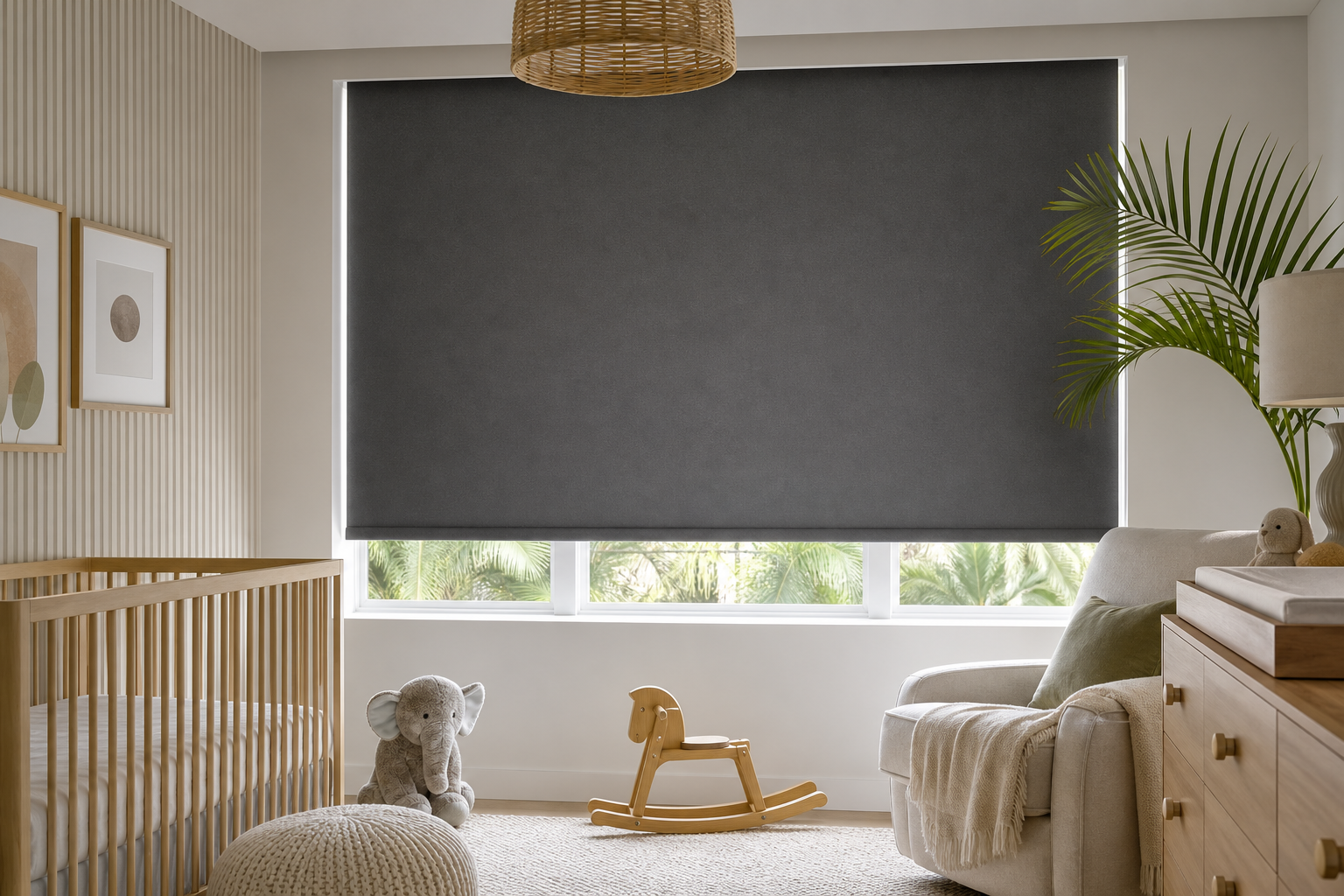
Creating a comfortable nursery in Pinecrest involves more than choosing a pleasing wall color and coordinating furniture. South Florida sunlight can be intense throughout the year, and bright windows may make it harder to maintain a consistent daytime environment for naps. Blackout shades for nurseries in South Florida can help reduce incoming light, improve privacy, and make a nursery more comfortable during bright afternoons.
The right window treatment should also suit the room’s layout, window size, furniture placement, and daily routine. This guide explains what Pinecrest homeowners should consider when comparing blackout shades for a nursery, including fabric, fit, heat, UV exposure, operation, and professional measurement.
Why Blackout Shades Are Useful in a Pinecrest Nursery
Nurseries in Pinecrest and throughout Miami-Dade may receive strong direct sunlight, reflected light from neighboring homes, or glare from outdoor surfaces. A nursery with an uncovered or lightly filtered window can become noticeably brighter and warmer during the day.
Blackout shades are designed to block a high level of incoming light when closed. They may be especially useful for:
- Daytime naps when sunlight enters through the nursery window
- Nurseries with west-facing windows that receive afternoon sun
- Rooms where exterior lighting or nearby homes affect privacy after dark
- Large windows or glass doors that contribute significant glare
- Homes where parents want more control over brightness throughout the day
Blackout shades do not automatically make a room completely dark. Light can still enter around the sides, top, or bottom of a shade depending on the window, mounting position, and product design. For the strongest light control, the shade and installation approach should be planned around the entire window opening.
What to Look for in Blackout Shades for Nurseries
1. Light-blocking performance
Start by considering how much light the nursery receives and when it is most noticeable. A room with morning sun may need a different approach from one with strong afternoon exposure. Ask about the available blackout fabric and how the shade will be installed to reduce light gaps.
Inside mounting can create a clean, built-in appearance, but it may leave small gaps between the shade and the window frame. Outside mounting can cover more of the opening and may be helpful when the goal is to reduce edge light. The best option depends on the window recess, trim, nearby walls, and the desired appearance.
2. Heat and UV exposure
Light control is only one consideration in South Florida. Direct sun can also add glare and heat near the window, while prolonged exposure may affect flooring, furniture, and fabrics. A blackout shade can help limit the amount of direct sunlight entering when it is closed, although results depend on the window, orientation, glass, fabric, and installation.
If the nursery becomes warm during part of the day, consider how the shade will work with the room’s existing cooling system. It is also useful to discuss whether the shade should remain closed during the brightest hours or be adjusted throughout the day for natural light and ventilation.
3. Child-conscious operation
Nursery window treatments should be selected with the room’s furniture and daily use in mind. Keep cribs, changing tables, chairs, and other climbable furniture positioned so children cannot easily reach operating components. Ask a window treatment professional about available operating styles and child-conscious options for the specific shade being considered.
Motorized operation may be convenient for parents who want to adjust shades without disturbing a sleeping child. It can also make it easier to manage several windows together. However, homeowners should discuss controls, placement, power requirements, and how the system will be used before choosing an automated solution.
4. A fabric and color that suit the room
Nursery shades do not have to look clinical or overly utilitarian. Soft neutrals, warm whites, light grays, and muted colors can complement many nursery styles while keeping the room calm and flexible as the child grows.
Color is primarily a design decision, while the shade’s construction and fabric determine its light-control performance. Ask to see samples in the actual room if possible. South Florida’s bright daylight can make a color appear different from how it looks under indoor lighting.
Blackout Shades Compared With Other Nursery Window Treatments
Blackout shades are not the only option for a nursery, but they are often considered when daytime darkness and privacy are important. Comparing the alternatives can make the decision easier.
| Window treatment | Best suited for | Points to consider |
|---|---|---|
| Blackout shades | Strong light control and nursery privacy | Installation and window coverage affect how much light escapes around the edges |
| Roller shades | Simple lines and a broad range of fabric choices | Light control depends on the selected fabric and fit |
| Zebra shades | Adjustable privacy and filtered daylight | They may not provide the same level of blackout as a dedicated blackout shade |
| Curtains paired with shades | Layered style and additional coverage | Requires more wall space and coordination between treatments |
Some homeowners choose a blackout shade for the nursery and use a softer light-filtering treatment in rooms where full darkness is not needed. If you are comparing shade styles for other parts of the home, Floridian Blinds’ guide to zebra shades versus roller shades in Pinecrest can help explain the differences in light control, privacy, and appearance.
Nursery Window Coverage: The Fit Matters
Even a well-made blackout shade may not perform as expected if it is too narrow, mounted incorrectly, or measured without accounting for the window frame. This is especially important for nursery windows with:
- Deep or uneven recesses
- Decorative trim or molding
- Multiple sections or paired windows
- Large panes with strong afternoon exposure
- Nearby doors, furniture, or wall obstructions
A professional measurement can help determine whether an inside or outside mount is more appropriate and how the shade should align with the surrounding trim. It also allows the design to account for handles, locks, baseboards, and any furniture that may interfere with operation.
Large nursery windows and glass doors
Some South Florida homes have oversized windows or glass doors that connect a nursery or adjacent room to a balcony, patio, or outdoor area. These openings can create substantial brightness and privacy concerns. A window treatment plan should consider whether each section needs independent control or whether multiple shades should operate together.
For glass doors, confirm that the selected shade will not interfere with door handles, movement, or access. In some layouts, a combination of shades and another treatment may provide a more practical solution than using one large shade.
Motorized Blackout Shades for a Nursery
Motorized shades can be a convenient choice when windows are difficult to reach or when parents want to adjust light from across the room. They may be useful for gradually managing brightness during the day, closing shades before afternoon sun reaches the nursery, or controlling several windows without walking to each one.
Before selecting motorization, discuss:
- How the shades will be controlled
- Whether one or multiple shades should operate together
- Where controls will be placed
- Power and charging considerations for the chosen system
- How the system will be used around children and other household members
Motorization is an option to evaluate rather than a requirement. A manually operated shade may be entirely suitable when the window is accessible and the household prefers a straightforward design.
Privacy Considerations for Pinecrest Nurseries
Privacy can be important at any time of day. A nursery facing the street, a neighboring home, or a shared outdoor area may need coverage after sunset, when interior lights make it easier to see into the room from outside.
Blackout shades can support privacy when fully closed, but homeowners should also consider gaps around the window, the angle of neighboring sightlines, and whether the shade is regularly left open. If natural light is preferred during the day, a layered window treatment or a shade with adjustable positioning may provide more flexibility.
How to Choose the Right Blackout Shade for Your Nursery
- Observe the room at different times. Note when direct sun, glare, or privacy concerns are most noticeable.
- Identify the main goal. Decide whether the priority is daytime darkness, heat and glare reduction, privacy, design, convenient operation, or a combination.
- Review the window structure. Check trim, recess depth, handles, doors, and furniture placement.
- Compare mounting options. Discuss inside and outside mounting based on the desired look and light coverage.
- Request fabric samples. View colors and textures in the nursery’s natural light.
- Discuss operation. Consider manual and motorized options, especially for high or hard-to-reach windows.
- Plan for the room’s future use. Choose a style that can continue to work as the nursery becomes a child’s bedroom.
Common Mistakes to Avoid
Choosing based only on color
A shade can look attractive in a sample and still provide less light control than expected if the fabric, mounting style, or fit is not appropriate. Evaluate appearance and performance together.
Assuming blackout means zero light gaps
The shade material may block light across its surface, but the overall result also depends on the sides, top, bottom, and window geometry. Ask how the proposed installation will address those areas.
Ignoring furniture placement
A crib or changing table placed directly beneath a window may affect access to the shade and how safely the room can be arranged. Consider the treatment before finalizing the furniture layout.
Using the same solution for every room
A nursery may need stronger light control than a living room, kitchen, or home office. Choose treatments according to each room’s sun exposure, privacy needs, and use.
Frequently Asked Questions About Blackout Shades for Pinecrest Nurseries
Do blackout shades make a nursery completely dark?
They are designed to block a high level of light, but some light may enter around the shade’s edges or through gaps created by the window and mounting style. Professional measurement and the right installation approach can improve coverage.
Are blackout shades useful for South Florida’s heat and sunlight?
When closed, blackout shades can reduce direct sunlight and glare entering through a window. The overall effect depends on the window, shade fabric, orientation, and installation, so these factors should be reviewed during the selection process.
Should a nursery shade be mounted inside or outside the window frame?
Either approach may be appropriate. Inside mounting offers a streamlined appearance, while outside mounting may cover more of the window area and help reduce edge light. The window frame and surrounding trim should be evaluated first.
Are motorized shades a good choice for a nursery?
They can be convenient for hard-to-reach windows or for adjusting shades without entering the room. Discuss controls, power, placement, and child-conscious use with a window treatment professional before deciding.
How do I maintain blackout shades?
Follow the care instructions for the selected fabric and avoid harsh cleaning methods unless the manufacturer or installer specifically recommends them. Regular gentle dusting can help keep the shade looking clean.
Plan Blackout Shades for Your Pinecrest Nursery
The best blackout shades for a Pinecrest nursery balance light control, privacy, South Florida sun exposure, appearance, and practical operation. A custom approach can account for the exact window dimensions, trim, furniture layout, and the way your family uses the room.
Floridian Blinds helps South Florida homeowners explore custom window treatment options for nurseries and other rooms. Contact us for a free consultation and measurement to discuss blackout shades for your Pinecrest home.