How to Clean Zebra Shades Safely: A Homeowner’s Guide
Learn how to clean zebra shades safely without damaging their alternating fabric layers, including practical tips for South Florida homes.
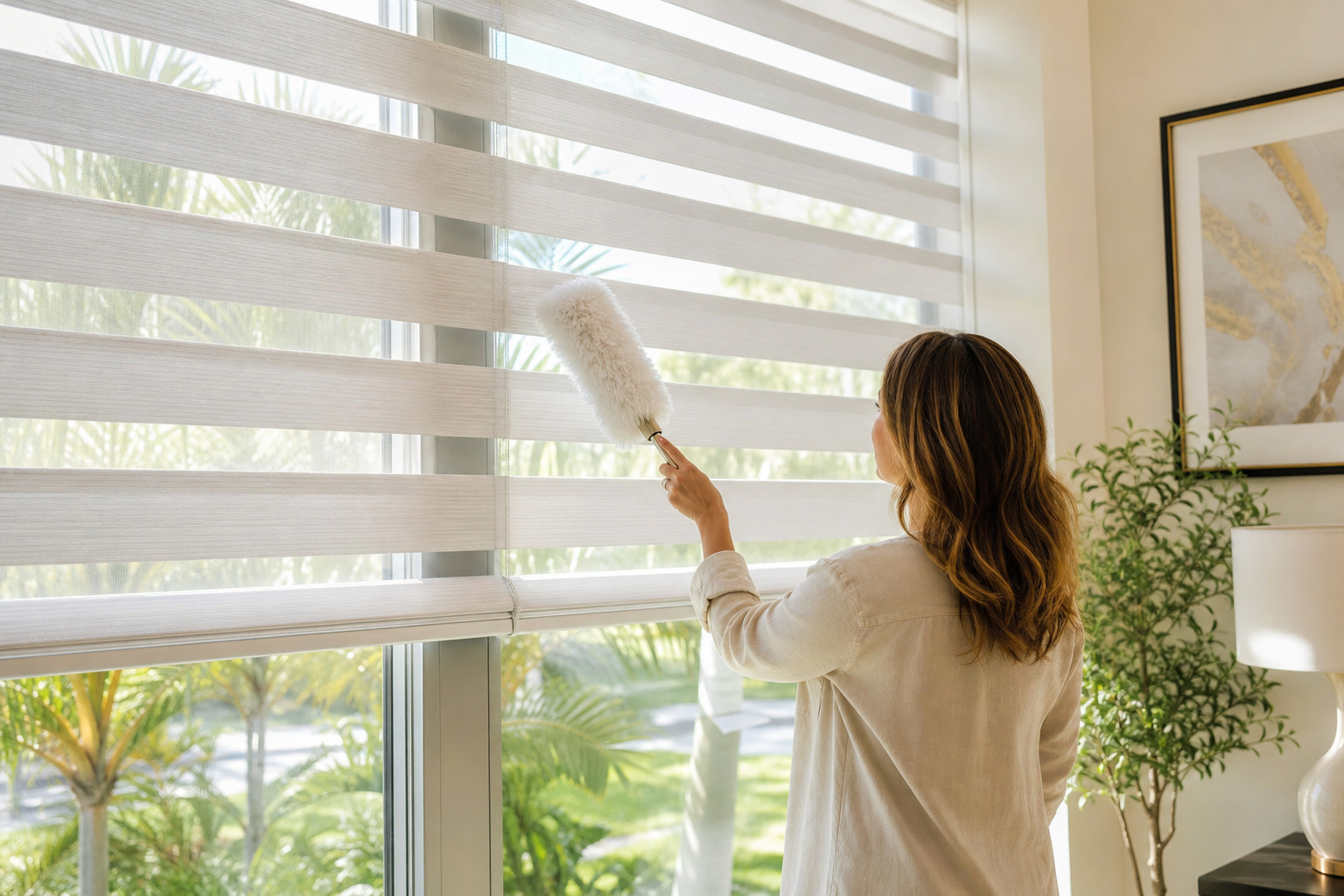
Zebra shades add flexible light control and a clean, modern look to homes throughout South Florida. Their alternating bands of sheer and opaque fabric can filter bright sunlight, provide privacy, or block more light when the shade is adjusted. Like any window treatment, they collect dust and may need occasional care, especially in homes with large windows, open patios, pets, or frequent exposure to Miami’s heat and humidity.
Knowing how to clean zebra shades safely helps preserve their appearance and operation. The safest approach is gentle, low-moisture cleaning rather than aggressive scrubbing, soaking, or harsh chemicals. This guide explains a practical routine for homeowners and identifies situations where professional advice may be the better choice.
What Makes Zebra Shades Different?
Zebra shades, also called dual-layer or transitional shades, use two horizontal fabric layers with alternating sheer and more opaque bands. As the shade moves, the bands align in different positions to adjust light and privacy.
Because the fabric layers need to move smoothly, cleaning requires more care than simply wiping a flat surface. Excess moisture, rough brushes, and forceful handling may affect the fabric, seams, or shade mechanism. Always check any care instructions supplied with your specific shade before using a cleaning product.
How to Clean Zebra Shades Safely
For routine household dust, follow these steps. Work slowly and avoid pulling, twisting, or pressing on the fabric.
1. Close or position the shade for easier access
Lower the shade to a comfortable working height and position the fabric so you can reach the visible surfaces without stretching or leaning over furniture. If the shade has motorization, use the control rather than pulling on the fabric. Keep the shade still while cleaning.
2. Remove loose dust first
Use a clean, soft feather duster or microfiber duster to remove surface dust. Move from top to bottom with light strokes. Avoid pushing the duster between the fabric layers, since forcing the layers apart can affect their alignment.
For heavier dust, a vacuum cleaner may be appropriate if it has a soft brush attachment and adjustable or low suction. Hold the attachment slightly away from the fabric or touch it very lightly. Do not use a bare vacuum nozzle directly against the shade.
3. Clean both accessible fabric surfaces
Adjust the zebra shade so each layer is accessible, then dust the front and back surfaces where possible. Do not twist the bottom rail or pull the shade sideways to reach an area. If a section is difficult to access, it is safer to leave it alone than to force the fabric into position.
4. Address small spots with minimal moisture
For a small mark, use a clean, lightly dampened microfiber cloth. The cloth should be damp rather than wet. Gently blot or dab the spot instead of rubbing it back and forth. Use plain water first unless the manufacturer’s care instructions recommend a specific cleaner.
Before treating a visible area, test the method on an inconspicuous section. Allow the test area to dry and check for changes in color, texture, or finish. Never saturate the fabric or allow water to collect near the headrail, controls, motor, or other hardware.
5. Let the shade dry naturally
Leave the shade in its normal position and allow any lightly dampened area to air-dry. Do not use a hair dryer, heat gun, iron, or other direct heat source. High heat can affect some fabrics and components, while forced drying may leave uneven marks.
How Often Should You Clean Zebra Shades?
The right cleaning schedule depends on the room and the amount of dust or airborne residue. A light dusting every few weeks can help prevent buildup, while deeper spot cleaning may only be needed when marks appear.
- Living rooms and bedrooms: Dust periodically as part of your normal housekeeping routine.
- Kitchens: Check more often for airborne grease or cooking residue. Avoid allowing residue to build up before seeking care guidance.
- Rooms near patios or open windows: Inspect the shades for dust, pollen, and outdoor residue.
- Coastal areas such as Miami Beach and Key Biscayne: Regularly remove dry surface dust and inspect for residue carried indoors by sea air. Do not use salt water as a cleaning solution.
- Homes with pets: Use a soft duster to remove hair before it becomes embedded in the fabric.
South Florida’s strong sunlight can make dust and marks more noticeable on light-colored window treatments. Routine, gentle maintenance is usually easier than trying to remove a large amount of buildup at once.
What Not to Use on Zebra Shades
When learning how to clean zebra shades safely, knowing what to avoid is just as important as knowing what to do. Unless the manufacturer specifically approves a product or method, avoid the following:
- Bleach, ammonia, solvents, and abrasive household cleaners
- Strong sprays applied directly to the fabric
- Steam cleaners, hot water, and soaking
- Stiff brushes, scrub pads, and rough towels
- High-suction vacuuming
- Washing-machine or dryer cleaning
- Pulling the fabric sideways or forcing the bands apart
These methods can cause discoloration, fabric distortion, water marks, fraying, or problems with the shade’s movement. A product that is safe for glass, tile, or another type of window covering may not be suitable for zebra shade fabric.
How to Clean the Headrail and Bottom Rail
Dust can collect on the headrail, bottom rail, and nearby window frame. Use a dry microfiber cloth or a soft duster for routine cleaning. If the rail needs more attention, lightly dampen the cloth and wipe the exterior surface without allowing water to drip into the headrail or control components.
For motorized zebra shades, keep moisture away from the motor, wiring, battery compartment, remote, and wall controls. Turn off or avoid operating the shade while cleaning around its hardware. If you notice unusual sounds, uneven movement, or a control issue, stop cleaning the mechanism and contact the installer or manufacturer for guidance.
How to Handle Stains, Grease, and Difficult Marks
Not every stain can be safely removed at home. A gentle water blot may help with a minor fresh mark, but repeated rubbing can spread the stain or change the fabric’s texture. Kitchen grease, makeup, ink, and other stubborn substances may require a cleaning method specific to the fabric.
Do not experiment with multiple products. If the mark remains after a cautious test, document the issue with a photo and check the shade’s care instructions or ask a qualified window treatment professional. Professional guidance is especially useful when the shade is large, difficult to remove, motorized, or installed in a prominent room.
Cleaning Zebra Shades in Rooms with Large Windows
Large windows are common in South Florida homes and can make window treatments a major part of a room’s appearance. They also create more fabric surface area to maintain. When cleaning a large zebra shade:
- Clear furniture and decorative items from the work area.
- Use a stable position on the floor rather than climbing onto a chair or windowsill.
- Clean in manageable sections from top to bottom.
- Check that the bands remain aligned as you work.
- Ask for assistance if the shade is difficult to reach or control safely.
For more planning considerations, including privacy and light control for expansive windows, see this guide to zebra shades for large windows in Miami.
Cleaning and Maintaining Zebra Shades in South Florida
Sun, heat, humidity, and frequent indoor-outdoor living can influence how often homeowners inspect their window treatments. In Miami-Dade County communities such as Kendall, West Kendall, Doral, Coral Gables, Pinecrest, South Miami, Cutler Bay, Palmetto Bay, and Homestead, shades may be exposed to bright windows, open doors, patio traffic, and airborne dust.
A few habits can make maintenance easier:
- Keep windows and nearby surfaces reasonably clean so dust is not transferred back onto the shade.
- Use exhaust ventilation in kitchens and bathrooms to reduce airborne moisture and residue.
- Close windows during dusty weather or when outdoor conditions are likely to carry residue indoors.
- Do not leave wet or damp cloths pressed against the shade.
- Inspect the fabric and hardware when adjusting the shade for seasonal decorating or deep cleaning.
Cleaning cannot prevent every form of wear. If a shade is exposed to intense direct sun for long periods, normal aging may eventually become visible. Proper operation and gentle care can help avoid unnecessary stress on the fabric and mechanism.
When to Consider Professional Help
Contact a window treatment professional when the fabric is heavily stained, the shade is not moving evenly, the layers no longer align, or the headrail or motorized controls need attention. Professional assistance may also be appropriate for shades installed in tall or hard-to-reach windows.
If you are replacing older treatments or selecting shades for a new home, cleaning requirements are worth discussing before you buy. A professional can help compare fabric choices, light-filtering needs, privacy preferences, and operating options for each room.
Frequently Asked Questions
Can I wash zebra shades in a washing machine?
No. Do not place zebra shades in a washing machine or dryer unless the manufacturer’s written instructions specifically allow it. These shades include layered fabric and operating components that are not designed for ordinary laundry methods.
Can I use a steam cleaner on zebra shades?
Steam should generally be avoided unless the shade manufacturer specifically approves it for that fabric and construction. Heat and moisture can affect the fabric, alignment, and internal components.
Can I use soap or a fabric cleaner?
Use plain water for a cautious spot test first. If a cleaner is being considered, check the product care instructions and test a hidden area. Never spray cleaner directly onto the shade, and avoid bleach, solvents, and abrasive products.
How do I clean motorized zebra shades?
Dust the fabric gently with a soft duster or low-suction brush attachment, and keep moisture away from the motor, controls, wiring, and battery compartment. Do not pull on a motorized shade by hand unless the manufacturer’s instructions say that manual operation is allowed.
What should I do if the shade is still stained after spot cleaning?
Stop rubbing and avoid adding stronger chemicals. Review the manufacturer’s care instructions and contact a qualified window treatment professional for advice, especially if the shade is large, motorized, or difficult to remove.
Keep Your Zebra Shades Looking Their Best
The safest cleaning routine is simple: dust gently, use minimal moisture only when appropriate, avoid harsh products, and never force the fabric or hardware. With regular light maintenance, homeowners can help their zebra shades continue providing flexible privacy and light control throughout the year.
If you are considering new zebra shades or need guidance for large windows, contact Floridian Blinds for a free consultation and measurement. Our team can help you explore custom window treatment options for homes and properties in Miami and throughout our South Florida service areas.