Motorized Shades for High Windows: A South Florida Guide
Learn how motorized shades make high windows easier to control while improving privacy, light management, comfort, and design in South Florida homes.
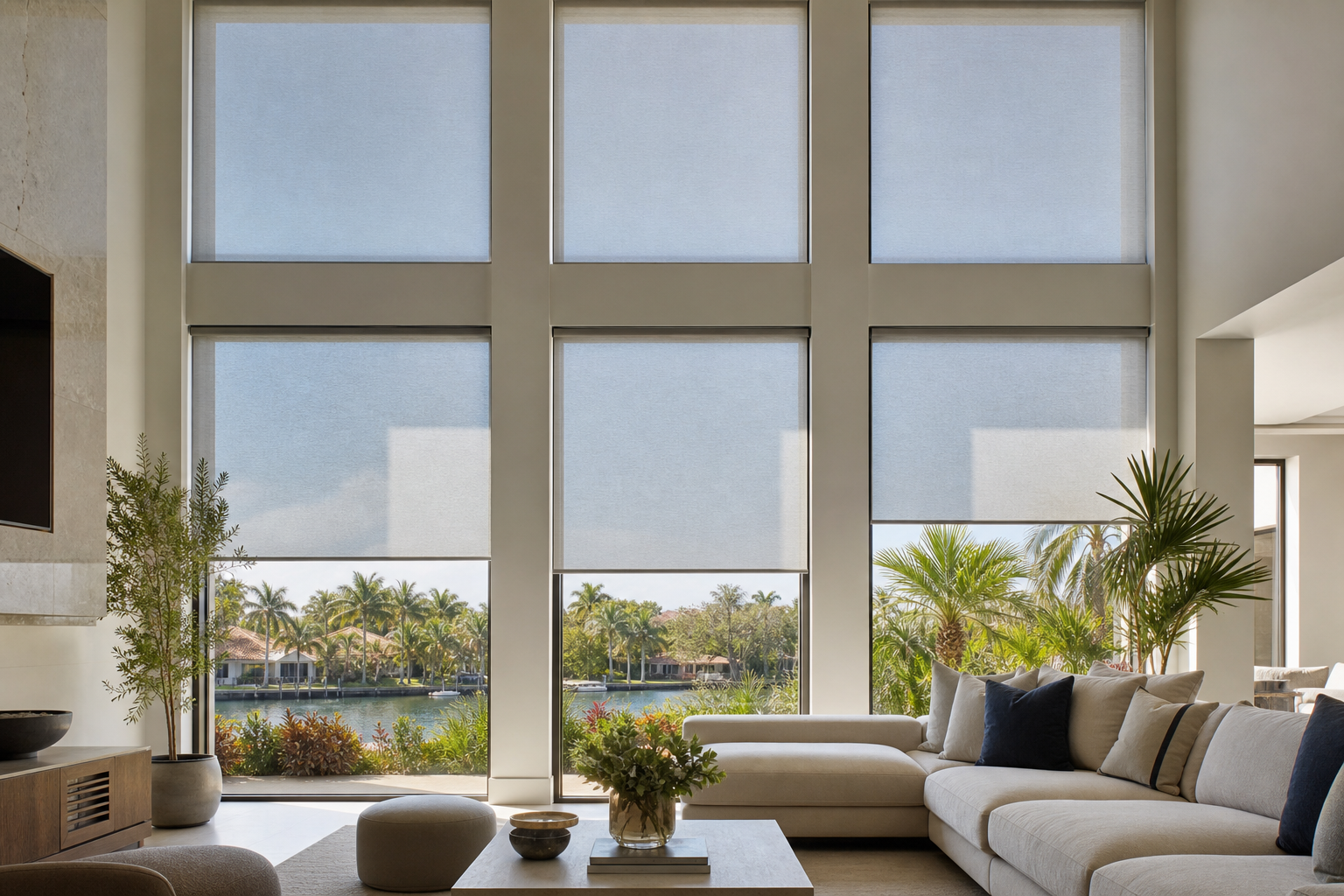
High windows can bring beautiful natural light into a home, but they can also be difficult to reach when you need to reduce glare, improve privacy, or manage indoor temperatures. In rooms with tall ceilings, two-story windows, clerestory windows, or expansive glass walls, motorized shades for high windows offer a practical way to control your window treatments without ladders, long poles, or manual adjustments.
For homeowners in Miami-Dade County and throughout South Florida, motorized shades can be especially useful. Strong sunlight, heat, humidity, and privacy concerns often make window coverings an important part of everyday comfort. The right system can also complement modern interiors while making large or elevated windows easier to use.
Why Motorized Shades Work Well for High Windows
Traditional shades may be difficult or inconvenient to operate when windows are positioned well above normal reach. Even if a manual shade is accessible with a chain or extension, adjusting several high windows throughout the day can become a chore. Motorized shades move using a quiet integrated motor and can be controlled from a wall switch, remote, smartphone, or compatible smart-home system, depending on the selected product and setup.
The main benefits include:
- Convenient operation: Open or close elevated shades without climbing furniture or using a ladder.
- More consistent light control: Adjust multiple windows together when sunlight moves across the room.
- Improved privacy: Close shades in the evening without manually reaching every window.
- A cleaner appearance: Cordless operation supports a streamlined look around tall or oversized glass.
- Better access to hard-to-reach windows: Motorization makes windows practical to cover even when they are above stairwells, entryways, or tall living spaces.
- Smart-home convenience: Some systems can be incorporated into broader home-control routines, depending on compatibility.
Which Types of Shades Are Suitable for High Windows?
Motorization is the operating method, not a fabric type. The best shade material depends on the room, the direction of the windows, the amount of privacy needed, and whether the priority is glare reduction, darkness, or design.
Motorized Solar Shades
Solar shades are often considered for high windows that receive intense sunlight. Their screen-like fabrics can reduce glare and help filter daylight while preserving some outward visibility during the day. This can be useful in living rooms, offices, media areas, and spaces with large windows facing bright South Florida skies.
Solar shades are not the same as blackout shades. Depending on the fabric and lighting conditions, people may still see silhouettes or interior details from outside at night when lights are on. If nighttime privacy is a major concern, ask whether a room-darkening or more opaque option would be a better fit.
For additional guidance, see Motorized Solar Shades for Large Windows.
Motorized Blackout Shades
Blackout shades are designed to block a substantial amount of incoming light and are commonly considered for bedrooms, media rooms, nurseries, and rooms where glare or early morning brightness is disruptive. On high windows, motorization allows you to darken the room without needing to reach the shade manually.
The final level of darkness depends on the shade, the mounting method, and light gaps around the edges. A professional consultation can help determine whether an inside mount, outside mount, side channels, or another configuration is appropriate for the window and the desired result.
Motorized Roller Shades
Roller shades offer a simple, modern profile that works well with contemporary architecture and tall glass. They are available in different fabric styles, including light-filtering and room-darkening options. Because the design is visually clean, roller shades can be a good choice when you want the windows to remain a subtle part of the room rather than a decorative focal point.
Motorized Zebra Shades
Zebra shades use alternating bands of solid and sheer fabric. By positioning the bands, you can adjust the balance between filtered daylight, view, and privacy. Motorization is particularly helpful when zebra shades are installed on windows that are too high to adjust comfortably by hand.
Because the layered fabric creates a distinctive look, zebra shades may be a strong option when both flexible light control and a modern design are important. They may not provide the same level of darkness as a dedicated blackout shade, so the room’s function should guide the selection.
Important Considerations for South Florida Homes
High windows in Miami, Kendall, Coral Gables, Pinecrest, Doral, and other South Florida communities often face conditions that affect how a window treatment performs. A useful consultation should consider more than the window’s height.
Sunlight and Glare
Bright sunlight can make televisions and computer screens difficult to see, especially in rooms with large west- or south-facing windows. Solar shades or light-filtering fabrics can help moderate glare while maintaining a bright interior. The right openness and fabric selection depend on how much view, privacy, and solar control you want.
Heat and Indoor Comfort
Window coverings can change how much direct sunlight enters a room, which may support a more comfortable interior. This is relevant in South Florida, where large areas of glass can contribute to noticeable heat and brightness during the day. Shade color, fabric construction, window orientation, and whether the treatment is mounted inside or outside the frame can all influence the result.
Privacy at Night
Daytime privacy and nighttime privacy are not always the same. A screen-style solar shade may provide useful daytime privacy when outdoor light is brighter than indoor light, but the effect can reverse after sunset. Rooms facing neighboring homes, sidewalks, roads, or nearby buildings may need a more private fabric or a second layer.
Humidity and Material Selection
South Florida interiors are exposed to humidity and frequent air-conditioning cycles. Choose a shade fabric and operating system appropriate for the room, particularly in spaces near exterior doors, covered patios, or areas with more exposure to moisture. Outdoor screens require different considerations than interior shades, including weather exposure and installation conditions.
Where Are Motorized High-Window Shades Most Useful?
Motorized shades can be installed in many areas of a home, but they are especially valuable when windows are elevated or numerous.
- Two-story living rooms: Operate upper windows without interrupting the room’s open, airy design.
- Entryways and foyers: Manage privacy and afternoon light in tall spaces that are difficult to access.
- Stairwells: Cover windows safely without placing a ladder on stairs.
- Bedrooms with clerestory windows: Reduce early morning light or improve privacy above standard-height windows.
- Home offices: Reduce glare on monitors and help maintain a more comfortable work environment.
- Media rooms: Control light at the push of a button, especially when windows are wide or high.
- Large great rooms: Operate several shades together for a coordinated appearance.
- Commercial or professional spaces: Make elevated windows easier to manage in offices, showrooms, and other properties.
How to Choose the Right Motorized Shade System
Several decisions affect the final result. A professional measurement and consultation helps ensure the shades are selected for the actual window, surrounding architecture, and intended use.
1. Start with the Room’s Main Function
Ask what you need the shade to do first. Is the priority glare reduction, privacy, room darkening, temperature management, or visual design? A home office may need glare control, while a bedroom may need greater darkness and privacy.
2. Consider the Window’s Size and Shape
High windows are not always standard rectangles. They may be unusually wide, divided into multiple sections, angled, or positioned near beams and trim. The shade must fit the opening while leaving enough clearance for the motor, brackets, hardware, and surrounding finishes.
3. Decide How You Want to Operate the Shades
Common control options may include a handheld remote, wall control, app-based operation, or integration with a compatible smart-home platform. If multiple shades are in the same room, group control can make everyday operation more convenient. Ask about the control method, charging or power requirements, and how the system will be used during installation planning.
4. Think About Power Access
Motorized shades may use different power arrangements depending on the system. Some projects may call for rechargeable power, while others may be suited to a wired connection. High windows can make future access more difficult, so the power and maintenance plan should be discussed before installation rather than treated as an afterthought.
5. Coordinate the Design with the Room
Fabric color, texture, cassette or headrail appearance, and mounting position can all affect the finished look. Neutral shades may blend into a modern interior, while a contrasting fabric can frame a window as an architectural feature. For tall spaces, consistent alignment across multiple windows is often just as important as the shade color.
Why Professional Measurement and Installation Matter
High-window projects require more than ordering a shade based on rough measurements. Small inaccuracies can affect the way a shade rolls, aligns, seals light, or sits within the opening. A professional measurement also identifies obstacles such as deep trim, handles, mullions, beams, ceiling conditions, and limited access.
Installation planning is equally important. The installer must determine where brackets can be secured, how the shades will be aligned, how controls will be positioned, and whether the selected system is appropriate for the window’s size and location. For windows above stairs or in double-height rooms, safe access and careful handling are essential.
Motorized Shades vs. Manual Shades for High Windows
| Consideration | Motorized shades | Manual shades |
|---|---|---|
| Access | Can be operated without reaching the window | May require a chain, pole, ladder, or direct access |
| Multiple windows | Can allow coordinated operation, depending on the control system | Usually adjusted individually |
| Design | Supports a clean cordless appearance | May include visible chains or operating hardware |
| Planning | Requires decisions about power and controls | Generally has simpler operating requirements |
Manual shades may be perfectly practical for windows that are easy to reach. For elevated windows, however, motorization can make the difference between a shade that is technically installed and one that is actually used consistently.
Frequently Asked Questions
Are motorized shades a good choice for very tall windows?
They can be a practical choice when windows are out of reach or difficult to access. The shade type, size, mounting conditions, and motor system should be evaluated together during a professional consultation.
Can motorized shades provide privacy at night?
Yes, but the level of privacy depends on the fabric. Solar shades may offer daytime privacy while still allowing visibility from outside at night when interior lights are on. More opaque or room-darkening fabrics may be more appropriate for bedrooms and street-facing rooms.
Can several high windows operate together?
Many motorized shade systems can be organized into groups, allowing multiple shades to operate together or separately. The available control options depend on the selected system and installation plan.
Do motorized shades require wiring?
Power options vary. Some systems may use rechargeable power, while others may use a wired connection. Discussing power access early is important when the shades will be installed high above the floor.
Are motorized roller shades the only option for high windows?
No. Depending on the room and design goals, motorized solar shades, blackout shades, zebra shades, and other custom window treatments may be considered. The best option depends on light control, privacy, appearance, and window conditions.
Plan Motorized Shades Around Your Home
Motorized shades for high windows can combine practical control with a clean, modern appearance. In South Florida homes, they can also help address bright sunlight, glare, privacy, and the challenges of managing large areas of glass. The most successful projects begin with accurate measurements, a clear understanding of the room’s needs, and a shade selection that fits both the architecture and daily routine.
Floridian Blinds can help you compare shade styles, control options, and installation approaches for high or hard-to-reach windows. Contact us for a free consultation and measurement.