Motorized Zebra Shades for Luxury Homes: Design and Comfort
Discover how motorized zebra shades can enhance luxury homes in South Florida with flexible light control, privacy, automation, and a polished custom look.
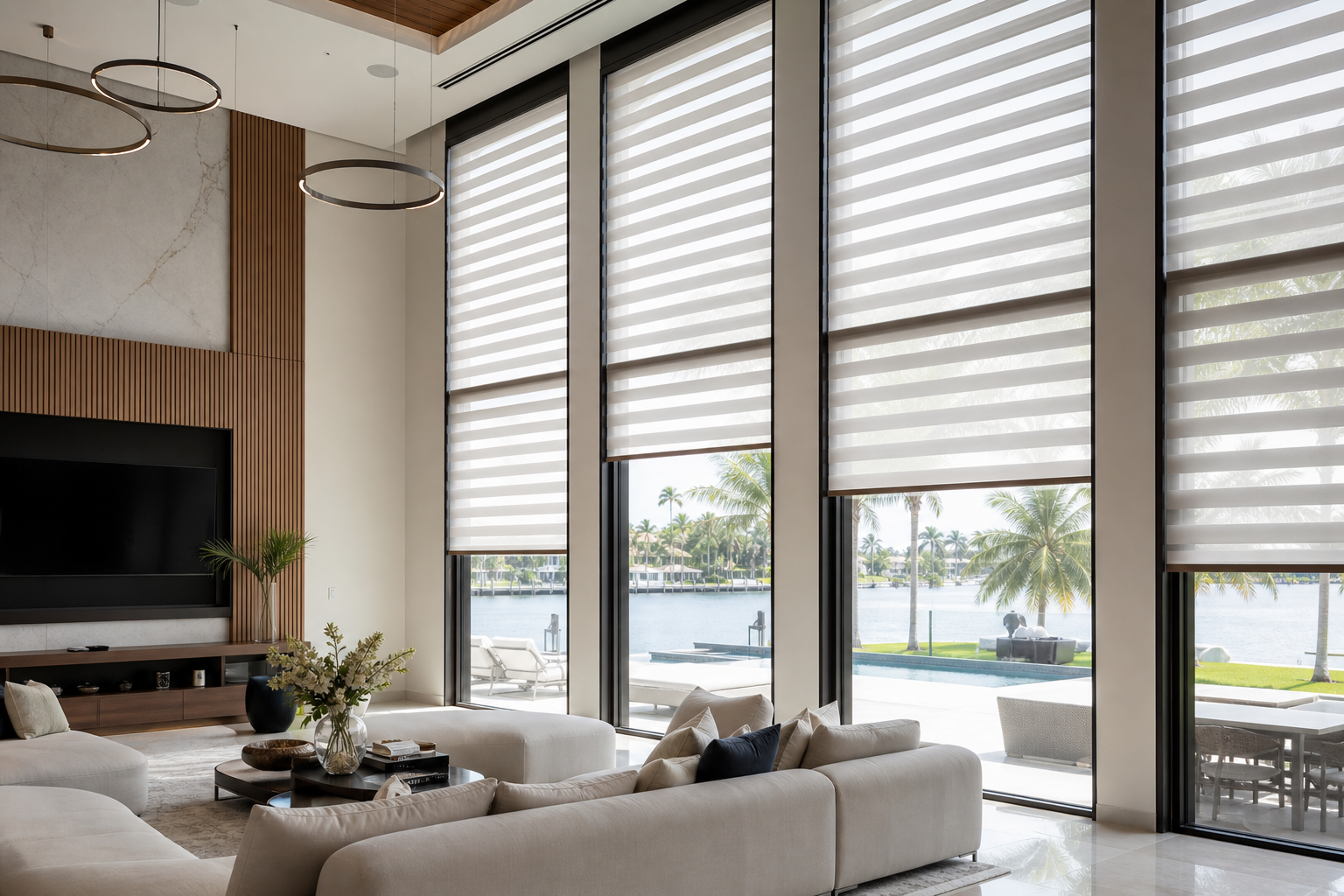
For homeowners designing a luxury residence in Miami-Dade County, window treatments are an important part of the overall experience of a room. They influence natural light, privacy, interior comfort, energy use, and the way architectural details are seen throughout the day. Motorized zebra shades for luxury homes combine the layered look of zebra shades with convenient shade automation, making them a practical and refined choice for modern South Florida living.
Zebra shades use alternating bands of sheer and more opaque fabric. Depending on how the shade is positioned, the bands can allow filtered daylight into a room or provide greater privacy and light control. Adding motorization can make it easier to adjust shades across tall windows, multiple rooms, or hard-to-reach openings without interrupting the clean appearance of the interior.
Why motorized zebra shades suit luxury homes
Luxury is not only about the materials used in a home. It is also about how easily the space functions. A carefully planned window treatment can help a room feel more comfortable, private, and visually cohesive while supporting the way residents use the home.
Clean, coordinated design
Zebra shades offer a streamlined appearance that works well with contemporary, transitional, and many classic interiors. When the shades are raised, the window area can remain visually open. When lowered, the alternating fabric bands provide a layered look without requiring separate curtains or bulky treatments.
Motorization can support that clean design by reducing the need for accessible chains or manual controls at every window. This can be especially useful in rooms with large expanses of glass, high ceilings, or a series of windows that should appear coordinated.
Convenient control throughout the home
Opening and adjusting one shade is simple. Managing many shades in a large home is a different matter. Motorized shades can make it easier to control multiple window treatments from a convenient location, depending on the system selected and the available control options.
Homeowners may choose to group shades by room or by function. For example, living room shades may be adjusted together, while bedroom shades follow a separate schedule or control setting. During a consultation, it is helpful to discuss how each room is used rather than choosing the same operating approach for every window.
Better access to hard-to-reach windows
Large windows, clerestory windows, and openings above staircases can be difficult to operate manually. Motorization provides a more practical way to adjust these shades while preserving the design of the room. It may also be useful for windows behind furniture or in spaces where a manual control would be inconvenient.
How zebra shades help manage South Florida light
South Florida homes receive strong sunlight for much of the year. That natural brightness can make interiors feel open and inviting, but it can also create glare and expose furnishings, flooring, and artwork to ongoing UV radiation. Window treatments should be selected with the room’s light conditions and intended use in mind.
Flexible daylight and privacy
The layered construction of zebra shades allows homeowners to fine-tune the balance between daylight and privacy. A more open alignment can bring filtered light into a room, while a more closed alignment can reduce visibility through the window. This flexibility is useful in living areas, dining rooms, home offices, and bedrooms that may need different levels of privacy throughout the day.
Privacy needs can also change by location. A home in Miami Beach or Key Biscayne may have different exposure concerns than a residence in Pinecrest, Doral, or Homestead. Nearby homes, street-facing windows, pool areas, and neighboring buildings should all be considered during the selection process.
Reducing glare in frequently used rooms
Glare can affect television viewing, computer work, and the comfort of a seating area. Zebra shades can help homeowners adjust the amount of incoming light rather than relying on permanently closed coverings. For rooms with intense afternoon sun, it is worth reviewing the window direction, surrounding landscaping, and the type of fabric available for the project.
For spaces that require a darker environment, such as bedrooms or media rooms, a different shade style may be more appropriate. Floridian Blinds can help homeowners compare zebra shades with blackout shades and other window treatment options based on the room’s priorities.
Where to use motorized zebra shades in a luxury home
Motorized zebra shades can work throughout a home, but the best locations are usually those where convenience, design consistency, or light management matter most.
- Great rooms and living rooms: Coordinate shades across wide window walls while maintaining flexible daylight control.
- Primary bedrooms: Adjust privacy and morning light without walking across the room.
- Home offices: Manage glare on monitors and maintain a polished backdrop for video calls.
- Dining areas: Control late-day sunlight during meals and gatherings.
- Two-story spaces: Improve access to elevated or difficult-to-reach windows.
- Guest suites: Provide simple, intuitive operation for visitors.
- Open-plan interiors: Group shades by zone to suit changing activities during the day.
For especially large windows, the construction and layout of the opening should be reviewed before selecting a treatment. Window dimensions, nearby doors, trim, furniture, and the desired finished appearance all affect the final solution. Homeowners researching options for expansive glass can also review this guide to zebra shades for large windows in Miami.
Choosing the right motorized zebra shades
The most successful projects begin with the home’s specific needs rather than with a shade style selected in isolation. Consider the following questions before making a decision.
1. What should the shades accomplish?
Start by identifying the primary goal for each room. Is the priority privacy, glare control, interior design, convenience, or a combination of these? A living room with a bright western exposure may need different light management from a shaded bedroom or a street-facing office.
2. How much privacy is needed?
Think about both daytime and nighttime conditions. A sheer-looking fabric may provide a comfortable daytime appearance but may not offer the same privacy after dark when interior lights are on. Discuss the view from outside, neighboring properties, and whether additional layers are needed in bedrooms or bathrooms.
3. Which windows should be motorized?
Motorization does not necessarily need to be applied identically throughout the home. It may be most valuable on large, high, or difficult-to-reach windows. In other rooms, homeowners may prefer a different operating method or shade type. A room-by-room plan can help balance convenience, aesthetics, and project priorities.
4. How should the shades be grouped?
Consider how the household moves through the day. Shades might be grouped by room, exposure, floor, or activity. For example, west-facing windows may need attention during late afternoon, while bedroom windows may be adjusted independently from common areas. Planning these groupings in advance can make the finished system easier to use.
5. How will the shades coordinate with the interior?
Fabric color, texture, openness, and hardware appearance should work with the home’s flooring, cabinetry, wall color, furnishings, and architectural style. Neutral shades can blend into a minimalist interior, while a more distinct fabric may support a design feature. The goal is to create a consistent look without allowing the window treatments to compete with the room.
Motorized zebra shades and energy-conscious design
Window treatments can be part of a broader approach to managing heat and sunlight in South Florida. When shades are adjusted during periods of strong sun, they may help reduce glare and limit the amount of direct sunlight entering a room. Their effectiveness depends on factors such as window orientation, glass, room layout, fabric selection, and how consistently the shades are used.
Automation can make shade use more convenient, which may help homeowners respond to changing light conditions without manually adjusting every window. However, motorized shades should be viewed as one element of the home’s overall comfort strategy. Window performance, air conditioning, insulation, landscaping, and exterior shading can also affect indoor conditions.
Motorized zebra shades versus other shade styles
Zebra shades are not the only option for luxury homes. Comparing them with other treatments can clarify whether they are the right fit for each room.
| Shade style | Often a good fit for | Key consideration |
|---|---|---|
| Zebra shades | Flexible light control, privacy, and a layered modern appearance | Review fabric openness and nighttime privacy needs |
| Blackout shades | Bedrooms, media rooms, and spaces that need stronger light reduction | Confirm whether the room requires a darker environment than zebra shades provide |
| Roller shades | Simple, streamlined coverage and a broad range of design approaches | Choose the light-control level based on room orientation and use |
| Solar shades | Glare management and maintaining an outward view in bright areas | Consider how daytime and nighttime privacy requirements differ |
A whole-home plan may include more than one shade style. Zebra shades can provide visual consistency in common areas, while blackout, roller, or solar shades may be better suited to particular rooms. The right combination depends on the architecture, lifestyle, and priorities of the household.
Questions to ask during a consultation
A professional consultation is an opportunity to evaluate the windows and clarify how the shades should function. Homeowners may want to ask:
- Which rooms would benefit most from motorization?
- What fabric and opacity options are appropriate for each exposure?
- How will the shades look when they are open, closed, or partially adjusted?
- How should large windows or multiple windows be coordinated?
- What control options are available for the selected motorized system?
- Would another shade style be more suitable for bedrooms, media rooms, or high-glare spaces?
Accurate measurement is particularly important for custom window treatments. The location of the window, the depth of the opening, trim, handles, doors, and nearby furniture can all affect the final installation and operation.
Frequently asked questions
Are motorized zebra shades suitable for every room?
They can be considered for many rooms, including living areas, bedrooms, offices, and dining spaces. The best choice depends on the room’s privacy, light-control, design, and access requirements. A different shade style may be preferable where stronger darkening is needed.
Do zebra shades provide complete blackout?
Zebra shades offer adjustable light control, but they may not provide the same darkening effect as a blackout shade. If a room needs a darker environment, compare both options during the consultation.
Can motorized zebra shades be used on large windows?
They may be a practical option for large windows, but the opening must be measured and evaluated carefully. Window size, configuration, surrounding trim, and the selected product design should be reviewed before the treatment is specified.
Are motorized shades useful in homes with high ceilings?
Yes, motorization can be especially convenient when windows are elevated or difficult to reach manually. The control approach should be selected around how the household wants to operate and group the shades.
Should every window in a luxury home use the same shade?
Not necessarily. A coordinated whole-home design can combine zebra shades with blackout, roller, or solar shades when different rooms have different functional needs. Consistent colors or materials can help maintain a unified appearance.
Plan motorized zebra shades for your South Florida home
Motorized zebra shades for luxury homes can bring together refined design, flexible privacy, practical light control, and easier operation. The best results come from matching the shade style, fabric, and control plan to each room rather than treating every window the same way.
Floridian Blinds helps homeowners in Miami, Kendall, West Kendall, Doral, Coral Gables, Pinecrest, Homestead, Miami Beach, Key Biscayne, South Miami, Cutler Bay, and Palmetto Bay explore custom window treatment options. Contact us for a free consultation and measurement to discuss motorized zebra shades and find a solution suited to your home.