Solar Shades and Energy Savings in Miami: A Doral Homeowner’s Guide
Learn how solar shades can help manage sunlight, glare, heat, and privacy in Doral homes while supporting a more comfortable and energy-conscious South Florida interior.
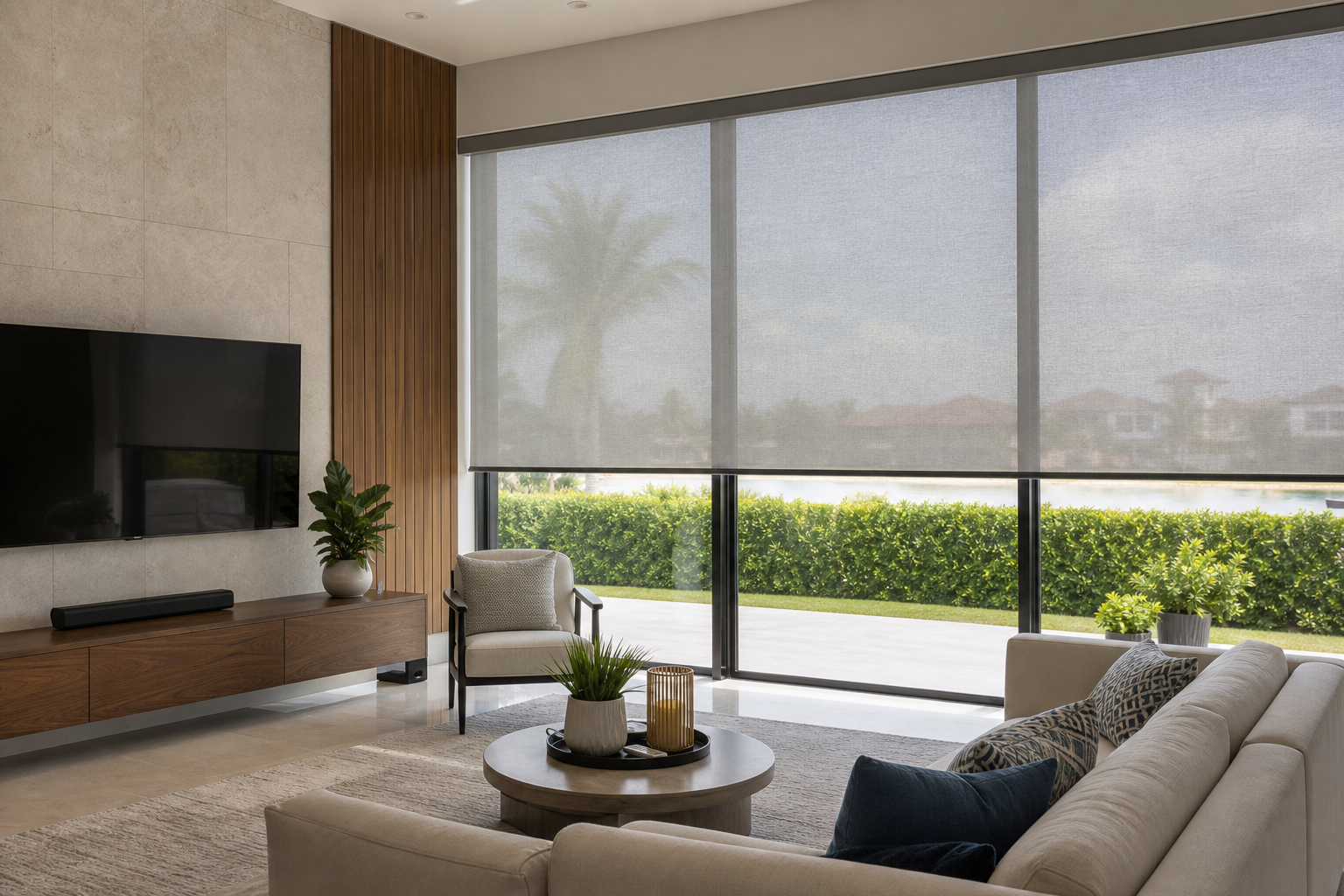
For homeowners in Doral, managing sunlight is part of everyday life. Large windows bring in natural light and connect the home to the outdoors, but South Florida’s intense sun can also create glare, warm up rooms, fade furnishings, and make certain spaces less comfortable. Solar shades offer a practical way to control these issues while preserving an open, modern appearance.
When properly selected and professionally measured, solar shades can support energy-conscious living by helping manage solar heat and reducing the need to rely as heavily on cooling during bright parts of the day. They are not a replacement for insulation or air conditioning, but they can be an important part of a broader window treatment strategy for homes in Doral and throughout Miami-Dade County.
What Are Solar Shades?
Solar shades are roller-style window coverings made with specially woven screen fabrics. The material filters sunlight rather than simply blocking it completely. This allows you to maintain a view through the window while reducing glare and softening the brightness entering the room.
The openness of the fabric affects how much light, view, and privacy the shade provides. A more open weave generally preserves more of the outdoor view, while a tighter weave filters more sunlight and offers greater daytime privacy. Your selection should depend on the window’s direction, the room’s purpose, and how much visibility you want to maintain.
Unlike blackout shades, solar shades are designed for light management rather than complete darkness. They are often a good fit for living rooms, home offices, dining areas, kitchens, and other spaces where homeowners want natural light without harsh glare.
How Solar Shades Can Support Energy Savings in Miami
Windows can allow sunlight to enter a home and warm interior surfaces, especially when they receive strong exposure during the afternoon. In Doral, west- and southwest-facing windows may be particularly challenging because they can receive intense direct sun later in the day.
Solar shades can help by filtering a portion of that sunlight before it spreads throughout the room. This may help reduce heat buildup and make it easier to maintain a comfortable indoor temperature. When rooms stay more comfortable, homeowners may be able to reduce cooling demand during certain parts of the day, depending on the home, window glass, shade fabric, and thermostat settings.
The potential energy benefit depends on several factors, including:
- The direction each window faces
- The size and number of windows
- The type of glass and existing window construction
- The solar shade’s fabric color and openness
- Whether the shade fits closely and is used consistently
- The room’s ventilation, insulation, and air-conditioning performance
Solar shades should therefore be viewed as one component of an overall comfort and efficiency plan. Professional measurement and product guidance can help you choose fabrics that are appropriate for the conditions in your home.
Why Solar Shades Are Well Suited to Doral Homes
Doral homes often feature contemporary interiors, expansive windows, open floor plans, and indoor-outdoor living areas. These design elements create a bright and spacious feel, but they can also make glare and heat more noticeable.
Solar shades address several common concerns at once:
Natural light without harsh glare
Filtered daylight can make a room feel bright without the intense contrast caused by direct sun. This can be especially useful in living rooms with televisions, offices with computer screens, and dining spaces with reflective surfaces.
Protection for interior furnishings
Repeated exposure to direct sunlight may contribute to fading or discoloration of flooring, upholstery, artwork, and other interior finishes. Solar shades reduce the amount of direct light reaching these surfaces, helping homeowners take a more protective approach to their interiors.
Maintained outdoor views
Many homeowners choose window treatments because they want privacy or light control but do not want to cover attractive views. Solar shades provide a clean, streamlined look and can preserve a connection to the outdoors when the selected fabric offers the right level of openness.
A modern, uncluttered appearance
Solar shades have a simple roller profile that works well with modern, transitional, and minimalist design styles. They can be customized to coordinate with wall colors, furniture, flooring, and architectural details.
Choosing the Right Solar Shade Fabric
Fabric selection is one of the most important decisions when planning solar shades. Two shades may look similar but perform differently depending on their color, openness, and placement.
| Selection factor | What it affects | Questions to consider |
|---|---|---|
| Openness | View-through, daylight, and privacy | Do you want a clearer view or more filtered light and privacy? |
| Fabric color | Appearance, glare control, and how the room feels | Should the shade blend with the interior or create contrast? |
| Window direction | Amount and timing of direct sun | Does the window receive strong morning or afternoon exposure? |
| Room function | Required light control and privacy | Is the room used for relaxing, working, sleeping, or entertaining? |
Dark-colored solar fabrics may help reduce the visual impact of glare and can provide a clearer outward view in some settings. Lighter fabrics may coordinate well with bright interiors and offer a softer appearance. The right choice depends on the room and the homeowner’s priorities, so it is helpful to review fabric samples in the actual space rather than selecting from a small online image alone.
Solar Shades vs. Blackout Shades
Solar shades and blackout shades serve different purposes. Solar shades filter daylight, reduce glare, and preserve a view. Blackout shades are designed to block substantially more light and are commonly selected for bedrooms, media rooms, nurseries, and spaces where darkness is important.
Some homes benefit from using both types in different rooms. For example, solar shades may be appropriate for a Doral living room, while blackout shades may be better for bedrooms facing bright streets or early morning sun. In other cases, a homeowner may choose a layered approach that combines a solar shade with a decorative drapery panel for additional privacy and design flexibility.
If your primary concern is maintaining a bright room while controlling heat and glare, solar shades are usually the more appropriate starting point. If your priority is creating a dark environment, consider a blackout solution instead.
Privacy Considerations for South Florida Homes
Privacy needs can vary significantly from one Doral property to another. A home facing a nearby street, neighboring property, or shared walkway may require more daytime privacy than a home with an open view behind it.
Solar shade privacy is also affected by lighting conditions. During the day, a screen fabric may make it easier to see outside while limiting visibility into the home. At night, interior lights can reverse that effect, making it easier for people outside to see in. For that reason, solar shades may need to be paired with another window treatment or adjusted after dark when nighttime privacy is a priority.
During a consultation, consider privacy at different times of day rather than evaluating the window only under bright daytime conditions. This helps ensure the final window treatment supports how your household actually uses the space.
When Motorized Solar Shades Make Sense
Manual solar shades can be a practical choice for easily accessible windows. Motorized shades may be more convenient for large windows, tall openings, multiple windows in one room, or areas that are difficult to reach.
Motorization can make it easier to adjust shades throughout the day as the sun moves across the home. It may also help homeowners maintain a consistent routine for glare and heat control without walking from window to window. For homes with smart-home features, motorized shades may be considered as part of a broader automation plan, subject to the specific products and control systems selected.
Read more about planning automated window coverings in Motorized Roller Shades for Smart Homes: A South Florida Guide.
Common Applications for Solar Shades in Doral
Living rooms and open-concept spaces
Large living areas often benefit from glare control that does not eliminate natural light. Solar shades can help create a more comfortable environment for conversation, reading, and television viewing.
Home offices
Direct sunlight can make computer screens difficult to read and create reflections on desks or conference areas. Solar shades can help manage these distractions while keeping the office bright.
Dining rooms and kitchens
These spaces often include reflective countertops, flooring, or glass surfaces. Filtering direct light can make the room more comfortable and help create a more balanced appearance.
Large window walls and sliding doors
Wide openings may be visually striking but challenging to cover with standard window treatments. Custom solar shades can be planned around the opening’s dimensions, operation, and access requirements.
Why Professional Measurement Matters
Accurate measurement is important for both appearance and performance. Windows may vary slightly in width, height, depth, and alignment, even within the same room. A shade that is too small may leave unwanted light gaps, while a shade that is too large may interfere with handles, trim, or nearby furniture.
Professional measurement also allows the installer to evaluate practical details such as mounting surfaces, shade placement, operating clearance, and how multiple shades will align visually. These details matter particularly for large windows and wide expanses of glass commonly found in newer South Florida homes.
Custom installation helps ensure the selected shades are fitted to the home rather than forcing a standard-size product into an opening that requires a more precise solution.
Solar Shade Buying Checklist
Before choosing solar shades, review each room and window with the following questions:
- Which windows receive the strongest direct sunlight?
- Is glare, heat, privacy, fading, or appearance the main concern?
- Do you want to preserve an outdoor view?
- Will the shades be used manually or would motorization be more convenient?
- Does the room need filtered daylight or near-total darkness?
- Are there large openings, sliding doors, or unusually shaped windows?
- How should the fabric coordinate with the home’s finishes?
- Will nighttime privacy require a second layer or another type of shade?
For a more detailed look at selecting solar roller shades for local conditions, see Solar Roller Shades for Florida Sun in Doral: A Homeowner’s Guide.
Frequently Asked Questions
Can solar shades lower my energy bill?
Solar shades can help manage sunlight and heat entering through windows, which may support reduced cooling demand at certain times. Actual energy use depends on the home’s windows, insulation, air-conditioning system, shade fabric, and daily habits. They should be considered part of an overall energy-conscious approach rather than a guaranteed source of savings.
Do solar shades block the view?
Solar shades are designed to preserve a view to varying degrees. The amount of visibility depends primarily on the fabric’s openness and the lighting conditions. A consultation can help you compare options for your specific windows.
Do solar shades provide privacy at night?
Privacy performance changes after dark when interior lights are on. In many situations, people outside may be able to see into the room. If nighttime privacy is important, you may need a more opaque shade, a blackout option, or a complementary window treatment.
Are solar shades suitable for bedrooms?
They can be suitable when the bedroom needs glare and heat control but not complete darkness. If you prefer a dark sleeping environment, blackout shades may be a better fit.
Can solar shades be motorized?
Motorized options may be available for solar shades, depending on the selected product and installation requirements. They can be useful for large, high, or hard-to-reach windows and for homeowners who want convenient daily adjustment.
Plan Solar Shades for Your Doral Home
The right solar shades can help a Doral home feel more comfortable, reduce distracting glare, protect interior finishes, and maintain the clean appearance of large windows. Choosing the correct fabric requires more than comparing colors; window direction, privacy, room function, view, and operation all matter.
Floridian Blinds helps homeowners in Doral and throughout South Florida explore custom window treatment options based on the way each room is used. Contact us for a free consultation and measurement to discuss solar shades, motorization, and other solutions for your home.