What Is the Best Solar Shade Openness Factor for Your Home?
Learn how solar shade openness factors affect privacy, glare, views, UV protection, and comfort so you can choose the right shade for your South Florida home.
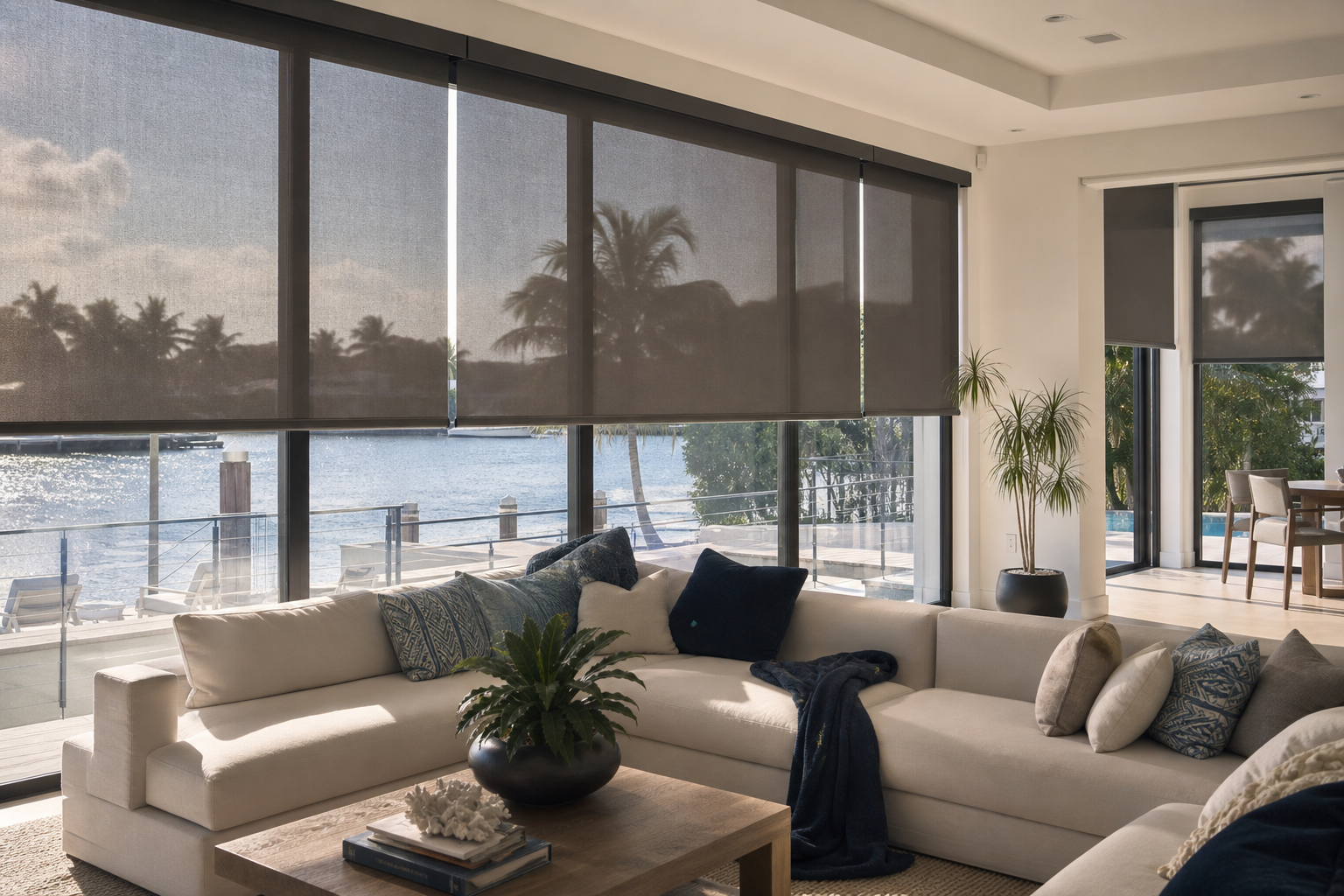
Choosing the best solar shade openness factor is one of the most important decisions when selecting solar roller shades. The openness factor affects how much sunlight enters a room, how clearly you can see outside, how much privacy you receive, and how comfortable your space feels throughout the day.
For homeowners in Miami-Dade County and across South Florida, this decision matters even more. Strong sunlight, heat, glare, large windows, and outdoor views all influence which solar shade fabric will work best. A shade that looks ideal in a showroom may perform differently when installed on a west-facing window, a street-facing bedroom, or a bright living room overlooking the water.
There is no single openness factor that is best for every room. The right choice depends on your window orientation, privacy needs, desired view, interior design, and how much light control you want. This guide explains the options and how to compare them before ordering custom solar shades.
What Does Solar Shade Openness Factor Mean?
Openness factor refers to the percentage of a solar shade fabric that is open rather than covered by woven material. It is usually expressed as a percentage, such as 1%, 3%, 5%, or 10%.
For example, a 5% openness fabric has a tighter weave than a 10% fabric. A 1% fabric allows less light and provides more daytime privacy, while a 10% fabric allows more natural light and generally preserves a clearer outward view.
Openness factor is not the same as a shade’s color, transparency, or total light-blocking ability. It is one part of the fabric selection process. The fabric color, window direction, glass type, room use, and installation style also affect how the shade performs.
Solar Shade Openness Factors Compared
| Openness factor | Light and view | Privacy | Often considered for |
|---|---|---|---|
| 1% | More controlled light and a less open view | Higher daytime privacy than more open fabrics | Bright rooms, street-facing windows, and spaces needing stronger glare control |
| 3% | Balanced light control and outward visibility | Moderate to strong daytime privacy, depending on conditions | Living rooms, home offices, and rooms with direct sun |
| 5% | Good natural light and a noticeable outdoor view | Moderate daytime privacy | General living areas and windows where views are important |
| 10% | More daylight and a more open outward view | More limited privacy, especially at night | Private properties, scenic views, and rooms where brightness is welcome |
These ranges are useful for comparison, but the actual appearance can vary by fabric construction and color. Looking at physical samples in the room where the shades will be installed is an important part of the selection process.
How to Choose the Best Openness Factor
Start with the room’s main purpose
Consider how you use the room before focusing on a specific percentage. A family room with a view may benefit from a more open fabric, while a bedroom or street-facing office may need a tighter weave.
- Living rooms: A 3%, 5%, or 10% fabric may work well depending on glare, privacy, and the importance of the view.
- Home offices: A lower openness factor can help manage screen glare while still allowing daylight into the room.
- Bedrooms: Solar shades provide daytime light and glare control, but they do not create a dark sleeping environment. Consider a blackout shade or layered window treatment if nighttime darkness is a priority.
- Dining areas: A more open fabric can maintain a bright, connected feel, particularly when privacy is not a major concern.
- Media rooms: Solar shades can help reduce glare, but blackout shades are generally more appropriate when the goal is substantial darkness for viewing.
Think about window direction
Window orientation has a major effect on the best openness factor. East-facing windows receive strong morning light, while west-facing windows may receive intense afternoon sun. South-facing windows can receive substantial light for much of the day, depending on the home’s layout and surrounding structures.
In South Florida, a window with direct exposure may need a tighter weave than a shaded window facing a covered patio or neighboring building. If a room becomes uncomfortable or difficult to use during a particular part of the day, note when that happens. This observation can help guide the fabric choice more effectively than choosing based on appearance alone.
Balance outdoor views with glare control
One of the main advantages of solar shades is their ability to soften bright sunlight while maintaining a connection to the outdoors. A higher openness factor generally provides a more open view, but it may also allow more brightness and glare into the room.
A lower openness factor can provide more visual filtering for windows exposed to direct sun. This may be useful in rooms with televisions, computers, artwork, or furnishings that need protection from harsh daylight. However, no solar shade fabric should be selected solely by percentage without considering the fabric’s color and the window’s exposure.
Consider daytime and nighttime privacy separately
Solar shades are designed to filter light and provide daytime privacy, not complete privacy at all hours. During the day, when the exterior is brighter than the interior, a solar shade can make it more difficult for people outside to see in. At night, interior lights can reverse that effect, making the inside of the home more visible from outside.
If nighttime privacy is essential, consider a dual-shade arrangement, curtains, shutters, or a different shade style that provides more coverage after dark. This is particularly important for bedrooms, bathrooms, street-facing windows, and homes close to neighboring properties.
Is a Lower Openness Factor Always Better?
Not necessarily. A 1% fabric may offer more control over direct light and a more filtered view, but it may also make the window feel less open. A 10% fabric may preserve more of the view and bring in more daylight, but it may not provide enough glare or privacy control for every room.
The best solar shade openness factor is the one that fits the room’s priorities. Homeowners often need different fabrics throughout the same property. For example, a home may use a tighter weave on west-facing living room windows, a medium openness factor in a home office, and a more open fabric in a private backyard-facing space.
Does Solar Shade Color Affect Performance?
Yes. Color can influence the way a solar shade manages light, glare, and views. In many fabrics, darker colors can make it easier to see outward and may reduce the visual impact of glare, while lighter colors can reflect more light and create a brighter appearance. The exact result depends on the fabric’s construction, the window glass, and the direction of the light.
Color also affects the room’s design. Neutral shades can blend into modern interiors, while a contrasting color can make the window treatment more noticeable. When comparing samples, view them against the window in daylight and under the room’s normal lighting. A sample held against a wall does not always show how it will look when sunlight passes through it.
Solar Shades and South Florida Conditions
Solar shades are often considered for South Florida homes because they address several common window concerns at once. Large glass areas can bring in strong light and heat, while homes near busy streets or neighboring properties may need additional daytime privacy. Patios, balconies, and indoor-outdoor living areas can also create a need for consistent light management across several windows.
When selecting fabric, consider:
- Direct sun: Determine which windows receive the strongest light and at what time of day.
- Heat and comfort: A shade that filters intense sunlight may help make a room feel more comfortable, although results depend on the glass, window size, room design, and other factors.
- UV exposure: Solar shades can filter sunlight, which may help reduce the amount of direct exposure reaching furnishings and flooring. Ask about the specific fabric’s performance rather than assuming every shade provides the same level of protection.
- Privacy: Homes in Miami, Kendall, Coral Gables, Doral, and nearby communities can have very different privacy needs depending on lot size, landscaping, and window placement.
- Large windows: Wide openings may require careful fabric, control, and installation decisions to achieve a clean appearance and practical operation.
- Humidity and outdoor exposure: Interior solar shades and outdoor screens serve different purposes. For patios and exterior openings, discuss whether an outdoor screen is more suitable than an interior shade.
For more information about selecting fabrics for local conditions, see this guide to roller shade fabrics for Miami’s climate.
Solar Shades Versus Blackout Shades
Solar shades and blackout shades solve different problems. Solar shades filter sunlight while preserving some view and natural brightness. Blackout shades are designed for much stronger light blockage and are often selected for bedrooms, nurseries, media rooms, and spaces where darkness is important.
If your primary goal is to reduce glare while maintaining an outdoor view, solar shades may be the better starting point. If your priority is sleeping, watching movies, or creating a darker room, compare solar shades with blackout options. In some rooms, homeowners choose layered treatments so they can enjoy a filtered view during the day and more privacy or darkness at night.
Why Custom Measurement Matters
Openness factor is only one part of a successful solar shade installation. The shade must also fit the window correctly, operate smoothly, and coordinate with adjacent windows, doors, trim, and furniture.
Professional measurement helps identify details that can affect the final result, including inside-mount depth, outside-mount placement, handle clearance, window trim, mullions, and the relationship between multiple shades. It also provides an opportunity to evaluate the room’s actual light conditions rather than choosing a fabric from a generic description.
Motorization may be useful for large or hard-to-reach windows, especially when several shades need to operate together. Automated schedules can also make it easier to adjust shades during bright parts of the day. Learn more in this guide to motorized roller shades for South Florida homes.
A Practical Process for Selecting Solar Shade Openness
- Identify the problem: Decide whether you are primarily addressing glare, heat, privacy, fading concerns, or an overly bright room.
- Observe the window: Note the direction, strongest sunlight, outdoor view, and nighttime privacy conditions.
- Compare several openness factors: Review 1%, 3%, 5%, and 10% options when appropriate rather than assuming one percentage will work everywhere.
- Evaluate fabric color: Compare samples in the actual room and look at them from both inside and outside when possible.
- Decide whether solar shades are enough: Add blackout or layered treatments if you need substantial nighttime darkness or privacy.
- Plan control and installation: Consider cordless operation, chain controls, motorization, window access, and how multiple shades should align.
- Schedule professional measurement: Confirm the final selection after reviewing the windows and the room’s practical requirements.
Frequently Asked Questions
What is the best solar shade openness factor for privacy?
A lower openness factor, such as 1% or 3%, generally provides more daytime privacy than a more open fabric. However, solar shades do not provide complete nighttime privacy when interior lights are on. The best option depends on the window’s exposure and surroundings.
Is 5% openness a good choice for solar shades?
A 5% fabric can be a balanced option for rooms where homeowners want natural light, a visible outdoor connection, and moderate glare and privacy control. It is not automatically right for every window, particularly those with intense direct afternoon sun.
Do solar shades block all sunlight?
No. Solar shades filter and soften sunlight, but they are not generally designed to create a completely dark room. For substantial light blockage, compare blackout shades or layered window treatments.
Can solar shades provide privacy at night?
Solar shades can provide useful daytime privacy, but nighttime privacy is limited when the room is illuminated. Curtains, blackout shades, or another room-darkening treatment may be needed for bedrooms and street-facing windows.
Should every window in a home use the same openness factor?
Not always. Different rooms and window directions may require different levels of light filtering, privacy, and view preservation. A custom plan can combine several fabrics while maintaining a coordinated appearance throughout the home.
Choose Solar Shades Based on Your Actual Windows
The best solar shade openness factor is not simply the lowest or highest percentage. It is the fabric that gives each room the right balance of light, privacy, comfort, and outdoor visibility. In a South Florida home, that balance may vary between a bright west-facing window, a shaded patio door, and a private bedroom.
Floridian Blinds can help you compare solar shade fabrics, openness factors, colors, mounting options, and controls for your property in Miami-Dade County and surrounding South Florida communities. Contact us for a free consultation and measurement.