Zebra Shades Privacy and Light Control Guide for South Florida Homes
Learn how zebra shades manage privacy, glare, sunlight, and style in South Florida homes, plus practical guidance for choosing the right configuration.
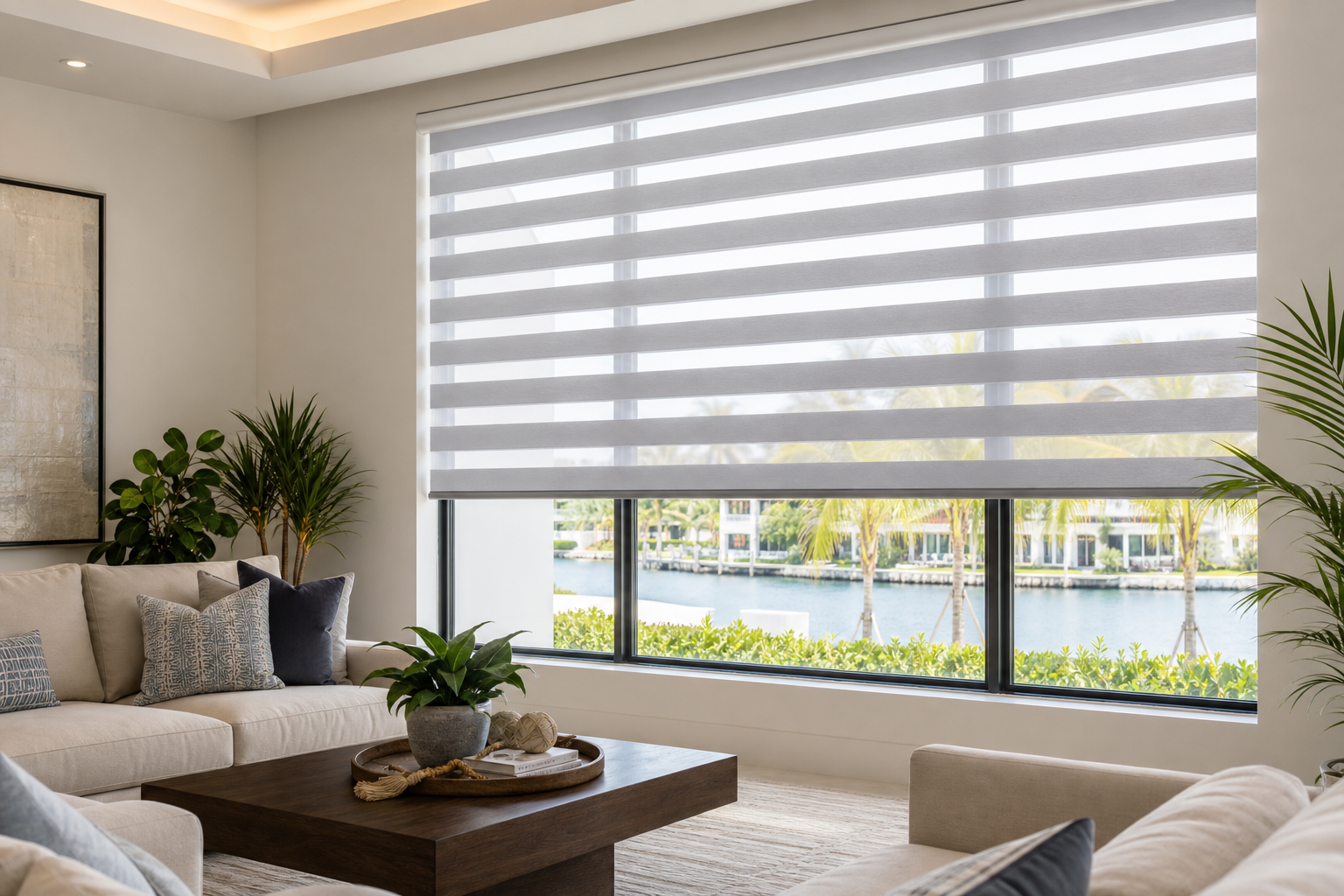
Choosing window treatments for a South Florida home often means balancing several needs at once: bright sunlight, afternoon glare, indoor privacy, energy efficiency, and a clean appearance. A zebra shades privacy and light control guide can help you understand how these versatile shades work and whether they are a good fit for your rooms.
Zebra shades use alternating bands of fabric that can be aligned to filter incoming light or overlapped to create a more private, shaded setting. They offer more flexibility than a simple open-or-closed window covering, making them useful for living rooms, bedrooms, home offices, and large windows throughout Miami-Dade County.
How Zebra Shades Control Privacy and Light
The defining feature of zebra shades is their layered banded design. Sheer and more opaque sections move past one another as the shade is adjusted. This lets you change the relationship between the window, the room, and the outside view throughout the day.
Light-filtering position
When the fabric bands are arranged to overlap the sheer sections, zebra shades can reduce direct sunlight while still allowing a softer amount of daylight into the room. This position can be helpful when you want natural light without leaving the window completely uncovered.
In South Florida, that flexibility is especially useful during bright mornings and intense afternoon sun. Adjusting the shade can help reduce glare on televisions, computer screens, and other surfaces without requiring the room to remain dark all day.
More private position
When the more opaque bands align, the window covering provides a greater visual barrier than an open or mostly sheer setting. This can make living areas and street-facing rooms feel more comfortable, particularly in neighborhoods where homes are close together.
Privacy is not identical in every lighting condition. During the evening, interior lights can make it easier to see into a room from outside, depending on the fabric, window placement, and viewing angle. If nighttime privacy is a top priority, ask about the available opacity and consider pairing zebra shades with another layer or choosing a different shade style for specific rooms.
Are Zebra Shades Good for Privacy?
Zebra shades can be a strong privacy solution, but the best choice depends on how the room is used and when privacy matters most. They offer adjustable coverage rather than a single fixed level of privacy, so you can respond to changing conditions throughout the day.
- Living rooms: Adjust the bands to soften outside views while preserving some daylight.
- Bedrooms: Use a more private setting when resting or sleeping, and consider a room-darkening option if early morning light is disruptive.
- Bathrooms: Select a suitable privacy level and discuss moisture, ventilation, and window placement with a window-treatment professional.
- Home offices: Reduce glare on screens while maintaining a comfortable amount of daylight.
- Street-facing windows: Use the shades to limit direct views into the home, especially during high-traffic parts of the day.
For windows that require complete nighttime coverage, zebra shades may not be the only solution to consider. Blackout shades, layered treatments, or another opaque window covering may be more appropriate depending on the room and your expectations.
Zebra Shades for South Florida Sun and Heat
Miami-area homes experience strong sunlight, heat, and UV exposure for much of the year. Window treatments can help you manage the way sunlight enters a room, although no shade should be treated as a replacement for other home energy measures.
By adjusting zebra shades before direct sun reaches the glass, you can limit glare and make the room feel more comfortable. The shades may also help protect furnishings, flooring, artwork, and interior finishes from prolonged exposure to sunlight. The level of protection will depend on the selected fabric, window orientation, glass, and how consistently the shades are used.
Consider the direction of each window
Window orientation affects how much light and heat a room receives. East-facing windows may receive strong morning light, while west-facing windows often receive more challenging afternoon sun. South-facing exposures can also remain bright for long periods.
Rather than selecting the same shade for every room, consider how each window performs during the day. A professional consultation can help match the fabric and operating style to the room's light conditions.
Plan around large windows and open layouts
Large windows and sliding glass doors are common features in South Florida homes, especially in spaces designed for indoor-outdoor living. Wide openings can create attractive views but may also introduce significant glare and heat.
For larger openings, think about how the shades will look when raised, how the individual sections will operate, and whether the treatment should be used independently across different areas. Floridian Blinds also offers guidance for large windows in Miami and Kendall homeowners can use when comparing zebra shade options.
Read the guide to zebra shades for large windows in Miami for additional planning considerations.
Privacy and Light Control: What to Consider Before Buying
The appearance of zebra shades is important, but performance should come first. Before choosing a fabric or color, evaluate the room, the window, and your daily routine.
1. Identify your main privacy concern
Do you want to block views from neighbors, pedestrians, nearby buildings, or a pool area? Privacy needs can vary between a front-facing room and a backyard bedroom. Consider both daytime and nighttime use rather than judging the shade only in a showroom or online photograph.
2. Decide how much natural light you want
Some homeowners prefer a bright, softly lit room, while others want stronger light control for sleeping, media viewing, or working from home. Zebra shades can provide adjustability, but fabric selection still influences the room's overall brightness and feel.
3. Check glare and screen placement
If a window faces a television, desk, or monitor, direct sunlight may be more problematic than general brightness. Consider when glare is strongest and whether you want to adjust the shades manually or use motorization for easier control.
4. Match the treatment to the room's design
Zebra shades have a structured, contemporary appearance that works well with modern, transitional, and many coastal interiors. Fabric color affects how prominent the window treatment looks and how the room feels when the shades are closed. Neutral tones can blend into the architecture, while a more noticeable color can help define the window wall.
5. Review operating needs
Windows that are difficult to reach, especially tall windows or those behind furniture, may be better suited to motorized shades. Motorization can make it easier to adjust several shades, create a consistent look across a room, and manage sunlight without walking from window to window.
Zebra Shades Compared With Other Shade Styles
There is no single best window treatment for every South Florida room. Comparing the primary goal of each shade type can make the decision easier.
| Shade style | Often considered for | Key question to ask |
|---|---|---|
| Zebra shades | Adjustable privacy, flexible daylight, and a layered modern look | Do I want to change light and privacy levels throughout the day? |
| Blackout shades | Bedrooms, media rooms, and spaces needing stronger light reduction | Do I need a darker room for sleeping or viewing? |
| Roller shades | Simple lines, straightforward coverage, and broad design flexibility | Do I prefer a clean shade with a more consistent coverage level? |
| Solar shades | Glare control and maintaining an outside view | Is reducing glare while preserving the view more important than nighttime privacy? |
| Motorized shades | Hard-to-reach windows, large rooms, and convenient scheduled adjustments | Would powered operation make daily use easier? |
These categories can also be used together. For example, zebra shades may work well in a living room, while a bedroom may call for blackout coverage. Solar shades can be useful where preserving an outdoor view is a priority, but nighttime privacy should be evaluated carefully.
When Motorized Zebra Shades Make Sense
Motorized operation is worth considering when convenience, accessibility, or coordinated light control is important. It can be particularly practical for large windows, high windows, multiple windows in an open floor plan, or rooms with strong sun exposure at predictable times.
Before choosing a motorized setup, think about which shades should operate together and which should remain independent. A consultation should also cover control preferences and how the shades fit into your daily routines. For example, you may want to lower shades in a west-facing room before afternoon glare becomes uncomfortable, then open them later when the sun moves.
Automation is not necessary for every window. Manually operated zebra shades may be perfectly suitable for small, accessible windows that need occasional adjustment. The right choice depends on the room, window size, furniture placement, and your expectations for convenience.
Common Mistakes to Avoid
- Choosing based only on color: A shade can look attractive but still provide the wrong amount of privacy or light control.
- Ignoring nighttime conditions: Test or discuss how the fabric performs when interior lights are on.
- Using one solution throughout the home: Bedrooms, offices, living rooms, and street-facing windows may have different needs.
- Overlooking window orientation: Morning and afternoon sun can affect rooms very differently.
- Forgetting the outside view: If the view is important, ask how the shade position affects visibility from inside.
- Waiting until after installation to consider operation: Hard-to-reach windows may benefit from motorization from the beginning.
Frequently Asked Questions About Zebra Shades Privacy and Light Control
Do zebra shades provide complete privacy?
They can provide substantial adjustable privacy, but the result depends on the fabric, band position, window location, and indoor and outdoor lighting. Nighttime privacy should be discussed separately because illuminated interiors may be more visible from outside.
Can you see outside through zebra shades?
In a more open or light-filtering position, zebra shades may preserve some view and daylight. When the opaque bands overlap, the view is reduced. The exact experience depends on the selected material and how the shades are adjusted.
Are zebra shades suitable for bedrooms?
They can be, especially when you want adjustable daylight and privacy. If the bedroom needs stronger darkness for sleeping, ask whether a blackout shade or layered option would better match your goals.
Do zebra shades help with glare in Miami homes?
Adjusting zebra shades can reduce direct sunlight and glare, including glare on screens. Their effectiveness depends on the fabric, window direction, glass, and the time of day when sunlight enters the room.
Should zebra shades be manual or motorized?
Manual shades may be a good fit for accessible windows. Motorized zebra shades can be more convenient for large, high, or hard-to-reach windows and for rooms where you want to adjust several shades together.
Find the Right Zebra Shades for Your Home
The best zebra shades balance privacy, daylight, glare control, room design, and ease of operation. South Florida homeowners should also consider strong sun, heat, UV exposure, large windows, and the way each room connects to outdoor living areas.
Floridian Blinds can help you compare shade options for your home and select treatments based on how each space is used. Contact us for a free consultation and measurement.