1 Percent vs. 3 Percent vs. 5 Percent Solar Shades: Which Is Right for Your Home?
Compare 1%, 3%, and 5% solar shades by privacy, glare control, outdoor views, and heat management to choose the right option for your South Florida home.
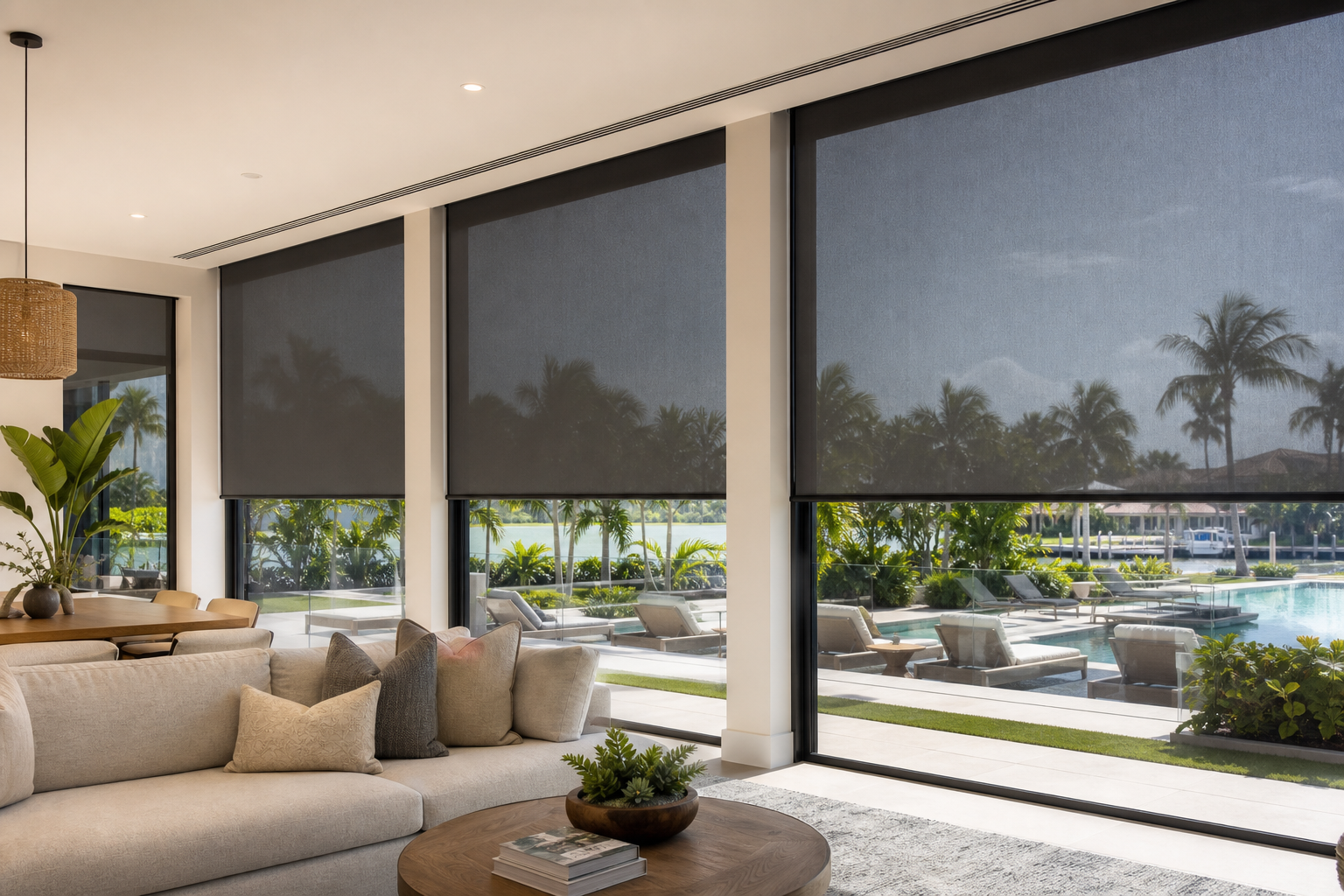
When you are comparing solar shades, the difference between 1 percent, 3 percent, and 5 percent can seem small. In practice, the openness factor has a noticeable effect on how much sunlight, glare, privacy, and outdoor visibility your windows provide.
Solar shades are made with a woven screen-like fabric. The openness percentage refers generally to how tightly the fabric is woven. A lower percentage creates a tighter weave that filters more light and provides more daytime privacy. A higher percentage allows more daylight and a clearer view through the shade.
For homeowners in Miami-Dade County and throughout South Florida, the right choice also depends on window direction, room use, furniture protection, privacy needs, and how much of the outdoor view you want to preserve. This guide explains the practical differences between 1 percent, 3 percent, and 5 percent solar shades so you can make a more informed decision.
What Does the Openness Percentage Mean?
The openness factor describes the approximate amount of open space in the solar shade fabric. It is not a measurement of how much of the window is covered. All three options can cover the window in a similar way; the difference is the weave of the material.
- 1 percent solar shades: A tighter weave that offers stronger glare filtering, more daytime privacy, and less visibility through the fabric.
- 3 percent solar shades: A middle-ground option that balances outdoor visibility, natural light, privacy, and glare control.
- 5 percent solar shades: A more open weave that preserves more of the view and daylight but provides less privacy and light filtering.
Openness is only one part of the decision. Fabric color, window orientation, the surrounding landscape, interior lighting, and the distance between your windows and neighboring homes can all change how a shade looks and performs.
1 Percent vs. 3 Percent vs. 5 Percent Solar Shades at a Glance
| Solar shade openness | Light and glare control | Daytime privacy | Outdoor visibility | Common applications |
|---|---|---|---|---|
| 1 percent | Strong | Higher | More limited | Bright bedrooms, media rooms, street-facing windows, and rooms with intense afternoon sun |
| 3 percent | Balanced | Moderate | Moderate | Living rooms, dining areas, home offices, and general-purpose windows |
| 5 percent | Moderate | Lower | More open | Views, patios, large windows, and spaces where daylight and scenery are priorities |
These are general comparisons rather than guarantees of a specific result. A professional consultation can help account for the actual fabric, color, window exposure, and surrounding conditions in your home.
1 Percent Solar Shades: Maximum Filtering and Privacy
One percent solar shades use a tighter weave. They are often considered when a room receives strong direct sunlight or when glare is a major concern. They can help make screens and televisions easier to see during bright parts of the day while reducing the visual intensity of sunlight.
When 1 percent solar shades may be a good fit
- Windows facing strong morning or afternoon sun
- Home offices where glare affects computer screens
- Living rooms with televisions or reflective surfaces
- Street-facing rooms where daytime privacy matters
- Bedrooms that need more light filtering than a more open solar shade provides
In South Florida, 1 percent shades can be useful on exposed windows in Miami, Kendall, Doral, Coral Gables, and other communities where bright sun is a daily consideration. However, they will not create the room-darkening effect of a blackout shade. Light can still enter around the edges of the window, and the fabric itself is designed to filter light rather than eliminate it.
Because the weave is tighter, the outdoor view may appear less clear than it would through a 3 percent or 5 percent shade. If preserving a broad view of a pool, garden, bay, or patio is your top priority, another openness level may be more suitable.
3 Percent Solar Shades: A Versatile Middle Ground
Three percent solar shades are a popular choice for homeowners who want a balance between light control and visibility. They filter substantial sunlight while allowing a reasonably open view through the window, depending on the fabric and lighting conditions.
Why homeowners often choose 3 percent shades
- They provide a balanced appearance for many living areas.
- They can reduce glare without making the fabric feel overly closed.
- They maintain more of the outdoor view than a 1 percent shade.
- They offer more daytime privacy than a 5 percent shade.
- They work well when different rooms have similar but not identical needs.
A 3 percent solar shade can be a practical starting point for open-concept living rooms, dining rooms, home offices, and large windows. It is also worth considering when you want a consistent look across several rooms but do not want the most restrictive weave throughout the home.
The best result still depends on the specific fabric color. Darker solar shade fabrics often make the outside view appear clearer, while lighter colors can reflect more light and create a brighter interior appearance. Reviewing samples in the actual room is more useful than choosing based on a percentage alone.
5 Percent Solar Shades: More View and Natural Light
Five percent solar shades use a more open weave. They allow more daylight and generally preserve more of the outdoor view. This can be appealing for windows overlooking landscaped yards, water, balconies, or outdoor entertaining areas.
When 5 percent solar shades may be a good fit
- Rooms where the view is an important design feature
- Windows that do not receive harsh direct sunlight for most of the day
- Large glass doors and expansive windows
- Open living areas that benefit from natural light
- Patio-facing rooms where indoor-outdoor connection matters
The tradeoff is reduced privacy and glare control compared with tighter weaves. During bright daytime conditions, the exterior may be difficult to see into, especially when the outdoor side is brighter than the interior. At night, however, privacy changes. If the lights are on inside and it is darker outdoors, people outside may be able to see in through an open-weave solar shade.
For bedrooms, bathrooms, and street-facing windows, you may want to pair 5 percent solar shades with another window treatment or choose a tighter openness factor. Layering can provide daytime sun control while giving you a separate option for nighttime privacy.
How Privacy Changes from Day to Night
Solar shades are often selected for daytime privacy, but they are not privacy shades in every lighting condition. Their screen-like construction lets you see out during the day while reducing visibility into the room from the brighter exterior.
At night, the privacy effect can reverse when interior lights are brighter than the outside. This is true for 1 percent, 3 percent, and 5 percent fabrics, although a tighter weave may limit visibility more than a more open weave. It does not necessarily provide complete nighttime privacy.
If a room requires dependable privacy after dark, consider combining solar shades with blackout shades, draperies, or another room-darkening treatment. A layered design can also add softness and visual depth while maintaining the clean look of a solar shade during the day.
Which Openness Factor Is Best for Different Rooms?
Living rooms and family rooms
A 3 percent solar shade is often a balanced option for living areas, especially when you want both glare reduction and a usable view. A 5 percent shade may be appropriate when the room faces a garden, water, or attractive outdoor space and direct glare is manageable. For a television-facing window or strong western exposure, 1 percent may offer better glare control.
Bedrooms
Solar shades can filter daytime sunlight, but they are not automatically blackout treatments. For bedrooms, think about both morning light and nighttime privacy. A 1 percent shade may provide stronger filtering, while a blackout shade or layered treatment may be more appropriate if darkness and privacy are essential.
Home offices
Computer screens are especially sensitive to glare. A 1 percent or 3 percent solar shade can help reduce distracting brightness while preserving a professional, uncluttered appearance. The correct choice depends on whether the desk faces the window and how much direct sunlight enters during working hours.
Dining rooms and kitchens
These rooms often benefit from natural light and a comfortable view. A 3 percent or 5 percent fabric may suit a moderately shaded exposure. Windows near a sink, dining table, or food preparation area may also benefit from easy-to-operate shades and a fabric selected with everyday maintenance in mind.
Large windows and sliding glass doors
For large expanses of glass, solar shades can help maintain a clean, coordinated appearance while managing sunlight. A 5 percent shade can preserve more of the view, while 3 percent or 1 percent may be more appropriate for intense glare or privacy concerns. Professional measurement is particularly important for wide windows and doors because alignment, mounting space, and operation all affect the finished result.
South Florida Factors to Consider Before Choosing
Miami-Dade and surrounding South Florida communities experience strong sunlight, high heat, and bright conditions throughout much of the year. Those factors make window orientation especially important.
- East-facing windows: Can receive strong morning sun, which may affect bedrooms and breakfast areas.
- West-facing windows: Often receive intense afternoon sun and may need tighter solar shade fabrics for glare and comfort.
- South-facing windows: Can receive substantial daylight and may benefit from a carefully selected openness factor and fabric color.
- Coastal or open exposures: May need more attention to glare, privacy, and the visibility of neighboring buildings or outdoor spaces.
- Indoor-outdoor living areas: May benefit from a more open weave if preserving the view is more important than maximum filtering.
Solar shades can help manage glare and may support a more comfortable interior by filtering some of the sun reaching the glass. Their effect on cooling and energy use varies with the window, fabric, installation, room conditions, and other factors. For more context, see this guide to roller shade fabrics for Miami’s climate.
Does a Darker Fabric Always Work Better?
Not necessarily. Fabric color and openness work together. Darker fabrics often provide a clearer outward view because they reduce reflected light at the window, while lighter fabrics can reflect more sunlight and create a brighter appearance. A darker shade may also make glare feel less visually distracting, but the actual result depends on the room and window exposure.
When comparing samples, look at them from inside the room during different lighting conditions. View them against the glass, with the interior lights on and off, and from the exterior when possible. This can reveal differences that are difficult to judge from a small catalog image.
Should You Choose One Openness Factor for the Whole Home?
Many homeowners use different solar shade openness levels in different rooms. A home office facing west may need a tighter weave than a living room overlooking a shaded patio. A bedroom may need solar filtering during the day and a separate blackout layer at night.
Using one fabric throughout the home can create a consistent design, but it is not always the most functional approach. Custom window treatments make it possible to coordinate colors and hardware while selecting fabrics based on each room’s light, privacy, and view requirements.
Motorization can also be useful for tall windows, hard-to-reach openings, and rooms with multiple shades. Automated schedules or remote operation can make it easier to adjust shades as sunlight changes during the day. Learn more about motorized roller shades for South Florida homes.
Questions to Ask Before Ordering Solar Shades
- Which windows receive the strongest direct sunlight?
- Is glare affecting a television, computer, artwork, or flooring?
- How important is the outdoor view from each room?
- Do you need privacy only during the day, or after dark as well?
- Would a layered treatment provide better flexibility?
- Are any windows unusually tall, wide, or difficult to reach?
- Would motorization improve convenience or accessibility?
Professional measurement helps account for mounting depth, window alignment, shade size, control placement, and the way neighboring shades will look together. It also gives you an opportunity to compare fabric samples in the actual lighting of your home.
Frequently Asked Questions
Are 1 percent solar shades better than 5 percent shades?
Neither is automatically better. One percent shades generally provide more glare filtering and daytime privacy, while 5 percent shades provide more outdoor visibility and natural light. The right choice depends on the room, window exposure, and your priorities.
Do 3 percent solar shades provide privacy at night?
They can reduce daytime visibility from outside, but solar shades generally do not guarantee nighttime privacy when interior lights are on. Consider blackout shades, draperies, or another layered treatment if evening privacy is important.
Do solar shades block all sunlight?
No. Solar shades filter sunlight rather than blocking it completely. A tighter 1 percent weave can reduce more glare than a 5 percent weave, but blackout shades are typically more appropriate when you need a darker room.
Which solar shade openness factor is best for a west-facing window?
A 1 percent or 3 percent shade may be worth considering for strong afternoon glare, but the best selection depends on the fabric color, window size, and room use. Samples should be reviewed in the space before ordering.
Can solar shades be motorized?
Many custom shade designs can be configured for motorized operation, depending on the product and window. Motorization can be especially convenient for large, tall, or hard-to-reach windows.
Choose Solar Shades Based on the Room, Not Just the Number
The simplest comparison is that 1 percent solar shades prioritize filtering and daytime privacy, 3 percent shades balance several needs, and 5 percent shades prioritize view and daylight. But the percentage is only a starting point.
For a South Florida home, the best solution may combine different openness factors, fabric colors, room-darkening layers, and control options. Floridian Blinds can help you compare custom solar shade fabrics, evaluate your window exposure, and plan professional measurement and installation.
Contact Floridian Blinds for a free consultation and measurement to discuss the right solar shades for your home.