Are Smart Shades Worth It? A South Florida Homeowner’s Guide
Are smart shades worth it for your home? Learn how automated window shades can improve light control, privacy, comfort, and convenience in South Florida.
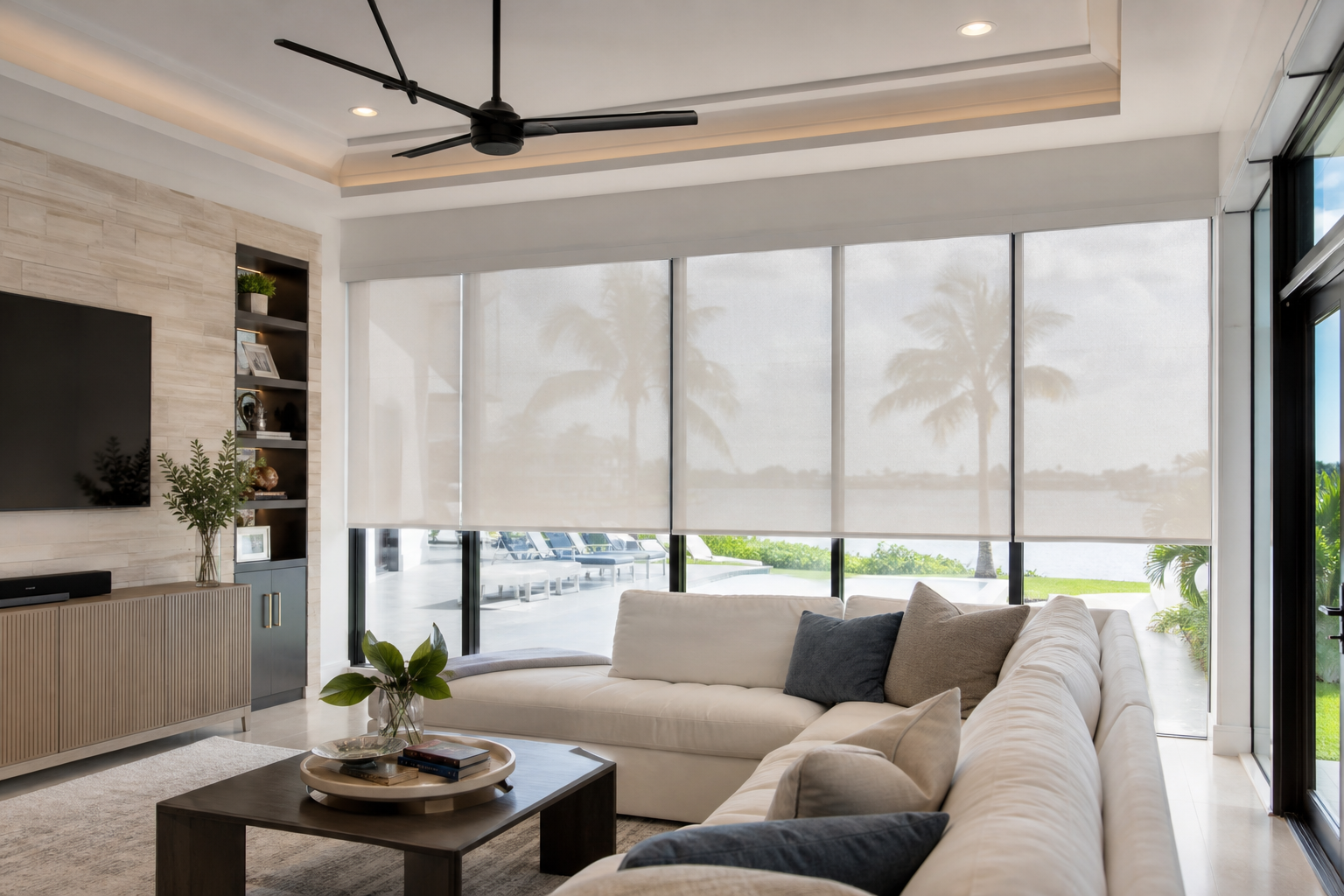
Are smart shades worth it? For many South Florida homeowners, the answer depends on how much you value convenience, coordinated light control, privacy, and a cleaner way to manage hard-to-reach windows. Smart shades can be controlled with a remote, app, voice assistant, or schedule, but they are not automatically the right choice for every room or budget.
In Miami-Dade County, window treatments often need to do more than complement the room. Intense sunlight, heat, glare, privacy concerns, large windows, and indoor-outdoor living all affect how a home feels throughout the day. The right motorized shade system can help you manage those conditions while supporting a modern interior design.
This guide explains the benefits, limitations, costs to consider, and selection factors that can help you decide whether smart shades make sense for your home.
What Are Smart Shades?
Smart shades are motorized window shades that can be operated without manually raising or lowering each shade. Depending on the system, control may be available through a handheld remote, smartphone app, voice commands, wall controls, or automatic schedules.
Smart shades can be made with several shade styles, including roller shades, blackout shades, solar shades, and zebra shades. The motorization adds convenience, while the shade material determines how much light, heat, glare, and privacy control the window provides.
That distinction is important. A motorized shade is not necessarily a fully connected smart-home product. If integration with schedules, an app, or voice control matters to you, ask which control options are available before choosing a system.
Are Smart Shades Worth It? The Main Benefits
1. Convenient control throughout the home
The clearest benefit is convenience. Instead of walking from window to window, you can adjust multiple shades together or control one shade individually. This is especially helpful in rooms with numerous windows, tall glass doors, high windows, or furniture that makes manual operation difficult.
For example, a homeowner could lower bedroom shades at night, open living room shades in the morning, and adjust west-facing windows later in the day when glare becomes more noticeable. The goal is not to automate every movement, but to make daily routines simpler.
2. Better control over sunlight and glare
South Florida homes receive strong sunlight for much of the year. Unmanaged sunlight can create glare on televisions, computer screens, and glass surfaces. It can also make a room feel warmer and less comfortable.
Motorized shades allow you to adjust window coverings as sunlight changes. Solar shades can help reduce glare while maintaining an outward view, while roller shades offer a range of openness and light-control choices. In rooms where darkness is important, blackout shades can provide stronger light control.
3. Improved privacy with less daily effort
Privacy needs can change from morning to evening. A home that feels private during the day may need more coverage after sunset when interior lighting makes it easier to see inside from outdoors.
With smart shades, you can create a routine that closes selected shades in the evening or adjust them quickly when needed. This can be particularly useful for homes near busy streets, neighboring properties, shared buildings, or high-traffic areas in Miami and surrounding communities.
4. A cleaner look for modern interiors
Smart shades can support a streamlined appearance because there are no dangling cords to operate the shade. A consistent shade style across several windows can also create a more coordinated look, especially in open-concept living areas.
Design still depends on the fabric, color, opacity, valance, and mounting approach. Motorization is only one part of the overall design. A professional consultation can help match the operating system with the architecture and interior style of the room.
5. Helpful control for large or hard-to-reach windows
Large windows and sliding glass doors are common features in South Florida homes. Some openings are difficult to reach, while others may require multiple shades to be adjusted individually. Motorization makes these openings easier to manage and can reduce the temptation to leave shades in one position all day.
Smart operation can also be useful for second-story windows, high transoms, and rooms with expansive glass where manual controls are inconvenient.
When Smart Shades May Not Be Worth It
Smart shades are not the ideal solution for every window. If you have only a few small windows that are easy to reach and rarely need adjustment, traditional shades may meet your needs with less complexity.
They may also be unnecessary if your main priority is simply choosing an attractive window covering at the lowest initial cost. Motorization adds equipment and planning, so it is worth considering where the convenience will have the greatest effect.
Smart shades may require decisions about battery charging or replacement, wiring, control compatibility, and installation. These factors are manageable, but they should be discussed before ordering. Read more about the differences in battery versus wired motorized shades.
Smart Shades vs. Traditional Shades
| Consideration | Traditional shades | Smart shades |
|---|---|---|
| Operation | Manual adjustment | Remote, app, voice, wall control, or schedule depending on the system |
| Convenience | Simple for easily reached windows | Useful for multiple, tall, or hard-to-reach windows |
| Privacy control | Requires manual changes | Can be adjusted individually or by routine |
| Light management | Depends on when someone adjusts the shade | Can be coordinated with changing sunlight and daily habits |
| Planning | Usually straightforward | Requires decisions about power and controls |
The right choice depends on the room, window size, frequency of use, and your expectations for automation. Some homeowners choose smart shades for the main living areas and bedrooms while using manually operated shades in less frequently used spaces.
Which Rooms Benefit Most From Smart Shades?
Living rooms and great rooms
Large living room windows often receive direct sunlight and may be used throughout the day. Smart zebra shades or roller shades can make it easier to transition between an open view, filtered light, and greater privacy. You can learn more in this guide to smart zebra shades for living rooms.
Bedrooms
Bedrooms may benefit from scheduled privacy and light control, particularly when windows face bright outdoor lighting or receive early morning sun. Smart blackout shades can be considered when a darker room is a priority, while other fabrics may be preferable when you want to wake with natural light.
Home offices
Glare on monitors can make an office less comfortable and harder to use. Solar shades or other light-filtering options can help manage the window without necessarily eliminating the outdoor view. Motorization allows quick adjustments during video calls or changing daylight.
Sliding doors and high windows
Large glass doors and elevated windows are strong candidates for motorization because they can be awkward to operate manually. The shade style and mounting design should be selected around door clearance, traffic patterns, and the need to maintain access to the opening.
What to Consider Before Buying Smart Shades
Choose the shade material first
Start with the room’s functional needs rather than the technology. Consider whether you need privacy during the day, nighttime privacy, glare reduction, a clear view, or stronger darkness.
- Solar shades: Useful to consider when glare and outdoor brightness are concerns and maintaining a view is important.
- Blackout shades: Appropriate for rooms where stronger light blocking is a priority.
- Roller shades: A versatile option with a clean profile and a range of fabric choices.
- Zebra shades: Designed to provide adjustable transitions between more open and more covered positions.
A consultation can help determine whether one shade style should be used throughout the home or whether different rooms need different fabrics.
Decide how you want to control the shades
Think about how you will actually use the shades. Some homeowners prefer a simple remote, while others want app access, voice control, or scheduled operation. A system should be convenient enough that everyone in the household can use it comfortably.
If smart-home integration is important, confirm compatibility before selecting the shade system. Do not assume that every motorized shade works with every platform or control method.
Plan for power and installation
Battery-powered and wired motorized shades each have different planning considerations. Battery operation may simplify installation in some situations, while wired shades may be appropriate when a permanent power connection is preferred or when multiple shades are part of a larger project.
Professional measurement is especially important for custom shades. Window dimensions, mounting depth, door clearance, shade alignment, and access to power can all affect the final result.
Consider the whole room, not just one window
A shade may look attractive on its own but still feel inconsistent if neighboring windows use different colors, profiles, or mounting positions. Review the windows together, especially in open floor plans, connected rooms, and spaces with multiple elevations.
Can Smart Shades Help With South Florida Heat?
Window shades can help manage the amount of sunlight entering a room, which may improve comfort near sunny windows. In South Florida, this is relevant for rooms with strong afternoon exposure, large glass areas, and spaces that become uncomfortable when glare and direct sun are not controlled.
However, smart shades are not a replacement for every other part of a home’s energy strategy. Their value comes from making it easier to use the shade consistently and adjust it as conditions change. Fabric selection, window orientation, installation, and the amount of glass all matter.
For a deeper look at automated light management, see smart shades for energy efficiency in South Florida homes.
How Much Should You Prioritize Smart Features?
Smart features should solve a real problem rather than be added simply because they are available. Ask yourself:
- Are some windows difficult or unsafe to reach?
- Do sunlight and glare change significantly during the day?
- Would scheduled privacy be useful in bedrooms or street-facing rooms?
- Do you want to coordinate window coverings with a smart-home routine?
- Would controlling several shades at once make daily life easier?
- Are you comfortable planning for batteries, wiring, and system controls?
If you answer yes to several of these questions, smart shades may provide meaningful value. If not, a high-quality manually operated custom shade may be the more practical choice.
Frequently Asked Questions About Smart Shades
Are smart shades difficult to use?
They are designed to simplify operation, but the experience depends on the selected control system. A remote may be easiest for some households, while others may prefer an app, voice control, or scheduled routines. A professional installer can explain the available options before you choose.
Do smart shades need to be connected to Wi-Fi?
Not always. Some systems can operate with a remote or local control without relying on a home network. Wi-Fi or another connection may be needed for certain app-based features or smart-home integrations. Confirm the requirements for the specific system being considered.
Are smart shades a good choice for bedrooms?
They can be, especially when you want scheduled privacy or convenient light control. The shade fabric still matters. Blackout material may be appropriate for stronger darkness, while light-filtering fabric may better suit a bedroom where some daylight is preferred.
Can smart shades be installed on large windows?
Many large windows can be designed with motorized shade solutions, but the correct approach depends on the opening size, shade style, mounting conditions, and power plan. Accurate measurement is essential.
Should I choose battery-powered or wired smart shades?
There is no universal answer. Battery-powered shades can be practical when minimizing wiring is important, while wired options may suit new construction, remodeling, or projects where permanent power is preferred. Discuss both options during the consultation.
Are Smart Shades Worth It for Your Home?
Smart shades are often worth considering when convenience, privacy, glare control, and coordinated operation matter more than choosing the simplest manual option. They can be particularly useful for large windows, sliding doors, bedrooms, home offices, and rooms exposed to strong South Florida sunlight.
The best decision starts with the window and the room—not with the technology alone. Consider the fabric, openness, privacy needs, power source, control method, and installation details together. A custom plan can also help you decide where motorization adds the most value and where traditional shades may be sufficient.
Floridian Blinds can help you compare custom shade styles and motorization options for your home in Miami-Dade County and surrounding South Florida communities. Contact us for a free consultation and measurement.