Smart Shades for Energy Efficiency in South Florida Homes
Learn how smart shades can help South Florida homeowners manage sunlight, heat, privacy, and indoor comfort through scheduled and automated shade control.
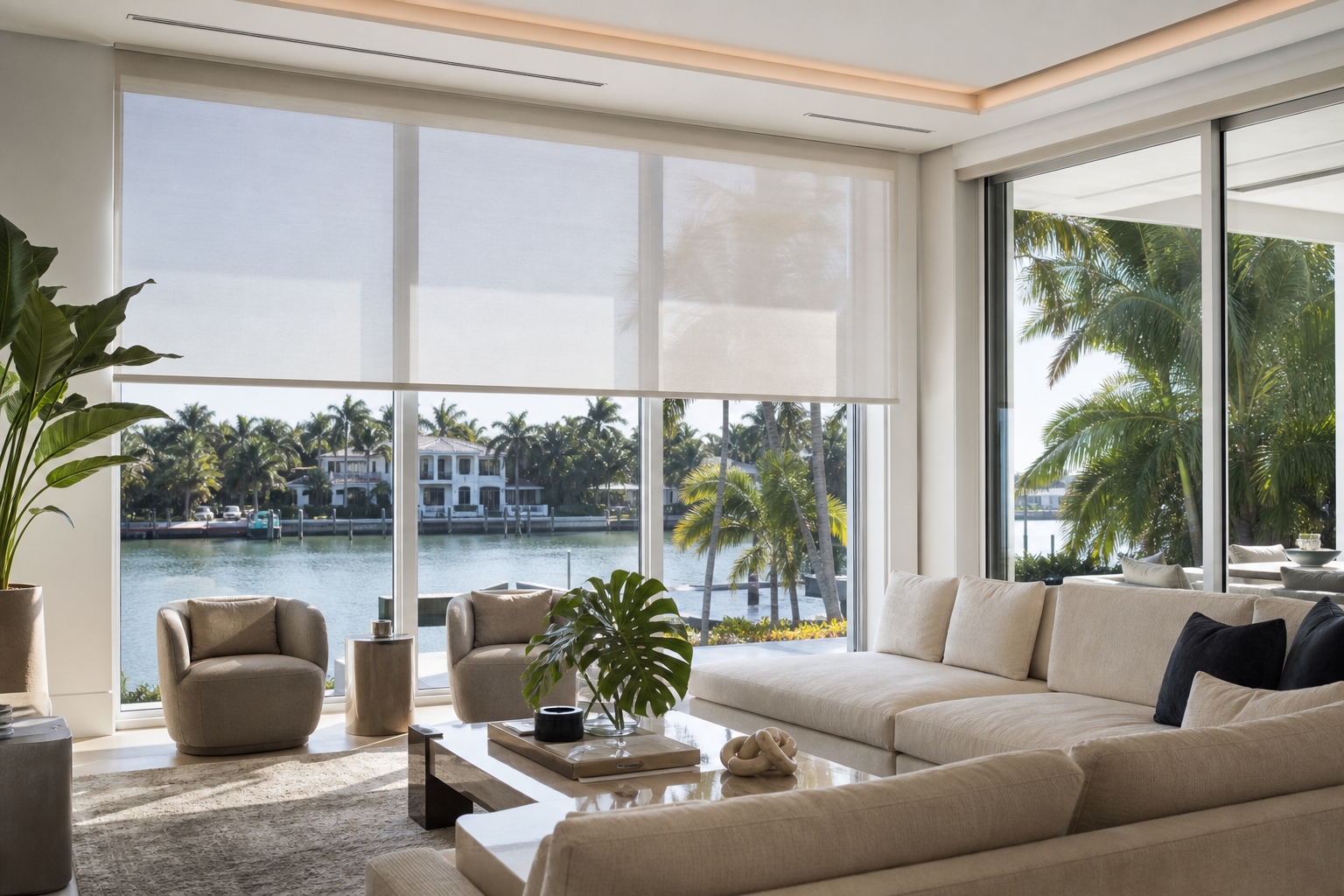
In South Florida, window treatments do more than complete the look of a room. They also influence how much sunlight enters your home, how comfortable your interiors feel, and how often you need to adjust shades throughout the day. Smart shades for energy efficiency give homeowners a more convenient way to manage these conditions through motorized operation, schedules, and home automation.
Smart shades are not a replacement for quality windows, insulation, or sensible thermostat settings. However, when they are properly selected and professionally installed, they can help control direct sunlight and solar heat gain at the times when your rooms need it most. This can be especially useful in Miami-Dade County homes with large windows, bright west-facing rooms, high ceilings, or indoor-outdoor living areas.
This guide explains how automated shades support energy-conscious living, what features to consider, and how to choose the right shade style for your home.
How Smart Shades Can Support Energy Efficiency
Windows allow natural light into your home, but they can also allow unwanted heat to enter. In a warm climate such as South Florida, strong sunlight can make certain rooms feel warmer during the day and place additional demands on your cooling system.
Smart shades help by making it easier to adjust window coverings consistently. Instead of relying on manual adjustments, you can use scheduled operation or compatible controls to position shades based on the time of day, the room, and your comfort preferences.
For example, shades may be programmed to close during periods of intense afternoon sunlight and open later when direct solar exposure is lower. This approach can help limit glare and heat entering through the glass while still allowing natural light into the room when conditions are more comfortable.
The effectiveness of any shade depends on several factors, including the window’s orientation, glass type, shade fabric, fit, and how consistently the shade is used. Smart operation improves convenience and consistency, but the shade itself still needs to be selected for the window and the room.
Why Automation Matters in a South Florida Home
Manual shades can provide light and privacy control, but they are easy to overlook. This is particularly true for windows that are difficult to reach, located behind furniture, or spread throughout a large home. Automation makes it easier to maintain a regular shade routine without walking from room to room.
Scheduled shade adjustments
Schedules can be useful for predictable daily patterns. A homeowner might prefer shades to remain open in the morning, adjust during the brightest part of the day, and open again in the evening. The right schedule depends on the room’s orientation and how your household uses the space.
Schedules can also support privacy. In bedrooms, bathrooms, and street-facing rooms, shades can close at a preferred time without requiring constant manual adjustment.
Convenience for hard-to-reach windows
High windows, oversized openings, and windows above staircases can be challenging to operate manually. Motorized shades allow these locations to be included in your overall window treatment plan. For more considerations related to elevated windows, see our guide to motorized shades for high windows.
More consistent light control
Energy-conscious window treatment strategies work best when shades are adjusted at appropriate times. Automation can help reduce the chance that shades remain fully open during the brightest part of the day simply because no one is home to close them.
Choosing Shade Fabrics for Heat and Sun Control
Motorization is only one part of an energy-conscious window treatment solution. The shade fabric determines how much light enters the room, how much glare is reduced, and how much of the outside view remains visible.
Solar shades
Solar shades are often considered for rooms with strong sunlight, glare, or views that homeowners want to preserve. Their open-weave fabrics can filter incoming light while maintaining some connection to the outdoors. They may be a practical option for living rooms, home offices, and windows facing bright exterior areas.
Solar shades do not provide complete room darkening in every fabric selection. If the goal is to create a darker sleeping environment or a dedicated media room, another shade style may be more appropriate.
Blackout shades
Blackout shades are designed for stronger light control. They can be useful in bedrooms, nurseries, media rooms, and other spaces where reducing daylight is a priority. In addition to supporting a more comfortable viewing or sleeping environment, they can limit direct sunlight entering the room when closed.
Light control depends on the shade design and installation details. Even when a shade fabric blocks light, small gaps around the edges may allow some light into the room. A professional consultation can help identify the most suitable configuration for your windows.
Roller shades
Roller shades offer a clean, streamlined appearance and are available in fabrics with different levels of light filtering and privacy. Their simple profile works well in modern South Florida interiors, and they can be motorized for convenient daily operation.
Zebra shades
Zebra shades use alternating bands of fabric to provide adjustable light and privacy control. They can be positioned to soften sunlight while maintaining some natural illumination or adjusted for greater privacy. Their modern appearance makes them a popular choice for homeowners who want flexible control without a heavy window treatment.
To learn more about how motorized treatments can fit into a high-end residential design, read our South Florida guide to motorized shades for luxury homes.
How to Plan Smart Shades by Room
Different rooms have different needs. Rather than selecting the same shade for every window, consider sunlight, privacy, function, and the direction each window faces.
- Living rooms: Consider solar, roller, or zebra shades for glare control, daytime privacy, and a clean appearance. Motorization can be especially helpful when there are multiple windows to coordinate.
- Bedrooms: Blackout or room-darkening fabrics may be appropriate when reducing early morning light is important. Automated schedules can support consistent privacy at night and in the morning.
- Home offices: Select a fabric that limits screen glare while allowing a comfortable level of daylight. Solar shades may be worth considering where preserving an exterior view is important.
- Media rooms: Stronger light control is usually a priority. Blackout shades can help create a more controlled viewing environment.
- Large glass doors: Choose a shade solution that is sized and installed for the opening. Motorization can make larger or frequently used treatments easier to operate.
- High or difficult-to-reach windows: Motorized operation can improve accessibility and allow these windows to be included in a scheduled shade plan.
Smart Shade Features to Consider
Not every home needs the same level of automation. During a consultation, consider how you want to use the shades and which controls will be most convenient.
Individual or grouped control
Individual control allows you to adjust one window at a time. Grouped control lets you operate several shades together, such as all the shades in a living room or all the west-facing windows in a home.
Remote operation
Remote control can be useful when you are away from home or when a window is difficult to reach. It may also allow you to adjust shades without interrupting an activity in the room.
Timers and schedules
Schedules can help coordinate shade movement with your household routine. Keep in mind that the most effective schedule for a window depends on its exposure, nearby trees or buildings, seasonal sunlight, and how the room is used.
Smart-home compatibility
If you already use a smart-home system, ask which shade controls and integrations are compatible with your setup. Compatibility can vary by motor and control platform, so it is important to confirm the details before ordering.
Quiet, reliable operation
Motorized shades should be selected and installed with the room’s function in mind. Bedrooms, offices, and living spaces may each have different expectations for operation and control. Professional installation also helps ensure that shades are properly aligned and fitted to the window.
Professional Measurement and Installation Matter
Custom measurement is important for both appearance and performance. Windows may vary in width, height, depth, and trim details, even within the same home. Large windows and sliding openings may require additional planning to ensure that the shade operates correctly and fits the design.
A professional measurement can help identify factors such as:
- The best mounting position for the window and trim
- Clearance for handles, locks, and nearby furniture
- Whether an inside or outside mount is more appropriate
- How multiple shades should be aligned and grouped
- Which fabric offers the right balance of light, privacy, and view
- How wiring, charging, or control access should be handled based on the selected system
Installation is also part of the overall result. Correct placement helps the shades operate smoothly and gives the finished treatment a more integrated appearance. It is particularly valuable for oversized windows, high openings, and rooms where several shades need to align visually.
Questions to Ask Before Buying Smart Shades
- What is the main goal? Decide whether you are prioritizing heat and glare control, privacy, room darkening, convenience, design, or a combination of these needs.
- Which windows receive the strongest sunlight? Note rooms with intense morning or afternoon exposure, especially west-facing windows.
- Do you need a view-through fabric? Solar shades may help preserve an exterior view, while blackout fabrics focus more on light reduction and privacy.
- How will the shades be controlled? Consider whether you prefer a remote, wall control, schedules, grouped operation, or integration with an existing smart-home system.
- Are the windows difficult to reach? High windows and large openings may benefit significantly from motorization.
- Will the shades coordinate with the interior? Fabric color, openness, texture, and mounting style all affect the appearance of the room.
Frequently Asked Questions
Can smart shades lower my energy bills?
Smart shades can help manage sunlight and solar heat entering through windows, which may support indoor comfort and reduce the need for constant manual adjustment. Actual energy results depend on the home, windows, shade fabric, weather, thermostat settings, and usage patterns. No shade system should be viewed as a guaranteed source of savings.
Are smart shades useful in Miami and South Florida?
They can be particularly useful in South Florida homes because strong sunlight, heat, glare, and privacy concerns are common considerations. The best solution depends on each window’s orientation, glass, room function, and exposure.
Are solar shades or blackout shades better for energy efficiency?
Neither is automatically better for every room. Solar shades may be a good fit where glare control and an outside view are priorities. Blackout shades may be more suitable where strong light reduction is needed, such as bedrooms or media rooms. Fabric selection and professional fit are important with either option.
Can motorized shades be added to an existing smart-home system?
Possibly, but compatibility varies by motor, control system, and the technology already installed in the home. Confirm compatible controls and integration options during the consultation.
Do all smart shades need wiring?
Shade systems may use different power and control arrangements. The appropriate option depends on the selected product and installation conditions. A window treatment professional can explain the available choices for your home.
Plan a More Comfortable, Efficient Window Treatment System
Smart shades for energy efficiency combine the benefits of custom window treatments with more consistent control over sunlight, glare, privacy, and daily comfort. For South Florida homeowners, the right solution may include a mix of solar, blackout, roller, or zebra shades, along with motorized operation in the rooms and windows that benefit most.
Floridian Blinds can help you evaluate your windows, compare fabric options, and plan a motorized shade system suited to your home and lifestyle. Contact us for a free consultation and measurement.