Best Blackout Fabrics for Sunny Rooms: A South Florida Guide
Learn how to choose the best blackout fabrics for sunny rooms, including fabric construction, color, heat control, privacy, and custom-fit considerations for South Florida homes.
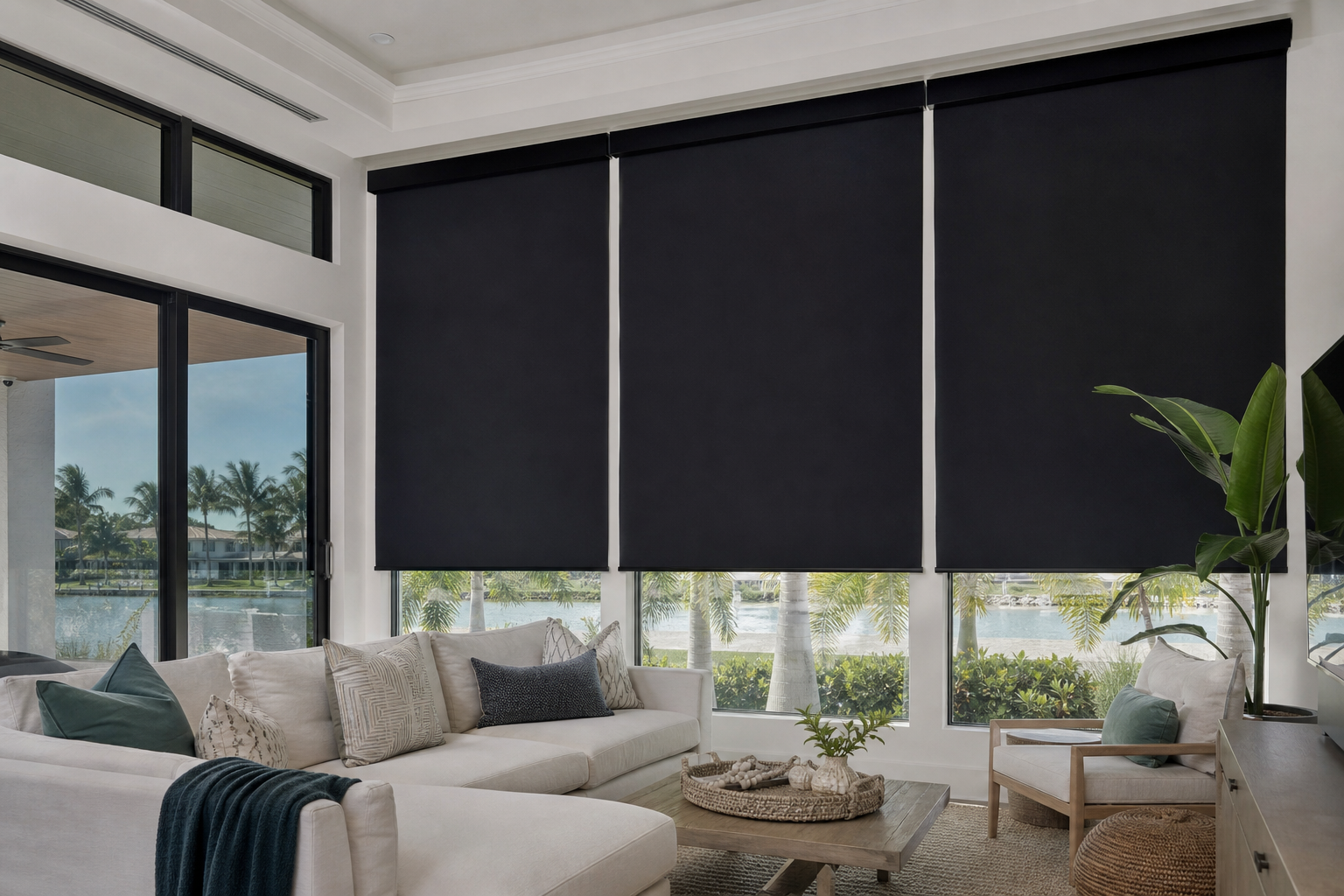
Why the Right Blackout Fabric Matters in a Sunny Room
Choosing the best blackout fabrics for sunny rooms involves more than selecting the darkest color on a sample card. In South Florida, intense sunlight, heat, glare, and UV exposure can affect how comfortable a room feels throughout the day. The right blackout shade fabric can help create a darker, more private space while supporting a finished interior design.
Blackout shades are often considered for bedrooms, nurseries, media rooms, home offices, and living spaces with large windows. They can also be useful in rooms facing the east or west, where direct morning or afternoon sunlight creates significant glare. However, the fabric is only one part of the solution. Shade style, fit, installation, window orientation, and side gaps all influence the final result.
This guide explains the main blackout fabric options, what to look for when comparing samples, and how South Florida homeowners can choose shades that suit their rooms and daily routines.
What Makes a Fabric “Blackout”?
Blackout fabric is designed to block most incoming light when used as part of a properly fitted shade system. Many blackout fabrics use a dense weave, an opaque backing, or multiple layers to limit light transmission. The goal is to reduce the amount of light passing through the fabric itself.
That does not always mean a room will be completely dark. Light can still enter around the sides, above the shade, or below the window covering. This is especially noticeable on wide windows, glass doors, recessed windows, and installations where the shade is mounted inside the window frame.
For that reason, it is helpful to distinguish between the fabric’s light-blocking performance and the overall room-darkening result. A high-quality blackout fabric paired with a carefully measured shade can perform very differently from the same fabric installed with significant gaps.
For a closer comparison of light-control levels, read Blackout Shades vs. Room Darkening Shades.
The Best Blackout Fabrics for Sunny Rooms
1. Opaque polyester blackout fabric
Opaque polyester is one of the most practical choices for blackout roller shades. Its dense construction and light-blocking backing can provide a clean, consistent appearance while limiting light through the shade itself. Polyester is also available in a wide range of colors, textures, and design finishes, making it suitable for both contemporary and traditional interiors.
This option is often a strong fit for bedrooms, guest rooms, home offices, and media spaces where dependable light control is more important than a highly decorative fabric surface. When comparing samples, look at the front and back of the material and hold the sample near a bright window. This can help you see whether light is transmitted through the fabric or mainly appears around the edges.
2. Tightly woven blackout fabrics
Some blackout fabrics rely on a tightly woven construction to reduce transparency and create a more substantial appearance. These fabrics may have a smooth, structured surface or a subtle texture that works well with custom roller shades.
A tightly woven fabric can be a good choice when you want a shade to look like part of the room’s architecture rather than a temporary covering. It may suit living rooms, dining areas, and bedrooms where the window treatment needs to coordinate with upholstery, wall color, or flooring.
Ask to see the material in both natural and artificial light. A fabric that looks neutral in a showroom can appear warmer, cooler, lighter, or darker in a room with strong South Florida daylight.
3. Blackout fabrics with a decorative or linen-look texture
If you want strong light control without a completely flat appearance, consider a blackout fabric with a woven, linen-look, or lightly textured face. These materials can add visual depth to a room while maintaining an understated design.
Textured blackout fabrics are useful in spaces where the shade will remain visible for much of the day. They can soften the appearance of large windows and complement coastal, transitional, modern, and relaxed South Florida interiors.
Texture should not be the only selection criterion. Examine the fabric’s actual opacity and backing, because a decorative face does not automatically indicate blackout performance. A professional consultation can help match the visual finish with the desired level of light control.
4. Blackout fabrics with a light-colored backing
Light-colored backings can be worth considering when the exterior appearance of the shades matters. Some buildings, neighborhoods, or homeowners’ associations may have preferences regarding the visible side of window treatments, although requirements vary by property.
A lighter backing may also create a more uniform exterior appearance across multiple windows. At the same time, the indoor appearance depends on the face fabric, construction, and available color options. If your home has many street-facing windows or large areas of glass, ask how the selected fabric will look from both inside and outside.
Does Blackout Fabric Reduce Heat in South Florida?
Blackout shades are primarily selected for light control and privacy, but the right window treatment can also contribute to a more comfortable room. Blocking direct sunlight helps reduce glare and limits the amount of solar energy entering through the glass. The result depends on the window, the shade’s position, the fabric construction, the color, and how much of the window is covered.
For rooms that become hot in the afternoon, consider the complete window-treatment design rather than fabric alone. A close fit, full window coverage, and a shade that can be lowered before peak sunlight may improve the room’s comfort. Light-colored or reflective-facing materials may also be worth discussing, depending on the look you want indoors and outdoors.
Blackout shades should not be presented as a replacement for every other energy-efficiency measure. Window orientation, glass type, exterior overhangs, air conditioning, and insulation also affect indoor temperatures. The best choice is one that balances heat, light, privacy, and design needs.
How to Choose Blackout Fabric by Room
| Room | Key priorities | Fabric considerations |
|---|---|---|
| Bedroom | Darkness, privacy, and a comfortable appearance | Opaque or tightly woven blackout fabric in a color that supports restful decor |
| Nursery | Daytime darkness and easy operation | Blackout fabric with a simple, durable finish and a shade system suited to the room |
| Media room | Glare reduction and consistent light control | Dense blackout material with careful attention to side gaps and window coverage |
| Home office | Screen visibility, privacy, and daytime flexibility | Blackout or layered options that let you manage direct sun when needed |
| Living room | Design coordination, privacy, and UV exposure | Textured or linen-look blackout fabric that complements furniture and finishes |
In homes with different needs from room to room, there is no requirement to use the same blackout fabric everywhere. You may prefer a more decorative finish in the living room and a simpler, highly opaque option in the bedroom or media room.
Blackout Fabric Color: Does It Matter?
Fabric color affects the appearance of a room, but color alone does not determine whether a shade is blackout. The fabric’s construction and backing are more important indicators of light transmission.
Dark colors can create a dramatic look and may visually recede when the shades are lowered. Light neutrals can keep a room feeling bright and coordinated when the shades are open. In a sunny Miami-Dade home, samples should be viewed at different times of day because direct sunlight can change how the color appears.
Consider the following when comparing colors:
- Whether the shade should blend with the wall or contrast with it.
- How the fabric coordinates with flooring, cabinetry, upholstery, and trim.
- Whether the exterior-facing side should have a consistent appearance.
- How much dust, salt air, or everyday use the shade may experience.
- Whether the color will remain appealing if the shade is frequently lowered.
Installation Details That Affect Blackout Performance
Even the best blackout fabrics for sunny rooms cannot eliminate light leakage caused by an unsuitable installation. Before choosing a shade, discuss how the treatment will be mounted and how much of the window needs to be covered.
Inside mount or outside mount?
An inside-mounted shade fits within the window opening and can provide a streamlined look. However, the surrounding frame naturally leaves some space at the sides and top. An outside-mounted shade covers more of the opening and may be preferable when reducing perimeter light is a priority.
The correct approach depends on the depth and condition of the window frame, nearby handles, trim, doors, and the desired appearance. Custom measurement is especially important for large windows and sliding glass doors.
Large windows and glass doors
Large expanses of glass can create more glare, heat, and privacy concerns than standard windows. They also require careful attention to alignment and operation. A blackout shade should be selected with the full opening in mind, including how adjacent panels will meet and how the treatment will be used during the day.
For more guidance, see Custom Blackout Shades for Large Windows.
Motorized operation
Motorized shades can be convenient for tall windows, hard-to-reach openings, and rooms where you want to adjust several shades together. They can also make it easier to lower shades before direct sunlight reaches a room. Ask about available control options and how the motorized system would fit your window layout and daily routine.
Questions to Ask Before Buying Blackout Shades
- Is the fabric genuinely blackout, or is it primarily room darkening?
- How much light should I expect around the edges after installation?
- Would an inside mount or outside mount better suit this window?
- How will the fabric look in direct South Florida sunlight?
- What fabric finish best matches the room’s furniture and architectural style?
- Would motorized operation be useful for tall, wide, or difficult-to-reach windows?
- How should the shades be cleaned and maintained?
Frequently Asked Questions About Blackout Fabrics
What is the best blackout fabric for a bedroom?
The best choice is usually an opaque or tightly woven fabric that provides the level of darkness and privacy you want while coordinating with the bedroom design. Installation and edge coverage are just as important as the fabric itself.
Are darker blackout fabrics better than lighter fabrics?
Not necessarily. Blackout performance depends mainly on the fabric construction and backing, not simply on the visible color. Compare samples in natural light and ask about the material’s intended light-control level.
Can blackout shades block all sunlight?
Blackout fabric can block light through the shade, but small amounts of light may enter around the sides, top, or bottom. A properly measured shade and the right mounting style can help reduce those gaps.
Are blackout shades suitable for large windows in Miami?
Yes, blackout shades can be suitable for large windows, bedrooms, media rooms, and other spaces in Miami. Large openings require careful measurement, material selection, and planning for operation and alignment.
Should I choose blackout shades or room-darkening shades?
Choose blackout shades when stronger light control is a priority. Room-darkening shades may be preferable when you want to reduce glare and brightness without pursuing the darkest possible room. Your choice should reflect how the space is used and how much natural light you want during the day.
Find the Right Blackout Fabric for Your Sunny Room
The best blackout fabrics for sunny rooms combine effective light control with the right texture, color, mounting style, and fit. In South Florida, it is also important to consider strong sunlight, heat, privacy, large windows, and the way each room is used throughout the day.
Floridian Blinds can help you compare custom blackout shade options for your home or property. Contact us for a free consultation and measurement to discuss your windows, design preferences, and light-control goals.