Blackout Shades vs Room Darkening Shades: Which Is Right for Your Home?
Learn the difference between blackout shades and room darkening shades, including light control, privacy, heat, fit, room use, and South Florida buying considerations.
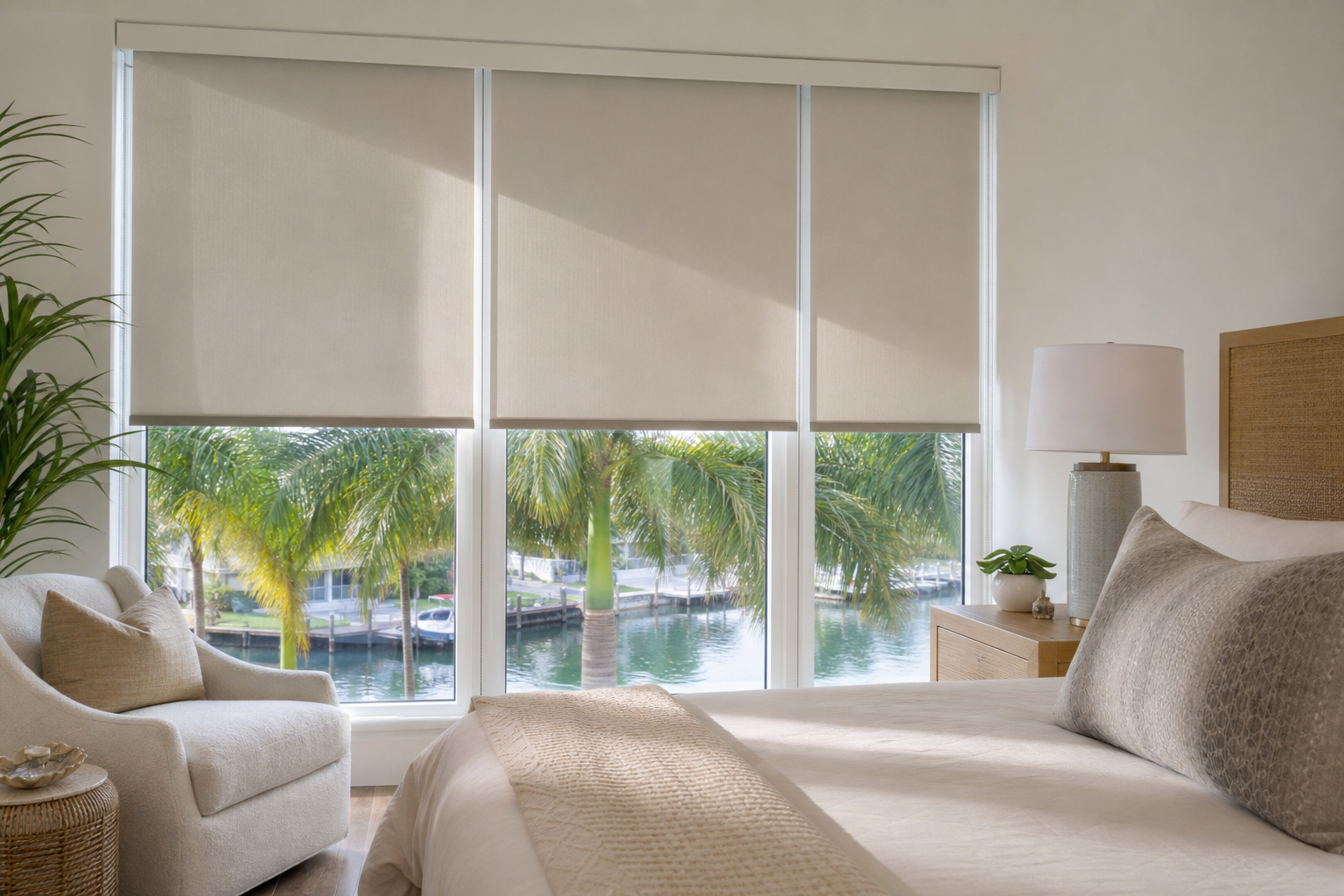
Blackout Shades vs. Room Darkening Shades: The Main Difference
When comparing blackout shades vs. room darkening shades, the most important distinction is how much light each option is designed to control. Blackout shades are intended to block nearly all incoming light when the shade and installation are properly selected. Room darkening shades reduce and soften incoming light, but they typically allow some glow around the fabric or through small gaps.
Neither choice is automatically better for every room. The right window treatment depends on how dark you want the space, whether privacy is a priority, how the room is used, and how much intense South Florida sunlight reaches the windows. A bedroom, media room, nursery, home office, and living room may each call for a different level of light control.
Understanding the difference before choosing custom shades can help you avoid selecting a product that is either too restrictive or not effective enough for your needs.
What Are Blackout Shades?
Blackout shades are designed for maximum light reduction. Their fabric or lining helps prevent sunlight from passing through the shade, making them a strong choice for rooms where darkness is important during the day or at night.
Blackout shades can be useful in:
- Bedrooms where early morning sunlight affects sleep
- Media rooms where glare can interfere with screens
- Guest rooms that need flexible daytime privacy
- Nurseries and children’s rooms
- Home offices with strong direct sun on computer monitors
It is important to understand that the shade material is only part of the result. Light can still enter through side gaps, the space above the shade, or the area below it, depending on the window, mounting position, and design. A close-fitting inside or outside mount, along with careful measurement, can make a noticeable difference in perceived darkness.
What Are Room Darkening Shades?
Room darkening shades are designed to significantly reduce sunlight without creating the same level of darkness as a blackout treatment. They can make a bright room more comfortable while preserving a softer, more natural atmosphere.
Room darkening shades may be a practical fit for:
- Living rooms and family rooms
- Dining areas with strong afternoon sun
- Bedrooms where complete darkness is not necessary
- Home offices that need less glare but some daylight
- Spaces where homeowners want privacy without making the room feel closed in
For many South Florida homes, room darkening shades offer a useful balance. They can reduce harsh brightness and improve visual comfort while allowing some daylight to remain. This can be especially appealing in rooms that are used throughout the day and benefit from a bright, open feel.
Blackout Shades vs. Room Darkening Shades Compared
| Consideration | Blackout shades | Room darkening shades |
|---|---|---|
| Light control | Designed to block nearly all incoming light when properly fitted | Reduces and softens light but may allow some daylight through |
| Room atmosphere | Creates a darker, more enclosed environment | Maintains a softer level of natural light |
| Best for | Bedrooms, media rooms, nurseries, and glare-sensitive spaces | Living areas, dining rooms, offices, and everyday spaces |
| Privacy | Provides strong privacy when closed | Can provide daytime privacy, depending on fabric and window conditions |
| Installation importance | Very important because gaps can allow visible light | Important for consistent light control and appearance |
| Daytime usability | May require opening the shade to bring in natural light | Often lets a room remain bright but more comfortable |
Which Option Is Better for South Florida Homes?
South Florida windows often deal with bright sun, heat, glare, and privacy concerns. Large windows and glass doors can make indoor spaces feel exposed, particularly in neighborhoods with close homes or active streets. The best choice depends on the direction of the window, the room’s function, and how the space is used during the day.
Consider the direction of the windows
Windows facing east may receive strong morning sunlight, while west-facing windows can experience intense afternoon glare. South-facing windows may receive substantial light throughout the day. A room darkening shade may be enough for a window with indirect light, while a bedroom or office with direct sun may benefit from blackout fabric.
Think about privacy at different times
Privacy needs can change from daytime to nighttime. A shade that appears private during the day may look different after interior lights are turned on. Blackout shades provide a more consistent privacy solution when closed, while room darkening shades should be evaluated based on their fabric, weave, and the visibility conditions around the window.
Account for heat and glare
Both blackout and room darkening shades can help make a room feel more comfortable by reducing direct sunlight. However, the result depends on the shade material, window glass, mounting method, and how much of the window is covered. A shade is not a substitute for evaluating the entire window system, especially when large panes of glass receive direct South Florida sun.
For spaces where preserving outdoor views is important, solar shades may also be worth considering. They are designed around glare, privacy, and visibility rather than creating a dark room. Homeowners comparing several options can review Floridian Blinds’ guide to privacy and light control with zebra shades for another perspective on flexible window treatments.
How to Choose Between Blackout and Room Darkening Shades
1. Start with the room’s primary purpose
Ask what you want the room to feel like and how you use it. If you need a dark sleeping environment or want to reduce reflections on a television, blackout shades may be the better starting point. If you want to reduce brightness while keeping a welcoming daytime atmosphere, room darkening shades may be more suitable.
2. Decide how much natural light you want to keep
Some homeowners want the ability to turn a bright room into a dark one. Others prefer to filter the sunlight rather than eliminate it. Consider whether the shade will usually remain closed, partially open, or adjusted throughout the day. This can help determine whether maximum light control or a more flexible level of filtering is the priority.
3. Evaluate the window size and shape
Large windows, sliding doors, and expansive glass walls require careful planning. The shade should operate comfortably, look proportionate, and provide the desired light control across the opening. A professional measurement can help identify potential gaps, clearance issues, and the best mounting approach.
4. Consider the appearance from inside and outside
Window treatments are a major part of a room’s design. Think about color, texture, roll position, hardware visibility, and how multiple shades will align across a wall of windows. A lighter fabric may support an airy design, while a deeper tone can complement a room with stronger contrast. The choice should work with flooring, furniture, wall color, and the amount of daylight the room receives.
5. Plan for convenience
For tall, wide, or frequently used windows, motorized shades can make daily adjustments easier. Automation may be especially convenient in bedrooms, high windows, large living areas, and spaces where several shades need to be adjusted together. Floridian Blinds also offers information about motorized shade comfort and design, which may help when considering automated light control.
Blackout Shades for Bedrooms and Media Rooms
Blackout shades are often chosen when light control is the main goal. In a bedroom, they can help limit early morning brightness and nighttime light from exterior sources. In a media room, they can reduce glare that makes screens harder to view.
For the best result, look beyond the fabric label. Ask how the shade will be mounted, how much space will remain at the sides, and whether the window trim or wall design creates unavoidable openings. Layering a shade with drapery may also be considered when the room needs additional design softness or coverage, but the appropriate solution depends on the window and the homeowner’s preferences.
Room Darkening Shades for Living Areas and Offices
Room darkening shades can be a good choice when the goal is comfort rather than complete darkness. They may reduce harsh brightness in a living room, help limit distractions in a home office, or make a dining space feel more comfortable during the afternoon.
They are also useful when homeowners want privacy and light control without making the interior feel completely dim. This can support the indoor-outdoor lifestyle common in Miami-Dade County, where residents may want to enjoy daylight and views while reducing glare and exposure.
Common Mistakes to Avoid
- Choosing based only on the name: “Blackout” and “room darkening” describe intended light control, but the final result also depends on fit and installation.
- Ignoring side gaps: Light leaks can be noticeable, especially in bedrooms and media rooms.
- Using the same treatment in every room: A home may need blackout shades in bedrooms and room darkening or solar options in shared living spaces.
- Overlooking nighttime privacy: Review how the fabric performs when interior lights are on.
- Forgetting large windows and doors: Wide openings require a coordinated plan for operation, alignment, and appearance.
- Skipping professional measurement: An accurate measurement helps support a cleaner fit and more predictable light control.
Frequently Asked Questions
Are blackout shades completely dark?
Blackout shades are designed to block nearly all incoming light through the shade material. Small amounts of light may still enter around the edges, above the shade, or below it, depending on the window and installation.
Are room darkening shades good for bedrooms?
They can be a good choice if you want to reduce brightness without making the room completely dark. If your main priority is maximum darkness, blackout shades may be more appropriate.
Do blackout shades help with South Florida heat?
Blackout shades can reduce direct sunlight entering through a window, which may improve comfort in some conditions. Performance varies based on the fabric, window glass, orientation, fit, and installation, so they should be selected as part of an overall window treatment plan.
Can room darkening shades provide privacy at night?
They can provide privacy when closed, but nighttime privacy depends on the fabric, window location, lighting, and how much light may pass through or around the shade. Discuss the room’s privacy needs before selecting the material.
Can shades be motorized?
Some shade styles can be motorized, making it easier to adjust hard-to-reach, large, or frequently used windows. A consultation can help determine whether motorization fits the window layout and daily routine.
Find the Right Light Control for Your Home
The choice between blackout shades and room darkening shades comes down to your preferred level of darkness, privacy, glare control, room function, and window design. Blackout shades are generally the stronger choice for maximum light reduction, while room darkening shades offer a softer balance between comfort and natural light.
Floridian Blinds can help South Florida homeowners compare custom window treatment options for bedrooms, living areas, offices, large windows, and indoor-outdoor spaces. Contact us for a free consultation and measurement.