Best Screen Mesh for Florida Patios: A Homestead Homeowner’s Guide
Learn how to choose the best screen mesh for Florida patios, including options for insect control, sunlight, privacy, durability, and outdoor comfort in Homestead.
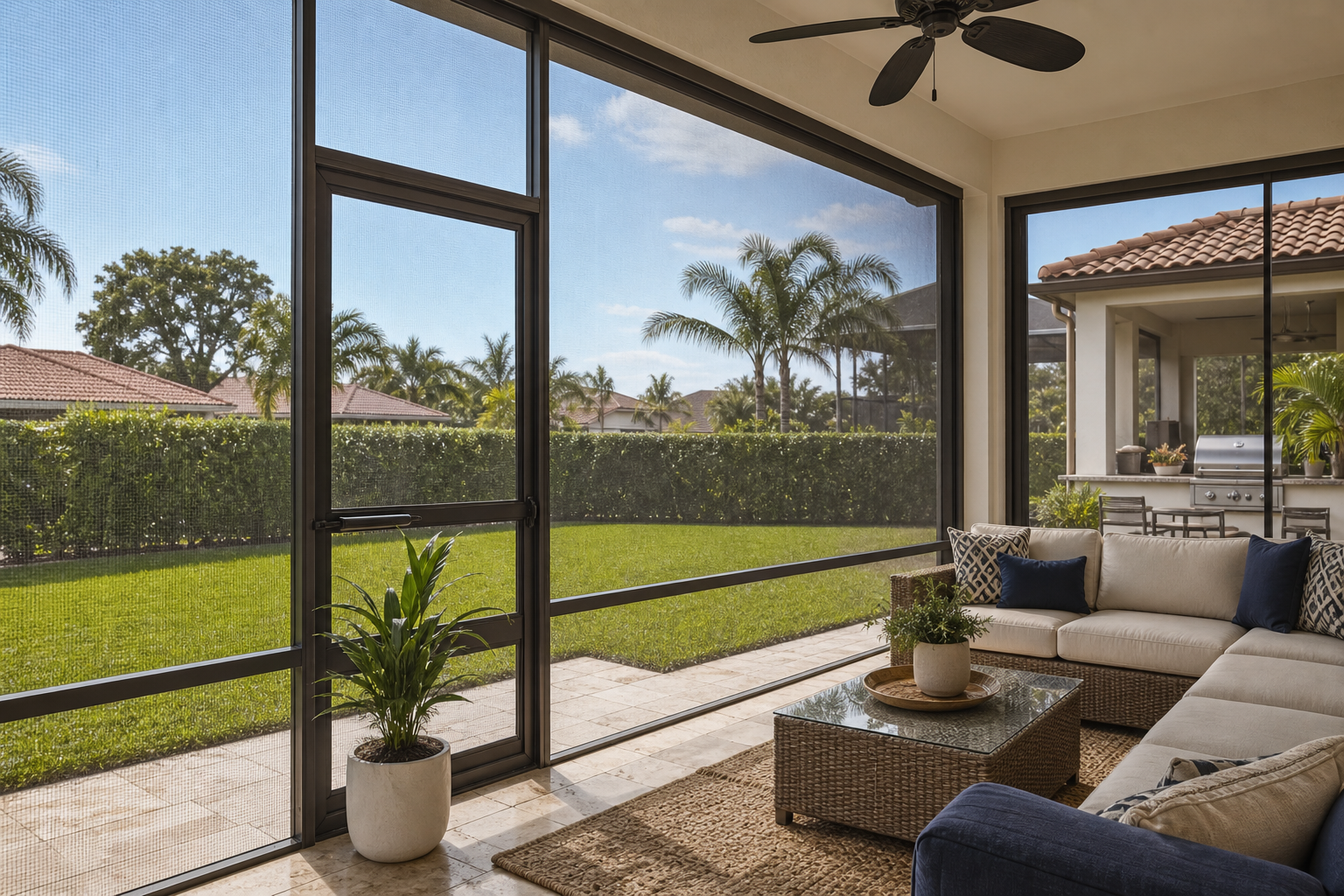
Choosing the best screen mesh for Florida patios involves more than selecting a material that keeps insects outside. In Homestead and throughout South Florida, patio screens also need to help manage intense sunlight, heat, humidity, privacy, and the everyday demands of outdoor living.
The right mesh depends on how you use your patio, how much sun it receives, whether you want a clearer view or more privacy, and how important durability is for your home. A professional screen consultation can help match the mesh, frame, operation, and installation approach to your patio.
This guide explains the most common patio screen mesh considerations so you can make a more informed decision for your Homestead home.
What Makes a Patio Screen Mesh Suitable for Florida?
Florida patios face conditions that can be more demanding than those in many other parts of the country. A screen may be exposed to strong sunlight, high humidity, airborne debris, insects, and frequent use. South Florida homes also often have large openings designed to connect indoor and outdoor living areas, so the screen needs to balance protection with visibility and airflow.
When comparing mesh options, consider these factors:
- Insect control: The mesh should help create a comfortable barrier against mosquitoes and other flying insects.
- Sun and heat management: Some screen materials are designed to reduce glare and help limit direct sunlight entering the patio area.
- Visibility: A more open-looking mesh may preserve views, while a denser mesh can provide additional shade or privacy.
- Durability: Material quality, installation, tension, and exposure all affect how a screen performs over time.
- Appearance: The screen should complement the home, patio enclosure, doors, and surrounding architecture.
- Ease of operation: Large patio openings may benefit from screens that are simple to raise, lower, open, or close.
Common Patio Screen Mesh Options
There is no single mesh that is right for every Florida patio. The best option depends on the balance you want between airflow, visibility, sun control, privacy, and durability.
Fiberglass Screen Mesh
Fiberglass is a familiar choice for insect screens because it is lightweight and flexible. It can provide a clear, practical barrier while allowing air to move through the patio. Fiberglass mesh is often considered when the primary goal is insect protection without substantially changing the look of the opening.
For a Homestead patio, fiberglass may be appropriate when you want a straightforward screen with good visibility and airflow. However, it may not provide the same level of solar control, privacy, or resistance to physical wear as heavier-duty screen materials. Ask a professional which fiberglass option is suitable for the size and location of your opening.
Polyester Screen Mesh
Polyester mesh is another option used for screen applications where flexibility and resistance to everyday wear are important considerations. Depending on the construction and coating, polyester can be selected for applications that need a balance of strength, appearance, and performance.
It is important to evaluate the actual product rather than choosing based only on the material name. Mesh openness, color, coating, and installation method can all affect the final result.
Solar Screen Mesh
Solar screen mesh is designed to help reduce the impact of direct sunlight. It can be useful on patios that become uncomfortably bright or hot during parts of the day. Depending on the openness and color, solar mesh may reduce glare and provide more shade while still allowing some visibility through the screen.
This can be a helpful choice for South Florida outdoor living spaces where the patio is used for dining, relaxing, or entertaining. The tradeoff is that a denser solar mesh may make the view look darker or less open than a standard insect screen. Before choosing it, consider whether preserving a clear view is more important than additional sun control.
Privacy Screen Mesh
Privacy-oriented mesh is designed to make it more difficult to see into the patio from certain angles or under particular lighting conditions. It can be useful for homes near neighbors, streets, walkways, or other properties.
Privacy mesh is not the same as a completely opaque shade. Visibility can change depending on the difference in brightness between the inside and outside of the patio. In many cases, the brighter side is easier to see from the darker side. A sample viewed at the actual installation location can provide a more realistic idea of the finished appearance.
Aluminum or Metal Mesh
Metal mesh can be considered when a homeowner is prioritizing a more rigid or durable screen material. It may provide a different appearance and feel from fabric-like fiberglass or polyester options.
Metal mesh is not automatically the best choice for every patio. It may affect visibility, airflow, appearance, and the overall operation of the screen. The right option depends on the application, the size of the opening, and the type of screen system being installed.
How to Choose the Best Screen Mesh for Your Homestead Patio
Start by identifying the main problem you want the screen to solve. Many homeowners want several benefits, but one or two usually matter most.
1. Decide Whether Insect Protection Is the Main Goal
If your patio is primarily used in the evening, mosquito control may be your first priority. A conventional insect mesh may be a practical starting point, especially when you want strong airflow and a relatively open view.
Think about the areas where insects enter most easily, including large openings, doors, and gaps around an enclosure. Professional measurement and installation are important because even a suitable mesh may not perform as expected if the system is not fitted properly.
2. Consider the Patio’s Sun Exposure
A west-facing patio may receive intense afternoon sun, while another outdoor space may be shaded for much of the day. If glare and heat are the biggest concerns, compare solar screen options rather than focusing only on traditional insect mesh.
Keep in mind that patio screens can support comfort, but they do not replace every other form of sun control. The patio’s roof, orientation, surrounding landscaping, and window treatments inside the home all influence the temperature and brightness of the space.
3. Balance Privacy and Outdoor Views
Homes in Homestead may have open yards, neighboring properties, pools, or outdoor seating areas that homeowners want to enjoy with more privacy. A privacy-oriented mesh can help reduce visibility in some conditions, but it may also make the patio feel more enclosed.
Ask to see mesh samples from both sides and in different lighting conditions. A sample that looks ideal in a showroom may appear different when installed against a bright South Florida sky or a shaded backyard.
4. Think About Airflow
One advantage of a screened patio is the ability to enjoy fresh air without leaving the space completely open. A mesh that is too dense for your preference may reduce the open-air feeling, while a more open mesh may provide less shade or privacy.
Your installer can help explain how the mesh openness affects the balance between airflow, visibility, sun control, and screening.
5. Match the Mesh to the Screen System
Mesh selection should not be separated from the screen design. The size of the opening, the way the screen moves, the frame, the available mounting surfaces, and the frequency of use all matter.
For example, a frequently used patio may benefit from an easy-to-operate system that can be opened when you want an unobstructed connection to the yard and closed when you want more protection. Large openings also require careful measurement so the finished installation operates smoothly and fits the space properly.
Patio Screen Mesh Comparison
| Mesh type | Often considered for | Potential tradeoffs |
|---|---|---|
| Fiberglass | Basic insect protection, airflow, and visibility | May offer less solar control or physical durability than heavier-duty options |
| Polyester | Flexibility and everyday wear considerations | Performance varies by product construction and coating |
| Solar screen | Reducing glare and direct sunlight | May make views appear darker or less open |
| Privacy mesh | Reducing visibility into the patio | Privacy depends on lighting, direction, and mesh openness |
| Metal mesh | A more rigid or durable screen approach | May change the appearance, airflow, and view through the opening |
Why Professional Measurement Matters
Patio openings are not always perfectly uniform. Small differences in width, height, angles, mounting surfaces, and surrounding trim can affect how a screen fits and operates. This is especially important for wide openings or outdoor areas connected to a pool deck, porch, or covered patio.
Professional measurement helps determine the appropriate screen size and installation approach before materials are ordered. It also gives you an opportunity to discuss how the screen will look when open and closed, where it will be mounted, and how it will coordinate with the rest of the home.
For homeowners in Homestead, a local consultation can also make it easier to discuss the patio’s sun exposure, outdoor layout, privacy needs, and typical use throughout the year.
Questions to Ask Before Choosing Patio Screen Mesh
- Is my main priority insect control, shade, privacy, visibility, or a combination?
- How will this mesh look from inside and outside the patio?
- How much airflow and visibility should I expect?
- Is the material suitable for the size and location of my opening?
- How will the screen be operated and secured?
- What maintenance is recommended for the mesh and frame?
- Can I review samples in natural outdoor lighting?
- Will the screen design coordinate with my existing patio and home exterior?
Frequently Asked Questions
What is the best screen mesh for Florida patios?
The best mesh depends on your priorities. Standard insect mesh may be suitable for airflow and visibility, while solar or privacy mesh may be more appropriate when sunlight, glare, or privacy is a bigger concern. A professional evaluation can help narrow down the options.
Does solar screen mesh block all sunlight?
No screen mesh should be assumed to block all sunlight. Solar mesh is intended to help manage direct sunlight and glare, but the amount of light control depends on the mesh, color, openness, patio orientation, roof, and surrounding conditions.
Can patio screens provide privacy at night?
Privacy depends on lighting conditions and the type of mesh. If the patio is brighter than the surrounding area, people outside may still be able to see in. Ask to evaluate samples in lighting conditions similar to how you use the patio.
How do I know whether I need insect mesh or solar mesh?
Choose based on the primary issue. If insects are the main problem and you want maximum openness, insect mesh may be a starting point. If direct sun and glare make the patio uncomfortable, solar mesh may deserve closer consideration.
Is professional installation important for patio screens?
Yes. Accurate measurement and careful installation help ensure the screen fits the opening and operates as intended. Professional installation is particularly important for large openings, custom configurations, and outdoor areas exposed to regular use.
Choose the Right Patio Screen for Your Homestead Home
The best screen mesh for a Florida patio is the one that fits the way you use your outdoor space. In Homestead, that may mean prioritizing insect control, reducing afternoon glare, improving privacy, preserving backyard views, or creating a more comfortable connection between the home and patio.
Floridian Blinds can help you compare custom patio and outdoor screen options based on your opening, design preferences, and outdoor living goals. Contact us for a free consultation and measurement.
For more context, see our related guide: Best Patio Screen Mesh for Florida Weather: A Pinecrest Guide.