Blackout Shades for Home Theaters in Miami: A Key Biscayne Guide
Learn how blackout shades can improve movie viewing, reduce glare, protect interiors, and support comfortable home theaters in Key Biscayne and Miami.
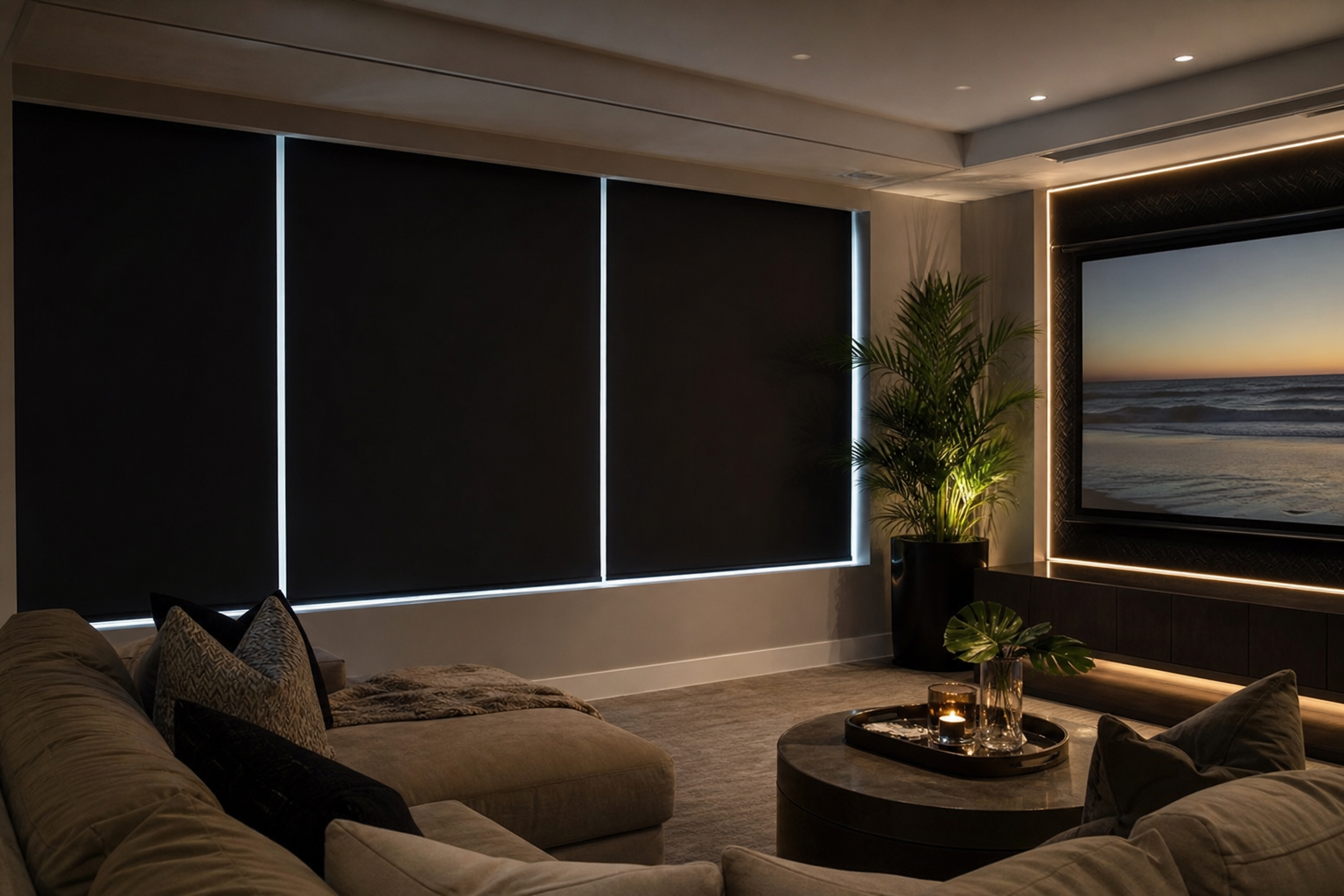
A well-designed home theater depends on more than a large screen and comfortable seating. In Key Biscayne and throughout Miami-Dade, intense sunlight can enter through windows, create glare on the display, and make it harder to enjoy movies during the day. Blackout shades for home theaters in Miami can help create a darker, more comfortable viewing environment while also supporting privacy and protecting furnishings from direct UV exposure.
For South Florida homeowners, the right window treatment must balance light control, appearance, heat, privacy, and convenience. This guide explains what to look for when choosing custom blackout shades for a home theater in Key Biscayne, including fabric selection, window coverage, motorization, installation, and the local conditions that can affect performance.
Why blackout shades are useful in a Miami home theater
Home theaters often have different lighting needs from bedrooms, living rooms, or offices. A small amount of natural light may be welcome in other spaces, but it can be distracting when it reflects across a television or projector screen. Blackout shades are designed to limit the amount of light passing through the shade material, helping create a darker room for daytime viewing.
In a Key Biscayne home, blackout shades may also provide several practical benefits:
- Reduced screen glare: Lowering the amount of sunlight entering the room can make movies, sports, and games easier to see.
- Improved privacy: Closed shades can limit views into the theater room, particularly for homes with street-facing, waterfront, or nearby neighboring windows.
- Protection for interiors: Limiting direct sunlight can help reduce exposure to UV rays for flooring, furniture, artwork, and other finishes.
- Better room comfort: Blocking strong sunlight may help reduce the sensation of heat near bright windows.
- A cleaner theater aesthetic: Custom shades can fit the window opening and coordinate with the room’s walls, seating, flooring, and media equipment.
Blackout shades do not replace thoughtful theater lighting. Dark wall colors, controlled accent lighting, appropriate screen placement, and careful management of reflections are still important. However, window treatments are a key part of controlling the room’s light environment.
Blackout shades versus room-darkening shades
The terms “blackout” and “room darkening” are sometimes used interchangeably, but they can describe different levels of light control. Room-darkening shades reduce incoming light, while blackout shades are selected when the goal is to make the room as dark as practical.
For a home theater, blackout shades are generally the better starting point when the room has windows that receive direct sunlight or when the homeowner uses a projector. A television may remain visible in brighter conditions, but glare can still affect contrast and comfort.
It is important to understand that the shade fabric is only part of the result. Light can also enter around the sides, above, or below the shade. The overall installation design, mounting position, window shape, and coverage area all influence how dark the room becomes.
For a more detailed comparison of the two options, see Blackout Shades vs. Room Darkening Shades.
What to consider when choosing blackout shades for a Key Biscayne home theater
1. The type and location of the windows
Begin by reviewing every window in the theater, not only the largest one. Narrow side windows, transoms, glass doors, and high windows can all contribute to glare. A window facing east may create strong morning light, while a west-facing opening can receive intense late-afternoon sun. South-facing windows may need consistent light control for much of the day.
Homes in Key Biscayne may also include large openings designed to emphasize views and indoor-outdoor living. These openings can look impressive, but they require careful shade planning if the room is used for movie viewing. A professional measurement can help identify the best mounting approach and whether multiple shades are needed.
2. Shade coverage and side light gaps
A shade installed inside the window frame can provide a clean, built-in appearance, but the fit and available space must be evaluated. Outside-mounted shades can cover more of the surrounding window area and may help reduce light entering around the edges.
For a theater room, ask how the shade will cover the window opening and what practical steps can be taken to minimize gaps. The ideal solution depends on the window trim, wall space, shade style, operating method, and the homeowner’s design preferences. No window treatment can guarantee total darkness in every room, especially where architectural openings or uncovered doors remain, so a complete evaluation is worthwhile.
3. Fabric appearance and room design
Blackout shades do not have to make a theater look heavy or overly formal. Neutral shades can blend with light walls, while deeper tones may complement a dedicated media room with darker finishes. The visible side of the shade, trim, hardware, and surrounding wall color can all affect the final appearance.
In a multi-purpose room, consider whether the space needs to look polished when the shades are open. A simple roller shade profile can work well with contemporary interiors, coastal design, and clean-lined media spaces. Custom window treatments can also help maintain a consistent look when several windows have different dimensions.
4. Manual or motorized operation
Motorized shades can be especially convenient in a home theater. Instead of reaching behind seating or walking across the room before a movie begins, homeowners can operate the shades from a remote or a compatible control system, depending on the selected setup.
Motorization may be useful when:
- The windows are large, tall, or difficult to reach.
- The theater has several shades that should close together.
- Furniture or equipment makes manual operation inconvenient.
- You want to lower the shades before starting a movie without interrupting the room.
- The home has other automated features that need to work together.
When considering motorized blackout shades, discuss power access, control preferences, shade grouping, and how the system will be used day to day. The best setup should be convenient without adding unnecessary complexity.
5. Heat and UV exposure
Miami’s sunlight can be a major factor in the comfort and maintenance of a home. Windows exposed to direct sun can make nearby areas feel warmer and expose furnishings to repeated UV exposure. Blackout shades can help limit the sunlight entering the room when they are closed.
Shade selection should still account for ventilation and routine use. If the theater also functions as a lounge or guest space, homeowners may prefer to open the shades when daylight and views are desirable. A practical design makes it easy to change the room’s light level rather than treating the windows as permanently covered.
Blackout shades for large windows and glass doors
Large windows and sliding glass doors are common challenges in South Florida home theaters. They can bring in attractive views and natural light, but they can also create broad areas of glare. A shade plan should account for the entire opening and how the screen is positioned relative to it.
Important questions include:
- Will the shade span one opening or several separate panels?
- Will the glass door still need to open and close regularly?
- Is there enough wall or ceiling space for the selected mounting method?
- Could the shade interfere with trim, handles, speakers, or other equipment?
- Should the shades operate together or independently?
For additional guidance on planning treatments for expansive windows, read Custom Blackout Shades for Large Windows: A South Florida Homeowner’s Guide.
How to prepare for a blackout shade consultation
Before scheduling a consultation, note how the room is used at different times of day. A theater that is mainly used at night may have different priorities from one used for weekend sports, gaming, or daytime family movie sessions.
It can help to identify:
- Which windows receive direct sunlight and when.
- Whether the room uses a projector, television, or both.
- Where glare appears on the screen.
- Whether privacy is a concern from nearby homes, streets, or outdoor areas.
- Which windows need frequent access or independent control.
- Whether the room should remain flexible for other activities.
During measurement, the window dimensions, frame conditions, nearby obstructions, and preferred mounting locations should be reviewed. This is particularly important in rooms with large openings, specialty windows, built-in cabinetry, or technology equipment.
Common mistakes to avoid
Choosing based only on color
A shade may look attractive in a sample but still be unsuitable for the room’s light-control needs. Consider opacity, coverage, operating method, and window orientation along with appearance.
Covering only the window directly behind the screen
Light from side windows or glass doors can still reflect across the screen. Review the whole room rather than focusing on one opening.
Ignoring the edges of the installation
Small openings around a shade can be noticeable in a dark theater. Ask how the selected mounting approach addresses side and top gaps.
Waiting until after the theater is finished
Shade placement can affect trim, electrical planning, furniture clearance, and the position of screens or speakers. Including window treatments early can make coordination easier.
Frequently asked questions
Are blackout shades a good choice for a home theater in Miami?
They can be a strong choice when the room needs substantial daytime light control, reduced glare, privacy, and a more comfortable viewing environment. The best result depends on the fabric, coverage, window design, and installation.
Will blackout shades make a home theater completely dark?
They can significantly reduce incoming light, but darkness also depends on gaps around the shade, uncovered windows or doors, room lighting, and the construction of the opening. A consultation can help set realistic expectations.
Should I choose inside-mount or outside-mount blackout shades?
Inside mounts offer a streamlined appearance when the window frame allows for them. Outside mounts may cover more of the surrounding area and can be useful when minimizing edge light is a priority. The appropriate option depends on the window and room design.
Are motorized blackout shades worth considering for a theater?
Motorization may be worthwhile for large, high, or hard-to-reach windows and for rooms with several shades. It can also make it easier to control the room’s light before a movie or presentation begins.
Can blackout shades work in a room that is not used only as a theater?
Yes. They can be opened when natural light and views are wanted and closed for movies, gaming, presentations, or privacy. The shade style and color can be selected to complement the room when it is not in theater mode.
Create a better viewing environment in your Key Biscayne home
Choosing blackout shades for a home theater in Miami involves more than selecting a dark fabric. Window direction, glass size, side gaps, privacy, heat, room design, and daily convenience all matter. A custom approach can help align the shades with the theater’s layout and the way your household uses the space.
Floridian Blinds helps South Florida homeowners explore window treatment options for bedrooms, living spaces, media rooms, and large glass openings. Contact us for a free consultation and measurement to discuss blackout shades for your Key Biscayne home theater.