Custom Window Treatments vs. Store-Bought Blinds: Which Is Right for Your Home?
Compare custom window treatments and store-bought blinds by fit, design, light control, privacy, durability, motorization, and installation needs.
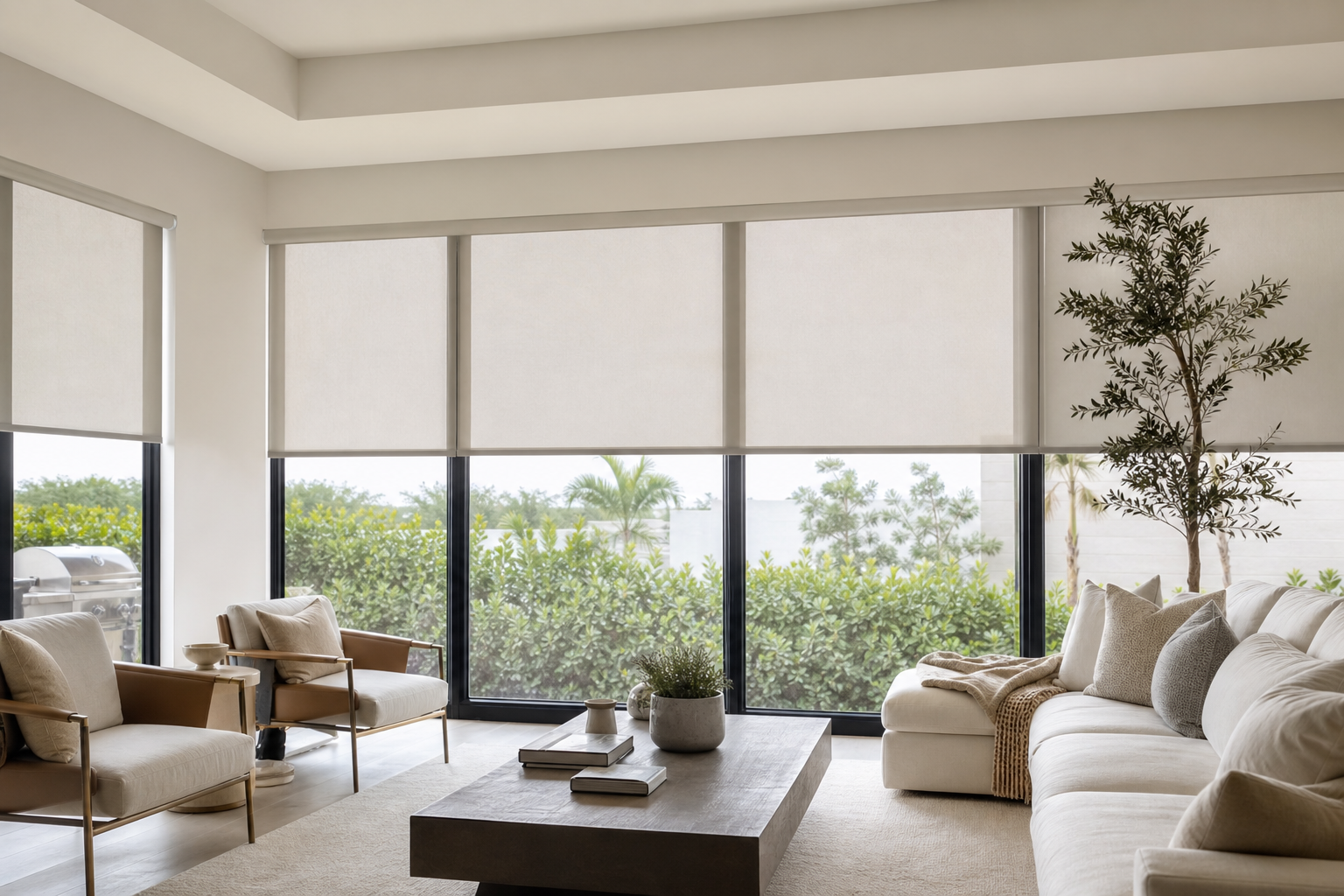
When you are updating the windows in a Miami-Dade County home, the choice between custom window treatments and store-bought blinds can affect more than appearance. The right solution can improve privacy, light control, comfort, and the way a room functions every day.
Store-bought blinds are convenient and may work well for simple, standard-size windows. Custom window treatments are made to fit the specific dimensions, design goals, and daily needs of your home. They can be especially helpful in South Florida, where intense sunlight, heat, glare, privacy concerns, and large windows are common considerations.
This guide explains the practical differences between the two options so you can make an informed decision for your home, rental property, office, or design project.
What Are Store-Bought Blinds?
Store-bought blinds and shades are manufactured in standard sizes and sold through home improvement stores, online retailers, and other general merchandise providers. Some products can be trimmed or adjusted, while others are purchased in the closest available size and installed as-is.
They are often chosen because they are readily available and may be suitable for temporary updates, basic rooms, or windows with common dimensions. However, standard products may not provide the precise fit or design coordination that homeowners want for a finished interior.
What Are Custom Window Treatments?
Custom window treatments are selected and made based on the measurements and requirements of a specific window. The process typically includes professional consultation, precise measurement, product selection, and installation.
Custom options can include roller shades, Zebra Shades, blackout shades, solar shades, and motorized shades. Depending on the room, a homeowner may prioritize filtered natural light, bedroom darkness, daytime privacy, glare reduction, or convenient control from a wall switch, remote, or smart-home system.
Custom Window Treatments vs. Store-Bought Blinds: Key Differences
| Consideration | Custom window treatments | Store-bought blinds |
|---|---|---|
| Fit | Measured for the individual window and installation requirements | Available in standard sizes, which may leave gaps or require adjustments |
| Design | More control over style, fabric, color, opacity, and operating method | Selection is limited to the available stock and size combinations |
| Light control | Can be selected for filtering light, reducing glare, or creating a darker room | Depends on the product and how closely it fits the window |
| Installation | Professionally installed as part of the project | Usually measured and installed by the homeowner or a separate installer |
| Automation | Can be planned around motorization and daily routines | Motorized choices may be limited or unavailable for the desired size and style |
| Complex windows | Better suited to oversized, unusually shaped, recessed, or hard-to-reach windows | May be difficult to fit or operate properly |
Why Precise Fit Matters
A window treatment does not need to look dramatically oversized or undersized to create a problem. Small gaps can allow unwanted light or reduce privacy. A shade that is too wide may interfere with nearby trim, handles, or walls. An improperly placed bracket can also affect how smoothly the treatment operates.
Professional measurement accounts for details such as:
- Inside-mount or outside-mount installation
- Window depth and available mounting space
- Trim, molding, handles, locks, and nearby walls
- Multiple windows that need to look consistent
- Large expanses of glass and sliding doors
- Access to windows that are high, wide, or difficult to reach
In homes throughout Miami, Coral Gables, Pinecrest, Doral, and surrounding communities, windows may vary significantly from room to room. A custom approach helps address those differences rather than forcing every opening into the same standard-size solution.
Light Control and Privacy in South Florida Homes
Strong sunlight is an important part of life in South Florida, but it can also create glare, make rooms uncomfortable, and affect how you use certain spaces during the day. Store-bought blinds may provide basic coverage, but the result depends heavily on the fit, material, and operating design.
Custom window treatments let you choose the level of light control that suits each room:
- Living rooms: Solar shades or light-filtering roller shades can help manage glare while maintaining a bright, open feel.
- Bedrooms: Blackout shades can be considered when darkness and privacy are priorities.
- Media rooms: A shade selected for stronger light control can help reduce reflections on screens.
- Street-facing windows: Privacy-focused fabrics or adjustable shades can provide coverage without making the room feel closed in.
- Large glass doors: Coordinated shades can improve privacy and light control across a wider opening.
For windows with intense afternoon exposure, the selection should also account for glare and the way sunlight enters the room at different times of day. A consultation can help match the treatment to the window's orientation and the room's use.
Design Flexibility and a More Finished Look
Store-bought blinds can be practical, but homeowners may have to design around whatever colors, textures, and sizes happen to be available. That can be limiting when coordinating window treatments with flooring, cabinetry, furniture, wall color, or architectural details.
Custom window treatments provide more control over the overall look. You can select a style that complements a modern condo in Miami Beach, a family home in Kendall, or a traditional interior in Coral Gables. Treatments can be coordinated across several rooms while still using different levels of light control where needed.
Zebra Shades, for example, can create flexible transitions between filtered light and greater privacy. Roller shades offer a clean, streamlined appearance, while solar shades can be useful in spaces where glare and outdoor visibility are major concerns. The best choice depends on the room rather than on a single solution for the entire home.
Motorization: A Major Advantage of Custom Planning
Motorized shades are one of the clearest differences between a basic window covering purchase and a fully planned window treatment project. Automation can be useful for high windows, large rooms, bedrooms, nurseries, home offices, and openings that are difficult to reach manually.
With motorization, homeowners may be able to operate multiple shades together, adjust them without walking from window to window, or incorporate them into a broader smart-home routine. Planning is important because the shade style, size, power arrangement, control method, and installation location all need to work together.
If you are considering automated window treatments, read Are Smart Shades Worth It? for additional guidance on convenience, routines, and home integration.
Installation: DIY Convenience vs. Professional Support
Installing a small, standard-size blind may be manageable for a homeowner who is comfortable with basic tools. The process becomes more complicated when windows are wide, unusually shaped, installed close to one another, or located in areas that require ladders or special care.
Professional installation helps ensure that the selected treatment is mounted correctly and operates as intended. It also gives you an opportunity to address practical questions before ordering, such as whether an inside mount will provide enough clearance or whether an outside mount would create better coverage.
Professional support can be particularly valuable when a project includes multiple rooms. Consistent measurements, aligned installation, and coordinated finishes can make the completed space look more intentional.
When Store-Bought Blinds May Be a Reasonable Choice
Custom treatments are not automatically necessary for every window. Store-bought blinds may make sense when:
- You need a temporary treatment for a rental or recently purchased property.
- The window is a common size and has straightforward mounting conditions.
- Your main priority is immediate availability.
- You are covering a utility space where appearance and precise light control are less important.
- You are comfortable measuring, selecting, and installing the product yourself.
Even in these situations, carefully check the product dimensions, mounting requirements, operating clearance, and return policy before purchasing.
When Custom Window Treatments Are Usually the Better Fit
A custom solution may be worth considering when:
- Your windows are unusually wide, tall, deep, or difficult to reach.
- You want consistent treatments throughout several rooms.
- Privacy, bedroom darkness, glare reduction, or daytime light control is important.
- You want a specific color, texture, opacity, or modern design.
- You are furnishing a newly renovated home or completing an interior design project.
- You are interested in motorization or smart-home integration.
- You want professional measurement and installation rather than a do-it-yourself project.
How to Choose Between Custom and Store-Bought Options
- Identify the room's main purpose. Decide whether the priority is privacy, darkness, glare control, appearance, convenience, or a combination of needs.
- Review the window conditions. Note the size, shape, depth, trim, handles, and proximity to doors or furniture.
- Consider South Florida exposure. Think about strong morning or afternoon sunlight, heat, glare, and how much visibility you want from outside.
- Decide how you want to operate the treatment. Manual operation may be adequate for accessible windows, while motorization can be useful for high or frequently adjusted shades.
- Compare the complete project. Look beyond the product itself and consider measurement, installation, fit, design coordination, and long-term convenience.
It can also help to evaluate windows individually. A home might use blackout shades in bedrooms, solar shades in a bright living room, and motorized treatments for large or elevated windows. Custom planning does not require every room to use the same product.
Frequently Asked Questions
Are custom window treatments better than store-bought blinds?
Neither option is right for every situation. Store-bought blinds can be suitable for standard windows and temporary needs. Custom window treatments are generally more appropriate when precise fit, coordinated design, specialized light control, professional installation, or motorization is important.
Do custom shades help with privacy?
They can be selected and measured to provide the level of privacy needed for a specific room and window. The best choice depends on the shade style, fabric openness or opacity, mounting method, and whether privacy is needed during the day, at night, or both.
Are custom window treatments useful for large windows?
Yes. Large windows and sliding glass doors often require more careful planning than standard openings. A professional can help evaluate the span, mounting conditions, operating method, and desired light control before recommending a treatment.
Can store-bought blinds be motorized?
Some store-bought products may offer motorized versions, but availability and compatibility can vary. If automation is a priority, it is helpful to plan the shade style, controls, power needs, and installation together from the beginning.
What should I prepare for a window treatment consultation?
Consider which rooms need coverage, what problems you want to solve, your preferred design style, and whether you want manual or motorized operation. It is also helpful to note windows with strong glare, limited privacy, difficult access, or unusual dimensions.
Choosing Window Treatments for Your South Florida Home
The decision between custom window treatments and store-bought blinds comes down to the balance of convenience, fit, appearance, performance, and long-term use. Standard products may be adequate for simple windows, while custom shades can provide a more coordinated and purposeful solution for homes with unique layouts, strong sun exposure, large glass areas, or specific privacy and light-control needs.
Floridian Blinds helps homeowners and property professionals in Miami-Dade County select window treatments based on the way each space is used. From Zebra Shades and roller shades to blackout, solar, and motorized options, the process can begin with a conversation about your windows and priorities.
Contact Floridian Blinds for a free consultation and measurement.