Do Motorized Shades Save Energy? A South Florida Homeowner’s Guide
Motorized shades can support energy management by controlling sunlight automatically. Learn how they work, where they help, and what to consider in a South Florida home.
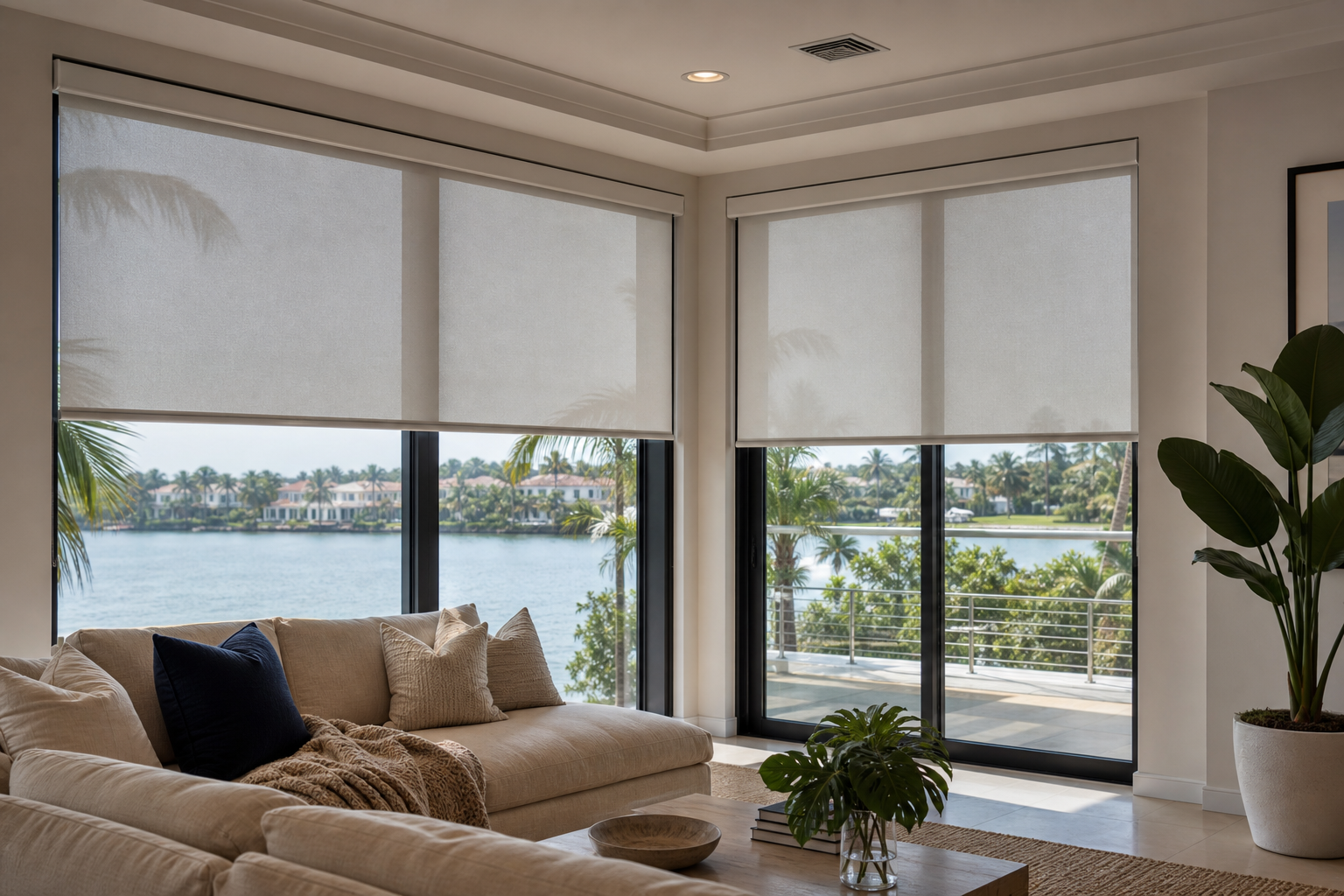
Do motorized shades save energy? They can, especially when they are programmed to respond to sunlight, time of day, and the way each room is used. In a South Florida home, where intense sunlight and heat can affect rooms throughout the year, automated shades may help reduce unwanted solar heat and make indoor spaces more comfortable.
However, motorized shades are not an energy-saving solution simply because they have a motor. Their value comes from consistent control. When shades open and close at the right times, they can limit direct sun when heat gain is a concern and allow natural light in when conditions are more comfortable.
This guide explains how motorized shades can support energy efficiency, which window exposures may benefit most, and how to choose a system that fits your home.
How Can Motorized Shades Help Save Energy?
Windows influence how much sunlight and heat enter a room. During bright periods, direct sunlight can make floors, furniture, and indoor air feel warmer. This may encourage homeowners to rely more heavily on air conditioning, particularly in rooms with large windows, west-facing glass, or expansive sliding doors.
Motorized shades help by making it easier to manage that sunlight consistently. Depending on the shade fabric and control system, homeowners can schedule shades to:
- Close during periods of intense direct sunlight
- Open when daylight can illuminate a room without adding excessive heat
- Adjust based on the time of day or the way a room is being used
- Reduce the need to manually adjust hard-to-reach windows
- Coordinate multiple windows throughout an open living area
The energy benefit comes from managing solar heat before it becomes an indoor comfort problem. This can support the performance of your cooling system, although the actual results depend on window orientation, glass type, shade fabric, room design, programming, and other factors.
Why Automation Matters in a South Florida Home
Traditional shades can also reduce glare and sunlight, but they only work when someone remembers to adjust them. That can be difficult for tall windows, high ceilings, large glass doors, or rooms that are not used every day.
Motorization adds consistency. A homeowner may program shades to respond to a typical daily pattern, such as closing during the strongest afternoon sun and opening later when outdoor conditions are more comfortable. The schedule can then be adjusted as seasons, room usage, or preferences change.
This is especially useful in Miami-Dade County and other South Florida communities, where homeowners often manage bright sunlight, warm temperatures, outdoor views, and indoor-outdoor living at the same time. Motorized shades can make these decisions more convenient without requiring someone to walk from room to room.
Which Windows Benefit Most From Motorized Shades?
Not every window has the same impact on comfort. A professional assessment can help identify which openings deserve priority.
West-Facing Windows
West-facing windows can receive strong afternoon sunlight. This may create glare and add heat when the home is already warm. Scheduling shades to close before or during the brightest part of the afternoon can help manage that exposure.
Large Sliding Glass Doors
Wide glass doors often bring in substantial daylight and heat. They may also be difficult to cover with manually operated shades, especially when connected to a patio or pool area. Motorized shades can provide coordinated control across a larger opening while preserving a clean, modern appearance.
High or Hard-to-Reach Windows
Windows near high ceilings, staircases, or vaulted living areas are often left uncovered because they are inconvenient to operate. Motorization makes regular adjustment practical and can help homeowners manage sunlight in spaces where manual controls are not realistic.
Bedrooms and Media Rooms
In bedrooms, automated shades can be scheduled for privacy and morning light control. In media rooms, they can reduce glare when the room is in use. These comfort benefits may also encourage more consistent shade use, which is important if the goal is to manage sunlight and heat.
Do All Motorized Shades Provide the Same Energy Benefits?
No. The motor is only one part of the system. The shade style, fabric, openness, color, fit, and installation all influence how effectively a window treatment manages light and heat.
| Shade consideration | How it may affect energy management |
|---|---|
| Fabric openness | More open fabrics preserve views and daylight but may allow more sunlight through. More closed fabrics can provide stronger glare and solar control. |
| Color | Different colors and fabric constructions can affect how much light and solar heat are filtered or reflected. |
| Fit | A properly measured shade can provide more consistent coverage than a poorly fitted treatment with unwanted gaps. |
| Window orientation | East- and west-facing windows often require different timing than north- or south-facing windows. |
| Control method | Schedules, remote controls, sensors, and smart-home integration can make regular adjustments easier. |
For example, solar shades may be a practical choice where preserving an outdoor view and reducing glare are priorities. Blackout shades may be more appropriate for bedrooms, nurseries, or media rooms where privacy and light blocking matter most. Roller shades and other custom options can be selected based on the needs of each room.
For more information about automated window treatments and energy management, read Smart Shades for Energy Management: A South Florida Homeowner’s Guide.
Motorized Shades and Smart-Home Integration
Motorized shades may be controlled in several ways, depending on the selected system. Common options include a wall control, remote, app, scheduled operation, and integration with a broader smart-home setup.
For energy-conscious homeowners, scheduling is often the most useful feature. Instead of relying on memory, a programmed routine can help shades respond to regular patterns. Some homeowners may prefer a simple schedule, while others may want more flexible control for rooms that change throughout the day.
Smart-home integration can also make it easier to coordinate shades with lighting, occupancy routines, or other household preferences. The right level of technology depends on how much control you want and how comfortable you are managing connected devices.
What Motorized Shades Cannot Do
It is important to set realistic expectations. Motorized shades can help manage sunlight, privacy, and comfort, but they do not replace other parts of an energy-efficient home.
They cannot correct poorly sealed windows, inadequate insulation, air leaks, or an HVAC system that is not properly sized or maintained. They also may not produce noticeable energy savings if they are rarely used, incorrectly scheduled, or installed on windows that receive little direct sunlight.
In addition, energy performance varies from room to room. A shaded bedroom with limited sun exposure may benefit more from privacy and convenience than from meaningful heat reduction, while a bright living room with large west-facing windows may have a greater opportunity for solar control.
How to Choose Motorized Shades for Energy Management
1. Start With the Room’s Main Problem
Identify whether the priority is heat, glare, privacy, morning light, afternoon sun, or a combination of concerns. This helps narrow the selection before focusing on colors and design.
2. Consider the Window Direction
Note when sunlight enters each room. A window that receives direct afternoon sun may need a different operating schedule and fabric than one that receives softer morning light.
3. Decide How Much View You Want to Preserve
Some homeowners want to reduce glare while maintaining an open view of the yard, water, or neighborhood. Others prefer stronger privacy or light blocking. Discuss these priorities before choosing a fabric.
4. Plan the Controls
Think about how you will use the shades every day. A remote may be sufficient for a small number of windows. Larger homes, high windows, and whole-room installations may benefit from scheduled or integrated controls.
5. Prioritize Professional Measurement
Accurate measurement is important for appearance, operation, and consistent coverage. A professional can evaluate window dimensions, mounting conditions, door clearances, nearby furniture, and the best placement for controls.
6. Consider the Whole Home
It may be tempting to choose one shade style for every room, but different spaces often have different needs. A coordinated design can still use different fabrics or operating settings for bedrooms, living areas, offices, and media rooms.
Are Motorized Shades Worth It for South Florida Homeowners?
Motorized shades may be worth considering when convenience, modern design, privacy, and light control are all important. They are particularly practical for large homes, rooms with many windows, tall openings, sliding doors, and homeowners who want to manage sunlight on a regular schedule.
The strongest case for motorization is usually not one isolated feature. It is the combination of easier operation and more consistent shade use. When window treatments are simple to control, homeowners are more likely to adjust them when sunlight, glare, or privacy needs change.
For rooms where heat reduction is the main goal, the shade fabric and installation details should be considered alongside the motor. You can also compare blackout options in Blackout Shades and Heat Reduction: A South Florida Homeowner’s Guide.
Frequently Asked Questions
Do motorized shades use a lot of electricity?
Motorized shades use power to operate, but the amount depends on the system and how frequently it is adjusted. Their potential energy benefit comes from managing sunlight and heat more consistently, not from the motor itself.
Can motorized shades lower my air-conditioning costs?
They may help reduce unwanted solar heat entering certain rooms, which can support indoor comfort and cooling management. Actual utility savings vary based on the home, windows, shade fabric, programming, weather, and HVAC operation.
Should motorized shades close automatically during the hottest part of the day?
That may be useful for windows exposed to strong direct sun, especially in the afternoon. The best schedule depends on the room, window direction, season, and whether you want to preserve daylight or an outdoor view.
Are motorized shades useful for high windows?
Yes. Automation can make high or hard-to-reach windows easier to operate regularly. A professional measurement can help determine the most practical shade style and control arrangement.
Do I need blackout shades to manage heat?
Not necessarily. Blackout shades may be appropriate where maximum light blocking and privacy are priorities, but other shade fabrics may better suit rooms where you want to preserve daylight or a view. Selection should be based on the room’s specific needs.
Make a More Informed Window Treatment Decision
Motorized shades can support energy management when they are matched to the right windows, fabrics, controls, and daily routines. In South Florida, they can be especially helpful for managing intense sunlight, glare, privacy, and comfort in rooms with large or hard-to-reach windows.
Floridian Blinds can help you evaluate your home’s window orientations, room-by-room needs, shade styles, and motorization options. Contact us for a free consultation and measurement to explore a custom window treatment solution for your South Florida home.