Blackout Shades and Heat Reduction: A South Florida Homeowner’s Guide
Learn how blackout shades can help reduce solar heat, improve comfort, protect interiors, and provide better light control in South Florida homes.
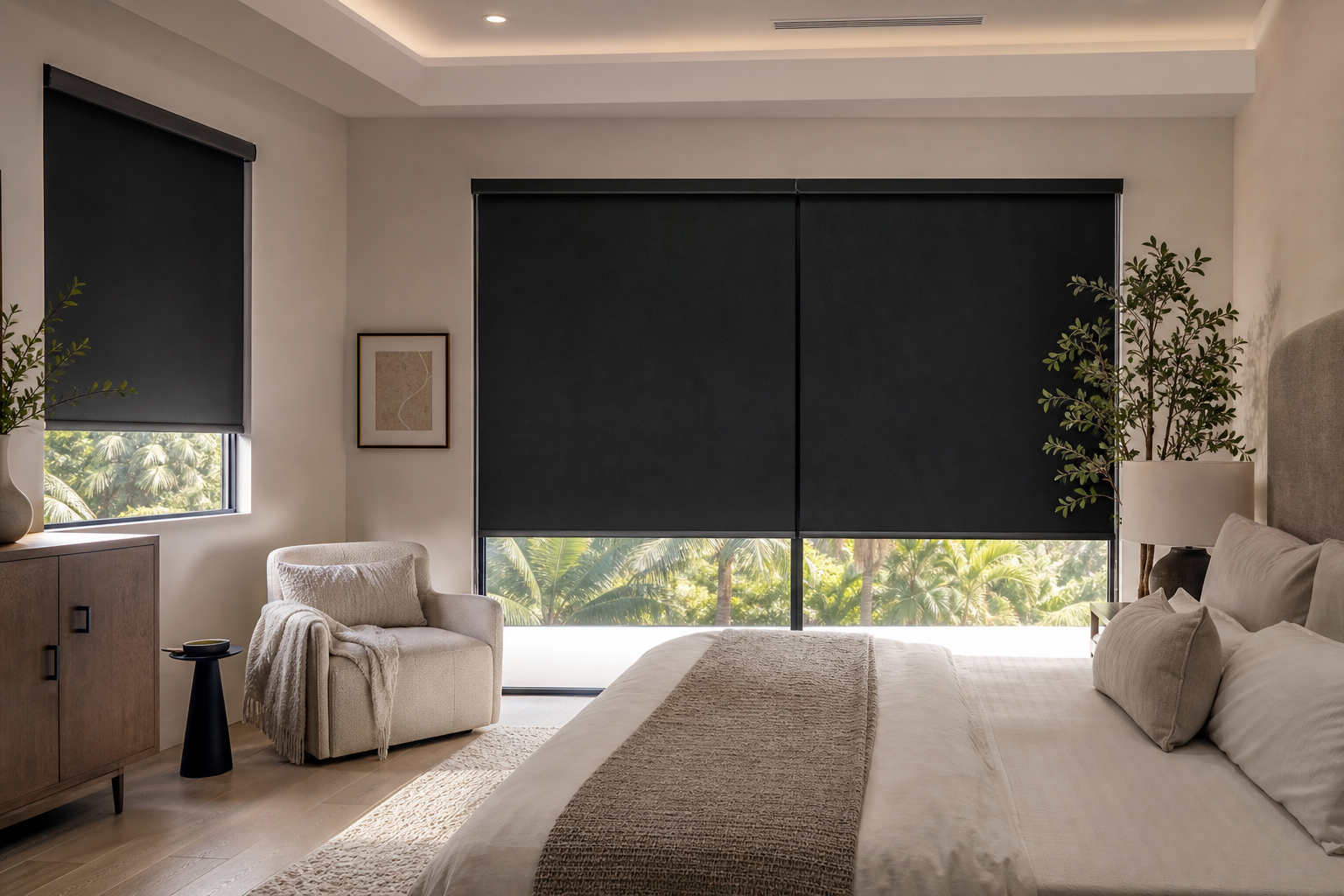
In South Florida, strong sunlight can make a room feel uncomfortable long before the thermostat catches up. Large windows, west-facing glass, and rooms with limited shade are especially vulnerable to solar heat. Blackout shades can help by blocking incoming light and reducing the amount of solar energy that enters through the window.
However, blackout shades are not simply a solution for making a room darker. The fabric, shade design, window coverage, installation method, and type of glass all influence how well they support indoor comfort. For homeowners in Miami-Dade County, choosing and measuring blackout shades carefully can improve light control while complementing the design of the home.
This guide explains how blackout shades support heat reduction, what they can and cannot do, and how to choose a custom solution for bedrooms, living areas, home offices, and other spaces exposed to Florida sunlight.
How Blackout Shades Help Reduce Heat
Windows are one of the main paths through which sunlight enters a home. When direct sunlight reaches the glass, it can warm the window and the surrounding interior surfaces. That heat may be especially noticeable during the afternoon, when west- and southwest-facing windows receive intense sun.
Blackout shades use a tightly woven or coated fabric designed to block most visible light when the shade is closed. By placing a light-blocking layer between the window and the room, they can limit direct sunlight and help reduce the feeling of heat near the glass.
The amount of heat reduction depends on several factors, including:
- Window orientation: Windows facing west or southwest may receive stronger afternoon exposure than windows facing north.
- Glass type: Single-pane, double-pane, tinted, and low-emissivity glass can perform differently in direct sun.
- Shade coverage: Light and heat can still enter around the sides, top, or bottom if the shade does not closely cover the window.
- Fabric construction: Different blackout materials have different insulating and reflective properties.
- Distance from the glass: Inside-mounted shades and outside-mounted shades may manage light and heat differently depending on the window and mounting conditions.
- Room ventilation and air conditioning: Shades work as part of the home's overall comfort strategy, not as a replacement for properly operating cooling equipment.
For a broader look at window treatment choices for Florida's intense sunlight, see this guide to choosing shades for Florida sunlight.
Blackout Shades vs. Room-Darkening Shades
The terms blackout and room darkening are sometimes used interchangeably, but they describe different levels of light control.
Blackout shades are designed to block nearly all visible light through the fabric. Small amounts of light may still appear around the edges, particularly when the shade is installed inside the window frame or when the frame is not perfectly square.
Room-darkening shades reduce incoming light but generally allow more ambient brightness into the room. They may be a good choice when you want softer light control without creating a very dark environment.
For heat reduction, both options can help limit direct sunlight, but the result depends on the complete shade system rather than the label alone. A consultation can help determine whether a blackout fabric, a room-darkening fabric, or another window treatment is more appropriate for each room.
Where Blackout Shades Make the Most Difference
Bedrooms
Blackout shades are a natural choice for bedrooms because they control early morning light, afternoon glare, and nighttime privacy. In rooms with windows that receive direct sun, closing the shades before the hottest part of the day can also help limit solar heat near the bed and surrounding furniture.
Home offices
Sunlight can create glare on computer screens and make a home office feel warmer. Blackout shades allow you to control the amount of light entering the room, which can make screen-based work more comfortable. Depending on the layout, a shade that combines blackout performance with motorization may be useful when the window is difficult to reach.
Media rooms
Light control is important for televisions, projectors, and other screens. Blackout shades can reduce reflections and create a more controlled viewing environment while also supporting privacy.
Living rooms with large windows
Large windows bring in natural light and connect indoor spaces with the outdoors, but they can also introduce glare and heat. Custom blackout shades can be designed for individual window dimensions and coordinated with the room's furnishings, allowing homeowners to adjust light without permanently blocking the view.
Nurseries and guest rooms
These rooms often benefit from a balance of privacy, darkness, and comfort. Blackout shades can be paired with motorization or simple manual operation depending on the homeowner's preferences and the window location.
Why Custom Measurement Matters for Heat and Light Control
Off-the-shelf shades are made in standard sizes, while custom shades are measured for the specific opening. That distinction matters when the goal is to reduce light and heat, because uncovered gaps can allow sunlight to enter around the shade.
During a professional measurement, the installer evaluates the width, height, depth, trim, sill, frame condition, and mounting options. They can also discuss whether an inside mount or outside mount is more suitable.
- Inside mount: The shade sits within the window opening and creates a clean, integrated appearance. Depending on the frame and shade design, some light may show around the edges.
- Outside mount: The shade is installed over or beyond the window opening. This can help cover more of the surrounding area and may be useful when the window has limited mounting depth or when greater light control is a priority.
Custom sizing does not eliminate every gap, especially around a window that must open or a frame that is not square. Still, accurate measurement and thoughtful mounting can provide more consistent coverage than choosing a standard size without evaluating the opening.
For more information about the differences between custom and ready-made products, read Custom Window Treatments vs. Store-Bought Blinds.
Choosing the Right Blackout Shade Design
Fabric and color
Blackout performance is created by the fabric construction, lining, or backing—not necessarily by choosing a dark visible color. Light-colored fabrics can still provide strong light control when they are made with an appropriate blackout backing. The best selection depends on the room's design, the amount of sun exposure, and the desired appearance from both inside and outside the home.
Roller shades
Blackout roller shades offer a clean, modern profile and work well in bedrooms, offices, and media rooms. Their simple lines can complement contemporary interiors, and they can be coordinated across multiple windows for a consistent look.
Motorized operation
Motorized blackout shades allow homeowners to open and close shades without manually reaching each window. This can be convenient for high windows, large rooms, or hard-to-reach openings. A programmed schedule may also make it easier to close shades before strong afternoon sun enters, although the exact control options depend on the selected motorization system.
Layered window treatments
Some homeowners combine a blackout shade with decorative drapery or another window treatment. This approach can add softness, improve the finished appearance, and provide another layer of privacy and light control. It may be especially appropriate in living rooms, bedrooms, and formal spaces where design is as important as function.
Blackout Shades and Energy Efficiency in South Florida
Reducing direct sunlight can help limit solar heat gain at the window, which may make a room feel more comfortable during sunny periods. This can be useful in Miami, Kendall, Doral, Coral Gables, Pinecrest, and other South Florida communities where homes are exposed to strong sun for much of the year.
Blackout shades should be viewed as one part of a broader approach to managing indoor comfort. Window orientation, air conditioning settings, insulation, glass performance, ceiling height, and the home's layout all affect how warm a room becomes. Shades can support comfort, but they do not replace maintenance of the cooling system or address every source of heat transfer.
To get the most from blackout shades, consider closing them before direct sun reaches the glass rather than waiting until the room is already hot. Motorized shades can make this routine easier for windows that are difficult to access or for homeowners who want a more consistent daily schedule.
What to Consider Before Ordering Blackout Shades
- Identify the main problem. Decide whether your priority is heat, glare, early morning light, nighttime privacy, media viewing, or a combination of these concerns.
- Observe the sun. Note which windows receive direct sunlight and at what time of day. This information helps guide fabric and mounting decisions.
- Review the window operation. Confirm whether the window opens inward, outward, or vertically, and make sure the shade will not interfere with handles or hardware.
- Choose the desired appearance. Consider color, texture, cassette or headrail visibility, and how the shade will coordinate with flooring, walls, and furnishings.
- Ask about control options. Manual operation may be appropriate for accessible windows, while motorization can be useful for tall, wide, or frequently adjusted shades.
- Plan for professional installation. Correct mounting helps the shade operate smoothly and provides more consistent coverage across the opening.
Common Questions About Blackout Shades and Heat Reduction
Do blackout shades make a room cooler?
Blackout shades can help reduce direct sunlight and the solar heat entering through a window, which may make the room feel more comfortable. The result varies according to the fabric, window glass, mounting, orientation, and other conditions in the home.
Do blackout shades block heat completely?
No. Blackout shades are designed primarily for light control, and they can also help manage solar heat. They do not block every form of heat transfer or replace insulation, energy-efficient glass, or a properly maintained cooling system.
Are outside-mounted blackout shades better for heat reduction?
Not in every situation. Outside mounting can cover more of the window area and may reduce edge gaps, while inside mounting offers a more integrated appearance. The right choice depends on the window frame, available depth, trim, shade design, and desired level of coverage.
Can light still enter around blackout shades?
Yes. Even blackout fabric may allow small amounts of light around the sides, top, or bottom. Professional measurement and an appropriate mounting style can help improve coverage, but the window design and installation conditions still matter.
Are motorized blackout shades worth considering?
Motorized shades may be helpful for tall windows, large openings, bedrooms, home offices, and rooms where shades need to be adjusted regularly. They can also make it easier to close shades before direct afternoon sun reaches the window.
Plan a Blackout Shade Solution for Your Home
Blackout shades can support better light control, privacy, and indoor comfort in South Florida homes, particularly in rooms affected by strong afternoon sun or large areas of glass. The best result comes from matching the shade fabric and design to the window, measuring accurately, and choosing an installation approach that supports the homeowner's goals.
Floridian Blinds provides custom window treatment guidance for homeowners and property owners throughout Miami-Dade County and surrounding South Florida communities. Contact us for a free consultation and measurement to discuss blackout shades, heat reduction, motorization, and the right solution for your space.