How Much Do Solar Shades Cost in Miami? A South Miami Guide
Learn what affects solar shade costs in Miami, including window size, openness factor, fabric, motorization, installation, and South Florida design considerations.
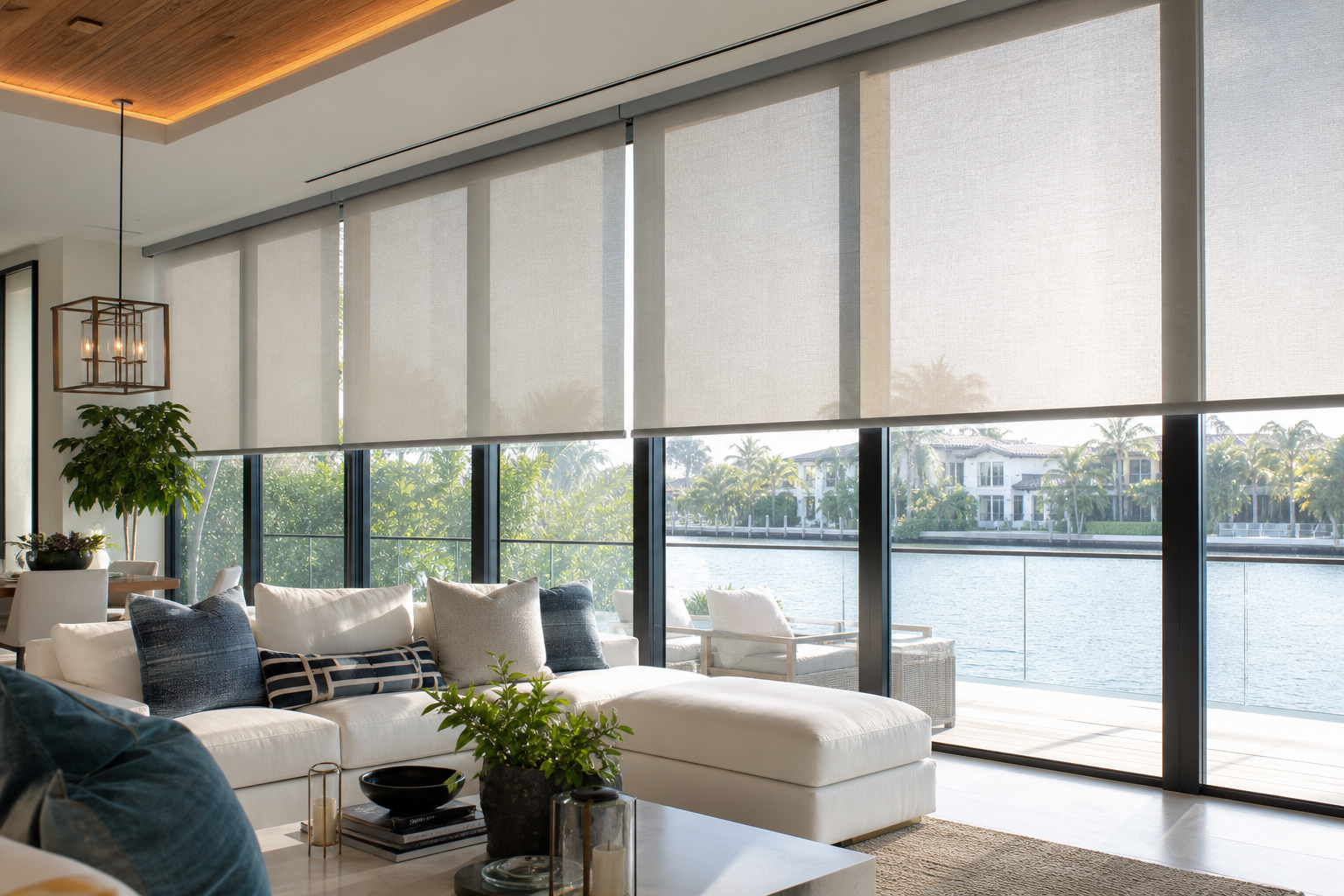
If you are researching how much solar shades cost in Miami, the most accurate answer is that there is no single price for every home. Custom solar shade costs depend on the size and number of windows, the fabric and openness factor you choose, the operating system, and whether the shades are installed manually or motorized.
For homeowners in South Miami and throughout Miami-Dade County, solar shades are often selected to manage intense sunlight, reduce glare, protect interior furnishings from UV exposure, and preserve a clean modern view. The right solution should be measured and specified for your actual windows rather than chosen from a one-size-fits-all price list.
This guide explains the main factors behind solar shade pricing so you can compare quotes more confidently and plan for a window treatment that fits your home, design preferences, and daily routine.
What Determines the Cost of Solar Shades in Miami?
A professional quote typically reflects more than the shade fabric itself. Each window may require different measurements, mounting considerations, and control options. The following factors usually have the greatest effect on the total project cost.
Window size and quantity
Larger windows require more material and may need a stronger tube, bracket system, or specialized configuration. A home with a few standard-size windows will be priced differently from a South Miami property with floor-to-ceiling glass, wide sliders, or multiple connected windows.
The number of shades also matters. A professional will consider whether each window should receive its own shade or whether several windows can be treated as one coordinated installation. Dividing a large opening into multiple shades can improve operation and appearance, but it may affect the overall project scope.
Solar fabric and openness factor
Solar shades are made with screen-like fabrics that filter sunlight while maintaining some outward visibility. The openness factor describes how tightly the fabric is woven. A lower openness factor generally provides more light filtering and daytime privacy, while a higher openness factor allows more natural light and a clearer view.
Your choice should be based on the direction of the window, the amount of glare, your desired view, and how much privacy you need. In a bright South Florida room, a shade selected only for appearance may not provide the light control you expect. Learn more in this comparison of 1%, 3%, and 5% solar shades.
Manual or motorized operation
Manual shades are operated with a chain or another standard control. Motorized solar shades add the cost of the motor and control system, but they can be especially practical for tall, wide, hard-to-reach, or frequently used windows.
Motorization may also be useful when you want several shades to operate together or prefer to adjust window coverings without walking from room to room. The final price depends on the number of motorized shades, the selected controls, and the requirements of the installation.
Mounting and installation requirements
Inside-mount and outside-mount installations can have different requirements. An inside mount fits within the window opening when there is enough depth and a suitable surface. An outside mount attaches above or around the opening and may be preferred when the window has limited depth or when you want to cover more of the surrounding area.
Large windows, sliding doors, unusually shaped openings, recessed windows, and difficult-to-access areas may require additional planning. Professional measurement helps identify these details before fabrication and reduces the risk of ordering a shade that does not fit properly.
Why Solar Shades Are Popular in South Miami
South Miami homes receive strong sunlight for much of the year. Depending on the room and window orientation, direct sun can create glare on televisions and computer screens, make rooms feel uncomfortable, and expose flooring, furniture, and artwork to ongoing UV exposure.
Solar shades are designed to filter light rather than simply block the window with an opaque material. This makes them a practical choice for living rooms, home offices, dining areas, and spaces where you want to maintain a connection to the outdoors.
- Glare control: Screen fabrics can soften bright sunlight and make rooms more comfortable for watching television or working.
- Daytime privacy: Depending on the fabric and lighting conditions, solar shades can make it more difficult to see into a home during the day while preserving some outward visibility.
- UV filtering: Solar shade fabrics can help limit direct sun exposure to interior furnishings, although they do not eliminate all potential fading.
- Modern appearance: Their simple horizontal lines work well with contemporary, coastal, transitional, and minimalist interiors.
- Flexible light control: Different fabrics and operating positions allow you to balance daylight, privacy, and exterior views.
Solar shades are not the same as blackout shades. If you need a dark bedroom for sleeping, a media room, or strong nighttime privacy, a blackout product may be a better fit. Solar shades are generally chosen for filtered daylight and glare control rather than complete darkness.
Solar Shade Cost Factors to Compare in a Quote
When reviewing estimates from a window treatment company, compare the complete scope of work instead of looking only at the fabric or per-window amount. A useful quote should make it clear what is included.
| Quote factor | Why it matters |
|---|---|
| Measurements | Accurate measurements determine the correct width, height, mounting style, and quantity of shades. |
| Fabric and openness factor | The weave affects light filtering, privacy, view-through, and the appearance of the shade. |
| Shade size and configuration | Large windows, sliders, and grouped openings may require different shade layouts. |
| Control type | Manual, cordless, and motorized operation have different hardware and installation requirements. |
| Mounting hardware | Brackets, valances, fascia, or other finishing options may affect the final design and scope. |
| Installation | Professional installation accounts for secure mounting, proper alignment, and smooth operation. |
Ask whether the estimate includes consultation, professional measurement, fabrication, delivery, installation, and setup of any motorized controls. These details make it easier to compare proposals accurately.
How to Choose Solar Shades for a South Miami Home
Start with the room's main problem
Think about what you want the shades to accomplish. A living room facing strong afternoon sun may need glare control and a comfortable view. A bedroom may need greater privacy and a darker treatment. A home office may benefit from reduced reflections on screens. Identifying the primary problem helps narrow the fabric and operating choices.
Consider each window's direction
Windows facing east and west can receive particularly strong low-angle sunlight in the morning or afternoon. South-facing windows may receive substantial daylight throughout the year. A professional consultation can help you evaluate each opening rather than using the same shade specification everywhere.
Think about daytime and nighttime privacy
Many solar shades provide more privacy during the day when outdoor light is brighter than indoor light. At night, illuminated interiors can be visible through the fabric from outside. If nighttime privacy is a priority, consider layering solar shades with drapery, adding another window treatment, or selecting a different product for specific rooms.
Plan for views and interior style
A solar shade should complement the room when it is open, lowered, or partially adjusted. Neutral fabrics can create a subtle look, while the openness factor changes how much of the exterior remains visible. For a cohesive home, coordinate fabrics and hardware across rooms while still choosing performance levels that suit each window.
Are Motorized Solar Shades Worth Considering?
Motorized solar shades can be a useful upgrade for large windows, high windows, sliding glass doors, and rooms where several shades need to move together. They can also make it easier to adjust shades throughout the day as sunlight changes.
In a South Florida home with extensive glass, motorization may support a more consistent routine for managing glare and direct sunlight. However, it is not necessary for every window. Manual operation may be appropriate for accessible windows that are used occasionally, while motorization can be reserved for hard-to-reach or frequently adjusted locations.
For more planning guidance, read Motorized Solar Shades for Large Windows.
Ways to Plan Your Solar Shade Budget
- Make a window list. Note the approximate size, room, direction, and whether each window is easy to reach.
- Identify priorities. Decide whether glare control, privacy, views, interior protection, or convenience matters most in each room.
- Separate essential and optional features. You may want solar fabric throughout the home but motorization only in selected areas.
- Request professional measurement. Accurate measurements are especially important for wide openings, sliders, and windows with unusual trim.
- Compare complete proposals. Confirm the fabric, openness factor, control type, installation details, and any finishing components included in each quote.
Choosing the least expensive shade without considering fit, fabric performance, and installation can lead to an appearance or operating experience that does not match your expectations. A custom consultation is a better way to understand which options are appropriate for your home.
Frequently Asked Questions About Solar Shade Costs in Miami
How much do solar shades cost in Miami?
The cost varies by window size, number of shades, fabric, openness factor, mounting requirements, operating system, and installation. A professional measurement and consultation are needed to provide an accurate project-specific quote.
Are solar shades more expensive than standard roller shades?
Pricing depends on the specific fabric, size, controls, and installation. Solar shades use specialized screen-like fabrics for filtered light and views, so they should be compared based on performance and intended use rather than product name alone.
Do solar shades provide complete privacy at night?
Usually, solar shades are primarily a daytime privacy solution. When indoor lights are on after dark, silhouettes or details may be visible from outside. Additional privacy treatments may be appropriate for bedrooms and other sensitive areas.
Can solar shades help with heat and glare in South Miami?
Solar shades can filter incoming sunlight and reduce glare, which may make rooms more comfortable. Their effect depends on window orientation, glass, fabric selection, and other conditions. They should be selected as part of an overall approach to managing sunlight and indoor comfort.
Should I motorize every solar shade?
Not necessarily. Motorization is most useful for large, high, hard-to-reach, or frequently adjusted windows, while manual shades may be suitable for accessible openings. A room-by-room plan can help you use motorization where it provides the most convenience.
Get a Custom Solar Shade Consultation in South Miami
The best way to find out how much solar shades cost in Miami is to have your windows evaluated in person. Floridian Blinds can help you compare fabrics, openness factors, mounting options, and manual or motorized controls based on your home's light, privacy, design, and comfort needs.
Contact Floridian Blinds for a free consultation and measurement.