How to Choose Roller Shades for Modern Kitchens
Learn how to choose roller shades for a modern kitchen, including light control, privacy, UV protection, easy care, and motorized options for South Florida homes.
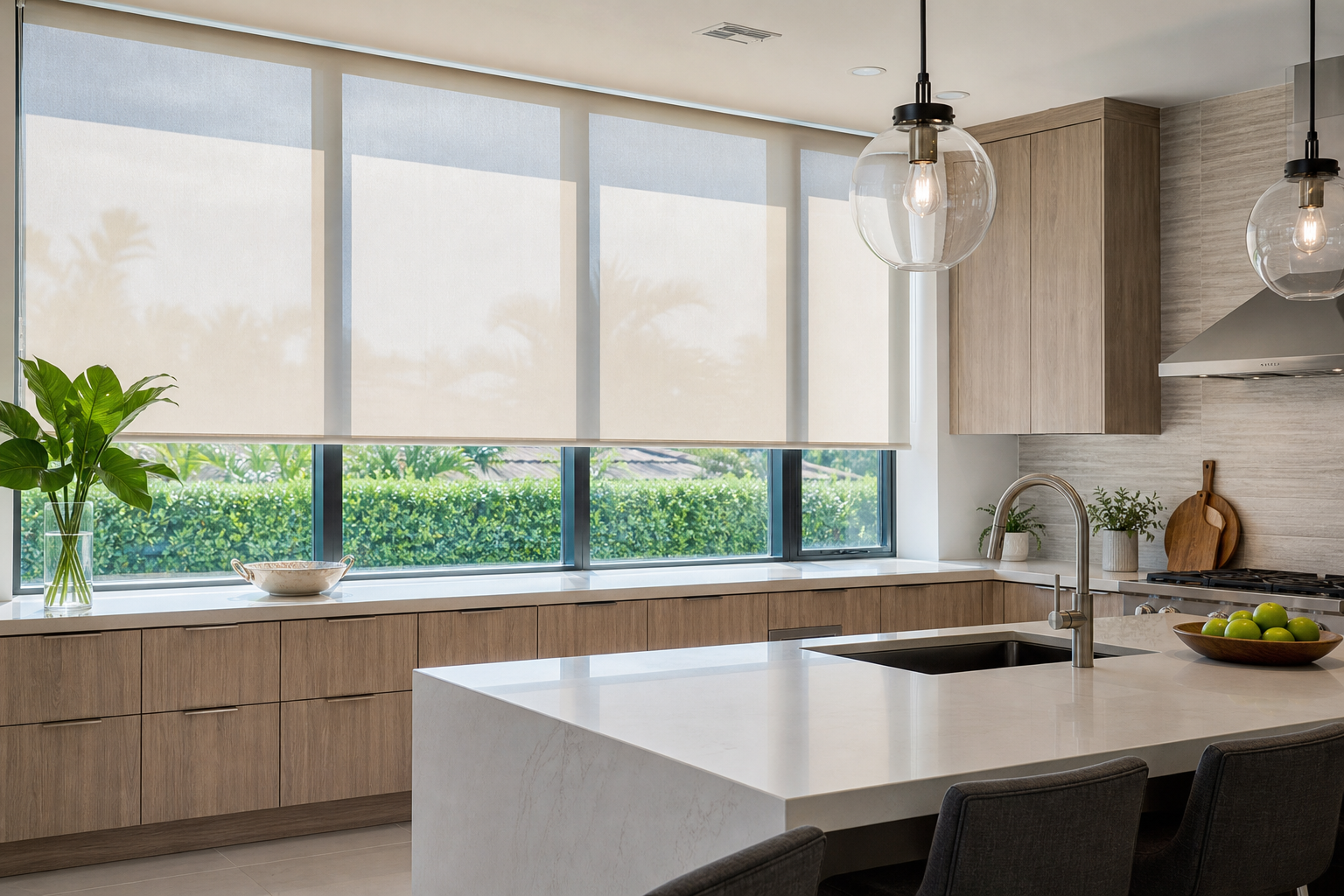
Modern kitchens are designed to feel bright, open, and connected to the rest of the home. But large windows and glass doors can also bring intense sunlight, heat, glare, and unwanted visibility into the space. The right roller shades for modern kitchens can help balance those concerns while maintaining the clean, streamlined look many homeowners want.
Roller shades are especially well suited to contemporary kitchens because they use a simple horizontal profile and can be customized to fit individual windows. With the right fabric, openness, opacity, and operating system, they can provide practical light control without making the room feel visually busy.
For homeowners in Miami-Dade County and throughout South Florida, kitchen window treatments should also account for strong year-round sun, UV exposure, humidity, and the way kitchens connect to outdoor living areas. This guide explains what to consider before choosing custom roller shades for your kitchen.
Why Roller Shades Work Well in Modern Kitchens
Roller shades have a clean appearance that complements contemporary cabinetry, stone countertops, stainless steel appliances, and minimalist hardware. When raised, the shade rolls into a compact area above the window. When lowered, it creates an even, uncluttered surface that does not compete with the rest of the kitchen design.
Unlike treatments with multiple slats or decorative layers, roller shades offer a relatively simple visual profile. That makes them useful in kitchens where homeowners want the windows to look finished but not overly decorated.
- Streamlined design: The simple shape works with modern and transitional interiors.
- Custom fit: Shades can be measured for individual windows, including different sizes and configurations within the same kitchen.
- Flexible light control: Fabrics can be selected to filter daylight, reduce glare, or provide more privacy.
- Multiple operating options: Depending on the design, shades may be operated manually or with motorization.
- Coordination: A consistent shade style can carry through nearby dining areas, living spaces, and large openings.
Key Factors When Choosing Kitchen Roller Shades
1. Decide how much natural light you want
The ideal roller shade depends partly on how the kitchen is used and where the windows face. A bright breakfast area may benefit from a fabric that softens daylight without making the room feel dark. A west-facing kitchen may need stronger glare control in the afternoon, especially when sunlight reaches countertops, floors, or seating areas.
Consider the times of day when the windows create the most discomfort. Morning glare may call for a different solution than late-day heat and brightness. If you are unsure, observe the kitchen at different times before selecting a fabric.
South Florida homes often receive strong direct sunlight, so it is also worth considering how window treatments may help protect nearby furnishings and finishes from prolonged UV exposure. Our guide to window treatments that block UV rays explains this consideration in more detail.
2. Choose the right level of privacy
Kitchen privacy needs vary widely. A window facing a private backyard may need only light filtering, while a street-facing or neighboring-facing window may require more coverage in the evening. Roller shade fabrics differ in how clearly people can see through them, both during the day and when interior lights are on at night.
It is important to think about daytime and nighttime privacy separately. A shade that lets you see outside during the day may not provide the same privacy after dark. For kitchens visible from a sidewalk, driveway, or nearby home, consider whether you want the shade to obscure views when the room is illuminated at night.
3. Consider the kitchen’s heat and glare exposure
Kitchen windows can contribute to glare on countertops, televisions in nearby rooms, and reflective appliances. Direct sun can also make the room feel warmer, which may be particularly noticeable in an open-concept layout.
Solar and light-filtering roller shade fabrics can help manage brightness while preserving some connection to the outdoors. More opaque options may be appropriate where stronger light control or privacy is a priority. The best selection depends on the window direction, size, surrounding surfaces, and your preferred level of visibility.
4. Look for a finish that is practical to maintain
Kitchens naturally produce cooking vapors, airborne particles, and occasional splashes. For that reason, homeowners should consider how easy the shade fabric and operating components will be to keep clean. A simple design with minimal exposed detail can make routine dusting easier.
Ask about recommended care for the specific fabric before making a decision. Cleaning methods can vary, and it is important to follow the product’s care guidance rather than applying household cleaners without confirmation. Placement also matters: a shade installed very close to a cooktop or sink may experience more exposure than one installed over a breakfast area.
5. Coordinate shades with the rest of the home
Many modern kitchens open directly into a dining room, family room, or patio. Instead of choosing a shade in isolation, consider how it will look from the adjoining spaces. Consistent roller shades can create visual continuity across several rooms, even when the windows have different dimensions.
Color, texture, and opacity all affect the final appearance. A neutral shade can blend with walls and cabinetry, while a contrasting tone can make the windows a stronger design feature. Samples are helpful because natural light can change how a fabric looks throughout the day.
Roller Shade Opacity and Fabric Choices
One of the most important decisions is how much light the fabric should allow through. The terms used to describe fabrics can vary by product, but the basic choices generally include light-filtering, solar, and room-darkening or blackout options.
| Option | Typical purpose | What to consider in a kitchen |
|---|---|---|
| Light-filtering | Softens daylight while keeping the room bright | Useful when you want a welcoming feel and moderate glare control |
| Solar | Helps reduce glare and manage bright sunlight while maintaining an outdoor view | Often considered for sunny windows, but nighttime privacy should be evaluated separately |
| Room-darkening or blackout | Provides stronger light reduction and privacy | May suit kitchens with intense direct sun, though some homeowners prefer a lighter daytime feel |
There is no single correct choice for every kitchen. Some homeowners use one shade style throughout the room, while others select different opacity levels for windows with different exposures. A professional consultation can help match the fabric to the actual conditions in your space.
Should You Choose Motorized Roller Shades?
Motorized roller shades can be a practical option for kitchens with high, wide, or difficult-to-reach windows. They can also make it easier to adjust several shades together when the kitchen is part of an open floor plan.
Convenience is not the only consideration. Motorization can support a consistent daily routine for managing sunlight and privacy. For example, shades may be adjusted when the morning sun becomes bright or lowered when the kitchen is unoccupied. If you are exploring this option, our guide to motorized shades and energy management provides additional context.
Motorized shades are also useful when windows are positioned above counters or appliances, where manual operation may be awkward. During the consultation, ask about control preferences, power requirements, and how the shades will coordinate with the rest of your window treatments.
Inside Mount or Outside Mount?
The mounting style affects both appearance and performance. An inside mount places the shade within the window opening for a more integrated look. This can work well when the window frame has enough depth and is reasonably square.
An outside mount places the shade on or above the frame. This may be considered when the opening does not provide sufficient depth, when the homeowner wants to cover more of the window area, or when reducing side gaps is a priority. Outside mounting can also create the appearance of a larger window.
There is no universal answer. A professional measurement helps determine which approach is appropriate for each opening, especially in kitchens with multiple windows, trim, backsplash materials, or nearby cabinetry.
Special Considerations for South Florida Kitchens
Window treatments in Miami, Kendall, Doral, Coral Gables, Pinecrest, and surrounding communities often need to do more than complete the room’s design. Strong sunlight, heat, and outdoor brightness can affect how comfortable a kitchen feels during the day. Homes near busy streets or close neighbors may also need a careful balance between views and privacy.
Large windows are common in newer homes, remodeled kitchens, and open-concept floor plans. When several windows face the same direction, selecting coordinated shades can help control glare more consistently. For windows near patios or sliding doors, consider how the kitchen shade will relate to outdoor screens and adjoining openings.
Color and fabric selection should also account for the amount of natural light in the room. A shade that looks subtle in a showroom may appear different in direct South Florida sun. Reviewing samples in the actual kitchen is a useful step before finalizing the design.
Common Mistakes to Avoid
- Choosing only by color: A shade can look attractive but still provide the wrong amount of privacy or glare control.
- Ignoring nighttime privacy: Daytime visibility does not always predict what can be seen after interior lights are turned on.
- Using the same opacity at every window: Different exposures may call for different levels of light control.
- Skipping professional measurement: Small measurement differences can affect alignment, coverage, and the overall finished appearance.
- Forgetting nearby rooms: Kitchen shades should usually coordinate with adjoining living, dining, and outdoor areas.
- Placing fabric too close to cooking activity without asking about care: Discuss the window location and maintenance expectations before selecting a material.
Frequently Asked Questions
Are roller shades a good choice for kitchen windows?
Yes, roller shades can be a good fit when you want a clean appearance, adjustable light control, and a custom solution for each window. The most suitable fabric depends on sunlight, privacy needs, window placement, and maintenance expectations.
What roller shades provide the most privacy at night?
More opaque or room-darkening fabrics generally provide stronger privacy than sheer or highly open fabrics. However, the amount of coverage also depends on the installation, window gaps, and whether the shade is fully lowered.
Are solar shades private at night?
Solar shades may preserve an outdoor view during the day, but their privacy performance can change after dark when interior lights are on. If nighttime privacy is important, ask about the specific fabric and consider whether another shade style is needed.
Can roller shades help with kitchen glare?
They can help reduce glare when the fabric is selected for the window’s exposure and the shade is properly sized and positioned. Solar and light-filtering options are often considered for bright windows, while more opaque fabrics provide stronger light reduction.
Should kitchen roller shades be motorized?
Motorization may be worthwhile for high, wide, or hard-to-reach windows, or when you want multiple shades to operate together. It can also be convenient in an open-concept home where consistent light control is important.
Find the Right Roller Shades for Your Kitchen
The best roller shades for a modern kitchen should support the way you use the room while fitting naturally into your interior design. Start by evaluating sunlight, glare, privacy, window direction, cleaning needs, and how the kitchen connects to adjacent spaces.
Floridian Blinds can help South Florida homeowners compare custom shade options and determine the right approach for each window. Contact us for a free consultation and measurement.