How to Clean Roller Shades Without Damaging Them
Learn how to clean roller shades safely, including fabric, solar, blackout, and motorized shades. Follow practical steps for removing dust, spots, and buildup.
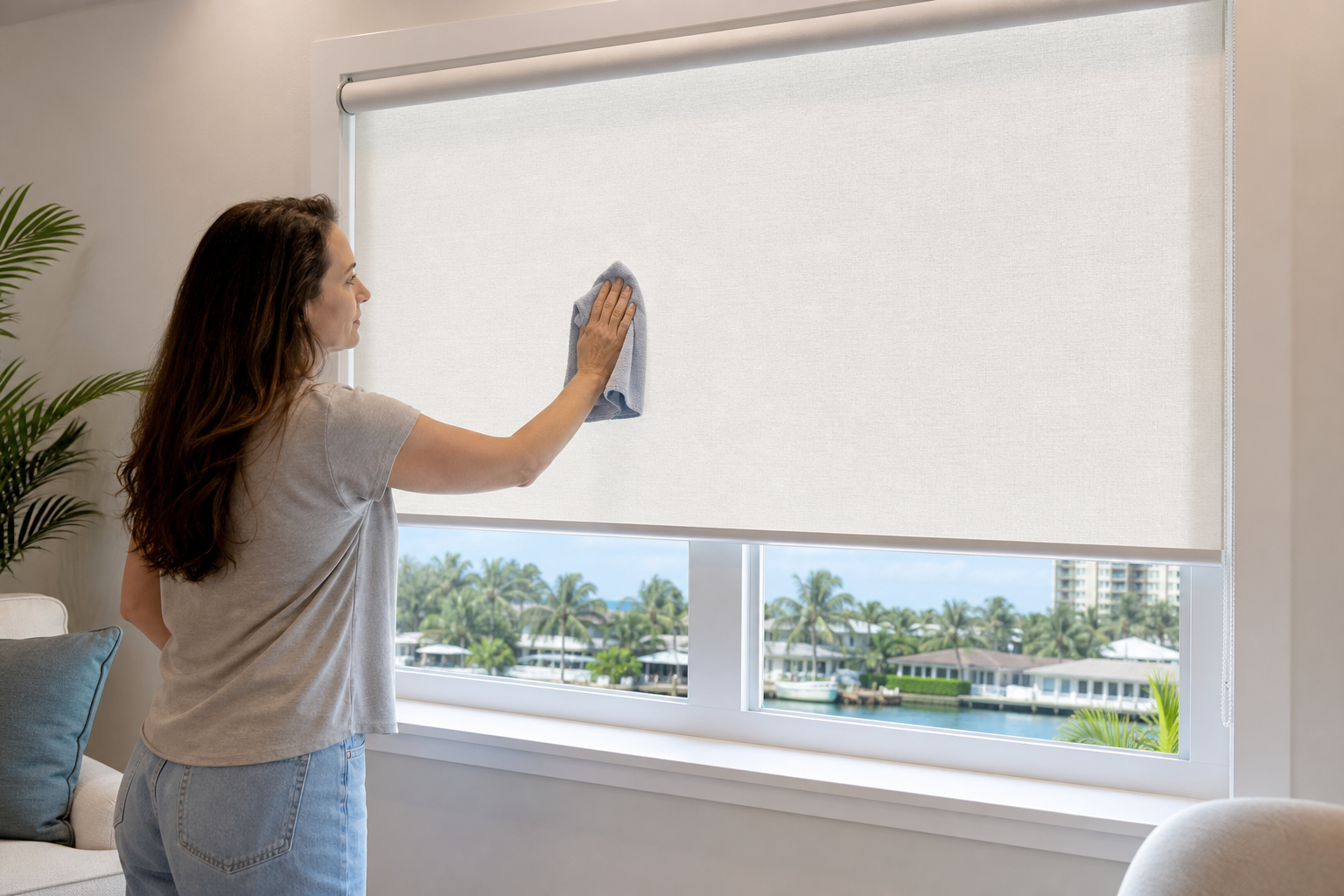
Roller shades are a practical way to manage sunlight, privacy, and interior comfort, but they can collect dust, fingerprints, and airborne residue over time. In South Florida, intense sunlight, humidity, open windows, and coastal air can make regular care especially important.
The safest way to clean roller shades is to begin with gentle dry cleaning and use as little moisture as possible. The right method depends on the shade fabric, backing, operating system, and the type of soil you are removing. This guide explains how to clean roller shades at home while reducing the risk of staining, stretching, discoloration, or damage to the shade mechanism.
Before You Clean Your Roller Shades
Before applying any cleaner, check the care instructions supplied with your shades. Custom roller shades may be made from different materials, including woven fabrics, coated fabrics, solar screen materials, and blackout fabrics. A method that is suitable for one shade may not be appropriate for another.
It is also a good idea to test your cleaning method in a small, hidden area first. Stop if the fabric changes color, develops a ring, or begins to separate from its backing.
Gather the right supplies
- A vacuum with a clean, soft brush attachment
- A clean microfiber cloth or soft, lint-free cloth
- Distilled or clean lukewarm water
- A small amount of mild, non-bleach soap if the care instructions allow it
- A clean, dry towel
- A stable step stool for higher windows
Avoid abrasive sponges, stiff brushes, bleach, ammonia, strong household sprays, and solvent-based cleaners. These products can damage the finish or leave visible marks on the fabric.
How to Clean Roller Shades: Step-by-Step
1. Lower the shade completely
Lower the roller shade so the material is fully accessible and supported by the roller tube. If the shade is motorized, use the control rather than pulling on the fabric or bottom rail. Make sure the shade is stationary before you begin.
2. Remove loose dust
Start at the top and work downward with a soft vacuum brush attachment. Use light pressure and keep the brush moving in the same general direction as the fabric. Do not press hard against the shade, catch the edge with the vacuum, or pull on the material.
If you do not have a suitable vacuum attachment, use a clean microfiber cloth or a feather duster designed for delicate surfaces. A dry cloth is usually safer than a damp cloth for the first cleaning pass because it removes surface dust without spreading it.
3. Spot-clean marks carefully
For a small mark, lightly dampen a clean cloth with lukewarm water. Do not spray water or cleaner directly onto the shade. Blot the affected area gently rather than rubbing it back and forth.
If water alone does not remove the spot and the manufacturer permits soap, mix a very small amount of mild soap into the water. Apply the solution to the cloth, not the shade, and use a light dabbing motion. Follow with a second cloth lightly dampened with clean water to remove any soap residue.
4. Let the shade dry fully
Leave the shade fully lowered and allow it to air-dry. Keep it flat and undisturbed while it dries so the material does not fold or stick to itself. Avoid using a hair dryer, heater, or direct high heat. Do not roll the shade up while it is damp, since trapped moisture can create uneven drying and may affect the fabric or backing.
5. Clean the hardware separately
Dust the headrail, cassette, chain, cord, brackets, and bottom rail with a dry microfiber cloth. For a non-fabric surface, you can use a slightly damp cloth if the manufacturer’s instructions allow it. Keep water away from motors, controls, batteries, wiring, and other electrical components.
How to Clean Different Types of Roller Shades
Not all roller shades respond to cleaning in the same way. The shade’s construction should guide how much moisture and pressure you use.
Fabric roller shades
Fabric roller shades generally benefit from regular dust removal with a soft brush attachment. For isolated spots, use gentle blotting with minimal moisture. Avoid saturating the fabric or scrubbing in circles, which can create a lighter or darker patch.
Blackout roller shades
Blackout shades often include a light-blocking backing. Excessive water, heat, or aggressive rubbing can affect the appearance of that backing. Clean the front and back surfaces only as directed by the manufacturer, and pay close attention to seams and edges.
For more detailed guidance, see how to clean blackout roller shades without damaging them.
Solar roller shades
Solar shades are designed to filter sunlight while preserving some outward visibility, but their open-weave materials can hold fine dust. Vacuum gently using a soft attachment and avoid pushing debris deeper into the weave. Spot-clean with a barely damp cloth when permitted, then allow the shade to dry completely.
South Florida homeowners may also notice more dust or residue on shades near frequently opened windows, balconies, or patios. A consistent light-cleaning routine is safer than waiting until buildup requires more aggressive treatment. For related considerations, read this guide to solar roller shades for Florida sun.
Motorized roller shades
Use the controls to lower motorized shades before cleaning, and switch off or disconnect power when cleaning around electrical components if appropriate for the system. Never spray cleaner near the motor, charging port, wiring, or control buttons.
Clean the shade material using the same gentle approach recommended for its specific fabric. Do not pull, twist, or manually force a motorized shade unless the product instructions specifically allow it.
What Not to Do When Cleaning Roller Shades
Some common cleaning habits can cause more harm than good. Avoid these practices unless the shade manufacturer specifically recommends them:
- Do not put roller shade fabric in a washing machine or dryer.
- Do not soak the shade in a bathtub or rinse it with a hose.
- Do not use bleach, strong disinfectants, glass cleaner, or multipurpose sprays.
- Do not scrub stains aggressively or use a stiff brush.
- Do not iron, steam, or apply direct heat to the material.
- Do not roll the shade while it is wet or damp.
- Do not remove the shade from its brackets unless you understand how the system is assembled.
- Do not allow cleaning liquid to run into a motor, headrail, or control system.
If a shade has extensive staining, water damage, mildew-like discoloration, or a damaged backing, professional evaluation may be safer than repeated home cleaning attempts.
How Often Should You Clean Roller Shades?
Light dusting every few weeks or as needed can help prevent buildup. A more thorough vacuuming and inspection every few months is reasonable for many homes, but the ideal schedule depends on the room and the amount of dust or outdoor exposure.
Consider cleaning more frequently when:
- The shades are near an open window, balcony, or patio door.
- The room receives heavy daily sunlight.
- The shades are installed in a kitchen or dining area.
- There is visible dust along the bottom rail or fabric.
- The home is undergoing remodeling or construction.
- Pets, children, or frequent activity create additional surface residue.
Regular light cleaning is usually easier on custom window treatments than occasional deep scrubbing. It also gives you a chance to notice uneven rolling, loose hardware, frayed edges, or changes in the fabric before they become more difficult to address.
How to Prevent Roller Shades from Getting Dirty
A few simple habits can reduce the need for intensive cleaning:
- Keep hands clean when operating shades manually.
- Use the bottom rail, chain, or approved control rather than pulling on the fabric.
- Keep nearby cooking splatter, candles, and sprays away from the shade.
- Close windows during dusty outdoor work or storms when practical.
- Dust window sills and frames so debris does not transfer to the shade.
- Use motorization when it helps reduce repeated handling of the fabric.
In homes near the coast or in areas with frequent indoor-outdoor living, window treatments may be exposed to more airborne residue. Choosing a shade material that suits the room’s use and maintenance needs is just as important as knowing how to clean it.
When Cleaning Is Not Enough
Cleaning can remove surface dust and some minor spots, but it cannot correct every issue. A shade may need professional attention if it has permanent discoloration, a warped roller tube, uneven movement, damaged seams, a detached bottom rail, or a malfunctioning motor.
Replacement may also be worth considering when the shade no longer provides the light control, privacy, or appearance you need. For example, a sunny bedroom, media room, or street-facing window may benefit from a different fabric or operating style rather than more frequent cleaning.
Frequently Asked Questions
Can I use a steam cleaner on roller shades?
Steam and high heat can affect some fabrics, coatings, and blackout backings. Unless the manufacturer specifically approves steam cleaning, use dry dust removal and gentle spot cleaning instead.
Can I wash roller shades with water?
Some shade materials tolerate limited spot cleaning, but most should not be soaked or rinsed. Use a barely damp cloth only when the care instructions permit it, and never saturate the shade.
How do I remove dust from solar roller shades?
Use a clean, soft vacuum brush attachment or microfiber cloth. Work lightly from top to bottom and avoid pressing dust into the open weave. Follow with minimal spot cleaning if needed.
How do I clean motorized roller shades safely?
Lower the shade using its control, keep liquids away from the motor and electrical components, and clean the fabric according to its material. Do not pull or force the shade by hand unless the system instructions allow it.
What should I do if a stain will not come out?
Stop scrubbing once gentle spot cleaning has not worked. Additional rubbing or stronger chemicals may create a larger damaged area. A window treatment professional can help determine whether the fabric can be treated or should be replaced.
Choose Roller Shades That Fit Your Home
Proper cleaning starts with selecting roller shades that match the room, window size, sunlight exposure, and level of daily use. Custom measurements and professional installation can help ensure the shade operates smoothly and provides the intended privacy and light control.
If you are updating window treatments in Miami-Dade County or elsewhere in South Florida, Floridian Blinds can help you compare roller shade fabrics, blackout and solar options, and motorized controls. Contact us for a free consultation and measurement.