How to Control Glare With Window Shades in South Florida
Learn how to control glare with window shades while preserving natural light, improving privacy, and making Miami-Dade homes more comfortable.
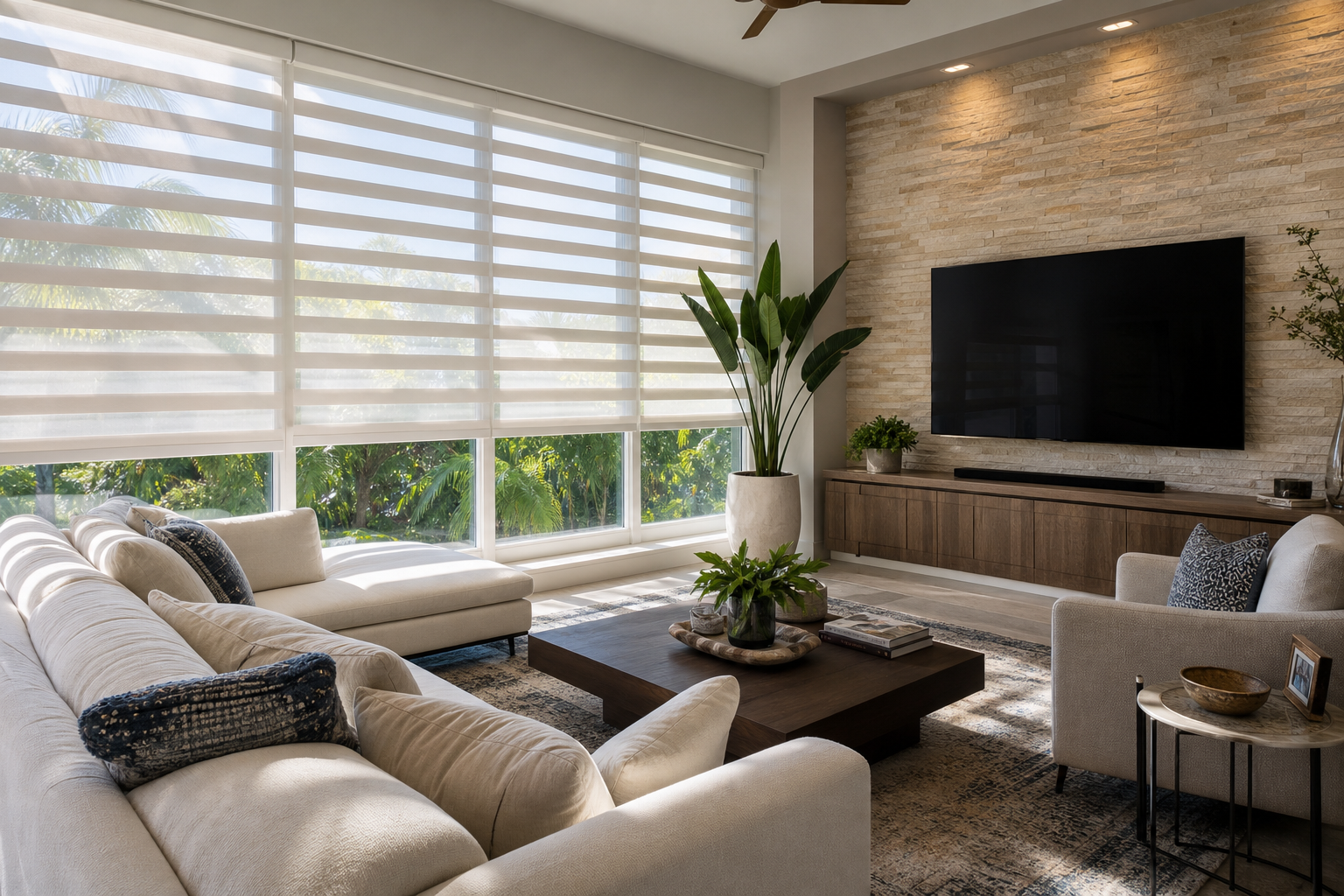
Bright Florida sunshine can make a room feel open and inviting, but too much direct light can create uncomfortable glare on televisions, computer screens, kitchen surfaces, and floors. If you are wondering how to control glare with window shades, the right solution depends on the direction of the window, the time of day, the room’s purpose, and how much natural light you want to keep.
In South Florida homes, glare often comes with other concerns, including heat, UV exposure, privacy, and intense afternoon sun. A well-chosen custom shade can address several of these issues at once without making a room feel dark or closed off. This guide explains which window shade styles can help, how to select the right level of light control, and what to consider before ordering custom treatments.
Why Does Glare Happen?
Glare occurs when excessive or uneven light enters a room and reflects off a surface. The most common sources include direct sunlight through uncovered windows, bright reflections on glass or glossy furniture, and strong contrast between a sunlit window and a darker interior.
Window orientation makes a significant difference. East-facing windows may create glare in the morning, while west-facing windows often produce stronger glare later in the day when the sun is lower in the sky. Large windows, sliding glass doors, and corner windows can also allow more light into a room from different angles.
In Miami, Kendall, Coral Gables, Key Biscayne, and other South Florida communities, glare can be especially noticeable because bright sun is a regular part of daily life. The goal is usually not to block every ray of light. Instead, homeowners often want to soften direct sunlight, reduce reflections, and maintain a comfortable level of brightness.
How to Control Glare With Window Shades
The most effective approach is to match the shade’s fabric, openness, opacity, and operating style to the room. Here are several options to consider.
Solar Shades for Screen and View Protection
Solar shades are designed to filter sunlight while maintaining a connection to the outdoors. Their specialized fabric can help reduce harsh brightness and reflections on televisions and computer monitors without fully darkening the room.
They are often a practical choice for living rooms, home offices, media areas, and spaces with large windows. Solar shade fabrics are available in different levels of openness, which affect how much light enters and how clearly you can see through the shade. A more open fabric generally preserves more of the outdoor view, while a tighter weave provides more light filtering and daytime privacy.
Solar shades can also help reduce the visual impact of sunlight on interior furnishings. For a closer look at UV-related considerations, read Window Treatments That Block UV Rays: A Florida Homeowner’s Guide.
Roller Shades for Flexible Light Control
Roller shades offer a clean, streamlined appearance and are available in fabrics ranging from light filtering to room darkening. This makes them a versatile option when you want to control glare without committing to a heavily layered window treatment.
Light-filtering roller shades can soften direct sunlight and reduce reflections while maintaining a bright atmosphere. Room-darkening fabrics provide more substantial light control for bedrooms, media rooms, and other spaces where screen visibility or rest is a priority.
Because roller shades have a simple profile, they work well in modern South Florida interiors and can be customized to coordinate with a room’s colors and furnishings.
Blackout Shades for Strong Glare and Room Darkening
When glare is severe or a room needs to become significantly darker, blackout shades may be the better choice. They can be especially useful in bedrooms, home theaters, nurseries, and rooms with televisions or projectors.
Blackout shades are different from ordinary light-filtering shades because their fabric is designed to block substantially more incoming light. However, some light may still enter around the edges of the shade depending on the window, mounting position, and installation details.
For South Florida rooms that receive strong afternoon sun, blackout shades can also be considered as part of a broader strategy for managing brightness and heat. They may not be necessary in every room, so it is helpful to balance room function with your preferred level of natural light.
Zebra Shades for Adjustable Glare Control
Zebra shades use alternating bands of translucent and opaque fabric. By adjusting the position of the bands, you can filter incoming light, soften glare, or increase privacy without raising the shade completely.
This adjustability makes zebra shades useful in living rooms, dining areas, bedrooms, and spaces that change throughout the day. You can allow gentle daylight into the room in the morning, shift the fabric to reduce glare during brighter periods, and close the shade further when privacy is needed.
Zebra shades also provide a contemporary look that works well with modern interiors. They can be a good option for homeowners who want more flexibility than a simple open-or-closed shade provides.
Motorized Shades for Hard-to-Reach or Large Windows
Motorized shades can make glare control more convenient, particularly for tall windows, expansive glass, skylights, or multiple windows that receive sunlight at the same time. Instead of manually adjusting each shade, you can operate them from a control device or integrate their operation into a smart-home setup when compatible.
Motorization can also make it easier to respond to changing sunlight throughout the day. For example, shades can be adjusted when direct sun begins reaching a television or work surface, even if the windows are difficult to access.
Convenience is only one consideration. During a consultation, it is useful to discuss power, controls, window access, and how the shades will fit into your daily routine. Learn more in Smart Shades for Energy Management: A South Florida Homeowner’s Guide.
Choosing the Right Shade for Each Room
The best glare-control solution may vary throughout your home. A bright living room with an ocean or neighborhood view may need a different treatment than a bedroom or home office.
| Room or space | Common glare concern | Shade options to consider |
|---|---|---|
| Living room | Reflections on furniture, floors, and screens | Solar shades, light-filtering roller shades, or zebra shades |
| Home office | Glare on monitors and work surfaces | Solar shades or adjustable roller shades |
| Bedroom | Early morning or afternoon light | Blackout shades or room-darkening roller shades |
| Media room | Reflections that reduce screen visibility | Blackout shades or motorized room-darkening shades |
| Large glass doors | Strong direct sun and difficult manual access | Solar shades, roller shades, or motorized shades |
Important Factors to Consider Before Choosing Shades
Window Direction and Time of Day
Pay attention to when glare appears rather than evaluating the window at only one time. Note whether the problem occurs in the morning, around midday, or in the afternoon. Also consider whether the sun enters from the side or directly through the glass.
West-facing windows can be particularly challenging because lower afternoon sun may enter at a sharper angle. Read Best Shades for West-Facing Windows: A South Florida Guide for additional planning considerations.
Desired View and Privacy
Some homeowners want to reduce glare while keeping an open view of the garden, pool, or surrounding neighborhood. Solar shades may help preserve that connection during the day. Others prioritize privacy, particularly in urban areas, condos, townhomes, or homes with windows close to the street.
Remember that privacy can change with lighting conditions. A fabric that provides daytime privacy may offer less privacy at night when interior lights are on. A layered approach or a shade with stronger opacity may be more appropriate if nighttime privacy is important.
Natural Light Preferences
Consider how the room should feel when the shade is closed. Light-filtering fabrics can soften brightness while keeping a room welcoming. Room-darkening and blackout fabrics create a more controlled environment but may be more than you need for a kitchen, dining area, or naturally shaded room.
Many homeowners choose different opacity levels for different rooms rather than using the same fabric throughout the house.
Heat and UV Exposure
Glare is often connected to heat and sun exposure. Direct sunlight can make certain rooms feel warmer and may contribute to fading over time. Window shades can be part of a broader strategy for improving comfort and protecting interior finishes, although their performance depends on the fabric, window, installation, and other conditions.
For additional information about managing cooling demands with window treatments, see How Blinds Help Lower Cooling Costs in South Florida.
Professional Measurement and Installation
Accurate measurement matters when glare control is the goal. Gaps at the sides or top of a shade can allow unwanted light into the room, especially when the sun is at a low angle. The mounting position also affects coverage, appearance, and how the shade operates near handles, trim, and doors.
Professional measurement helps account for window dimensions, recess depth, obstructions, and the way each shade will be used. Installation is equally important because a properly fitted shade should operate smoothly and look proportionate to the window.
Can Window Shades Eliminate Glare Completely?
Window shades can significantly reduce glare, but no single shade works identically in every room or at every time of day. Light may enter around the edges, reflect from nearby surfaces, or come through another window. The result also depends on the window’s orientation, the shade fabric, and whether the treatment is mounted inside or outside the window opening.
A consultation can help identify the actual source of the glare and determine whether one shade, multiple shades, or a combination of light-filtering and room-darkening treatments is appropriate.
Frequently Asked Questions About Glare Control
What type of shade is best for reducing glare on a television?
Solar shades, light-filtering roller shades, zebra shades, and blackout shades can all help, depending on how much light the room receives and whether you want to preserve an outdoor view. A darker or more opaque fabric may be useful when reflections are severe, while solar shades can work well when maintaining daylight and visibility is important.
Are solar shades the same as blackout shades?
No. Solar shades are designed to filter sunlight and reduce brightness while typically maintaining some view through the window. Blackout shades are intended to block substantially more incoming light and are generally chosen when a darker room is the priority.
Can zebra shades reduce afternoon glare?
Yes. Zebra shades allow you to adjust the position of alternating fabric bands to filter or reduce incoming light. They can be helpful when glare changes throughout the day and you want more flexibility than a shade that is simply open or closed.
Should I use the same window shade in every room?
Not necessarily. Living rooms and offices may benefit from glare-reducing light-filtering shades, while bedrooms and media rooms may need stronger room darkening. Window direction, privacy needs, décor, and daily use should all be considered.
Do motorized shades help with glare control?
Motorized shades can make it easier to adjust hard-to-reach, tall, or numerous windows as sunlight changes. They may be especially convenient for large glass areas and rooms where manually operating each shade is difficult.
Find the Right Glare-Control Solution for Your Home
Controlling glare is not just about making a room darker. The right custom window shades can help balance natural light, screen visibility, privacy, comfort, and the design of your South Florida home. Solar shades, roller shades, blackout shades, zebra shades, and motorized options each offer different advantages.
Floridian Blinds can help you evaluate your windows, room-by-room needs, and preferred level of light control. Contact us for a free consultation and measurement to explore custom window treatments for your home in Miami-Dade County and surrounding South Florida communities.