How Blinds Help Lower Cooling Costs in South Florida
Learn how custom blinds and shades can reduce solar heat, improve indoor comfort, and support more efficient cooling in Miami-Dade County homes.
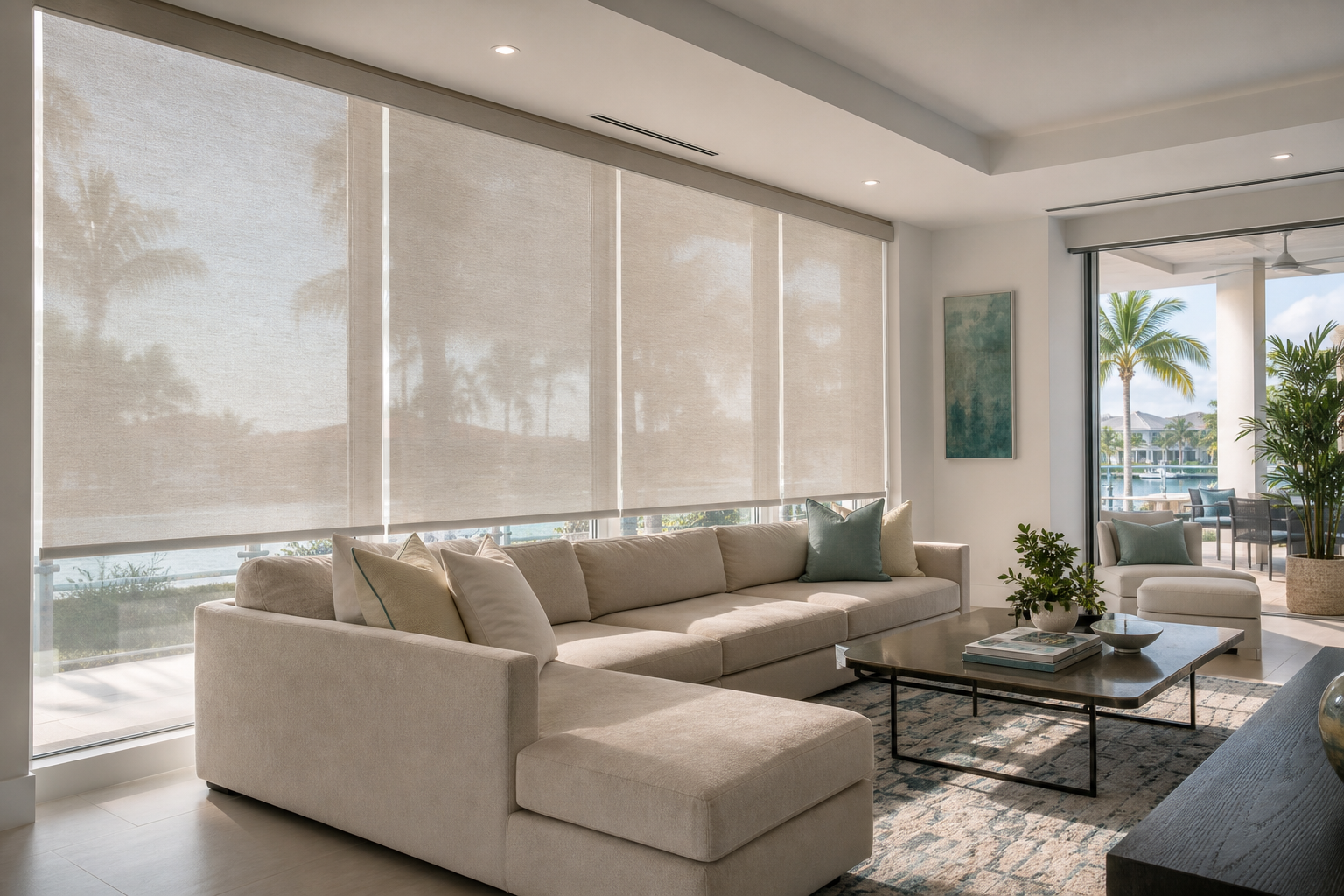
In South Florida, window treatments do more than complete a room’s design. The right blinds or shades can help limit the amount of heat and sunlight entering through your windows, which may make it easier to keep your home comfortable while your air conditioner is running.
Understanding how blinds help lower cooling costs starts with understanding solar heat gain. Sunlight passes through or strikes your windows, warming the glass, floors, furniture, and surrounding surfaces. That heat can build up indoors, especially in rooms with large windows, west-facing exposures, high ceilings, or expansive glass doors. Custom window treatments give you more control over when that heat enters your home.
While no window treatment can eliminate cooling expenses, well-selected blinds and shades may support a more comfortable and energy-conscious home. The results depend on your window orientation, glass type, home construction, thermostat settings, treatment material, and how consistently the treatments are used.
How blinds affect indoor heat
Windows are one of the main areas where outdoor heat and sunlight enter a home. During a sunny Miami afternoon, uncovered windows can allow strong solar radiation to warm the room. This is particularly noticeable in spaces with direct exposure, such as living rooms, bedrooms, home offices, and kitchens.
Blinds and shades help by creating a barrier between the glass and the interior of the room. Depending on the product, they can:
- Reduce direct sunlight entering the space
- Limit glare on televisions, computers, and other screens
- Reduce the amount of solar heat reaching floors and furnishings
- Support a more consistent indoor temperature
- Improve privacy while still allowing some natural light
When less heat enters through the windows, your air-conditioning system may not need to work as hard to offset that heat. This does not mean blinds replace insulation or efficient HVAC equipment. Instead, they are one part of a broader approach to managing comfort and cooling demand.
Why this matters in Miami-Dade County
South Florida homes face a different combination of conditions than homes in many other parts of the country. The region receives intense sunlight throughout much of the year, and many homes are designed with large windows, sliding doors, open floor plans, and indoor-outdoor living areas.
These features bring in natural light and create an inviting feel, but they can also increase exposure to heat, glare, and ultraviolet light. Homes in Miami, Kendall, Doral, Coral Gables, Pinecrest, Miami Beach, Key Biscayne, and nearby communities may also have different sun exposures depending on lot orientation, surrounding buildings, landscaping, and window placement.
For example, a west-facing room may become especially warm in the afternoon, while a bedroom with uncovered eastern windows may heat up early in the morning. A professional consultation can help identify which windows need stronger light and heat control and which should remain more open for natural light.
Which blinds and shades can help manage cooling demand?
Different window treatments control sunlight in different ways. The best choice depends on how much light, privacy, visibility, and temperature control you want in each room.
Solar shades
Solar shades are designed to filter sunlight and reduce glare while preserving some outward visibility. They can be a practical option for rooms with bright exposures, large windows, or views you do not want to completely block.
The openness and fabric selection affect how much light and visibility the shade allows. A more open fabric may preserve more of the view, while a denser fabric can provide stronger glare and sunlight control. Solar shades are often considered for living rooms, home offices, dining areas, and other spaces where daytime brightness is a concern.
Blackout shades
Blackout shades are intended to block most incoming light when closed. They can be useful in bedrooms, media rooms, nurseries, and rooms that receive strong direct sunlight.
By limiting sunlight during the hottest or brightest parts of the day, blackout shades can help reduce the amount of heat and glare entering the room. They also support darkness and privacy, which makes them a useful choice when light control is more important than maintaining a daytime view.
Roller shades
Roller shades offer a clean, streamlined look and are available in materials designed for different levels of light filtering, privacy, and room-darkening. Their simple profile works well in modern interiors and can be customized for individual windows.
For South Florida homes, roller shades can be selected according to the exposure and function of each room. A light-filtering fabric may work in a living area, while a room-darkening material may be more appropriate for a bedroom with direct afternoon sun.
Zebra shades
Zebra shades use alternating bands of solid and sheer fabric. Adjusting the bands allows you to move between filtered daylight, privacy, and a more open view without raising the shade completely.
This flexibility can be helpful when sunlight changes throughout the day. You may want filtered light in the morning, more privacy during the afternoon, and a clearer view in the evening. Zebra shades provide a modern appearance while giving homeowners more control over light and visibility.
Motorized shades
Motorized shades make it easier to adjust window treatments consistently, including on windows that are difficult to reach or located high above the floor. With scheduled or convenient operation, homeowners can close shades during the brightest part of the day and open them when natural light is more comfortable.
Consistent use matters. A shade that remains open because it is inconvenient to operate cannot provide the same level of daytime solar control as one that is adjusted when needed. Motorization can be especially helpful in homes with many windows, tall ceilings, large glass areas, or smart-home preferences.
Window treatments work best when selected by room and exposure
Using the same shade throughout the home is not always the most effective approach. Each room may have a different combination of sunlight, privacy, furniture placement, and daily use.
| Room or location | Common concern | Potential window treatment direction |
|---|---|---|
| Living room | Glare, afternoon heat, and maintaining a view | Solar shades, light-filtering roller shades, or adjustable zebra shades |
| Bedroom | Early morning light, privacy, and nighttime darkness | Blackout shades or room-darkening roller shades |
| Home office | Screen glare and changing daylight | Solar shades or adjustable shades with motorization |
| Large glass doors | Heat, glare, and frequent access | Custom roller shades, solar shades, or coordinated treatments |
| High windows | Hard-to-reach controls and strong upper-level sunlight | Motorized shades or professionally planned treatments |
For additional planning guidance, see how to choose window treatments room by room. A room-by-room approach can help you balance cooling support with natural light and design.
Interior blinds versus outdoor screens
Interior blinds and shades control sunlight after it reaches the window. Outdoor screens address the sun earlier by shading the exterior side of a patio, porch, or outdoor living area.
Outdoor screens can help make covered patios and other semi-outdoor spaces more comfortable by reducing direct sun, glare, and exposure to the surrounding environment. They may also reduce the amount of heat transferred toward nearby doors or windows, depending on the layout and screen design.
For homeowners who use their patios frequently, an outdoor screen can extend the practical use of the space while supporting a more comfortable transition between indoors and outdoors. Interior shades remain important for controlling the temperature and light inside the home, so the two solutions can work together rather than serve as exact substitutes.
How to choose blinds for lower cooling demand
When comparing blinds and shades, look beyond color and style. Consider how the window behaves throughout the day and how you want the room to function.
1. Identify the brightest and warmest windows
Walk through the home at different times of day and note where direct sunlight creates heat or glare. Pay attention to west-facing windows, large glass doors, high windows, and rooms that feel warmer than the rest of the home.
2. Decide how much visibility you need
If you want to preserve a daytime view, solar shades may be more appropriate than blackout shades. If privacy or darkness is the priority, consider a denser fabric or a blackout option.
3. Match the treatment to the room
A living room may benefit from filtered daylight, while a bedroom may require stronger room darkening. Kitchens, offices, and media rooms can each have different requirements for glare, privacy, and operation.
4. Consider the window’s size and location
Large windows and doors often benefit from custom sizing and coordinated operation. High or hard-to-reach windows may be easier to manage with motorization. Professional measurement helps account for the actual dimensions, mounting conditions, and placement of each treatment.
5. Think about daily operation
The most useful window treatment is one you can operate easily and consistently. Manual shades may work well for standard windows, while motorized shades can be a practical choice for multiple windows, tall openings, or homeowners who want scheduled control.
Why custom measurement and installation matter
Window dimensions and installation conditions vary from one home to another. Even windows that appear identical may have differences in width, depth, trim, or surrounding obstructions. Gaps around a shade can affect privacy, light control, and the overall appearance of the installation.
Professional measurement helps determine the appropriate size and mounting approach for each opening. Installation also matters because the treatment must operate smoothly, align properly, and fit the room’s design. This is especially important for oversized windows, sliding doors, bay windows, and high-ceiling spaces common in some South Florida homes.
Custom treatments also make it easier to coordinate fabrics, colors, control options, and light-filtering levels throughout the home. For a broader comparison of custom and ready-made options, read custom window treatments versus store-bought blinds.
Practical ways to use blinds for better comfort
- Close shades before the room becomes hot, rather than waiting until late afternoon.
- Prioritize windows receiving direct sunlight during the strongest part of the day.
- Use solar or light-filtering shades where you want daylight without unrestricted glare.
- Use blackout treatments in rooms where direct sun creates significant heat or disrupts sleep.
- Open shades when outdoor temperatures and sunlight are more comfortable, if privacy allows.
- Use motorization when manual operation makes it difficult to adjust treatments consistently.
- Coordinate indoor shades with outdoor screens for patios and large indoor-outdoor openings.
These steps can improve comfort, but they should be viewed as part of a complete home-efficiency plan that may also include proper HVAC maintenance, weatherstripping, insulation, and appropriate thermostat settings.
Frequently asked questions
Can blinds actually lower my cooling bill?
Blinds and shades can reduce the amount of sunlight and solar heat entering through windows, which may reduce cooling demand. Actual savings vary based on the home, window glass, treatment type, exposure, HVAC system, and how consistently the shades are used.
Are blackout shades the best option for hot rooms?
Blackout shades can be useful when strong sunlight, glare, and darkness are priorities. However, a solar shade or another light-filtering option may be a better fit if you want to preserve a daytime view. The best choice depends on the room and window exposure.
Do motorized shades help with energy efficiency?
Motorization can make it easier to adjust shades consistently, including on high or hard-to-reach windows. That convenience may support better solar control, particularly when shades can be operated according to the sun’s position or your daily routine.
Are outdoor screens useful for cooling indoor rooms?
Outdoor screens primarily improve comfort in patios, porches, and other outdoor living areas. Depending on the design and location, they may also reduce direct sun near adjacent doors and windows, but they are not a replacement for interior window treatments.
Should every window in my home have the same shade?
Not necessarily. Different rooms and exposures may require different levels of privacy, glare control, visibility, and light filtering. A coordinated design can use several shade types while maintaining a consistent appearance throughout the home.
Plan a more comfortable South Florida home
Choosing the right blinds or shades can help your home manage intense sunlight, glare, privacy, and indoor comfort more effectively. The most practical solution depends on your window exposure, room function, design preferences, and how you want to operate the treatments.
Floridian Blinds helps homeowners and property owners in Miami-Dade County explore custom options, including Zebra Shades, Blackout Shades, Roller Shades, Solar Shades, Motorized Shades, Patio Screens, and Outdoor Screens. Contact us for a free consultation and measurement to discuss the right window treatment approach for your home.