Motorized Patio Screens for Large Openings: A South Florida Guide
Learn how motorized patio screens work for wide openings, what to consider when choosing them, and how they can improve comfort, privacy, and outdoor living in South Florida.
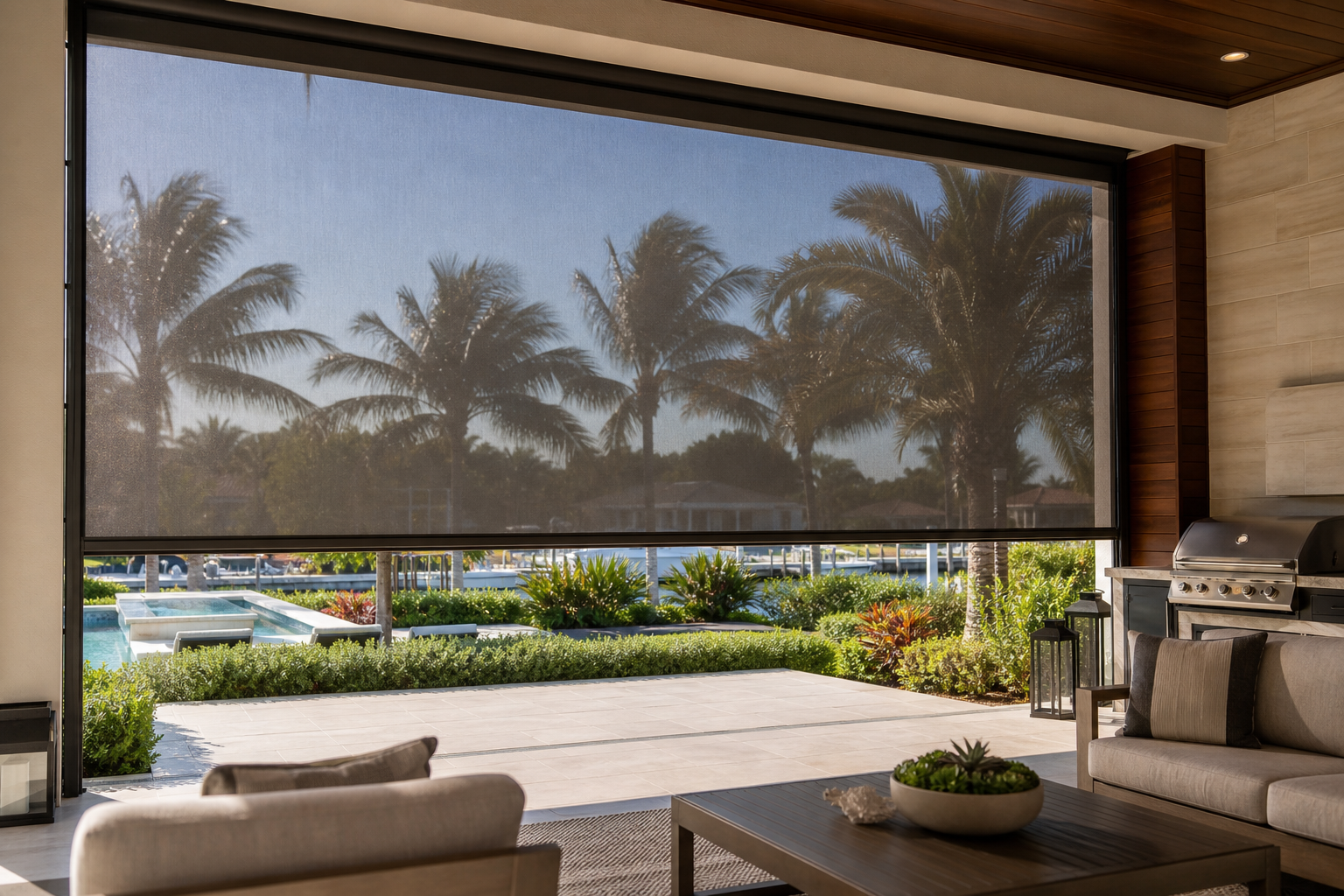
Large patios, lanais, balconies, and indoor-outdoor living areas are common in South Florida homes. They also create a practical challenge: how do you control sunlight, insects, heat, and privacy without blocking the view or making the space feel enclosed? Motorized patio screens for large openings can provide a streamlined solution when traditional doors, curtains, or manually operated shades are not practical.
These screens are designed to cover wide or tall openings with the push of a button, remote control, wall switch, or compatible smart-home system. Depending on the screen material and configuration, they may help soften sunlight, improve privacy, reduce glare, and make a patio more comfortable for everyday use.
Choosing the right system requires more than selecting a fabric color. Opening size, mounting conditions, screen purpose, power access, control preferences, and South Florida’s intense sun all matter. This guide explains the main considerations so you can make an informed decision for your home or property.
What Are Motorized Patio Screens?
Motorized patio screens are powered shades or screens installed over outdoor openings. A motor raises and lowers the screen, allowing you to adjust the space without manually pulling a shade or moving a panel. Many systems are custom measured so the screen fits the opening and operates smoothly within its intended mounting area.
A typical system may include a roll-up screen, side channels or guides, a top housing or cassette, a motor, and a control method. The exact design depends on the opening and the type of screen selected. Some installations cover a single wide opening, while others use multiple screens to accommodate a large patio or a series of openings.
Motorized screens are not the same as storm shutters or impact-rated protection. Unless a product is specifically designed and approved for that purpose, an outdoor screen should not be treated as hurricane protection. A professional consultation can help clarify what the selected system is designed to do.
Why Use Motorized Screens for Large Openings?
Convenient operation
Large screens can be difficult to operate by hand, especially when they span a wide patio or extend several feet above the floor. Motorization makes it easier to adjust the screen from a convenient location. This is especially useful when the screen is frequently raised and lowered throughout the day.
More comfortable outdoor living
South Florida patios often receive strong sun for much of the year. A screen can help manage direct sunlight and glare, making an outdoor seating or dining area more comfortable. It may also help create a more usable transition between the interior and exterior of the home.
Privacy without permanently closing the view
Depending on the fabric’s openness and color, an outdoor screen can provide a degree of daytime privacy while preserving some visibility to the outside. When privacy is not needed, the screen can be raised to keep the opening open and visually connected to the yard, pool area, or landscape.
A cleaner, more integrated appearance
Large openings can look unfinished when covered with mismatched curtains, temporary shades, or several manually operated products. A custom motorized screen can be designed around the architecture and installed with a coordinated housing and side guides. This creates a more intentional appearance for modern homes, covered patios, and outdoor entertaining areas.
Where Are Motorized Patio Screens Commonly Used?
Motorized screens may be suitable for a variety of large openings, including:
- Covered patios and lanais
- Outdoor kitchens and dining areas
- Pool decks and screened living spaces
- Wide sliding glass door openings
- Balconies and elevated outdoor areas
- Cabana-style spaces and covered terraces
- Commercial outdoor seating areas, depending on the application
They can be especially useful when a space has a broad, unobstructed opening that cannot be easily divided with standard doors or interior window treatments. The mounting surface and surrounding structure still need to be evaluated before a system is selected.
How to Choose the Right Screen for a Large Opening
1. Start with the purpose of the screen
Think about what you want the screen to accomplish. Do you primarily need sun control, glare reduction, privacy, insect protection, or a combination of these goals? Different fabrics and screen constructions are intended for different uses, so identifying the main priority helps narrow the options.
For example, a solar screen may be appropriate when preserving the outdoor view and managing bright sunlight are important. A more privacy-focused material may be preferable when neighboring homes or nearby walkways are visible. Insect-control applications may require a screen designed specifically for that purpose.
2. Consider openness and visibility
Screen openness refers to how tightly the material is woven. A more open fabric generally allows more outward visibility and airflow, while a tighter weave may provide more visual privacy and light filtering. The right balance depends on the orientation of the opening, the surrounding properties, and how the space is used.
Color also affects the experience. Darker screen materials can often make it easier to see through the screen from the shaded side, while lighter colors may create a brighter appearance. A professional window treatment specialist can show samples in relation to your home’s light conditions rather than relying on a small online image.
For additional information about outdoor solar shades and patio applications, see Solar Shades for Patios and Lanais: A South Florida Guide.
3. Measure the opening and mounting area carefully
Large openings require accurate measurements because small discrepancies can affect alignment, clearance, and the appearance of the finished installation. Measurements should account for the width and height of the opening, available side space, ceiling or header conditions, floor level, and any obstructions such as lighting, fans, beams, or railings.
Professional measurement is particularly important for multiple screens installed next to one another. The screens need to be coordinated so the overall installation looks balanced and operates as intended.
4. Review the power and control options
Motorized patio screens may be operated with a remote, wall control, or another compatible control option. Some homeowners prefer a simple dedicated remote, while others want the screen incorporated into a broader smart-home setup. Power access should be discussed early, since the installation may require planning around existing electrical conditions.
Ask how the system is operated, where the controls will be located, and what happens if power is unavailable. The appropriate solution depends on the product and installation requirements, so these details should be confirmed during the consultation.
5. Think about the screen housing and side guides
The top housing protects the rolled screen and motor when the screen is raised. Side channels or guides help keep the screen positioned within the opening. These components affect both appearance and performance, particularly on a large installation.
Housing and guide colors can often be coordinated with the home’s exterior finishes. In a modern property, a discreet housing may blend into the structure. In other installations, a contrasting frame may provide a more defined architectural look.
South Florida Considerations for Outdoor Screens
Miami-Dade County and surrounding South Florida communities present specific conditions that should be considered when selecting outdoor window treatments. Strong sunlight, heat, humidity, salt air near coastal locations, and frequent transitions between indoor and outdoor spaces can all influence the material and installation approach.
- Sun exposure: Identify which openings receive direct morning or afternoon sun. A screen may be used differently on an east-facing opening than on a west-facing one.
- Humidity and moisture: Outdoor products should be selected for the intended environment, with appropriate care and maintenance in mind.
- Coastal conditions: Homes near Miami Beach, Key Biscayne, or other coastal areas may need additional attention to cleaning and hardware maintenance because of salt exposure.
- Wind and movement: Large screens need suitable guides, mounting, and operating conditions. A professional should evaluate the opening and explain how the system should be used during unfavorable weather.
- Indoor-outdoor design: Consider how the screen will look from inside the home when it is raised and lowered. Fabric color and openness can affect the view and the overall feel of the room.
A screen can improve comfort, but it is not a substitute for appropriate weather planning. Homeowners should follow the product’s operating and care instructions, including guidance about when to raise the screen during severe weather.
Motorized Patio Screens Compared with Other Options
| Option | Potential advantages | Considerations |
|---|---|---|
| Motorized patio screen | Convenient operation, clean appearance, suitable for wide openings | Requires accurate measurement, power planning, and appropriate outdoor materials |
| Manual outdoor shade | Simple operation and no motorized control system | Can be less convenient for very wide or tall openings |
| Sliding or hinged panels | Can provide a more permanent enclosure or separation | Requires space for panels to open, close, or stack |
| Interior shades | Useful for rooms facing the patio and can coordinate with indoor design | Do not directly screen the outdoor opening or create the same patio enclosure effect |
The best choice depends on whether your priority is sun control, insect protection, privacy, flexibility, or a more permanent enclosure. Some homes benefit from combining outdoor screens with interior shades for layered control.
Designing a More Comfortable Outdoor Living Area
Motorized screens are most effective when they are considered as part of the entire space. Look at the patio’s furniture placement, lighting, ceiling fans, doors, flooring, and sightlines. A screen that operates behind furniture or near a walkway needs enough clearance for comfortable use and maintenance.
It is also helpful to consider how often the screen will be used. If you expect to adjust it several times a day, motorization may be especially valuable. If the screen will remain in one position for long periods, fabric selection and the appearance of the housing may be the higher priorities.
For nearby interior openings, coordinated motorized shades can create a consistent look between the patio and the room it serves. You can learn more about large-opening interior applications in Motorized Solar Shades for Large Windows: A South Florida Guide.
Questions to Ask Before Installation
- What is the primary purpose of the screen: sun control, privacy, insects, or several goals?
- What screen openness and color are appropriate for the view and sun exposure?
- Where will the screen housing, guides, and motor be positioned?
- What power and control options are available for this opening?
- How should the screen be operated and maintained in South Florida weather?
- Are there beams, fans, lights, railings, or uneven surfaces that affect the installation?
Frequently Asked Questions
Can motorized patio screens cover very wide openings?
They can be designed for many large openings, but the appropriate configuration depends on the opening’s dimensions, structure, mounting conditions, and the selected product. A professional measurement is necessary to determine whether one screen or multiple coordinated screens are appropriate.
Do motorized patio screens provide privacy?
They can provide daytime privacy depending on the fabric, openness, lighting conditions, and viewing angle. No screen provides the same privacy in every situation, so samples should be reviewed at the property when possible.
Can outdoor screens block heat and glare?
Screen fabrics can help manage direct sunlight and glare, which may make a patio more comfortable. The result depends on the opening’s direction, the fabric, the screen’s position, and other conditions around the space.
Are motorized patio screens hurricane shutters?
Not generally. A patio screen should not be considered storm protection unless the specific product has been designed and approved for that purpose. Ask the installer to explain the product’s intended use and weather limitations.
Do I need professional installation for a large patio screen?
Professional installation is recommended for large openings because accurate measurement, secure mounting, alignment, power planning, and product-specific adjustments all affect the finished result. An experienced installer can also identify potential clearance or structural issues before ordering.
Plan Your Large-Opening Screen Installation
Motorized patio screens can make a wide outdoor opening more comfortable, private, and flexible while preserving the connection between the home and the outdoors. The right solution depends on the screen’s purpose, the fabric, the opening, the mounting conditions, and how you plan to operate the system.
Floridian Blinds helps South Florida homeowners and property owners explore custom window treatment and outdoor screening solutions for their spaces. Contact us for a free consultation and measurement to discuss your large opening, review suitable options, and plan a professional installation.