Solar Shades for Patios and Lanais: A South Florida Guide
Learn how solar shades and outdoor screens can improve comfort, privacy, and light control on South Florida patios and lanais.
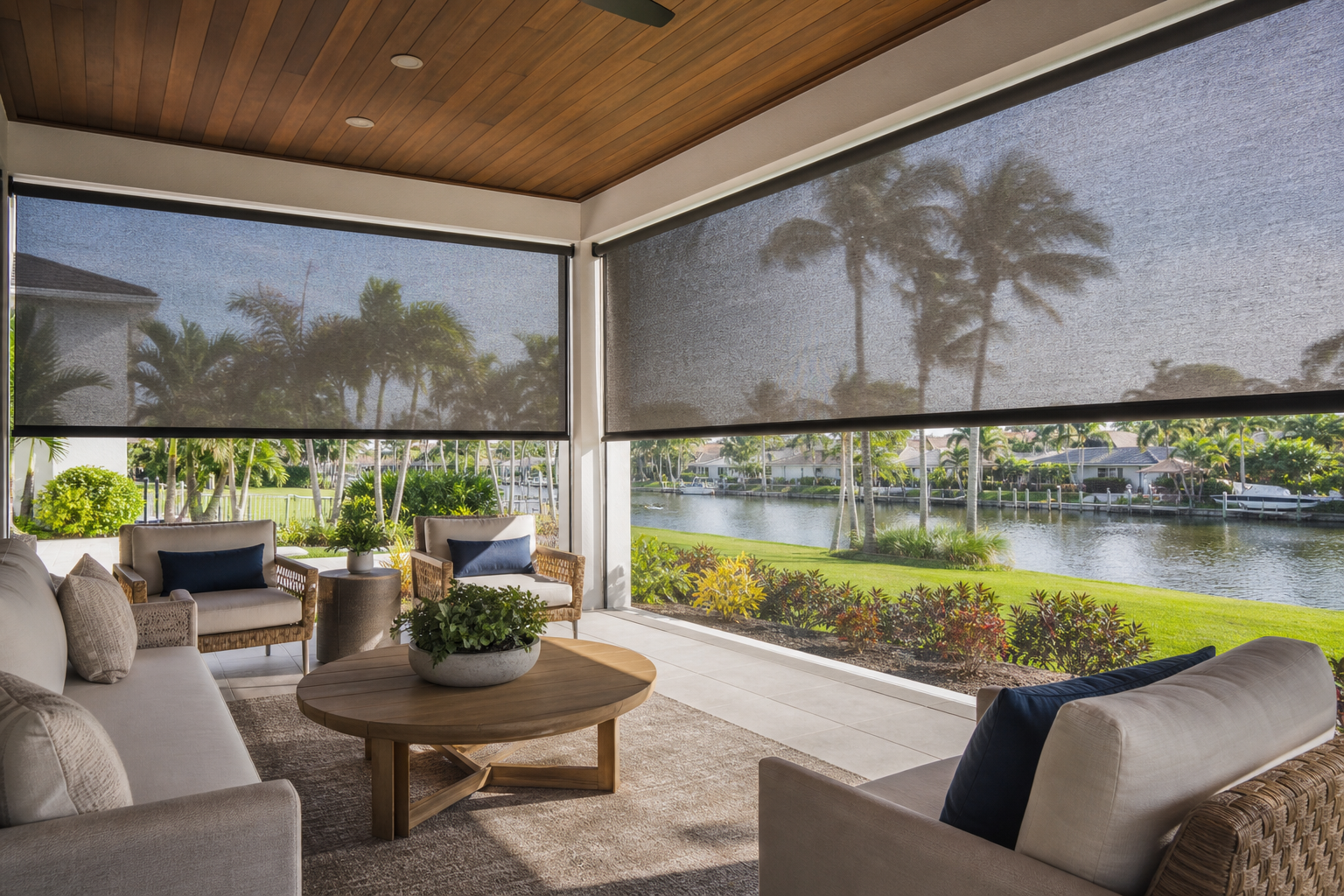
Patios and lanais are some of the most enjoyable spaces in a South Florida home, but intense sunlight, heat, glare, and limited privacy can make them uncomfortable during much of the day. The right window or patio treatment can help create a more usable indoor-outdoor area without completely blocking the view.
Solar shades for patios and lanais are one option worth considering, especially when your space has screened openings, glass doors, or large windows. They are designed to filter sunlight and reduce glare while preserving some visibility to the outdoors. For more exposed openings, outdoor screens may be a better fit. Understanding the difference can help you choose a solution that matches your patio’s construction, exposure, and daily use.
What Are Solar Shades for Patios and Lanais?
Solar shades are roller-style shades made with a screen-like fabric. Instead of creating a completely solid barrier, the material filters incoming sunlight. This can soften glare, reduce the harshness of direct light, and provide daytime privacy while maintaining an outward view.
On a patio or lanai, solar shades may be used on windows, sliding glass doors, screened openings, or other areas where sunlight enters the home. They can be installed as individual shades for separate openings or designed as part of a coordinated treatment throughout the space.
Solar shades are often considered for patios and lanais because they support a more open appearance than many opaque coverings. However, they are not the same as outdoor patio screens. The best application depends on whether the shade will be installed inside a protected opening or exposed directly to outdoor conditions.
Solar Shades vs. Outdoor Screens
Both solar shades and outdoor screens can improve a patio or lanai, but they serve somewhat different purposes.
| Feature | Solar shades | Outdoor screens |
|---|---|---|
| Typical placement | Inside windows, doors, or protected openings | Designed for certain exterior patio or lanai openings |
| Main purpose | Light filtering, glare control, and daytime privacy | Sun control, privacy, and greater separation from outdoor conditions |
| Appearance | Clean, streamlined roller-shade look | Can create a more enclosed outdoor living area |
| View through fabric | Often maintains an outward view, depending on fabric selection | Varies based on screen material and openness |
| Best starting point | Glass doors, windows, and screened or sheltered areas | Exposed patio openings and outdoor living spaces |
A professional consultation is important when a shade will be exposed to wind, rain, humidity, or other outdoor conditions. The mounting location, opening size, structure, and intended use all affect which type of treatment is appropriate.
Why Use Solar Shades on a South Florida Patio?
Reduce glare without losing the view
Bright sunlight can make it difficult to watch television, work on a laptop, or enjoy a meal near a patio door. Solar fabric filters light while allowing some visibility through the material. This makes it a practical option for homeowners who want a more comfortable space without covering the view entirely.
Improve daytime privacy
Depending on the fabric and lighting conditions, solar shades can make it harder for people outside to see into the home during the day. Privacy performance is influenced by the shade’s openness, the brightness inside and outside, and whether the shade is raised or lowered.
It is important to understand that many solar shades provide primarily daytime privacy. At night, interior lights can change the balance, making the inside of the home more visible from outside. If nighttime privacy is a priority, you may want to combine solar shades with another window treatment or consider a more opaque fabric.
Support a cooler, more comfortable room
South Florida patios and rooms with large glass openings can become uncomfortably warm when direct sunlight enters throughout the day. Solar shades help manage the amount and intensity of sunlight coming through the opening. They are not a replacement for air conditioning or insulated construction, but they can be part of a broader strategy for improving comfort and managing solar exposure.
For more information about how solar shades can fit into a Miami-area home, see Solar Shades and Energy Savings in Miami.
Protect furnishings from direct sunlight
Long-term exposure to sunlight can affect flooring, furniture, artwork, and other interior finishes. Filtering strong light through a patio door or large window may help reduce the amount of direct sunlight reaching these surfaces. The level of protection depends on the selected fabric, the opening, and the amount of exposure.
Create a cleaner, more modern design
Custom solar shades have a simple roller profile that works well with contemporary interiors and transitional spaces. They can be selected to coordinate with wall colors, flooring, furniture, and architectural details. When multiple openings are treated together, consistent shade placement can make a large patio wall look more intentional and finished.
Choosing the Right Solar Shade Fabric
Fabric selection is one of the most important decisions when planning solar shades for patios and lanais. Two shades that look similar at first glance can provide different levels of light filtering, privacy, and visibility.
Consider openness
Solar shade fabrics are commonly described by their openness, which refers to how tightly the material is woven. In simple terms, a more open fabric generally allows more view and daylight through, while a tighter fabric can provide more filtering and privacy. Your ideal balance depends on whether your priority is preserving the view, reducing glare, or creating a greater sense of separation.
Think about the direction of the opening
A patio facing east may receive strong morning sun, while a west-facing opening can experience intense afternoon glare. South- and southwest-facing exposures may also receive substantial sunlight during the day. The direction of the opening, nearby landscaping, roof overhangs, and surrounding buildings should all be considered before choosing the fabric.
Coordinate color with performance
Color affects both appearance and the way a shade interacts with light. A professional window treatment specialist can help you compare fabric samples in relation to your flooring, walls, furniture, and outdoor finishes. Looking at samples in the actual room is often more helpful than choosing from a small screen image.
For additional guidance on selecting fabrics for local conditions, read Best Roller Shade Fabrics for Miami’s Climate.
Should You Choose Manual or Motorized Solar Shades?
Manual shades may be a practical choice for smaller or easily reachable openings. Motorized shades can be especially convenient for large patio doors, tall windows, and openings that are difficult to access.
With motorization, shades can be adjusted without reaching across furniture or walking to each opening. This is useful when several shades need to be positioned together to manage changing sunlight throughout the day. Motorized treatments can also support a clean appearance by eliminating the need for operating cords.
Homeowners interested in smart-home features may want to ask about control options during the consultation. Compatibility and available features depend on the selected product and system, so it is best to discuss how you want to operate the shades before making a decision.
Learn more in Motorized Roller Shades for Smart Homes.
Important Considerations for Patios and Lanais
Indoor installation or outdoor exposure?
Start by identifying where the treatment will be mounted. A solar shade installed inside a glass door or screened opening has different requirements from a screen installed on an exposed patio. Outdoor applications need careful consideration of the structure, mounting surface, weather exposure, and movement caused by breezes.
Large openings and sliding doors
Wide sliding doors and expansive lanai openings may require more than one shade to achieve a practical fit and balanced appearance. A professional measurement helps determine how the shades should align, where they should be mounted, and how they will operate around door handles, furniture, and architectural features.
Wind, moisture, and maintenance
Patios and lanais can be exposed to humidity, salt air, dust, and airborne debris, particularly in coastal areas such as Miami Beach and Key Biscayne. Ask how the recommended material should be cleaned and maintained for its intended location. Avoid assuming that an indoor solar shade is suitable for direct outdoor exposure.
Privacy after sunset
If the patio connects to a living room, bedroom, or other private space, think about how the treatment will look and perform after dark. Solar shades may need to be paired with blackout or room-darkening shades, curtains, or another privacy layer if nighttime coverage is important.
How to Plan a Solar Shade Installation
- Identify the problem. Decide whether your main concern is glare, heat, daytime privacy, fading, or the need to make the patio more usable.
- Review each opening. Note the size, direction, frame style, door operation, and whether the opening is protected or exposed.
- Compare fabric options. Look at openness, color, visibility, and light filtering rather than choosing based on appearance alone.
- Decide how you want to operate the shades. Consider manual operation for accessible openings and motorization for large, tall, or multiple shades.
- Schedule professional measurement. Accurate measurements help prevent alignment problems and ensure the selected treatment works with the opening.
- Plan for installation. The installer should confirm mounting locations, shade clearances, control placement, and any details that could affect operation.
Are Solar Shades Right for Your Patio or Lanai?
Solar shades may be a good choice if you want to reduce glare, soften strong sunlight, maintain an outdoor view, and add daytime privacy with a streamlined design. They are particularly useful for windows and glass doors that face bright exposures.
They may not be the complete solution if you need total darkness, full nighttime privacy, or a treatment that will be directly exposed to demanding outdoor conditions. In those cases, blackout shades, layered window treatments, or outdoor screens may be more appropriate. A custom recommendation should account for how the space is built and how you plan to use it.
Frequently Asked Questions
Can solar shades be used on an outdoor patio?
Some solar-shade materials and systems may be suitable for protected outdoor applications, while others are intended for interior use. The correct choice depends on exposure to wind, moisture, sunlight, and the available mounting structure. An assessment of the patio is recommended before selecting a product.
Do solar shades completely block the sun?
Solar shades filter sunlight rather than automatically creating complete darkness. Their performance depends on the fabric, openness, color, and installation. If you need a dark room for sleeping or home theater use, ask about blackout options instead.
Can I see outside through solar shades?
Many solar fabrics are designed to preserve some outward visibility. How clear the view is depends on the fabric’s openness, the lighting conditions, and the direction of the light.
Do solar shades provide privacy at night?
Solar shades are generally most effective for daytime privacy. When interior lights are on after dark, visibility can change. If nighttime privacy is important, discuss a layered or more opaque treatment.
Are motorized solar shades useful for patios and lanais?
They can be helpful for large, tall, or difficult-to-reach openings and for homeowners who want to adjust several shades conveniently. Your installer can explain the available operating options for the selected shade system.
Get Guidance for Your Patio or Lanai
The right treatment depends on more than the appearance of the fabric. Exposure, opening size, privacy needs, outdoor conditions, and the way you use the space all matter. Floridian Blinds can help South Florida homeowners compare solar shades, motorized shades, and outdoor screens for a custom solution.
Contact us for a free consultation and measurement.