Motorized Shades for Luxury Homes: A South Florida Guide
Learn how motorized shades can improve comfort, privacy, light control, and design in luxury homes across Miami-Dade County and South Florida.
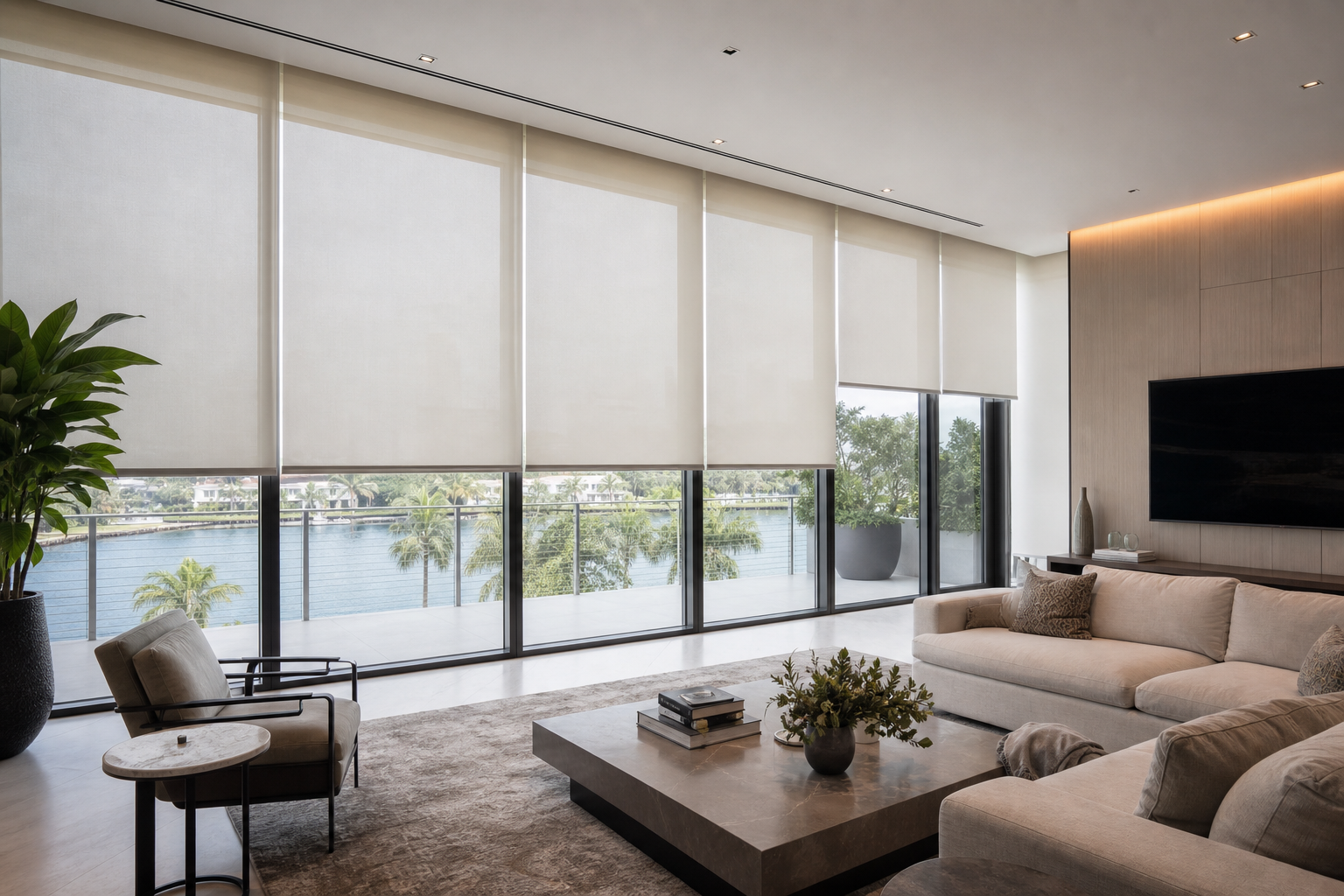
Motorized shades for luxury homes are about more than convenience. In a thoughtfully designed South Florida home, window treatments need to complement the architecture, manage intense sunlight, protect privacy, and make large or hard-to-reach windows easier to control. Motorization brings these functions together in a clean, modern system.
Whether you are furnishing a new home in Miami, updating a high-rise in Miami Beach, or finishing a custom residence in Coral Gables, the right shades can support both the appearance and daily comfort of your interiors. This guide explains what to consider when selecting motorized shades for a luxury home, including light control, privacy, automation, design, installation, and outdoor living.
Why Motorized Shades Are a Natural Fit for Luxury Homes
Luxury homes often include expansive glass walls, tall windows, multiple rooms with different lighting needs, and open-concept spaces. Manually adjusting every shade can be inconvenient, especially when windows are oversized, positioned high on a wall, or located behind furniture.
Motorized shades allow homeowners to operate individual shades or groups of shades with a control system. Depending on the selected product and setup, operation may be available through a remote, wall control, timer, or compatible smart-home system. A professional consultation can help determine which control method fits the home and the way your household uses each room.
- Convenience: Adjust shades without walking from window to window.
- Consistent design: Raise or lower multiple shades together for a coordinated appearance.
- Better access: Operate shades installed on tall, wide, or difficult-to-reach windows.
- Flexible light control: Create different lighting conditions for entertaining, relaxing, working, or sleeping.
- Privacy on demand: Cover exposed windows quickly, particularly in the evening.
South Florida Considerations for Motorized Window Treatments
Window treatments in Miami-Dade County must account for conditions that are especially important in South Florida. Strong sunlight can make rooms uncomfortable and create glare on televisions, computer screens, and reflective surfaces. Heat entering through windows can also affect how often homeowners use air conditioning.
Motorized shades do not replace good window design or insulation, but they can make it easier to manage sunlight throughout the day. Homeowners may choose to close shades during periods of intense sun and open them later when the light is softer. This is particularly useful for homes with large west-facing windows or rooms that receive direct afternoon sunlight.
Privacy is another important consideration. Homes in Miami, Kendall, Doral, Pinecrest, and other communities may have windows facing neighboring properties, streets, pools, or shared outdoor areas. A scheduled or conveniently controlled shade system can help maintain privacy without leaving window coverings closed all day.
Choosing the Right Shade Style for a Luxury Interior
Motorization is the operating method, not a single shade style. The best product depends on the room, window size, amount of sunlight, desired privacy, and overall design direction.
Motorized Roller Shades
Roller shades offer a streamlined look that works well with contemporary, transitional, and minimalist interiors. They are available in materials and openness levels suited to different goals, including filtered light, glare reduction, daytime privacy, or stronger room darkening.
Because the fabric rolls neatly into the headrail, roller shades can maintain a clean profile across a wall of windows. They are often considered for living rooms, dining areas, bedrooms, offices, and media spaces.
Motorized Solar Shades
Solar shades are designed to help manage glare and intense daylight while maintaining an outward view, depending on the fabric selected. They can be a practical option for large windows overlooking a garden, water view, or cityscape.
Solar shades are not intended to provide complete darkness. Their performance depends on fabric openness, color, window orientation, and interior lighting. For guidance on fabric selection, see our guide to motorized solar shades for large windows.
Motorized Blackout Shades
Blackout shades are commonly selected for bedrooms, nurseries, guest rooms, media rooms, and spaces where controlling early morning or exterior light is a priority. They can also help create a more comfortable environment for daytime rest or movie viewing.
For the darkest result, the shade fabric is only part of the equation. Light can also enter around the sides and bottom of a window, so the installation approach, window shape, and shade design should be reviewed during professional measurement.
Motorized Zebra Shades
Zebra shades combine alternating bands of sheer and more opaque fabric. By adjusting the alignment of the bands, homeowners can fine-tune light and privacy throughout the day. Their layered appearance adds visual interest while maintaining a relatively modern profile.
They may be a good choice for living areas, bedrooms, and other rooms where homeowners want more flexibility than a simple open-or-closed shade can provide.
Important Features to Evaluate Before Buying
A luxury motorized shade project should be planned around the home rather than selected from a single sample or product photograph. These are the main factors to discuss with a window treatment professional.
Window size and configuration
Large openings, corner windows, sliders, arched windows, and unusually tall windows may require different shade configurations. A professional measurement helps identify mounting conditions, clearances, alignment requirements, and the most practical way to divide a wide opening.
Light and privacy goals
Consider how each room is used at different times of day. A living room may need glare control while preserving a view. A bedroom may need more privacy and reduced morning light. A bathroom may require privacy throughout the day, while a home office may benefit from minimizing reflections on screens.
It is often more useful to plan room by room than to install the same fabric everywhere.
Power and control options
Motorized shades may use different power and control arrangements depending on the product and project. During the consultation, ask how the shades will be powered, where controls will be located, and how multiple rooms can be organized.
If smart-home compatibility is important, discuss the systems already used in the home before making a product decision. Compatibility should be confirmed rather than assumed, particularly when coordinating with an integrator, electrician, builder, or interior designer.
Fabric color and interior design
Shade color affects more than appearance. It can influence the character of the room, the way daylight is filtered, and how visible the shade is from outside. Neutral shades may blend into walls and architectural finishes, while a contrasting fabric can become a deliberate design element.
Samples should be viewed in the actual room whenever possible. A fabric can look different under direct South Florida sunlight, warm interior lighting, and evening conditions.
Professional measurement and installation
Accurate measurement is essential for a polished result. It helps ensure that shades are aligned across a series of windows and that the selected products fit the available space. Professional installation also matters for mounting, operation, appearance, and the coordination of multiple shades.
This is especially important in luxury homes with large expanses of glass, custom millwork, layered window treatments, or detailed ceiling and wall finishes. A careful installation plan can help protect the design intent of the room.
Using Automation to Improve Everyday Comfort
Motorized shades can be operated manually when needed, but automation can make them more useful throughout the day. For example, homeowners may choose to group shades by room, elevation, or exposure. A west-facing group could be managed differently from windows that receive morning light.
Some homeowners use scheduled adjustments to support privacy in the evening or reduce direct sunlight during the hottest part of the day. Others prefer simple remote or wall control without a more advanced schedule. There is no single correct level of automation; the best setup is the one that feels natural for the household.
When planning automation, consider:
- Which windows should operate together?
- Are there rooms where privacy changes at predictable times?
- Do you need access to controls from a bed, sofa, or desk?
- Would different settings make sense for weekdays, weekends, or entertaining?
- Will the shades be coordinated with other smart-home systems?
Motorized Shades and Indoor-Outdoor Living
South Florida homes frequently connect interior living spaces with covered patios, terraces, lanais, and pool areas. Interior motorized shades can manage sunlight through glass doors and windows, while outdoor screens may help make covered spaces more comfortable and private.
These products serve different purposes and should be selected for their installation environment. Interior shades are designed for indoor window openings, while patio screens and outdoor shades are planned for exterior applications. If your project includes a large outdoor opening, our guide to motorized patio screens for large openings explains several planning considerations.
Common Mistakes to Avoid
Choosing a product before evaluating the room
A shade that works well in a bedroom may not be the right choice for a bright living room or a home office. Start with the room's function, sun exposure, privacy needs, and design goals.
Focusing only on the motor
Quiet, convenient operation is important, but the fabric, mounting method, coverage, and installation quality also affect the finished result. A motor cannot compensate for a shade that does not provide the desired light or privacy control.
Using one control plan for the entire home
Different rooms often need different settings. Grouping every shade together may be convenient in some situations but limiting in others. Plan control zones around how the home is actually used.
Skipping professional measurement
Small inaccuracies can become more noticeable across a wall of windows. Professional measurement helps address alignment, mounting depth, window variations, and access to controls before installation begins.
Frequently Asked Questions
Are motorized shades suitable for large windows?
They can be a practical solution for large or hard-to-reach windows, but the appropriate product and configuration depend on the opening, shade material, mounting conditions, and control requirements. A professional measurement is the best way to evaluate the options.
Can motorized shades provide complete privacy at night?
Some shade fabrics are designed for stronger privacy than others. Privacy also depends on interior lighting, window location, and coverage around the shade. Discuss the room's nighttime privacy needs before selecting fabric.
Are solar shades the same as blackout shades?
No. Solar shades are generally selected to manage glare and strong daylight while preserving some view, depending on the fabric. Blackout shades are intended to reduce incoming light much more substantially. The better choice depends on how the room is used.
Can motorized shades be used in every room?
Motorized shades may be considered throughout a home, including bedrooms, living rooms, offices, media rooms, and tall or difficult-to-reach windows. Each room should be evaluated individually for light, privacy, design, and access needs.
How should I plan motorized shades for a new construction or renovation?
Start early enough to coordinate window dimensions, electrical planning, ceiling details, trim, smart-home systems, and installation access. Including a window treatment professional during the design process can help prevent conflicts later.
Plan a Custom Motorized Shade Project
Motorized shades for luxury homes should feel integrated into the architecture and simple to use every day. The right solution balances fabric, light control, privacy, automation, and professional installation rather than treating any one feature as the entire decision.
Floridian Blinds helps homeowners and design professionals throughout Miami-Dade County and surrounding South Florida communities evaluate custom shade options for modern interiors and large window openings. Contact us for a free consultation and measurement.