Outdoor Screens for Lanais: A Practical Guide for South Florida Homes
Learn how outdoor screens for lanais can improve comfort, privacy, and indoor-outdoor living while helping South Florida homeowners choose the right screen solution.
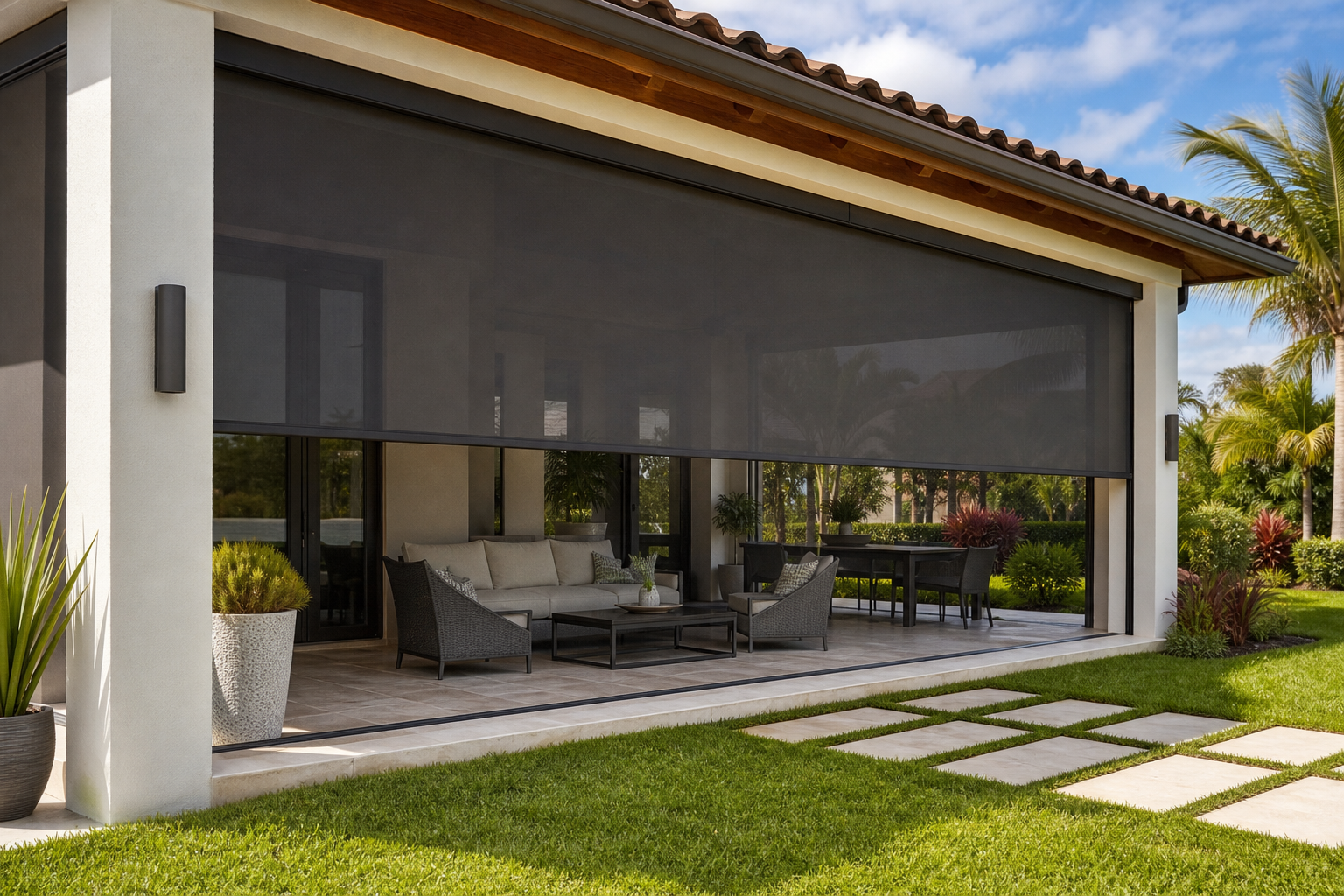
A lanai can be one of the most enjoyable areas of a South Florida home, offering a comfortable transition between indoor living spaces and the outdoors. However, intense sunlight, heat, insects, and limited privacy can make an open lanai difficult to use throughout the day.
Outdoor screens for lanais can help make these spaces more comfortable and functional. Depending on the screen design and fabric selected, they may provide shade, reduce glare, improve privacy, and create a more pleasant setting for relaxing, dining, or entertaining. They can also support the indoor-outdoor lifestyle that is common throughout Miami-Dade County and surrounding South Florida communities.
This guide explains how lanai screens work, what to consider before choosing them, and why professional measurement and installation matter for a finished result that fits your home.
What Are Outdoor Screens for Lanais?
Outdoor lanai screens are window-treatment-style screens designed for covered patios, lanais, porches, and other semi-outdoor living areas. They are typically installed across open sides of the space and can be raised or lowered when needed.
Unlike a permanent wall or enclosed patio system, a roll-down outdoor screen can give homeowners more flexibility. You can open the lanai when you want an unobstructed connection to the yard or pool area, then lower the screen when you need additional shade, privacy, or protection from insects.
The right solution depends on the structure of the lanai, the amount of sun it receives, the direction of the openings, and how you plan to use the space. A screen for a shaded back porch may have different requirements from one installed across a west-facing lanai that receives strong afternoon sun.
Why South Florida Homeowners Consider Lanai Screens
South Florida homes are exposed to bright sun, heat, humidity, and changing outdoor conditions for much of the year. These factors can affect how comfortable a lanai feels and how often the space is used.
Manage sunlight and glare
Direct sunlight can make it difficult to relax on a lanai, especially when the space faces east or west. An outdoor screen can soften incoming light and reduce glare on seating areas, tables, televisions, and other surfaces.
Screen openness and fabric color both influence the amount of light that passes through. A professional consultation can help you compare options based on whether your priority is a brighter view, stronger light control, or a balance of both.
Make the space more comfortable
A screened lanai may feel more comfortable than a completely open patio because it can reduce exposure to direct sun. It will not replace a dedicated cooling system, and it should not be treated as a substitute for weatherproof construction, but it can make the space more inviting during everyday use.
This can be especially helpful for homeowners who want to use their lanai for morning coffee, outdoor meals, reading, or gatherings without being directly exposed to harsh sunlight.
Improve privacy
Many South Florida homes are close to neighboring properties, streets, walkways, or shared community spaces. Depending on the fabric and viewing angle, outdoor screens can add a layer of visual privacy without completely blocking the outdoor setting.
Privacy needs can vary throughout the day. A screen that provides useful daytime privacy may offer less privacy at night when interior lights are on. For that reason, it is important to discuss both daytime and evening use before selecting a fabric.
Help limit insects
Outdoor screens can also help create a more enjoyable environment by reducing the number of insects entering an open lanai. The level of insect control depends on the screen design, how well the opening is covered, and whether other gaps remain around the structure.
A screen is not the same as a fully enclosed room. If insect control is a major priority, ask how the proposed system will interact with the lanai’s posts, ceiling, floor, doors, and other openings.
Outdoor Screen Fabrics and Openness
One of the most important decisions is the screen fabric. Outdoor fabrics are commonly evaluated by their openness, which describes how tightly the material is woven and how much visibility and light transmission it provides.
More open fabrics
A more open screen generally preserves more of the view and allows more natural light through. This can be a good choice when the lanai overlooks a garden, pool, or attractive landscape and you want to maintain a strong visual connection with the outdoors.
The tradeoff is that a more open fabric may provide less privacy and less light control than a more closed option.
Less open fabrics
A less open fabric can provide more shade, glare control, and privacy. It may be more appropriate for a lanai that receives strong afternoon sun or is exposed to neighboring homes.
Because it allows less visibility, however, it may change the overall feel of the space. The best choice is usually a balance between comfort, view preservation, privacy, and the appearance you want from inside and outside the lanai.
Color considerations
Screen color can affect both appearance and visibility. Darker materials may make it easier to see through the screen from the shaded side, while lighter colors can create a brighter look. The surrounding exterior finishes, furniture, flooring, and landscaping should all be considered when choosing a color.
It is helpful to review actual samples in the lanai rather than making a decision based only on a small digital image. Natural light can change how the material looks at different times of day.
Manual or Motorized Outdoor Screens?
Outdoor screens for lanais may be operated manually or with motorization, depending on the design and installation requirements. Both approaches can be useful, but the best option depends on the size, location, and frequency of use.
Manual screens
Manual operation can be a practical choice for a smaller or easily accessible opening. It may also suit homeowners who plan to adjust the screen only occasionally.
Before choosing a manual system, consider how easy it will be to reach and operate the screen. A tall opening or a screen positioned behind furniture may be inconvenient if it must be adjusted frequently.
Motorized screens
Motorization can make it easier to raise or lower a screen with the press of a button or through an appropriate control system. It can be particularly convenient for wide openings, multiple screens, or lanais that are used at different times of day.
Motorized operation may also support a more consistent routine. For example, homeowners may lower screens during the brightest part of the afternoon and open them later when they want a clearer view. If you are considering automated window treatments elsewhere in the home, it may be useful to discuss how lanai screens could fit into your broader shade-control plans.
When comparing motorized options, ask about power access, control placement, maintenance, and how the system will be operated during a power interruption. These details should be reviewed before installation rather than after the screen has been ordered.
Important Factors to Consider Before Buying Lanai Screens
1. The structure of the lanai
Every lanai has different dimensions, posts, beams, ceiling heights, flooring transitions, and surrounding openings. These details affect where a screen can be mounted and how it will travel when raised or lowered.
A professional measurement should account for the full opening, not just the width between two visible posts. Mounting surfaces, trim, lighting, ceiling fans, doors, and nearby architectural features may all influence the final design.
2. Sun exposure throughout the day
Think about when the lanai becomes uncomfortable. Morning sun, afternoon heat, and low evening glare can create different challenges. A screen selected for a west-facing opening may need stronger light control than one used on a shaded northern exposure.
It is also worth considering whether you want to screen every opening or only the side receiving the most direct sunlight.
3. Desired level of privacy
Decide whether your main goal is privacy from nearby homes, reduced visibility from the street, or simply a more comfortable sense of enclosure. Privacy can change based on the direction of the light, the height of nearby properties, and whether the interior of the lanai is illuminated at night.
4. View preservation
If your lanai overlooks a pool, garden, canal, or landscaped yard, you may want a screen that preserves the view when lowered. Ask to compare fabric openness levels and view samples before selecting a material.
5. Wind and weather exposure
Outdoor screens are installed in exposed areas, so the design should be appropriate for the lanai’s conditions. Consider how much wind the space receives, whether the lanai is protected by the home, and how the screen will be stored or positioned during severe weather.
Outdoor screens should not be assumed to provide storm protection unless a particular product has been specifically designed, tested, and approved for that purpose. Discuss how the system should be used during significant weather events and follow the manufacturer’s guidance.
6. Cleaning and upkeep
South Florida’s outdoor conditions can expose screens to dust, pollen, humidity, salt air, and other airborne residue. Ask how the selected material should be cleaned and whether the screen can be accessed easily for routine care.
Regular, gentle cleaning according to the manufacturer’s instructions can help maintain the screen’s appearance. Avoid using harsh chemicals or aggressive tools unless they are specifically approved for the fabric and hardware.
Why Professional Measurement and Installation Matter
Outdoor lanai screens need to fit the opening accurately and operate smoothly within the available space. An incorrect measurement can affect the screen’s appearance, movement, alignment, and ability to cover the intended area.
Professional installation also helps identify practical issues that may not be obvious during an online purchase. These can include uneven mounting surfaces, obstructions, clearance concerns, drainage paths, power access, and the relationship between the screen and nearby doors or furniture.
A consultation gives you the opportunity to review fabric samples, compare manual and motorized operation, and discuss how the screen will be used in real conditions. For a custom window treatment company serving Miami, Kendall, West Kendall, Doral, Coral Gables, Pinecrest, Homestead, Miami Beach, Key Biscayne, South Miami, Cutler Bay, Palmetto Bay, and nearby communities, local site conditions are an important part of the planning process.
Outdoor Screens Compared With Other Lanai Improvements
| Option | What it may help with | Things to consider |
|---|---|---|
| Outdoor screens | Sunlight, glare, privacy, insects, and flexible use of the lanai | Fabric openness, mounting, weather exposure, and operation |
| Permanent enclosure | A more fixed separation from the outdoors | Construction requirements, appearance, ventilation, and less flexibility |
| Interior shades | Light control and privacy through windows or doors | They do not cover open lanai sides and may not address outdoor exposure |
| Umbrellas or canopies | Temporary or localized shade | Coverage can be limited, and setup may be less convenient for daily use |
These solutions are not always alternatives. Some homeowners use outdoor screens on the lanai while also adding interior shades to nearby glass doors and windows. The right combination depends on how the space connects to the rest of the home.
Questions to Ask During a Consultation
- Which screen fabric best balances privacy, visibility, and sunlight for this lanai?
- How will the screen be mounted around the existing posts, ceiling, and flooring?
- Would manual or motorized operation be more practical for this opening?
- Where will the screen be positioned when it is fully raised?
- How should the screen be cleaned and handled during severe weather?
- Will nearby doors, ceiling fans, lights, or furniture affect operation?
Frequently Asked Questions About Outdoor Screens for Lanais
Can outdoor screens completely block heat on a lanai?
No screen can eliminate outdoor heat, but the right fabric may reduce direct sunlight and glare, which can make the space feel more comfortable. Results depend on the lanai’s orientation, ventilation, screen material, and surrounding construction.
Do lanai screens provide privacy at night?
Privacy at night depends on the screen fabric, lighting, and viewing angles. A screen that provides daytime privacy may offer less privacy when the lanai is brightly lit from inside. Discuss evening use when comparing materials.
Can outdoor screens help with mosquitoes and other insects?
They may help reduce insects entering through covered openings, but performance depends on the screen design and whether gaps remain around the lanai. A professional should review the entire opening rather than evaluating the screen material alone.
Are motorized screens a good choice for large lanais?
Motorization can be convenient for wide, tall, or frequently used openings, especially when manual operation would be difficult to reach. The installer should review power access, controls, mounting, and how the system will be used during a power interruption.
How do I choose the right screen openness?
Start with your priorities. Choose a more open fabric if preserving the view and natural light are most important. Consider a less open fabric if you need stronger shade, glare control, or privacy. Viewing samples at the property can make the comparison easier.
Plan a More Comfortable Lanai
Outdoor screens for lanais can help South Florida homeowners use their covered outdoor spaces more comfortably while maintaining flexibility and a connection to the surrounding landscape. The right result depends on more than selecting a fabric. Measurements, mounting conditions, sun exposure, privacy goals, operation, and weather considerations all deserve attention.
Floridian Blinds can help you evaluate custom outdoor screen options for your lanai and discuss the practical details of your space. Contact us for a free consultation and measurement.
For more context, see our related guide: Patio Screens for Outdoor Kitchens: A South Florida Guide.