Patio Screens for Outdoor Kitchens: A South Florida Guide
Learn how patio screens can improve outdoor kitchens in South Florida by helping manage insects, glare, privacy, heat, and indoor-outdoor comfort.
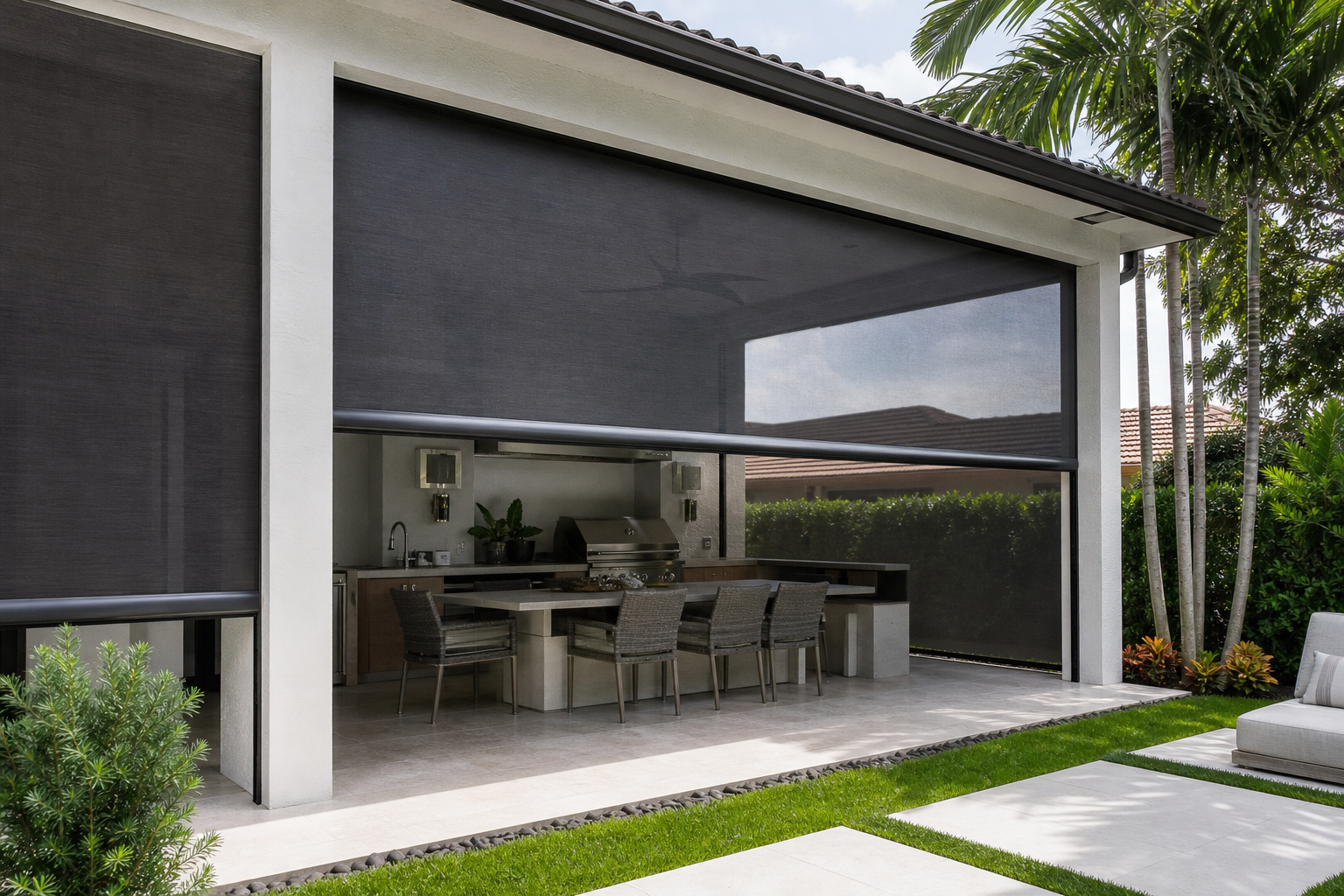
An outdoor kitchen can make a South Florida home more enjoyable, but open patios also expose cooking and dining areas to insects, intense sunlight, glare, heat, and limited privacy. Patio screens for outdoor kitchens can help create a more comfortable, usable space without giving up the open-air feeling that makes outdoor living appealing.
The right screen depends on how your patio is designed, where the kitchen is located, how much sun and wind it receives, and whether you want a manually operated or motorized solution. This guide explains what to consider before choosing outdoor screens for an outdoor kitchen in Miami-Dade County or elsewhere in South Florida.
Why Add Patio Screens to an Outdoor Kitchen?
Outdoor kitchens often serve several purposes at once. They may include a grill, sink, refrigerator, bar seating, dining furniture, and a lounge area. Because these spaces are used for cooking and entertaining, comfort and flexibility matter just as much as appearance.
Improve insect control
Open patios can attract mosquitoes, flies, and other insects, especially during evening meals or after rain. Patio screens create a physical barrier between the living area and the surrounding environment. While no screen can eliminate every outdoor nuisance, a properly selected and fitted screen can make the space more comfortable for cooking and dining.
Manage strong sunlight and glare
South Florida patios can receive bright sunlight for much of the year. Glare can make it difficult to see a television, use a phone, or comfortably sit at a dining table. A screen can filter or block some of that light, depending on the fabric and openness selected.
Support privacy
Many homes in Miami, Kendall, Coral Gables, Pinecrest, and nearby communities have patios that are visible from neighboring properties or streets. Outdoor screens can provide additional privacy without requiring a permanent wall or bulky construction. The level of privacy depends on the screen material, openness, lighting, and viewing angle.
Create a more comfortable entertaining area
A screened outdoor kitchen can feel more defined while still maintaining a connection to the yard, pool, or surrounding landscape. When the screen is raised, the patio can remain open. When it is lowered, the area can feel more protected and comfortable for meals, parties, or everyday use.
How Patio Screens Work Around Outdoor Kitchens
Patio screens are typically installed along the open sides of a covered patio, lanai, porch, or outdoor entertaining area. Depending on the layout, they may cover one opening or several sides. The system can be designed to fit around columns, beams, walls, doors, and other architectural features.
For an outdoor kitchen, planning is especially important. The screen should complement the placement of the grill, countertop, seating, lighting, and walkways. It should not interfere with appliance access or make it difficult to move between the kitchen and the house.
Professional measurement helps account for uneven openings, ceiling heights, corner conditions, and the relationship between the patio structure and the screen system. A custom approach is often more appropriate than trying to adapt a standard-sized product to a complex outdoor space.
Choosing the Right Screen Fabric
Screen fabric affects visibility, privacy, light control, appearance, and the overall feel of the patio. There is no single fabric that is ideal for every outdoor kitchen, so it helps to identify the most important function first.
Open-weave screen fabrics
More open fabrics can preserve outward visibility and allow the patio to feel connected to the yard or landscape. They may be a good choice when the main goal is to reduce insects while maintaining a bright, open environment.
More private or light-filtering fabrics
Fabrics with less visual openness can provide greater privacy and help reduce glare. These may be useful for patios that face a neighboring property, receive strong afternoon sun, or include a television or lounge area.
Solar screen-style materials
Solar screen materials are designed to filter sunlight while maintaining some outward visibility. They can be considered when reducing glare and solar exposure is more important than creating a fully darkened space. The correct openness factor depends on the patio's orientation, surrounding views, desired privacy, and design goals.
For more information about how openness affects visibility, glare, and privacy, see Solar Shades for Patios and Lanais: A South Florida Guide.
What to Consider Before Installing Patio Screens
1. The patio's sun exposure
Observe when direct sunlight reaches the outdoor kitchen. Morning sun may be manageable, while late-afternoon sun can create more intense glare and heat. A patio facing west may need different light-control considerations than one shaded by the home or landscaping.
2. Wind and weather exposure
South Florida weather can change quickly, particularly during the rainy season and tropical weather events. Outdoor screens should be selected and operated with the patio's exposure in mind. Ask about the intended operating conditions and what should be done with the screen during high winds or severe weather.
Screens are not a substitute for a permanent storm-rated enclosure or a way to make an outdoor kitchen weatherproof. They should be viewed as a flexible comfort and screening solution within the limits of the patio structure and system design.
3. Grill location and ventilation
An outdoor kitchen needs appropriate ventilation and safe clearances around cooking equipment. A screen should not obstruct required airflow or be positioned where heat, smoke, or grease could damage the material. The grill, hood, and screen layout should be reviewed together before installation.
Because every outdoor kitchen is different, homeowners should discuss the screen placement with their window treatment professional and follow the requirements provided by the appliance manufacturer and the project contractor.
4. Operating access
Consider how the screen will be used during a typical day. Will it be lowered only for dinner? Will one side remain open for access to the yard? Do you want to control several screens together?
These questions help determine whether manual operation is practical or whether motorization would make the space easier to use.
5. Ceiling height and opening size
Large patio openings may require careful planning. A screen system must be measured to fit the available width and height while working with the patio's structural elements. Multiple screens may be more practical than one very wide screen, depending on the opening and the desired appearance.
Manual or Motorized Patio Screens?
Both manual and motorized screens can be appropriate for outdoor kitchens. The best choice depends on the size of the openings, how frequently the screens are used, and how much convenience you want.
| Option | May be a good fit for | Considerations |
|---|---|---|
| Manual screens | Smaller or easily accessible openings | Simple operation and a practical choice when the screen is within easy reach |
| Motorized screens | Large openings, multiple screens, or patios used frequently | Convenient operation from a control, especially when screens are difficult to reach |
Motorization can be particularly useful when an outdoor kitchen has multiple openings or when the screens are mounted at a height that makes manual operation inconvenient. It can also support a cleaner, more streamlined appearance by reducing the need for accessible hand controls.
If your home also has large interior windows or connected living spaces, you may find this guide helpful: Motorized Solar Shades for Large Windows: A South Florida Guide.
Designing Screens Around the Look of Your Home
Outdoor screens should feel like part of the home's architecture rather than an afterthought. Neutral colors and simple profiles can complement contemporary homes, coastal properties, Mediterranean-inspired architecture, and traditional South Florida residences.
When selecting a screen, consider:
- The color of the patio ceiling, columns, doors, and outdoor kitchen cabinetry
- Whether you want the screen to blend into the structure or create a visible design element
- How much of the landscape should remain visible when the screen is lowered
- Whether the same screen style should be used across several patio openings
- How the screen will look from inside the home as well as from the patio
A well-planned installation can help the outdoor kitchen feel connected to nearby indoor living areas while still providing flexible separation when needed.
Patio Screens and Indoor-Outdoor Living in South Florida
Many South Florida homes are designed around patios, lanais, balconies, pool decks, and other transitional spaces. These areas may function as additional living rooms for much of the year, but they also face challenges that indoor rooms do not.
Intense sunlight can fade furnishings and create uncomfortable glare. Humidity and rain can limit when the patio is enjoyable. Nearby properties may reduce privacy. Outdoor screens can help address some of these concerns while preserving access to fresh air and views.
They can also be useful beyond the outdoor kitchen. A screen system may help define a poolside seating area, protect a covered dining space from insects, or make a patio more comfortable for morning coffee and evening gatherings.
Questions to Ask During a Patio Screen Consultation
Before choosing a system, prepare a few practical questions for your window treatment professional:
- Which screen fabric is appropriate for the patio's sun exposure and privacy needs?
- How should the screen be positioned around the grill, hood, and food-preparation areas?
- What operating method is practical for the opening size and ceiling height?
- How should the screens be handled during high winds or severe weather?
- Will the installation work with the patio's columns, beams, lighting, and doors?
- How many screen sections will provide the best balance of appearance and operation?
Professional measurement is important because outdoor openings are not always perfectly square, and the screen must work with existing construction. A consultation also gives you an opportunity to review fabric samples and consider how privacy and visibility change in daylight and at night.
Frequently Asked Questions
Can patio screens be installed around an outdoor kitchen?
In many cases, yes. The installation must be planned around the kitchen layout, grill, ventilation, columns, and available mounting surfaces. A professional measurement is recommended before selecting a screen system.
Do patio screens keep an outdoor kitchen completely dry?
No. Screens can help with insects, glare, privacy, and general comfort, but they are not the same as a fully enclosed or weatherproof structure. Rain and wind protection depends on the patio design and the type of screen system.
Are motorized screens worth considering for a patio?
Motorized screens may be useful for large openings, multiple screen sections, or areas that are difficult to reach. They allow you to adjust the space more conveniently when the screen is frequently raised and lowered.
Can screens provide privacy at night?
Privacy depends on the fabric's openness, surrounding lighting, viewing angles, and whether the patio is brighter or darker than the area outside. A fabric that provides daytime privacy may offer less privacy at night when interior or patio lights are on.
How do I choose the right screen openness?
Start by deciding whether your priority is outward visibility, glare reduction, privacy, or a balance of these features. Your home's orientation, neighboring properties, and patio lighting should also be considered when reviewing fabric options.
Plan Your Outdoor Kitchen Screen System
Patio screens for outdoor kitchens can make a South Florida patio more comfortable, functional, and visually cohesive. The right solution depends on the opening dimensions, fabric performance, sun exposure, privacy goals, weather considerations, and the way your household uses the space.
Floridian Blinds can help you review custom outdoor screen options for your patio, lanai, or covered entertaining area. Contact us for a free consultation and measurement.