Outdoor Screens for Waterfront Homes: A South Florida Guide
Learn how outdoor screens can improve comfort, privacy, and light control for waterfront homes in Miami-Dade County and South Florida.
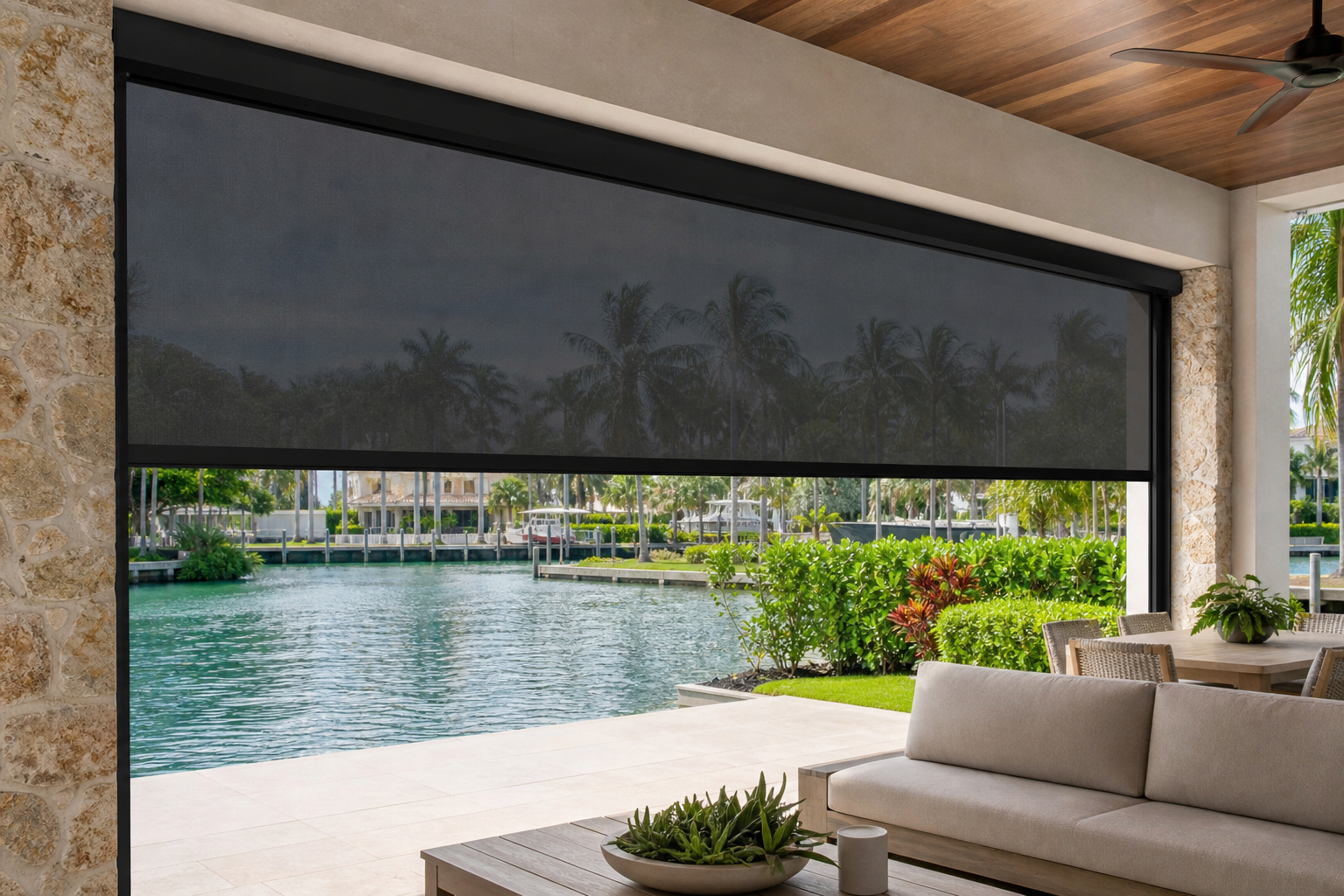
Waterfront living brings natural beauty, open views, and a strong connection to the outdoors. It can also bring intense sunlight, glare, humidity, insects, and less privacy than many homeowners expect. For patios, lanais, balconies, and covered outdoor rooms, outdoor screens can make these spaces more comfortable and useful throughout the day.
Choosing outdoor screens for waterfront homes requires more than selecting a color or fabric. The screen must suit the opening, the surrounding architecture, the level of sun exposure, and the way your household uses the space. In South Florida, homeowners should also consider salt air, changing weather conditions, water views, and the need to protect indoor and outdoor furnishings from sunlight.
This guide explains what to consider when evaluating exterior screens for a waterfront property in Miami, Miami Beach, Key Biscayne, Coral Gables, or another South Florida community.
Why Waterfront Homes Need Specialized Outdoor Shade Solutions
Waterfront properties often have large windows, expansive sliding doors, open patios, and outdoor entertaining areas designed to take advantage of the view. These features are attractive, but they can also expose living spaces to conditions that make them uncomfortable during parts of the day.
- Direct sunlight and glare: Light reflecting from the water can make patios and interior rooms difficult to use comfortably.
- Heat: Sun-exposed outdoor areas can become unpleasant, especially during the warmer months.
- Salt air and humidity: Materials and hardware should be selected with the coastal environment in mind.
- Insects: Outdoor screens may help create a more comfortable setting for dining and relaxing, depending on the screen design and enclosure.
- Privacy: Waterfront homes may have open sightlines from neighboring properties, docks, walkways, or nearby buildings.
- Changing weather: Wind and rain conditions should be considered before installing or operating any exterior screen.
A well-planned outdoor screen can help you use a patio or covered outdoor room more often without blocking the character of the property. The goal is not necessarily to close off the view. It is to manage sunlight, privacy, and comfort while preserving the connection to the water.
What Are Outdoor Screens?
Outdoor screens are exterior window or patio treatments designed to provide shade, light control, and, in some applications, added privacy or insect protection. They may be installed over patio openings, screened porches, balconies, covered terraces, or large exterior doors.
Unlike interior shades, outdoor screens are positioned between the living area and the strongest sunlight. This placement can help reduce the amount of direct sun reaching an outdoor space or the glass behind it. The right solution depends on the opening, mounting surface, desired level of openness, and how the screen will be used.
Common applications for waterfront homes
- Covered patios and outdoor kitchens
- Poolside seating areas
- Balconies and terraces
- Outdoor dining spaces
- Large sliding glass doors
- Sunrooms and enclosed porches
- Boat-facing rooms with strong afternoon glare
Some homeowners use a single screen for a specific problem area, such as a west-facing patio. Others use multiple screens to create a coordinated outdoor living area with adjustable protection throughout the day.
Benefits of Outdoor Screens for Waterfront Homes
Improved outdoor comfort
Outdoor screens can make a covered patio or terrace more comfortable by managing direct sunlight and glare. This can be particularly useful for spaces that receive strong morning or afternoon exposure. Reducing glare may also make it easier to read, dine, work, or enjoy a television outdoors.
The amount of shade and visibility depends on the screen material, openness, color, orientation, and installation. A professional consultation can help identify whether a screen is appropriate for the level of exposure at your property.
Privacy without completely closing the view
Waterfront homeowners often want privacy without losing the view that attracted them to the property. Depending on the fabric and viewing angle, an outdoor screen may soften visibility from outside while maintaining a connection to the surrounding landscape.
Privacy is not identical in every direction or lighting condition. A screen that provides useful daytime privacy may perform differently at night when interior lights are on. For that reason, privacy goals should be discussed in terms of time of day, viewing angles, and whether the screen will be used with interior lighting.
Support for indoor and outdoor furnishings
Strong sunlight can affect flooring, furniture, artwork, and fabrics over time. Outdoor screens may help manage direct exposure before it reaches an interior space or outdoor seating area. They should be viewed as one part of a broader light-control plan rather than a complete solution for every form of sun exposure.
A more flexible outdoor living area
An open patio may be attractive but difficult to use during certain hours. A retractable or adjustable screen can give homeowners more control over the space. It can be opened when the view and breeze are the priority and lowered when glare, sun, or privacy becomes a concern.
How to Choose Outdoor Screens for a Waterfront Property
1. Start with the direction of the sun
Observe when the patio or room becomes uncomfortable. Morning sun, afternoon glare, and low-angle light can create different challenges. A west-facing opening may need a different approach than a shaded north-facing patio.
It is helpful to note which areas receive direct sunlight, where reflections appear on glass or water, and whether the problem changes by season. These observations give your window treatment professional useful information before recommending a screen.
2. Decide how much visibility you want to preserve
Screen materials can balance shade and view in different ways. A more open design may preserve more of the waterfront view, while a denser material may provide stronger light control or privacy. There is no single choice that works for every room or patio.
Ask to review material samples in natural light. A sample viewed indoors under showroom lighting may look different when installed outside against bright water or sky.
3. Consider privacy during the day and at night
Think about who you want to screen from view and when. A waterfront home may need privacy from neighboring balconies during the day, while nighttime privacy may require a different treatment strategy, such as interior shades or layered window coverings.
For rooms with large glass doors, outdoor screens can be paired with interior shades to provide more flexible control. For example, a solar shade or roller shade inside may address interior glare while an exterior screen helps manage the outdoor exposure.
4. Evaluate the mounting location
The available mounting surface affects the design. Screens may be installed on walls, beneath roof structures, within openings, or around patio enclosures, depending on the property. The installer should evaluate clearances, the condition of the mounting surface, nearby doors, drainage, and how the screen will travel.
Waterfront homes often have custom architectural details, stone, stucco, tile, or limited attachment points. Professional measurement is important because a screen must fit the opening while allowing the surrounding doors and features to operate properly.
5. Choose operation that fits the space
Manual operation may be appropriate for a smaller opening that is used occasionally. Motorized outdoor screens can be more convenient for large openings, hard-to-reach areas, or multiple screens that need to be adjusted together.
Motorization may also support everyday routines. Homeowners can lower screens before the afternoon sun reaches a patio, raise them when entertaining, or coordinate shade adjustments with other motorized window treatments. If you are considering automation, Floridian Blinds offers additional guidance in this guide to smart shades for South Florida homes.
Outdoor Screens and Coastal Conditions
Waterfront locations require careful attention to maintenance and product suitability. Salt air, humidity, wind, rain, and airborne debris can affect exterior treatments over time. This does not mean every waterfront installation has the same requirements, but it does mean the environment should be part of the design conversation from the beginning.
- Ask which materials and finishes are appropriate for the planned location.
- Discuss how exposed the screen will be to wind and rain.
- Confirm how the screen should be operated during unfavorable weather.
- Review cleaning and maintenance recommendations.
- Make sure the installation plan accounts for the structure and attachment points.
Outdoor screens are shade and comfort products; they should not be treated as a substitute for storm protection or a hurricane-rated enclosure unless a product is specifically designed and documented for that purpose. Before choosing a screen, discuss the intended use and operating conditions with a qualified installer.
Motorized Outdoor Screens for Large Openings
Motorization can be especially practical for waterfront homes with tall windows, wide patios, multiple openings, or screens installed above furniture and outdoor kitchens. A motorized system reduces the need to reach the screen manually and can make it easier to adjust several openings consistently.
When planning motorization, consider the location of the power source, access for future service, control preferences, and whether the screens will operate independently or together. Depending on the project, a homeowner may prefer a wall control, remote, or smart-home integration.
Automation should be planned around the actual environment. For example, an afternoon schedule may be useful for a west-facing terrace, while a weather-aware operating plan may be more appropriate for a highly exposed location. For more information about installation considerations, see this guide to motorized shade installation for Key Biscayne homes.
Should You Combine Outdoor Screens With Interior Shades?
Many waterfront homes benefit from using exterior and interior treatments together. Outdoor screens can address sun and glare before they reach the patio or glass, while interior shades provide privacy, room-darkening, or design flexibility inside.
A combination may be useful when:
- The room has large glass doors facing the water.
- You want daytime glare control and nighttime privacy.
- The patio and interior room have different comfort needs.
- You want to preserve the view at certain times and increase privacy at others.
- Different family members use the space at different times of day.
Interior options such as roller shades, solar shades, blackout shades, or Zebra Shades can be evaluated alongside the exterior treatment. The best combination depends on the room, view, light exposure, and design goals.
Questions to Ask Before Buying Outdoor Screens
- What problem should the screen solve: heat, glare, privacy, insects, or a combination?
- How much of the waterfront view should remain visible?
- What happens to privacy when interior lights are on at night?
- How exposed is the installation to salt air, rain, and wind?
- Where can the screen be mounted without interfering with doors or architectural features?
- Would manual or motorized operation be more convenient?
- How should the screen be cleaned and maintained?
- What should happen to the screen during severe weather?
These questions help keep the project focused on how the space will actually be used rather than choosing a product based only on appearance.
Frequently Asked Questions
Are outdoor screens a good choice for waterfront homes?
They can be a practical option for managing sunlight, glare, privacy, and outdoor comfort. Suitability depends on the opening, exposure, mounting conditions, and how the screen will be operated in coastal weather.
Will outdoor screens block the view?
Outdoor screens are available in designs that balance shade and visibility. The amount of view preserved depends on the material, color, openness, lighting conditions, and viewing angle. Samples should be reviewed in conditions similar to the installation site.
Can outdoor screens provide nighttime privacy?
Nighttime privacy depends on lighting inside and outside the home. A screen that offers useful daytime privacy may not provide the same result after interior lights are turned on. Interior shades may be needed for additional nighttime control.
Are motorized outdoor screens worth considering?
Motorization may be useful for large, tall, or difficult-to-reach openings and for homes with multiple screens. It can simplify daily adjustments and support scheduled operation when planned appropriately.
Can outdoor screens protect a patio during storms?
Outdoor screens should not automatically be considered storm protection. Their operating limits and weather suitability vary by product and installation. Ask the installer how the screen should be handled during high winds, heavy rain, and severe weather.
Do waterfront outdoor screens require special maintenance?
Exterior treatments may require regular cleaning and inspection, particularly in humid or salty environments. Maintenance needs depend on the material, exposure, and installation. Follow the product-specific care recommendations provided by the installer.
Plan Outdoor Screens Around the Way You Live
The right outdoor screen for a waterfront home should support the way you use the property while respecting its architecture and surroundings. Start by identifying the times of day when glare, heat, or privacy is most difficult. Then consider the view, mounting conditions, coastal exposure, operating method, and how the screen will work with your interior window treatments.
Floridian Blinds helps homeowners and property professionals in Miami-Dade County evaluate custom window treatment solutions for indoor and outdoor spaces. Contact us for a free consultation and measurement to discuss outdoor screens for your waterfront home.