Patio Screens for Privacy and Shade: What South Florida Homeowners Should Know
Learn how patio screens can improve privacy, reduce glare, and make outdoor spaces more comfortable in Miami-Dade County and throughout South Florida.
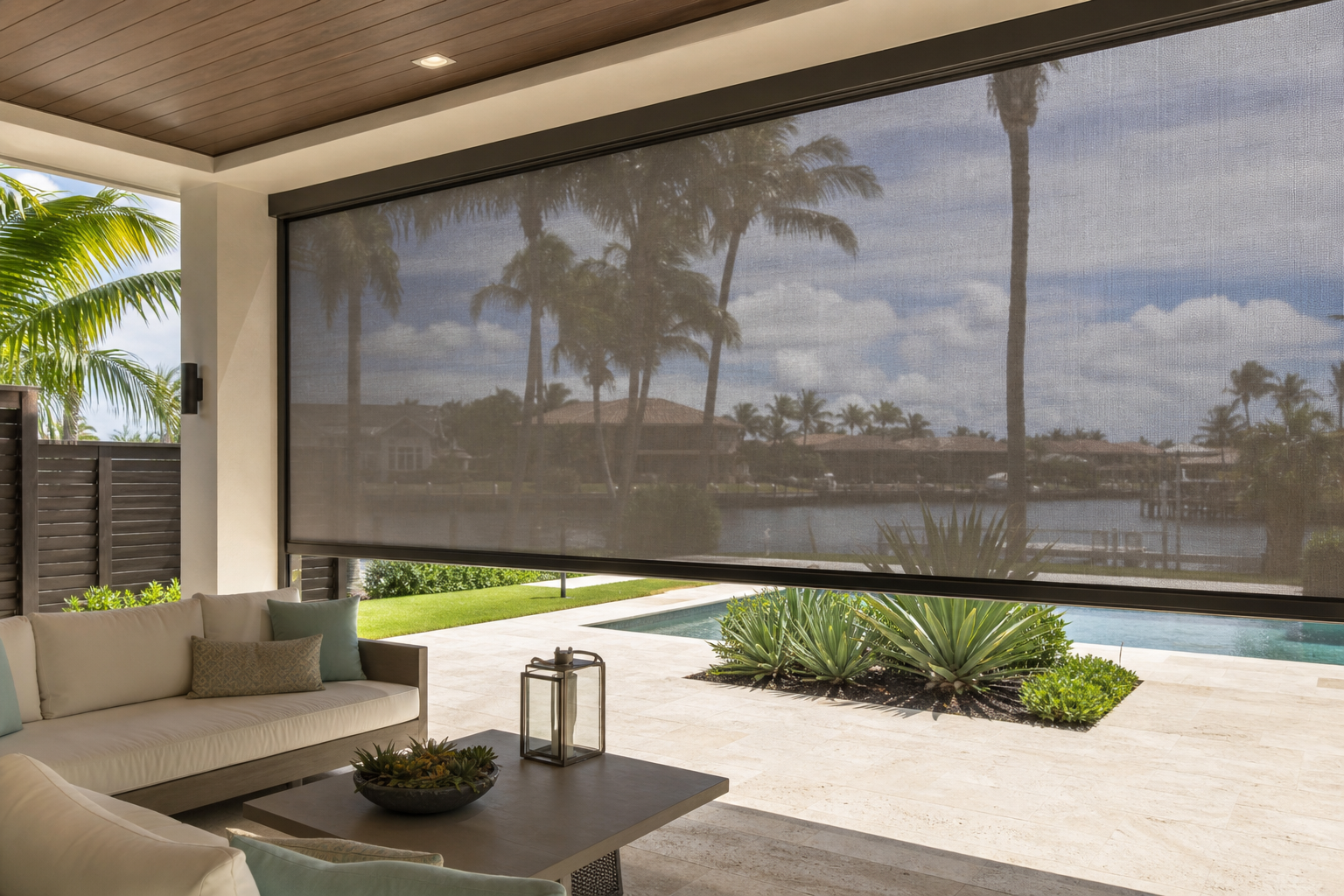
Patios, lanais, balconies, and covered outdoor areas are a major part of life in South Florida. They give homeowners a place to relax, dine, and entertain, but intense sunlight, heat, insects, and nearby homes can make these spaces less comfortable than they should be. Patio screens for privacy and shade can help create a more usable outdoor area without completely closing it off from the surrounding environment.
The right screen depends on how you use your patio, the direction of the sunlight, the amount of privacy you need, and whether you want a manually operated or motorized solution. This guide explains the main considerations for choosing custom patio screens in Miami-Dade County and nearby communities.
What Are Patio Screens?
Patio screens are retractable or fixed screening systems designed for outdoor openings such as patios, lanais, porches, balconies, and covered terraces. Depending on the design, a screen can help filter sunlight, reduce glare, provide daytime privacy, and create a more comfortable transition between your indoor and outdoor spaces.
Many patio screens are made with woven solar-screen materials. These fabrics allow some light and airflow through while limiting the amount of direct sun entering the space. Other screen materials are selected primarily for insect control, visibility, or a greater degree of privacy.
Because every opening is different, custom measurement is important. A properly sized screen should work with the structure of the patio, account for clearances, and operate smoothly without interfering with doors, furniture, railings, or other features.
How Patio Screens Improve Privacy and Shade
Privacy during the day
Screen fabric can make it more difficult for people outside your property to see into a patio or lanai, especially when the outdoor area is brighter than the adjacent surroundings. This can be helpful for homes near neighboring properties, streets, shared walkways, or community spaces.
Privacy is not always the same after sunset. When interior or patio lighting is brighter than the area outside, visibility can change. Homeowners who need evening privacy may want to combine patio screens with appropriate lighting, curtains, or another window treatment. A consultation can help determine whether the selected screen material is suitable for both daytime and nighttime use.
Shade and glare control
South Florida sunlight can make a patio uncomfortably bright, particularly when the space faces east or west. Patio screens can filter direct sunlight and reduce glare on outdoor televisions, tables, flooring, and nearby interior surfaces.
They do not necessarily create the same darkness as a blackout shade. Instead, many outdoor screen materials are designed to soften the light while maintaining a connection to the view. This makes them useful for homeowners who want a shaded outdoor room rather than a completely enclosed space.
More comfortable outdoor living
Reducing direct sun can make a covered patio more pleasant for morning coffee, afternoon meals, or evening gatherings. Screens may also help reduce the amount of windblown debris and insects entering the space, depending on the product and the opening being covered.
It is important to choose a screen for its intended purpose. A fabric selected primarily for solar control may not provide the same insect protection as a dedicated insect screen, and no screen should be treated as a substitute for a fully enclosed outdoor structure.
Key Factors to Consider Before Choosing Patio Screens
1. The direction of the sun
Observe when your patio receives the most direct sunlight. East-facing spaces may need morning sun control, while west-facing areas often experience stronger afternoon glare and heat. A screen that works well on one side of the home may not be the right choice for another opening.
Also consider seasonal changes, nearby buildings, landscaping, roof overhangs, and the height of surrounding structures. These details affect how much sun reaches the patio throughout the day.
2. Your primary goal
Start by identifying what you want the screen to accomplish. Common priorities include:
- Reducing direct sunlight and glare
- Improving daytime privacy
- Creating a more comfortable outdoor seating area
- Limiting insects and windblown debris
- Protecting outdoor furnishings from prolonged sun exposure
- Maintaining a view while filtering harsh light
- Separating an outdoor area from a pool deck or neighboring property
Some homeowners need one screen solution to address several concerns, while others may benefit from using different materials in different openings.
3. Openness and visibility
Solar-screen materials are often described by their openness factor. In simple terms, this refers to how open the weave is. A more open fabric generally preserves more outward visibility and airflow, while a tighter weave can provide greater light filtering and daytime privacy.
There is a balance between view-through, shade, privacy, and natural light. A fabric that offers substantial daytime privacy may make the view appear darker or less clear. Your preferred balance will depend on whether the patio overlooks a garden, pool, street, neighboring home, or scenic view.
4. Screen size and patio structure
Large patio openings require careful planning. The installer may need to account for the width and height of the opening, mounting surfaces, columns, beams, tracks, thresholds, and nearby doors. Uneven surfaces or limited mounting space can affect how the screen is installed and operated.
Professional measurement helps identify these conditions before fabrication. It also helps ensure that the selected screen is appropriate for the opening rather than relying on a one-size-fits-all product.
5. Manual or motorized operation
Manual screens can be a practical choice for smaller or less frequently used openings. Motorized patio screens may be more convenient for large spans, hard-to-reach openings, or patios where multiple screens need to operate together.
Motorization can also make it easier to adjust shade throughout the day. Screens may be raised when you want an open view, lowered during intense afternoon sun, and adjusted again when the weather changes. If smart-home integration is important to you, discuss control options during the consultation so the system can be planned around your preferences.
Patio Screens Compared With Other Outdoor Shade Options
| Option | Best suited for | Important consideration |
|---|---|---|
| Patio screens | Filtering sunlight, improving daytime privacy, and making covered outdoor areas more comfortable | Fabric selection affects privacy, visibility, airflow, and light control |
| Outdoor curtains | Adding a softer decorative layer and flexible visual separation | They may move in the wind and require different care than screen fabric |
| Interior solar shades | Controlling glare and sunlight through windows or doors | They address indoor openings rather than enclosing an outdoor patio |
| Blackout shades | Reducing light in bedrooms, media rooms, or other interior spaces | They are generally intended for indoor use and are not a patio-screen replacement |
For a patio or lanai, the best solution may involve more than one treatment. For example, an exterior screen can help manage sunlight at the outdoor opening while an interior shade provides additional privacy or light control inside the home.
If you are comparing outdoor solar-shade materials with other patio options, see our guide to solar shades for patios and lanais in South Florida.
Why Custom Measurement Matters in South Florida Homes
Patios in Miami, Kendall, Coral Gables, Doral, Pinecrest, Homestead, Miami Beach, and surrounding communities can vary significantly in design. Some are built into the main structure of the home, while others are screened rooms, balconies, pool enclosures, or partially covered additions.
Custom measurement helps account for details such as:
- Wide or unusually tall openings
- Columns, beams, and architectural recesses
- Sliding glass doors and hinged doors
- Pool-deck transitions and floor thresholds
- Uneven walls or limited mounting surfaces
- Outdoor furniture and clearance requirements
- Existing shades, shutters, lighting, or ceiling fans
South Florida outdoor spaces are also exposed to heat, humidity, rain, salt air in coastal areas, and strong sunlight. Product selection should take the location and installation environment into account. A professional can help you choose a screen and operating system that fit the space and your intended use without making assumptions about conditions that need to be evaluated in person.
Design Considerations for Patio Screens
Patio screens are functional, but they also become part of the home's exterior appearance. Neutral fabrics can blend with stucco, stone, tile, or painted finishes, while a carefully chosen color can complement outdoor furniture and architectural details.
Consider the view from both inside and outside the home. A screen housing or side channel may be visible when the screen is retracted, so its placement and finish should be considered as part of the overall design. For larger patios, coordinated screens can create a cleaner appearance than several mismatched treatments.
It is also helpful to think about how the patio connects to adjoining rooms. If a living room or kitchen opens directly onto the patio, consistent colors and simple lines can make the indoor-outdoor transition feel more intentional.
Care and Maintenance
Outdoor screens should be kept free of accumulated dust, pollen, and salt residue, especially in coastal areas. The appropriate cleaning method depends on the fabric and hardware. In general, gentle cleaning and avoiding harsh chemicals can help protect the material, but homeowners should follow the care instructions supplied for their specific product.
Do not force a screen if it feels obstructed or does not move normally. Check for furniture, debris, or other objects in the operating path, and contact a qualified professional if the issue continues. Regular attention to the screen tracks, housing, and control system can help preserve smooth operation.
Questions to Ask Before You Buy
- Will the screen be used mainly for shade, privacy, insect control, or several purposes?
- How much of the outside view do I want to preserve?
- Which patio openings receive the strongest direct sunlight?
- Would manual operation be convenient, or would motorization be more practical?
- How will the screen coordinate with doors, furniture, lighting, and other outdoor features?
- What maintenance is appropriate for the selected fabric and hardware?
Frequently Asked Questions About Patio Screens
Do patio screens provide privacy at night?
Patio screens can provide useful daytime privacy, but their effectiveness can change at night. If the patio or room behind the screen is brightly lit, people outside may be able to see in more easily. Evening privacy may require lighting adjustments or an additional treatment.
Can patio screens block all sunlight?
Most patio screens are intended to filter sunlight rather than create complete darkness. The amount of light and glare reduction depends on the screen material, color, openness, and the direction of the sun.
Are patio screens suitable for large openings?
They can be suitable for large openings, but the opening must be measured carefully and evaluated for mounting, clearance, and operating requirements. Motorization may be worth considering when a screen is wide, tall, or difficult to reach.
Can patio screens help with heat?
By reducing direct sunlight and glare, exterior screens can help make a covered patio feel more comfortable. Their effect depends on the screen fabric, exposure, surrounding construction, ventilation, and weather conditions.
Are patio screens the same as insect screens?
Not always. Some screen systems are selected primarily for solar control and privacy, while others are designed for insect protection. Ask about the material's intended use so the product matches your priorities.
Should patio screens be custom measured?
Custom measurement is recommended for openings with unusual dimensions, doors, columns, architectural details, or limited mounting space. It helps create a solution that fits the structure and operates as intended.
Find the Right Patio Screen for Your Outdoor Space
Patio screens for privacy and shade can make a South Florida patio more comfortable, useful, and connected to the rest of the home. The right choice depends on your sunlight exposure, privacy expectations, preferred view, patio design, and operating needs.
Floridian Blinds helps homeowners and property owners evaluate custom outdoor screen solutions throughout Miami-Dade County and South Florida. Contact us for a free consultation and measurement to discuss your patio, lanai, balcony, or covered outdoor area.