Privacy Screens for Outdoor Living Spaces: A South Florida Guide
Learn how privacy screens can improve patios, balconies, lanais, and outdoor entertaining areas while supporting shade, comfort, and a more finished design.
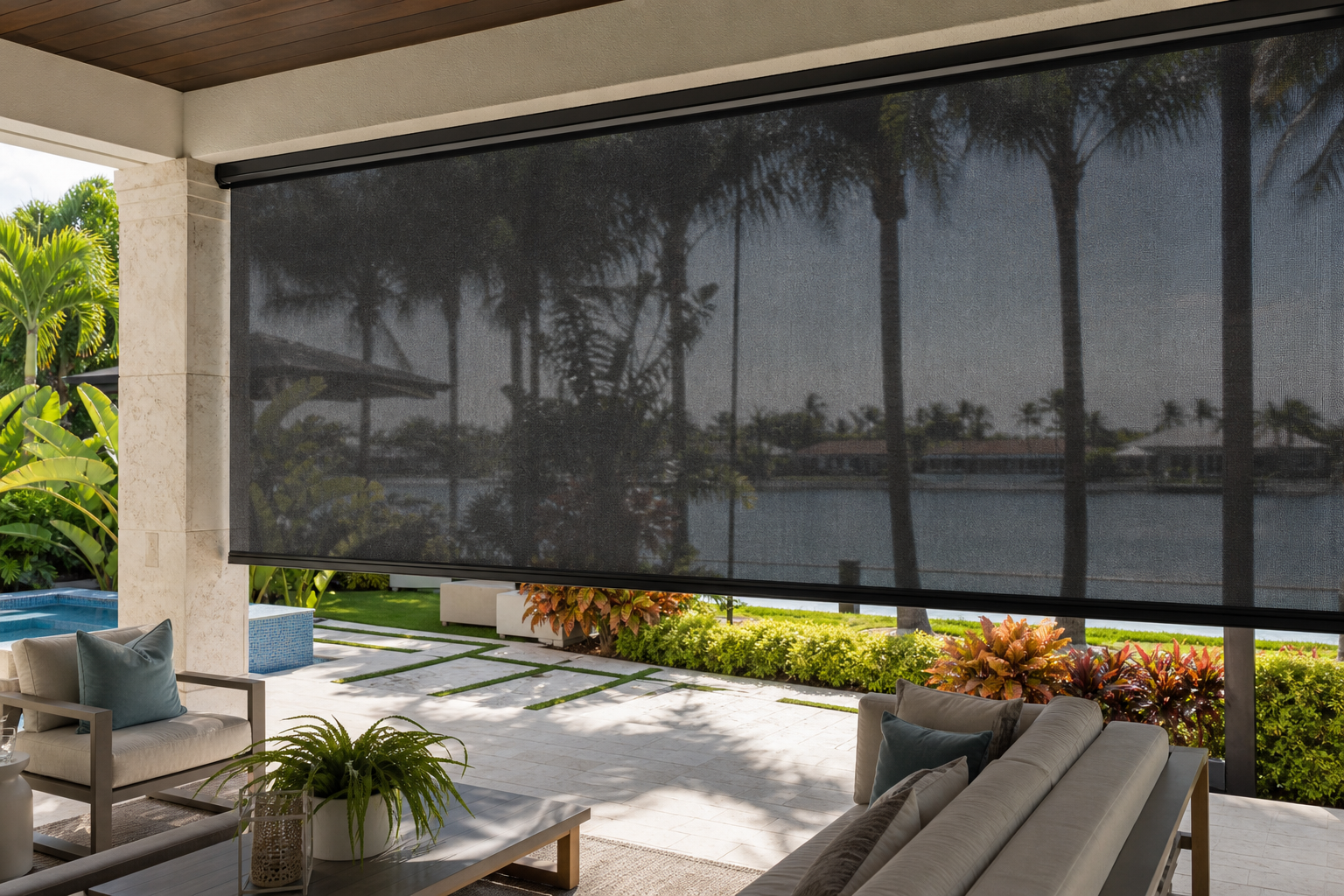
Outdoor living is part of everyday life in South Florida. A patio, balcony, screened enclosure, or covered terrace can become an extension of your home, but privacy is not always easy to achieve. Nearby homes, busy streets, neighboring balconies, and open views can make an outdoor space feel exposed.
Privacy screens for outdoor living spaces can create a more comfortable setting for relaxing, dining, working, or entertaining. Depending on the design, they may also help manage intense sunlight, reduce glare, and create a more defined transition between indoor and outdoor areas.
The right solution depends on the layout of your space, the direction of the sun, the level of privacy you need, and how often you want to adjust the screen. This guide explains the main considerations for choosing custom outdoor screens in Miami-Dade County and throughout South Florida.
What Are Privacy Screens for Outdoor Living Spaces?
Privacy screens are window or patio treatment systems designed to limit direct views into an outdoor area. They can be installed around patios, lanais, balconies, terraces, porches, and other covered or partially enclosed spaces.
Unlike a permanent wall or fence, an outdoor screen can provide adjustable coverage. You may be able to lower or extend the screen when you want more privacy and retract it when you want a more open view. This flexibility is useful for homes where the outdoor space serves several purposes throughout the day.
Outdoor screens can be selected based on their appearance, openness, level of visibility, and operating method. Some homeowners prioritize privacy from neighboring properties, while others need more control over afternoon sun or glare. A professional consultation can help determine whether privacy, solar control, insect protection, or a combination of these goals should guide the design.
Why Privacy Matters in South Florida Outdoor Spaces
Many South Florida homes are designed around indoor-outdoor living. Large glass doors and open patios create a strong connection to the outdoors, but they can also expose seating and dining areas to surrounding properties.
Privacy screens may be especially helpful in:
- Patios that face a neighboring home or street
- Balconies in condos and multi-story buildings
- Poolside areas where homeowners want a more secluded setting
- Covered terraces used for dining or entertaining
- Outdoor kitchens and lounge areas
- Homes with large openings that need flexible separation from the outdoors
In communities such as Miami, Kendall, Doral, Coral Gables, Pinecrest, and Miami Beach, outdoor layouts vary widely. A compact condo balcony may need a different screen configuration than a large patio in Homestead or Palmetto Bay. Custom measurement is important because outdoor openings are not always perfectly square, and mounting conditions can differ from one side of a structure to another.
Key Benefits of Outdoor Privacy Screens
More comfortable privacy
A privacy screen can make an outdoor area feel more personal without requiring a permanent construction project. It can help create visual separation during meals, conversations, or quiet time outside.
Adjustable light control
South Florida sunlight can be intense, particularly on patios and windows with western or southern exposure. Depending on the screen fabric and openness, an outdoor screen may help soften direct sun and reduce glare. The goal is not always to make the space completely dark; often, homeowners want a balance between filtered daylight and a usable view.
A more finished design
Outdoor screens can give a patio or terrace a cleaner, more intentional appearance. Color, fabric openness, housing, and mounting style all affect how the screen fits with the home's architecture and exterior finishes.
Flexible indoor-outdoor separation
When extended, a screen can help define an outdoor room. When retracted, it can preserve the open feeling that makes patios and terraces appealing. This flexibility is useful when the same space is used for morning coffee, afternoon relaxation, or evening entertaining.
Convenient operation
Depending on the product and installation, outdoor screens may be operated manually or with motorization. Motorized operation can be particularly convenient for wide openings, high installations, or spaces where several screens need to be adjusted together.
Choosing the Right Type of Privacy Screen
There is no single screen that is ideal for every outdoor space. Start by identifying what you want the screen to do.
| Primary goal | Important selection considerations |
|---|---|
| Privacy from neighbors | Fabric openness, viewing angles, screen height, and the position of surrounding buildings |
| Reducing direct sunlight | Sun exposure, fabric color, openness, and the time of day the space is used |
| Maintaining an outdoor view | Screen openness, sightlines, and how much visual connection you want to preserve |
| Covering a large opening | Available mounting surfaces, screen width, operating method, and how the system will be supported |
| Frequent daily use | Ease of operation, motorization options, access to controls, and maintenance requirements |
Screen openness and visibility
Screen fabrics are commonly described by how open or closed their weave is. A more open fabric may preserve more of the outside view, while a tighter weave may provide greater visual screening. However, privacy can change depending on lighting conditions.
For example, a screen may provide more privacy during the day when the outdoor side is brighter than the interior. At night, indoor lighting can change the balance. If nighttime privacy is important, consider how the space will be used after dark and whether additional window coverings or lighting adjustments are needed.
Manual or motorized operation
Manual screens can be practical for smaller or easily accessible openings. Motorized screens may be more convenient for large patios, multiple openings, or installations where reaching the operating mechanism is difficult.
Motorization also allows a screen to fit more naturally into a connected home routine. For example, screens can be adjusted before outdoor entertaining or retracted when the weather and view are favorable. Any automation plan should account for the screen location, power access, control preferences, and the home's existing smart-home setup.
Mounting and installation conditions
Outdoor screens need a suitable place for the hardware and screen housing to be installed. The installer may need to evaluate ceiling surfaces, columns, walls, beams, soffits, and the overall shape of the opening.
Professional measurement helps identify issues before installation, including uneven surfaces, limited mounting depth, obstructions, and openings that require more than one screen. It also helps ensure the finished system operates properly within the available space.
Privacy Screens and South Florida Weather
Outdoor treatments in Miami-Dade County are exposed to strong sunlight, humidity, salt air in coastal areas, and sudden changes in weather. These conditions should be part of the planning process rather than an afterthought.
When discussing outdoor screens, ask about:
- How the screen material is intended to be used outdoors
- How the system should be operated in strong wind or severe weather
- Whether the screen should be retracted when the space is not in use
- How to clean and maintain the fabric and hardware
- How the installation will fit with existing patio construction
- Whether coastal exposure or a covered location affects the selection
No outdoor screen should be treated as a substitute for appropriate storm preparation. The correct operating procedure depends on the product, installation, and weather conditions. A qualified window treatment professional can explain how the system should be used and maintained in your particular setting.
How to Plan Privacy Screens for a Patio or Terrace
- Identify the privacy problem. Note whether views come from a neighboring property, street, upper-floor window, or an open side of the patio.
- Observe the sun throughout the day. Morning and afternoon exposure can affect the best screen position, fabric selection, and operating needs.
- Decide what view you want to keep. Some homeowners want a more private enclosure, while others want to reduce glare without losing the view.
- Consider the furniture layout. Seating, dining tables, grills, planters, and outdoor kitchens can affect where screens can be installed and operated.
- Plan for nighttime use. Interior and exterior lighting can influence privacy after sunset.
- Schedule professional measurement. An on-site assessment can confirm dimensions, mounting options, and the most practical screen configuration.
Common Mistakes to Avoid
Choosing based on appearance alone
A screen may look attractive in a sample but perform differently in your space depending on the sun, surrounding buildings, and desired level of privacy. Evaluate the fabric and operating position in relation to the actual patio.
Assuming daytime privacy works the same at night
Lighting changes how privacy screens perform. If the patio is brightly lit after dark, views may be different than they are during the day. Include evening use in the design discussion.
Ignoring the mounting surface
An outdoor screen needs appropriate support. Measuring only the opening width without reviewing the surrounding structure can lead to an installation that does not work as intended.
Installing screens that are difficult to operate
If a screen is too high, too wide, or located behind furniture, it may not be used regularly. Operation should be convenient for the people who use the outdoor space most often.
Trying to solve every problem with one screen
Privacy, glare, heat, insects, and weather exposure are related but different concerns. A thoughtful design may combine an outdoor screen with other window treatments or changes to lighting and furniture placement.
Frequently Asked Questions
Do privacy screens completely block the view?
Not necessarily. The level of privacy depends on the screen fabric, openness, lighting, viewing angle, and whether the screen is used during the day or at night. A consultation can help match the screen to your desired balance of privacy and visibility.
Can outdoor screens help with glare on a patio?
They may help soften direct sunlight and reduce glare, depending on the fabric, sun exposure, and screen position. The best choice depends on how much light and view you want to preserve.
Are privacy screens suitable for balconies?
They can be considered for balconies when there is an appropriate mounting surface and the installation complies with building or community requirements. Condo owners should review any applicable rules before selecting an outdoor screen.
Should outdoor privacy screens be motorized?
Motorization can be useful for large, high, or frequently adjusted screens. Manual operation may be sufficient for a smaller, easily accessible opening. The right choice depends on the layout, frequency of use, power access, and homeowner preferences.
How do I maintain an outdoor privacy screen?
Maintenance depends on the screen material and hardware. In general, follow the manufacturer's cleaning and operating recommendations, keep the system free of obstructions, and retract it as advised during unsuitable weather conditions.
Designing a More Comfortable Outdoor Living Area
Privacy screens are most effective when they are planned as part of the entire outdoor space. Consider the patio's furniture, lighting, landscaping, doors, windows, and the views you want to preserve. A custom screen can support a cleaner design while giving you more control over privacy and sunlight.
For homeowners in Miami, Kendall, West Kendall, Doral, Coral Gables, Pinecrest, Homestead, Miami Beach, Key Biscayne, South Miami, Cutler Bay, Palmetto Bay, and nearby communities, local conditions make professional planning especially valuable. Floridian Blinds can help evaluate your outdoor openings, discuss screen and motorization options, and coordinate professional measurement and installation.
Contact Floridian Blinds for a free consultation and measurement to explore privacy screens for your outdoor living space.
For more context, see our related guide: Patio Screens for Outdoor Kitchens: A South Florida Guide.