Retractable Screens for Large Patio Openings: A Homeowner’s Guide
Learn how retractable screens can improve comfort, privacy, and usability around large patio openings in South Florida homes.
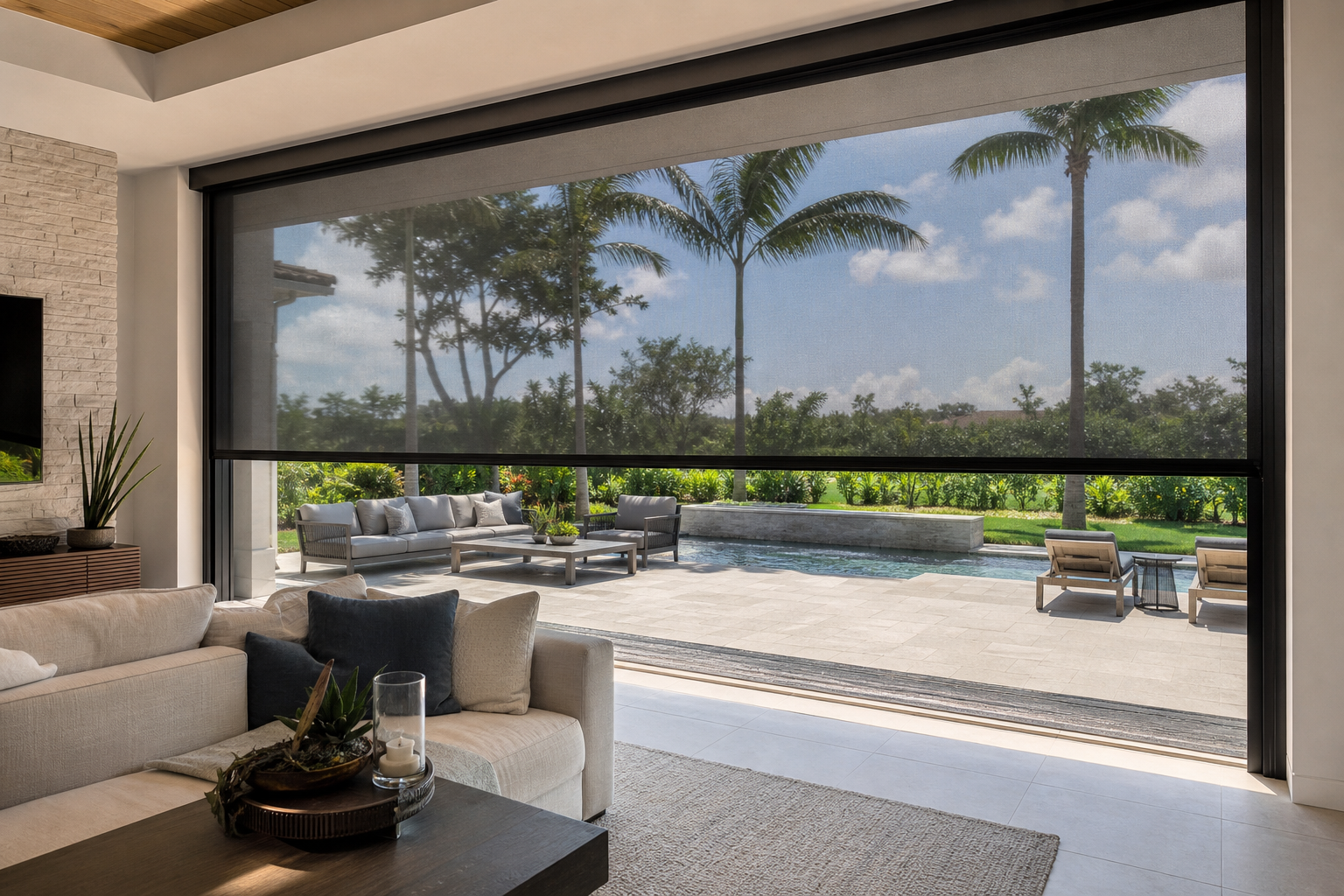
Large patio openings create a natural connection between your home and the outdoors, but they can also bring in intense sunlight, heat, insects, and unwanted visibility. Retractable screens for large patio openings offer a flexible way to enjoy that indoor-outdoor connection while keeping the space more comfortable and functional.
Unlike fixed screens, retractable systems can be opened when you want an unobstructed view and lowered when you need shade, privacy, or protection from flying insects. They can be a practical addition to sliding glass doors, folding door systems, wide lanais, covered patios, and other expansive openings commonly found in South Florida homes.
This guide explains how retractable patio screens work, what to consider before choosing one, and why professional measurement matters for a successful installation.
What Are Retractable Screens for Large Patio Openings?
Retractable screens are screening systems designed to cover an opening when needed and move out of the way when they are not. Depending on the design, the screen may roll into a side housing, retract vertically, or span a wide opening with guided tracks and supporting hardware.
For large patio openings, the system must be planned around the opening’s total width, height, structure, and everyday use. A screen that works well for a standard single door may not be suitable for a wide multi-panel slider or a folding glass wall. Larger installations require careful attention to alignment, track placement, tension, and the way the screen interacts with doors and surrounding finishes.
Retractable screens may be operated manually or with motorization. Motorized systems can be helpful for wide openings, openings that are difficult to reach, or homeowners who want convenient control from a wall switch, remote, or compatible smart-home setup. The appropriate operating method depends on the screen design, opening size, electrical access, and the homeowner’s preferences.
Why South Florida Homeowners Consider Retractable Patio Screens
Patios and covered outdoor areas are used throughout much of the year in Miami-Dade County and across South Florida. At the same time, the region’s strong sunlight, heat, humidity, and frequent outdoor entertaining can make an unprotected opening less comfortable than expected.
Improve comfort around the patio
A retractable screen can help create a more usable transition between the interior and exterior of your home. When closed, the screen may reduce direct exposure to sun and help make the patio feel more comfortable. It can also create a visual separation without permanently blocking the opening.
Reduce insect exposure
Screening can be especially useful for patios near landscaping, pools, gardens, or other areas where insects are more noticeable. A properly fitted screen helps create a more comfortable setting for meals, conversations, and outdoor relaxation.
Manage privacy and visibility
Large glass openings can provide beautiful views, but they may also make your living areas or patio more visible from neighboring properties. Depending on the screen material and openness, a retractable screen can add a degree of visual privacy while still allowing daylight into the space.
Preserve the open view when desired
Permanent enclosures can change the appearance and feel of a patio. Retractable screens provide another option: the opening can remain open and visually clear when the weather is pleasant, then be screened when additional comfort or separation is needed.
Common Applications for Large Retractable Screens
Retractable screens can be considered for several types of large openings, including:
- Wide sliding glass doors
- Multi-panel patio doors
- Folding or bi-fold door systems
- Covered lanais and outdoor rooms
- Poolside seating areas
- Screened porches and verandas
- Outdoor kitchens and entertaining spaces
- Large openings connecting a living room to a patio
Each application presents different installation conditions. A screen for a recessed patio door may be planned differently from a system installed across an open lanai. Nearby columns, ceiling heights, flooring transitions, door hardware, lighting, and drainage can all affect the final design.
Key Factors to Consider Before Choosing a Retractable Screen
1. The exact opening dimensions
Large openings should be measured at multiple points rather than assumed to be perfectly square. Small variations in width, height, or alignment can affect how the screen operates. Professional measurement helps identify whether the surrounding structure can support the required housings, tracks, and mounting points.
It is also important to measure the opening with the doors in their normal operating position. The screen should not interfere with door panels, handles, locks, thresholds, or the way people move through the space.
2. How the opening is used
Think about what happens in the space during a typical day. Do you frequently walk between the kitchen and patio? Is the opening used for entertaining? Does furniture remain close to the doors? Will children or pets pass through the area?
A screen design that works for occasional evening use may not be the best choice for a high-traffic opening. The operating style, control location, and bottom-track design should fit the way your household uses the space.
3. Manual or motorized operation
Manual screens can be appropriate for smaller or easily accessible openings. For a very wide patio opening, motorization may make daily operation more convenient and consistent. This can be particularly helpful when the screen is used frequently or when several openings need to be managed.
When considering motorization, ask how the screen will be powered and controlled. Depending on the system, options may include a wall control, remote, or smart-home integration. A professional consultation can clarify which controls are compatible with the specific screen and whether wiring or another power arrangement is needed.
4. Screen openness and visibility
Screen materials can differ in how much light, airflow, visibility, and sun control they provide. A more open material may preserve the view and allow greater airflow, while a tighter weave may offer more visual separation and light filtering.
There is no single screen openness that fits every patio. Consider whether your priority is an unobstructed view, daytime privacy, reduced glare, insect control, or a balance of these features. Bring the direction of the opening into the discussion as well. A west-facing patio may have different needs from one that faces a shaded garden.
5. Track and threshold conditions
Large retractable screens often rely on guides or tracks to keep the screen aligned during operation. The bottom of the opening may include a threshold, raised transition, or drainage area that affects the installation.
For homes with accessibility concerns, low-profile or carefully planned track options may be worth discussing. The final design should provide reliable screen movement without creating an unnecessary obstacle in a frequently used passage.
6. Exposure to weather and outdoor conditions
Patios in South Florida may be exposed to strong sunlight, humidity, wind-driven rain, salt air, and changing weather conditions. The screen’s placement matters. A covered patio with deep protection has different demands from an open terrace near the coast.
Ask how the selected system is intended to be used in different weather conditions and what care is recommended. Retractable screens are designed to improve comfort and enclosure, but they should not automatically be treated as storm shutters, hurricane protection, or a substitute for a properly designed impact or storm-protection system. If severe weather is approaching, follow the product guidance and secure the screen as directed.
Retractable Screens Compared With Permanent Patio Enclosures
| Consideration | Retractable screens | Permanent screening or enclosure |
|---|---|---|
| Flexibility | Can open or retract when an unobstructed opening is preferred | Remains in place once installed |
| Appearance | Can preserve a more open look when retracted | Provides a consistently screened appearance |
| Daily use | Useful when homeowners want to change the space throughout the day | May be simpler when constant screening is the priority |
| Design planning | Requires careful consideration of housings, tracks, and operation | Requires planning for permanent framing and enclosure elements |
| Best fit | Flexible indoor-outdoor living and changing comfort needs | Spaces intended to remain enclosed or screened most of the time |
The right choice depends on how often you want the patio open, how much flexibility matters, and the structure of the opening. Retractable screens are often appealing to homeowners who want both a clear view and the option to create a more protected outdoor room.
Design Considerations for a Clean, Modern Installation
Because large patio openings are highly visible, the screen system should complement the home rather than look like an afterthought. Housing and tracks should be planned around existing trim, beams, columns, door frames, and ceiling lines.
Color selection can also affect the finished appearance. Homeowners often coordinate the screen components with door frames, exterior finishes, or other window treatments. A professional can help review the available design choices and identify an installation approach that fits the architecture.
For interiors that connect directly to the patio, consider how the screen will look from inside the home. The goal is not only to cover the opening but also to maintain a cohesive transition between the living area and the outdoor space.
Why Professional Measurement and Installation Matter
Large screens have less room for measurement or installation errors than smaller window treatments. A professional installer can evaluate the opening, identify mounting conditions, check for obstructions, and recommend a system based on the space rather than relying on a standard size.
Professional installation also helps ensure that the screen is aligned with the opening and that the operating components are positioned correctly. This is important for wide systems, motorized controls, unusual ceiling heights, recessed openings, and areas where multiple panels or tracks must meet.
Before scheduling installation, ask the provider to review:
- The full width and height of the opening
- Mounting surfaces and available structural support
- Door swings, sliders, handles, and thresholds
- Power and control requirements for motorized systems
- Screen material options for light, airflow, and privacy
- How the system should be operated and maintained
- How the screen should be handled during severe weather
Care and Maintenance for Retractable Patio Screens
Routine care can help keep a retractable screen looking and operating properly. Keep the surrounding track or guide area free of leaves, dirt, sand, and other debris. Clean the screen material according to the manufacturer’s instructions, using methods appropriate for the fabric or mesh.
Avoid forcing the screen if it does not move normally. Unusual resistance, uneven movement, or visible damage should be addressed rather than ignored, especially with a wide or motorized system. Regularly check that furniture, planters, toys, and other objects are not obstructing the operating path.
In coastal areas or locations exposed to salt air, cleaning and maintenance may be especially important. Your installer can explain the care routine recommended for the selected materials and hardware.
Frequently Asked Questions
Can retractable screens cover very wide patio openings?
They can be designed for many large openings, but the appropriate system depends on the total dimensions, structure, operating method, and installation conditions. A professional measurement is needed to determine what is suitable for a specific opening.
Are retractable patio screens available with motorization?
Some retractable screen systems can be motorized. Motorization may be useful for wide openings or areas that are difficult to reach. Ask about control options, power requirements, and compatibility during the consultation.
Do retractable screens block all sunlight?
No. Screen materials vary in openness, visibility, and light-filtering ability. If strong light control or room-darkening is the primary goal, a separate interior shade may be more appropriate. The best screen choice depends on whether your priority is airflow, views, privacy, insect control, or sun management.
Can retractable screens provide hurricane protection?
Retractable screens should not automatically be considered hurricane protection or a replacement for an approved storm-protection system. Ask about the intended use of the product and follow the manufacturer’s guidance during severe weather.
How do I choose between a retractable screen and a permanent enclosure?
Choose based on how you use the patio. Retractable screens offer flexibility when you want the opening clear at certain times, while a permanent enclosure may be more appropriate when constant screening is the priority. The structure, appearance, and budget of the project should also be considered.
Why is professional measurement important for large openings?
Wide openings may have variations in width, height, alignment, thresholds, and mounting surfaces. Professional measurement helps identify these conditions and supports a cleaner installation that works with the doors and surrounding architecture.
Plan a Retractable Screen for Your Patio
Retractable screens for large patio openings can make a South Florida outdoor space more comfortable without permanently closing off the view. The right solution depends on the opening’s dimensions, the way your household uses the space, your priorities for privacy and sun control, and whether motorized operation would add convenience.
Floridian Blinds can help you evaluate the options for your patio, lanai, or large exterior opening. Contact us for a free consultation and measurement to discuss a custom screen solution for your home.
For more context, see our related guide: Motorized Patio Screens for Large Openings: A South Florida Guide.