Smart Motorized Shades With Voice Control: A South Florida Homeowner's Guide
Learn how smart motorized shades with voice control work, what to consider before buying, and how automated window treatments can improve comfort, privacy, and light control in a South Florida home.
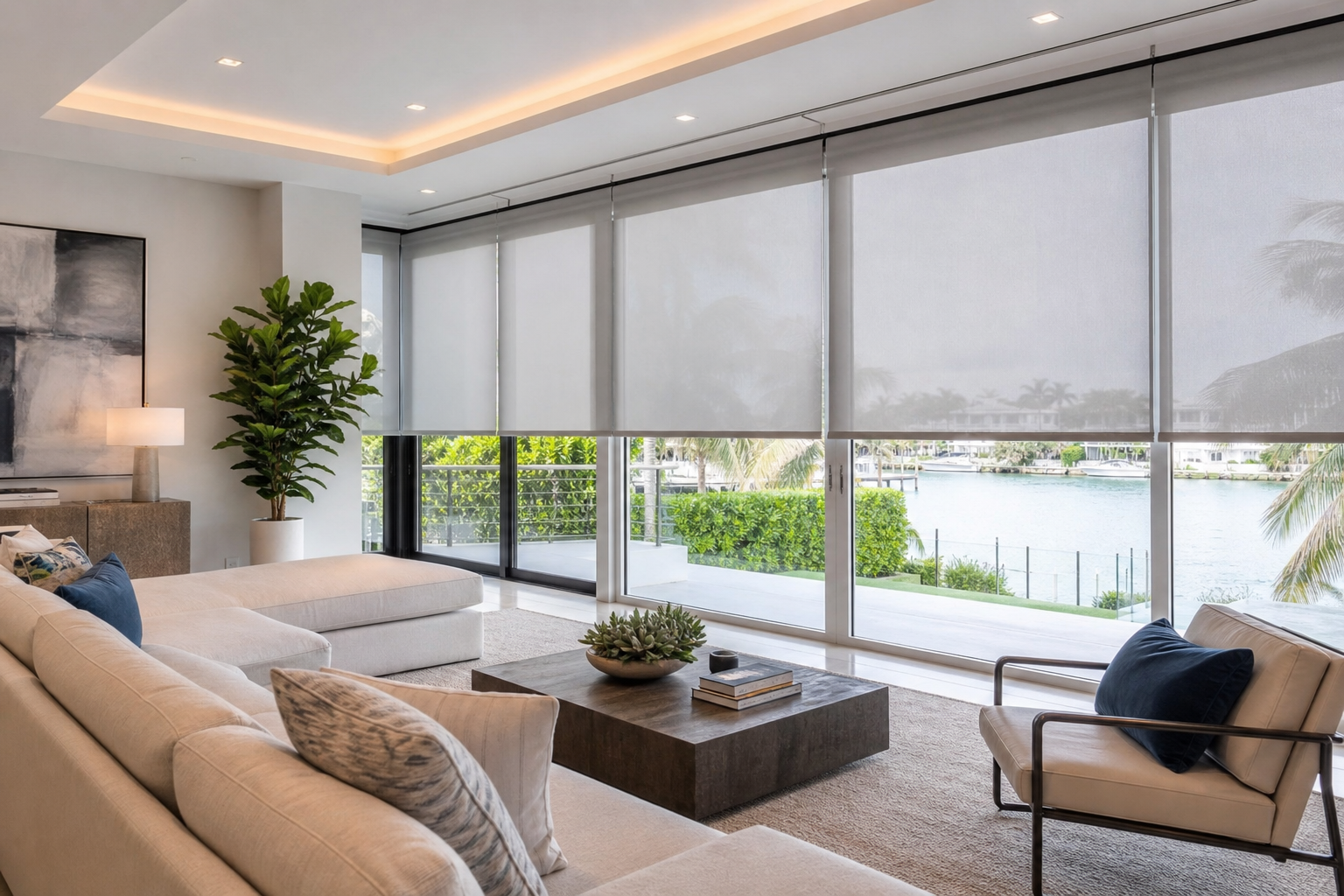
Smart motorized shades with voice control can make everyday window management simpler, especially in South Florida homes with large windows, strong sunlight, and open indoor-outdoor layouts. Instead of walking from room to room to adjust each shade, homeowners can use a voice command, mobile app, remote, or scheduled automation to manage natural light and privacy.
However, choosing the right system involves more than selecting a shade with a motor. The window treatment itself, the type of light control, power options, smart-home compatibility, installation requirements, and room-by-room needs all affect the final result. This guide explains what Miami-Dade County homeowners should know before investing in smart motorized shades with voice control.
What Are Smart Motorized Shades With Voice Control?
Motorized shades use an electric motor to raise, lower, or adjust the shade without a traditional manual chain or cord. A smart motorized shade can connect to a control system, allowing you to operate it through a remote, smartphone app, schedules, sensors, or voice commands.
Voice control adds another layer of convenience. Once the shades are properly connected to a compatible smart-home platform, you may be able to say a command such as “close the living room shades” or “open the bedroom shades.” The exact commands and available features depend on the shade motor, control system, and smart-home devices used in the home.
These shades are available in several styles, including roller shades, solar shades, blackout shades, and other custom window coverings. The best choice depends on whether your priority is glare reduction, privacy, room darkening, energy-conscious design, or a combination of needs.
Why Voice-Controlled Shades Make Sense in South Florida
South Florida homes often have expansive windows, sliding glass doors, high ceilings, and rooms designed around natural light. Those features create a bright and open atmosphere, but they can also make manual shade operation inconvenient. A motorized system is especially useful when windows are tall, wide, difficult to reach, or grouped together.
Managing intense sunlight and glare
Bright sunlight can make television screens, computers, and work areas difficult to use. Voice-controlled shades allow homeowners to reduce glare without interrupting a meeting, leaving the kitchen, or crossing a room. Solar shades can help soften incoming daylight while maintaining an outward view, while blackout shades are better suited to bedrooms, media rooms, and spaces where stronger light control is needed.
Improving privacy at convenient times
Privacy needs can change throughout the day. A home may feel open during daylight hours but exposed after sunset when interior lights are on. With smart motorized shades, homeowners can close selected windows at a scheduled time or adjust them with a simple command. This can be particularly helpful for homes near busy streets, neighboring properties, or dense Miami-area communities.
Supporting a more comfortable interior
Window coverings can help manage the amount of direct sunlight entering a room. Closing shades during the brightest part of the day may help reduce glare and the feeling of heat near sun-facing windows. Automation makes it easier to use shades consistently rather than relying on manual adjustments.
How Voice Control Works With Motorized Shades
A voice-controlled window treatment system typically includes several components:
- Custom shades: The shade is selected based on the window size, style, fabric, openness, and desired level of light control.
- Motor: The motor raises, lowers, or adjusts the shade. Motor placement and operating noise can vary by product and installation.
- Control method: This may include a handheld remote, wall control, smartphone app, or smart-home hub.
- Voice assistant connection: A compatible platform can allow voice commands after the motorized shades are connected and configured.
- Power source: Depending on the selected system, shades may use rechargeable power, batteries, or a wired electrical connection.
Professional planning matters because the shade, motor, power source, and control system need to work together. It is also important to determine whether you want individual control, room-based control, or one system that manages shades throughout the home.
Choosing the Right Shade Style for Voice Automation
Motorization and voice control describe how a shade operates. They do not determine how the shade looks or how much light it blocks. Choosing the appropriate shade style is just as important as selecting the technology.
Solar shades
Solar shades are often considered for rooms with strong sunlight, glare, and views that homeowners want to preserve. Their fabric openness affects the balance between outward visibility, privacy, and light filtering. For a closer comparison of openness levels, see our guide to 1 percent, 3 percent, and 5 percent solar shades.
Solar shades can be a practical option for living rooms, home offices, and large windows facing bright exposures. They may not provide complete privacy after dark when interior lights are on, so some homeowners combine them with another layer or choose a different shade style for bedrooms.
Blackout shades
Blackout shades are designed for stronger room darkening. They may be appropriate for bedrooms, nurseries, media rooms, and spaces where early morning sunlight or outside lighting is disruptive. The overall level of darkness also depends on the fit, mounting position, side gaps, and surrounding window conditions.
Roller shades
Roller shades offer a clean, modern profile and can be made with fabrics that provide different levels of light filtering and privacy. Their simple appearance works well with voice automation because the technology remains visually discreet when the shade is raised.
Zebra shades
Zebra shades use alternating bands of sheer and more opaque fabric. Adjusting the bands can provide filtered light, a greater level of privacy, or a more open view. They can be a useful choice for homeowners who want flexibility without switching between separate window treatments.
Important Features to Consider Before Buying
Individual, group, and room control
Consider how you expect to use the shades. You may want to control one window independently, all shades in a room together, or several rooms with one command. Grouping can be helpful in open-concept spaces, while individual control is useful when windows have different sun exposure or privacy needs.
Schedules and scenes
Schedules can automate common routines, such as opening shades in the morning or closing them in the evening. Scenes allow several shades to respond to one command or preset. For example, a homeowner might create a “movie” setting for a media room or an “evening” setting that closes shades in selected living areas.
Automation should support your daily habits rather than make the system unnecessarily complicated. During the consultation process, it helps to describe how each room is used and when you typically need privacy or light control.
Manual operation during power or connection issues
Ask how the shades can be operated if the power source is depleted, the internet is unavailable, or the smart-home connection needs attention. A well-planned system should account for practical situations and include a control method that suits the household.
Noise and bedroom use
For bedrooms and nurseries, ask about motor operation and whether the selected system is appropriate for nighttime use. Shade movement should fit the room’s purpose, particularly when automation is scheduled for early morning or evening.
Appearance when raised or lowered
Look at the shade fabric, cassette or headrail, mounting position, and how the treatment will appear alongside trim, cabinetry, and other finishes. Custom measurement helps ensure that the window treatment is proportioned correctly and operates as intended.
Power Options and Installation Planning
Power planning is one of the most important parts of a motorized shade project. Some installations may be suited to rechargeable or battery-powered motors, while others may benefit from a wired connection. The right choice depends on window quantity, accessibility, layout, construction, and the homeowner’s preferences.
Large windows and sliding doors require particular attention. The treatment must be measured accurately, and the motorized components need to be selected for the size and weight of the shade. A professional installer can also help identify mounting limitations, nearby outlets, trim conditions, and the best placement for controls.
Professional measurement is valuable even when the shade design appears straightforward. Small differences in width, height, or mounting position can affect alignment, light gaps, and the overall appearance of multiple shades installed next to one another.
Smart Motorized Shades for Large Windows and Glass Doors
Large openings are common in South Florida homes and often create the strongest need for automation. A motorized solar shade may help manage glare across a wide living room, while a blackout treatment may be more appropriate for a bedroom with a large glass door.
For large windows, consider whether the shades should operate individually or as a group. Separate control can accommodate different sun exposures, while grouped control creates a cleaner routine for an entire room. You can learn more about this application in our guide to motorized solar shades for large windows.
Sliding glass doors may also require careful consideration of clearance, access, and the way the shade interacts with door hardware. These details are best reviewed during an in-home consultation rather than decided from a product image alone.
How to Choose a Professional Installer
When comparing window treatment providers, look for a process that includes more than product selection. A quality installation experience should address:
- Accurate measurement of each window and opening
- Recommendations based on room use, sun exposure, privacy, and design
- Clear explanation of motor, power, and control options
- Coordination of shade fabrics and finishes throughout the home
- Professional installation and operating instructions
- Testing of the shades and controls after installation
It is also helpful to ask how the installer approaches unusual windows, high openings, large expanses of glass, and rooms with different automation needs. The goal is not simply to add a motor, but to create a window treatment system that is practical and visually consistent.
Frequently Asked Questions
Can I control motorized shades with my voice?
Many motorized shade systems can connect to compatible voice-control platforms. The available commands and features depend on the selected motor, control system, and smart-home setup. Confirm compatibility before ordering.
Do smart shades need Wi-Fi to work?
Some smart features may rely on a home network or hub, while basic operation may be available through a remote or another local control method. Ask your window treatment professional how the proposed system operates if the internet connection is unavailable.
Are voice-controlled shades useful for bedrooms?
Yes. They can make it easier to schedule or adjust blackout shades for sleeping spaces. Before choosing a system, discuss motor operation, nighttime schedules, privacy, and the desired level of room darkening.
Can I control only one shade instead of every shade in the house?
In many systems, shades can be configured for individual, room-based, or grouped control. The best arrangement depends on the layout and how you plan to use the rooms.
Are motorized shades suitable for large windows?
They can be, but large windows require careful product selection, accurate measurement, and appropriate motor planning. The shade material, dimensions, mounting conditions, and power source should all be reviewed before installation.
Plan Your Smart Shade Installation
Smart motorized shades with voice control can bring convenient light management, privacy, and a more connected feel to a South Florida home. The best results come from matching the automation features to the right shade style and planning the installation around each room’s practical needs.
Floridian Blinds can help you compare shade styles, light-control options, motorization, and control configurations for your home. Contact us for a free consultation and measurement.