Solar Shades vs Window Tint: Which Is Better for South Florida Homes?
Compare solar shades and window tint for heat, glare, UV exposure, privacy, design, and flexibility in Miami-Dade County and South Florida homes.
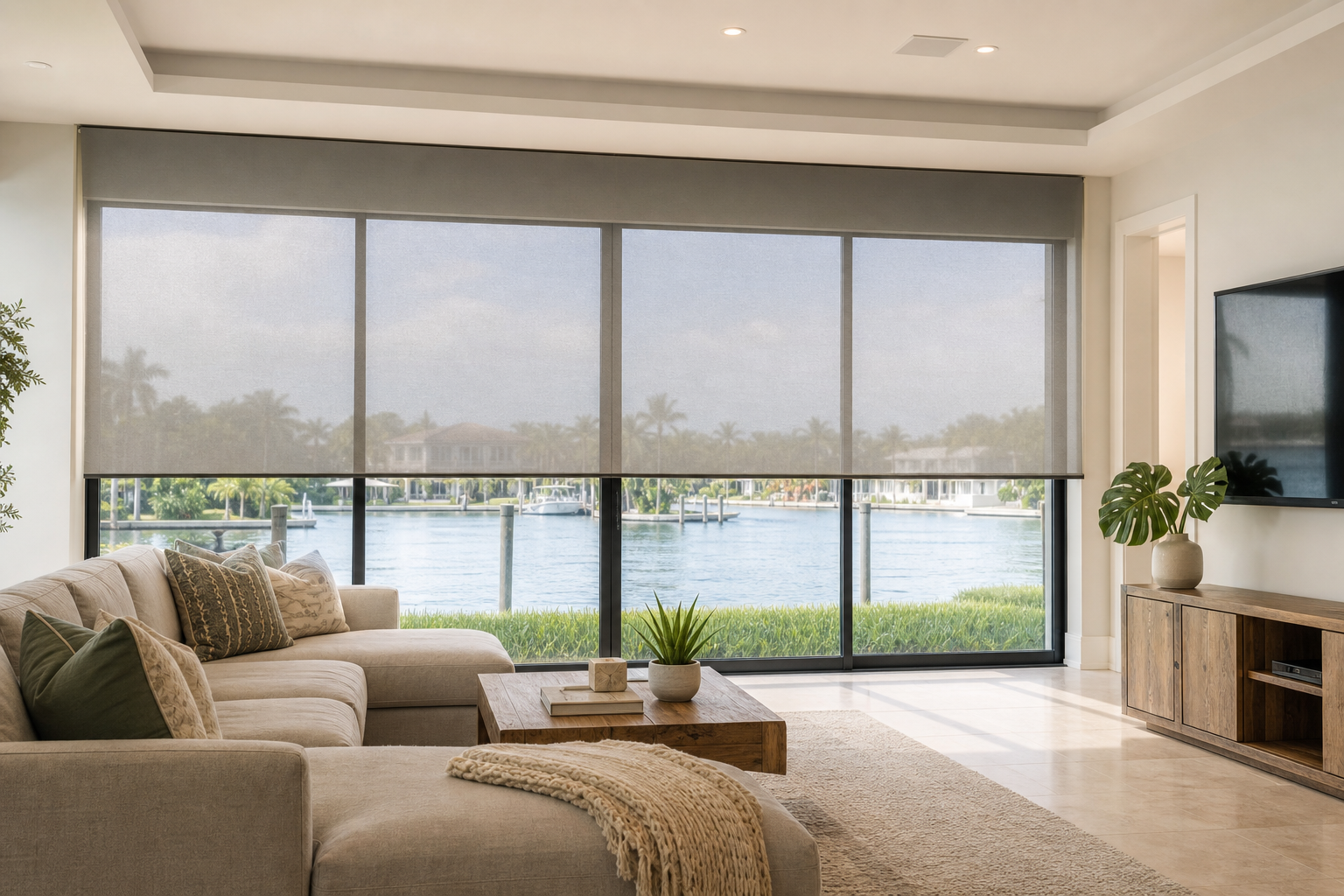
When South Florida sunlight pours through your windows, two popular solutions can help manage heat, glare, and UV exposure: solar shades and window tint. Both can make bright rooms more comfortable, but they work in different ways and offer different levels of flexibility, privacy, light control, and design customization.
Choosing between solar shades vs window tint depends on your windows, room function, interior style, and how much control you want over the space. A homeowner in Miami, Kendall, Doral, Coral Gables, or another Miami-Dade community may also need to consider intense sun, large glass areas, indoor-outdoor living, and privacy after dark.
This guide explains how each option works, where each performs well, and what to consider before investing in a window treatment.
Solar Shades vs Window Tint: How They Differ
Solar shades are fabric window treatments installed inside the home. They use specially designed screen-like materials to filter sunlight, reduce glare, and help protect furnishings from direct exposure while preserving some outside visibility. Solar shades can be raised, lowered, or motorized depending on the selected design.
Window tint is a film applied directly to the glass. It changes how sunlight passes through the window without adding a fabric treatment or operating hardware. Depending on the film, tint may reduce glare, alter the appearance of the glass, and provide a degree of solar control.
| Consideration | Solar shades | Window tint |
|---|---|---|
| Installation | Mounted inside the window opening or on the wall or ceiling | Applied directly to the glass |
| Light control | Adjustable; shades can be positioned as needed | Generally permanent once installed |
| Design choices | Fabric colors, openness, operating options, and mounting styles | Film shade, finish, and appearance |
| Privacy | Depends on fabric openness, lighting, and shade position | Depends on the film and lighting conditions |
| Motorization | Can be integrated into a motorized shade system when available for the selected product | Does not provide an operating function |
| Window changes | Can be replaced or updated as design needs change | May need to be removed and replaced to change the appearance or performance |
What Are Solar Shades?
Solar shades are roller-style window treatments made with woven screen fabrics. The fabric filters sunlight before it reaches the room, helping reduce harsh brightness and reflections on televisions, monitors, and other surfaces. They are especially useful in rooms with large windows or strong afternoon sun.
One important solar shade specification is the fabric openness factor. This describes how tightly the material is woven. A more open fabric typically allows more daylight and outside visibility, while a tighter weave can provide more light filtering and privacy. The right choice depends on whether the room is focused on views, glare reduction, privacy, or a balance of all three.
Benefits of solar shades
- Adjustable control over sunlight throughout the day
- A clean, modern appearance that works well with contemporary interiors
- Fabric and color options to coordinate with flooring, walls, furniture, and trim
- Useful glare control for living rooms, offices, media spaces, and bedrooms
- Potential compatibility with motorized operation for hard-to-reach windows
- A window treatment that can be changed if your design or light-control needs evolve
Solar shades do not usually create a completely dark room. Their purpose is to filter sunlight while maintaining a lighter, more open feel. If you need near-total darkness for sleeping or a home theater, blackout shades may be a more appropriate choice.
For additional guidance on selecting fabrics for local conditions, see Solar Shades and Energy Savings in Miami.
What Is Window Tint?
Window tint is a thin film applied to the interior surface of a window. It can change the amount and quality of light entering the room and may be selected for appearance, glare management, or solar-control goals. Because the film is attached to the glass, it remains in place rather than being opened or closed like a shade.
Window tint can be appealing when you want a relatively unobtrusive treatment. It does not take up room around the window and can maintain a simple glass-only appearance. However, it is less adjustable than a shade. If you want direct sunlight in the morning but filtered light in the afternoon, tint cannot be repositioned during the day.
Benefits of window tint
- Maintains a minimal appearance without visible fabric panels
- Does not require daily operation
- Can alter glare and the visual quality of incoming sunlight
- May be useful when window openings are difficult to cover with traditional treatments
- Can work as one part of a broader window and shading plan
Window tint also requires careful product selection and professional application. The suitability of a film can depend on the type, age, construction, and condition of the glass. Homeowners should discuss compatibility with a qualified window-film professional before installation.
Which Provides Better Heat and Glare Control?
Both solar shades and window tint can help manage the effects of strong sunlight, but their performance depends on the product selected and the window’s exposure. South Florida homes may receive intense sunlight through east-, south-, and west-facing windows, with afternoon exposures often creating significant glare and warmth.
Solar shades control sunlight by placing a filtering fabric between the room and the window. You can lower the shade during the brightest part of the day and raise it when you want a clearer view. This adjustability is one of the main advantages over a permanent film.
Window tint controls light through the glass itself. It may be suitable when you want a consistent appearance and do not need to adjust the treatment. Since results vary by film type and window, it is important to evaluate the actual glass and room conditions rather than choosing based only on a tint color or darkness level.
Neither option should be treated as a complete replacement for proper home design, insulation, ventilation, or climate control. However, the right window treatment can be an important part of making bright rooms more comfortable and protecting interior finishes from frequent sun exposure.
Privacy: Solar Shades vs Window Tint
Privacy is often more complicated than homeowners expect. A solar shade with an open screen fabric may allow you to see outside during the day while limiting the view into the room when outdoor light is brighter than indoor light. At night, the situation can reverse: interior lights may make it easier for people outside to see into the room.
Window tint has a similar lighting limitation. Reflective or darker films may provide more daytime privacy, but they generally do not guarantee privacy after dark when the interior is brightly lit. For bedrooms, bathrooms, street-facing windows, and homes close to neighbors, consider whether you need a second layer or a treatment designed specifically for nighttime privacy.
If privacy needs change throughout the day, an adjustable solar shade may offer more practical control. If you need privacy at all times, ask about combining a light-filtering or solar shade with another window treatment rather than relying on tint alone.
Design Flexibility and Interior Style
Solar shades offer more visible design choices than window tint. You can coordinate the fabric with a modern living room, select a neutral shade for a calm bedroom, or use consistent treatments across several windows. Different mounting approaches may also help create a clean appearance across large or unusually shaped openings.
Window tint is more discreet. It may be a good fit for homeowners who want the windows to remain visually simple and do not want fabric, headrails, or operating controls to be part of the room’s design. The tradeoff is that tint provides fewer opportunities to add texture, color, softness, or architectural balance.
For homeowners considering a fabric-based option for a contemporary room, this guide to roller shades for modern living rooms explains how clean-lined shades can support a modern interior.
When Solar Shades May Be the Better Choice
Solar shades may be the better fit when you want adjustable light control, coordinated interior design, or the option to use motorization. They are worth considering if:
- Your rooms become uncomfortably bright at certain times of day.
- Glare affects a television, computer monitor, or work area.
- You want to preserve an outside view while filtering direct sun.
- You need different light levels in different rooms.
- You are furnishing a modern home and want a coordinated window treatment.
- You have high or hard-to-reach windows where motorized operation could be useful.
- You may want to update or replace the treatment in the future.
Solar shades can also work well in South Florida homes with large windows and open floor plans. A professional consultation can help determine fabric openness, color, mounting, and operating options for each exposure.
When Window Tint May Be the Better Choice
Window tint may be worth considering when you prefer a minimal appearance and want a consistent treatment that stays on the glass. It may fit a space where:
- You do not want visible fabric window coverings.
- The windows are difficult to cover with traditional shades.
- You prefer not to operate a window treatment during the day.
- You are comfortable with a less adjustable solution.
- The selected film is appropriate for the existing glass and installation conditions.
Some homeowners choose both options. For example, tint may provide a base level of solar control while an adjustable shade adds privacy, glare management, and design flexibility. Whether that combination makes sense depends on the window, room, exposure, and desired appearance.
Important Considerations for Miami-Dade Homes
South Florida’s climate makes window treatment selection especially important. Strong sunlight, heat, humidity, and frequent use of air conditioning can all influence how a room feels. Large windows and sliding glass doors also connect indoor spaces to patios and outdoor areas, making privacy and glare control practical concerns rather than purely decorative choices.
Consider the following before selecting solar shades or tint:
- Window orientation: Note when each room receives direct sun. Morning and afternoon exposures can require different levels of control.
- Room purpose: A home office may need glare reduction, while a bedroom may prioritize privacy and darkness.
- Nighttime privacy: Test your preferred option under realistic evening lighting conditions.
- Outside views: Decide whether preserving a view is more important than maximizing privacy.
- Window size and access: Large windows and tall openings may benefit from professional measurement and motorized operation.
- Interior design: Decide whether the treatment should blend into the room or become part of its visual finish.
- Future flexibility: If your needs may change, an adjustable shade is usually more adaptable than a permanent glass treatment.
Professional Measurement Matters
Accurate measurement is important for both appearance and performance. A shade that is too narrow can leave unwanted gaps, while an incorrectly mounted treatment may look uneven or operate poorly. Window tint also requires careful installation to achieve a clean result and to account for the characteristics of the existing glass.
A professional window treatment consultation can evaluate each opening, identify differences between rooms, and recommend a consistent design without assuming that every window needs the same solution. This is particularly helpful in South Florida homes with expansive glass, corner windows, sliding doors, or a combination of old and new windows.
Solar Shades vs Window Tint: A Simple Decision Guide
Choose solar shades if adjustable light control, fabric design, privacy management, or motorization is important to you. Choose window tint if you prefer a fixed, minimal treatment applied directly to the glass and do not need to change the light level throughout the day.
If you are unsure, start by identifying the biggest problem in each room. Is it glare, heat, privacy, fading concerns, appearance, or the need to darken the room? The answer can help narrow the options. In some homes, a combination of treatments may provide a better result than using one solution everywhere.
Frequently Asked Questions
Are solar shades and window tint the same thing?
No. Solar shades are adjustable fabric window treatments, while window tint is a film applied directly to the glass. They can address some of the same concerns, but they differ in adjustability, appearance, installation, and privacy control.
Do solar shades block the view outside?
Solar shades can preserve an outside view, especially when a more open screen fabric is selected. Visibility depends on the fabric, lighting conditions, shade position, and the difference between indoor and outdoor brightness.
Do solar shades provide privacy at night?
Not always. Many screen-style solar fabrics provide more daytime privacy than nighttime privacy. When interior lights are on after dark, people outside may be able to see into the room. A second privacy layer may be appropriate for bedrooms and street-facing windows.
Can window tint make a room completely dark?
Window tint is generally not the same as a blackout window treatment. It may reduce or alter incoming light, but homeowners who need a dark bedroom or media room should discuss blackout shades or another light-blocking option.
Can solar shades be motorized?
Motorization may be available for selected solar shade designs and can be useful for tall, wide, or hard-to-reach windows. A professional consultation can help determine which operating method fits the window and the room.
Find the Right Window Solution for Your Home
There is no single answer to the solar shades vs window tint question. The right choice depends on how your windows face, how each room is used, how much privacy you need, and whether you want adjustable control or a permanent glass treatment.
Floridian Blinds helps South Florida homeowners evaluate custom window treatment options for comfort, privacy, glare control, modern design, and everyday convenience. Contact us for a free consultation and measurement.