Window Treatments for High Ceilings: A South Florida Guide
Learn how to choose window treatments for high ceilings, including shade styles, motorization, privacy, light control, and professional installation considerations for South Florida homes.
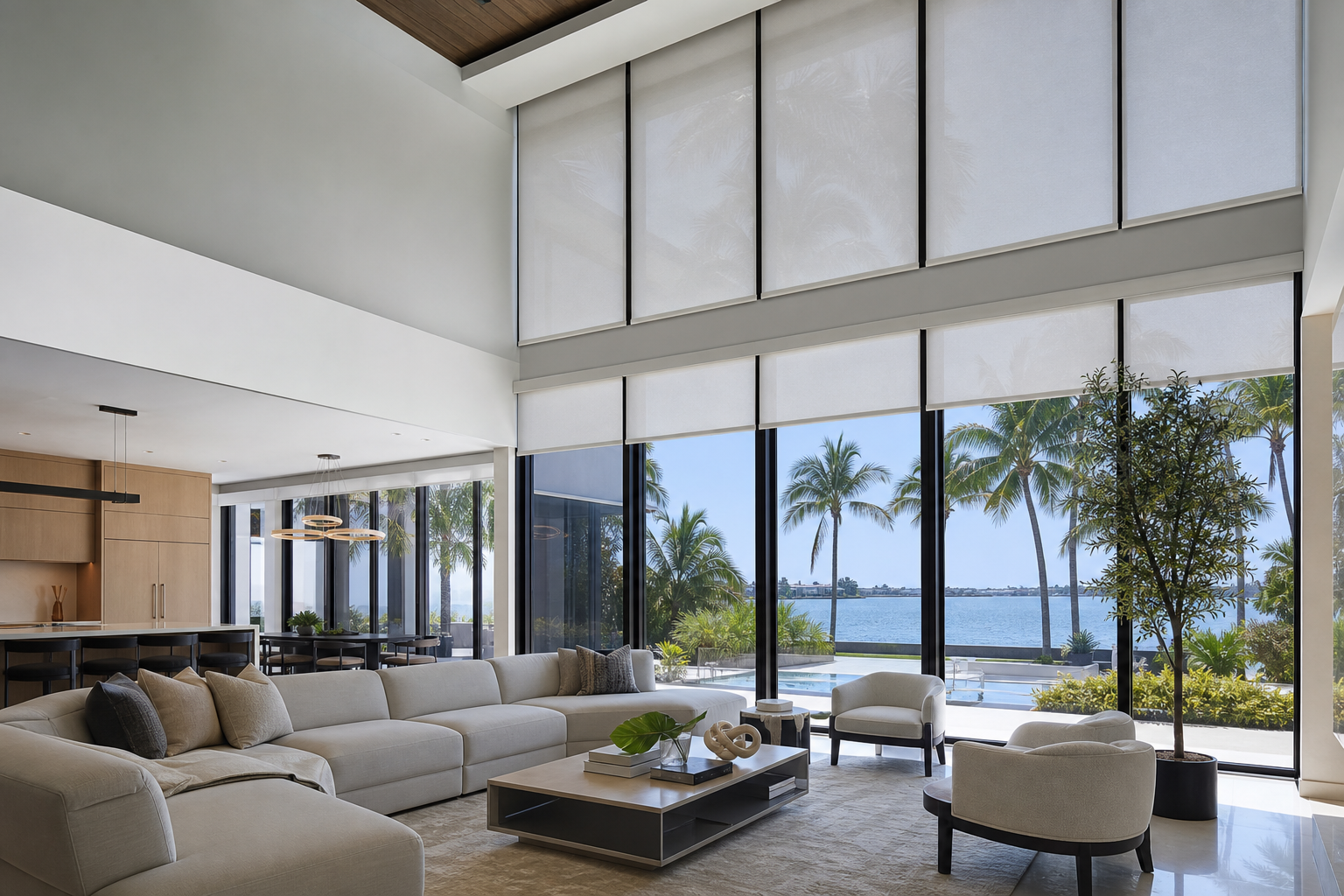
Why High Ceilings Need a Thoughtful Window Treatment Plan
High ceilings can make a room feel open, bright, and architecturally distinctive. They can also make window treatment decisions more complicated. Tall windows may be difficult to reach, exposed to intense sunlight, and large enough that the wrong shade style feels visually unbalanced.
The right window treatments for high ceilings should support the room’s design while providing practical control over sunlight, privacy, glare, and indoor comfort. In South Florida, these considerations are especially important because homes in Miami-Dade County experience strong sunlight, heat, and UV exposure throughout much of the year.
Whether you are furnishing a two-story living room, a great room with clerestory windows, or a home with oversized glass doors, the best solution usually starts with the window’s size, location, orientation, and accessibility. Custom measurement and professional installation help ensure the finished shades operate smoothly and look proportionate to the architecture.
What Makes High Windows Different?
Standard window treatment advice does not always apply to tall or hard-to-reach windows. Before choosing a product, consider the following factors:
- Reach and operation: A manually operated shade may not be practical if the window is several feet above the floor or located above stairs.
- Window proportions: Very tall glass can overwhelm a room when covered with a treatment that is too small, too heavy, or visually busy.
- Sun exposure: South- and west-facing windows may receive strong afternoon light, creating glare and heat near the glass.
- Privacy: Tall windows can provide excellent views but may also expose living areas, bedrooms, or entry spaces after dark.
- Installation access: Reaching high windows may require careful planning around staircases, balconies, furniture, and architectural details.
These issues are easier to address when the shade design is planned as part of the room rather than added as an afterthought.
Best Window Treatment Options for High Ceilings
Motorized Shades for Hard-to-Reach Windows
Motorized shades are often one of the most practical choices for high ceilings. With a remote, wall control, or compatible smart-home setup, homeowners can adjust shades without using a ladder or reaching over furniture.
Motorization is useful for tall living room windows, two-story spaces, high transom windows, and large areas of glass that need regular adjustment. It can also help keep several shades aligned visually across a large room. Depending on the room’s needs, shades may be operated individually or grouped together.
Automation can be particularly convenient in South Florida, where homeowners may want to adjust shades during the brightest part of the day, reduce glare while watching television, or close shades in the evening for privacy. For more planning ideas, see our guide on how to schedule motorized shades automatically.
Roller Shades for a Clean, Vertical Look
Roller shades are a streamlined option for high windows because their simple profile keeps attention on the architecture. They can be customized in fabrics and openness levels suited to the room’s light and privacy requirements.
A light-filtering roller shade can soften direct sunlight while preserving some natural brightness. A room-darkening or blackout material may be more appropriate for bedrooms, media rooms, or spaces where glare needs to be minimized. Roller shades also work well when a homeowner wants a consistent appearance across windows of different heights.
Solar Shades for Sun and Glare Control
Solar shades are designed to help manage sunlight and glare while maintaining an outward view. They can be a strong choice for high windows overlooking a pool, garden, or South Florida landscape.
Because large windows can introduce significant brightness into a room, solar shades may be useful in living rooms, home offices, and entertainment spaces. The appropriate fabric and openness level depend on the desired balance between view, privacy, and light control. Solar shades typically provide more daytime privacy than nighttime privacy, so another solution may be needed after dark.
Blackout Shades for Bedrooms and Media Rooms
High windows in bedrooms can allow early morning light into the room, while tall windows in media rooms can create reflections on screens. Blackout shades can help create a darker environment when that is the primary goal.
For elevated bedroom windows, motorization can make blackout shades easier to use consistently. A homeowner does not have to manually reach each shade to darken the room, and multiple shades can be adjusted together. Learn more about using smart blackout shades for bedrooms in a South Florida home.
Zebra Shades for Adjustable Light Control
Zebra shades use alternating bands of sheer and more opaque fabric to provide adjustable light control. Their modern appearance can suit contemporary interiors, and they offer more flexibility than a shade that is simply open or closed.
In a tall living area, zebra shades may allow filtered daylight during the day and increased privacy when the solid fabric bands are aligned. Motorization is worth considering when the shades are mounted too high for convenient manual operation. For living room design ideas, explore our guide to smart zebra shades for living rooms.
Should You Choose One Tall Shade or Several Smaller Shades?
High-ceiling windows can sometimes be covered with one continuous shade, but that is not always the most practical or visually balanced approach. The decision depends on the window configuration and the goals for the room.
One Shade Across a Tall Window
A single shade can create a clean, uninterrupted appearance. It may work well for a narrow, vertically oriented window where the shade is proportionate to the opening. However, large or heavy window coverings require careful consideration of operation, installation access, and the overall scale of the room.
Multiple Shades Across a Large Opening
Dividing a wide or unusually tall opening into multiple shades can make operation more manageable and provide more flexible light control. For example, the lower portion of a window may need privacy while the upper section remains open for daylight.
Separate shades can also be useful when windows face different directions or when one area of a room receives more direct sun than another. A professional window treatment consultation can help determine whether a single treatment or a coordinated group will look and function better.
How to Select the Right Fabric and Opacity
Fabric choice affects the amount of light, glare, and privacy a shade provides. Start by identifying how the room is used rather than choosing a material based only on color.
- For bright living rooms: Consider light-filtering or solar shade materials that soften daylight and help manage glare.
- For bedrooms: Look at blackout or room-darkening options, especially when windows face the sunrise or are positioned above the bed.
- For media rooms: Prioritize glare reduction and the ability to create a darker viewing environment.
- For street-facing windows: Consider privacy needs during both the day and evening. A shade that provides daytime privacy may not offer the same result once interior lights are on.
- For design-focused spaces: Coordinate color, texture, and opacity with flooring, wall finishes, furnishings, and the room’s architectural lines.
Samples are helpful because fabric can look different in direct sunlight, filtered daylight, and evening interior lighting. A consultation also allows the shade design to be evaluated against trim, ceiling height, and the surrounding finishes.
Why Professional Measurement Matters for Tall Windows
Accurate measurement is especially important when windows are high, oversized, or located in a complex architectural space. Small errors can become more noticeable when a shade spans a large opening or when several shades need to line up across a wall.
A professional measurement should account for the exact width and height of each opening, mounting conditions, nearby trim, handles, mullions, ceiling details, and access for installation. It should also consider how the shades will operate once furniture, curtains, or other design elements are in place.
Professional installation helps ensure that brackets, controls, and shade alignments are properly planned. For motorized products, installation also includes confirming that the operating system is positioned conveniently and that the finished treatment works as intended within the room.
Design Tips for Rooms with High Ceilings
- Keep the treatment proportional. A very small shade can look disconnected from a tall window, while an overly heavy treatment can dominate the room.
- Use consistent headrail or cassette lines. Aligning the top of multiple shades can create a more intentional appearance.
- Coordinate across adjoining windows. If a room includes standard-height and high windows, matching or complementary shades can create visual continuity.
- Consider the view. If the windows overlook water, landscaping, or a city setting, solar or light-filtering shades may preserve the view while reducing harsh brightness.
- Plan for evening privacy. Review the treatment from outside after dark if privacy is a major concern.
- Think about future operation. If a window is difficult to reach now, it may become even less convenient after furniture or décor is added.
Energy and Comfort Considerations in South Florida
Window treatments cannot replace a complete energy-efficiency plan, but they can help homeowners manage the sunlight entering a room. This matters in South Florida, where direct solar exposure can make spaces feel warmer and create uncomfortable glare.
Using shades during the brightest parts of the day may help limit direct sunlight through exposed glass. Solar shades can be considered where maintaining a view is important, while more opaque options may be appropriate when privacy, darkness, or stronger light control is the priority.
Window orientation matters. A west-facing room may need stronger afternoon glare control, while an east-facing bedroom may benefit from a solution that blocks early morning light. A room-by-room approach is often more effective than choosing the same shade for every window.
Common Mistakes to Avoid
- Choosing manual shades for windows that are difficult to reach.
- Selecting a fabric based only on appearance without considering glare or privacy.
- Assuming daytime privacy will remain the same at night.
- Installing treatments without accounting for stairways, balconies, furniture, or trim.
- Covering a large opening with an approach that does not allow practical maintenance or operation.
- Waiting until after painting, furnishing, or remodeling decisions are complete when the window treatment affects the overall design.
Frequently Asked Questions
Are motorized shades necessary for high ceilings?
They are not required in every room, but motorization can be a practical option when windows are difficult to reach or need frequent adjustment. It can also make it easier to operate several shades together.
What shades work best for tall living room windows?
Roller shades, solar shades, zebra shades, and motorized shades can all work well. The best choice depends on the room’s needs for view preservation, privacy, glare control, appearance, and ease of operation.
Can blackout shades be used on very tall windows?
Yes, blackout shades may be considered for tall bedroom or media room windows. Professional measurement is important so the treatment fits the opening and operates properly.
Do solar shades provide privacy at night?
Solar shades can provide useful daytime privacy in many settings, but their privacy effect may change at night when interior lights are on. Additional privacy planning may be needed.
Why should high windows be professionally measured?
Professional measurement helps account for the exact opening, mounting surface, nearby architectural features, and the practical operation of the finished shade. This is especially important for large, elevated, or hard-to-access windows.
Plan Window Treatments for High Ceilings with Floridian Blinds
High ceilings and oversized windows deserve a treatment plan that considers design, accessibility, light control, privacy, and the South Florida climate. Floridian Blinds can help you compare custom shade options, including roller shades, solar shades, blackout shades, zebra shades, and motorized solutions.
Contact Floridian Blinds for a free consultation and measurement to discuss the windows in your Miami-Dade County or South Florida home.