Best Shades for Home Offices in South Florida
Learn how to choose the best shades for a home office, including options for glare control, privacy, heat reduction, and video calls in South Florida.
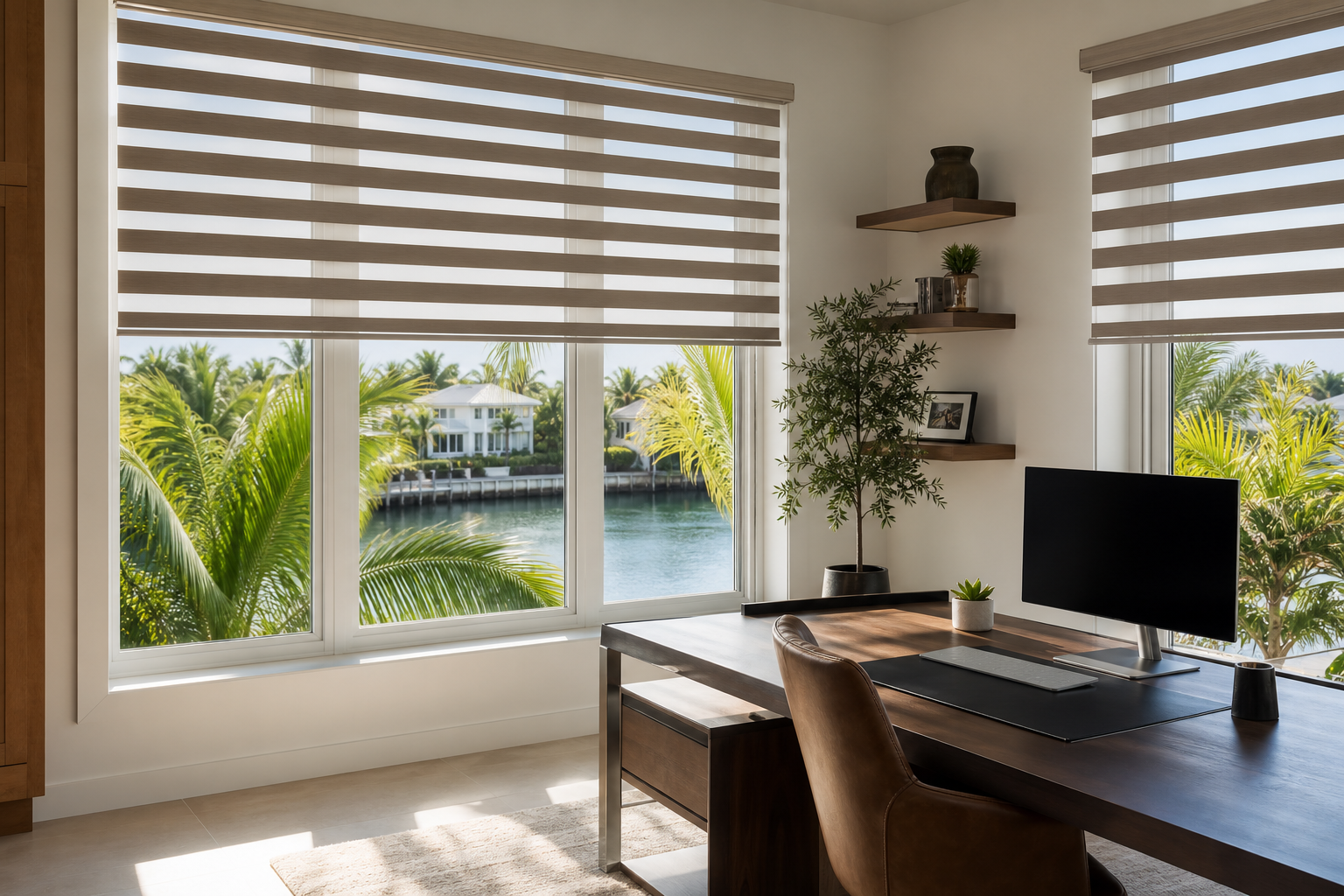
Choosing the best shades for a home office involves more than selecting a color that matches your décor. The right window treatment can reduce screen glare, improve privacy, control intense sunlight, and make the room more comfortable throughout the workday. In South Florida, where bright sun, heat, and UV exposure are regular considerations, custom shades can also help protect furnishings and create a more productive workspace.
The ideal solution depends on your window orientation, the amount of natural light you prefer, your need for privacy, and how often you use video calls. Below, we compare the most suitable shade styles for home offices and explain what to consider before ordering.
What Makes a Shade Effective in a Home Office?
A home office shade should support both comfort and concentration. Before comparing products, consider these practical goals:
- Screen visibility: The shade should help reduce reflections and glare without making the room unnecessarily dark.
- Light control: You may want soft daylight for general work but stronger light reduction during video calls or focused tasks.
- Privacy: Windows facing neighboring homes, streets, or busy areas may require daytime and nighttime privacy.
- Temperature control: Sun-facing windows can make an office uncomfortable, especially during the warmer parts of the day.
- Professional appearance: A clean, fitted window treatment creates a polished background for meetings and video conferences.
- Convenience: Motorization can make it easier to adjust shades without interrupting work or moving furniture near the window.
Custom measurement is particularly important in offices with large windows, multiple windows on different walls, unusually shaped openings, or windows located behind a desk. A properly fitted shade helps provide more consistent coverage and a finished appearance.
The Best Shades for Home Offices
1. Solar Shades for Glare Control
Solar shades are often a strong choice for home offices because they are designed to filter incoming sunlight while maintaining a connection to the outdoors. They can help soften harsh brightness and reduce reflections on computer monitors, making it easier to work near a window.
Solar shades are especially useful in rooms with east- or west-facing windows, where low-angle sunlight can create difficult glare at certain times of day. They also provide a streamlined, modern appearance that works well in contemporary offices.
One important consideration is privacy. Depending on the fabric and lighting conditions, a solar shade may provide more daytime privacy than nighttime privacy. When interior lights are on after dark, people outside may be able to see into the room. For a closer look at this issue, read what South Florida homeowners should know about solar shades and nighttime privacy.
Solar shades may be a good fit if you want:
- Reduced glare without completely blocking daylight
- A clean, minimal look for a professional workspace
- Daytime privacy while maintaining some outward visibility
- Help managing sunlight in a bright South Florida office
2. Roller Shades for Versatile Office Design
Roller shades are a practical and adaptable option for home offices. They are available in a wide range of fabrics, colors, and opacity levels, so you can choose the balance of light filtering and privacy that works for the room.
Light-filtering roller shades can reduce brightness while preserving a softer glow. Room-darkening or blackout fabrics provide stronger light control when you need to eliminate distractions, reduce glare during presentations, or create a more consistent background for video meetings.
Roller shades also work well when your office shares space with another room. A light-filtering fabric may be appropriate for an office that doubles as a guest room or reading area, while a more opaque material can create a focused environment for full-time work.
Consider roller shades if you want a straightforward window treatment that can be customized for different levels of privacy, light control, and design style.
3. Blackout Shades for Strong Light Control
Blackout shades are useful when your office receives intense direct sun, contains sensitive screens, or needs a darker environment for presentations and video calls. They can reduce the amount of light entering the room and help limit visual distractions outside the window.
Blackout shades may be especially helpful for home offices with west-facing windows. Afternoon sunlight can be bright and uncomfortable, and it may fall directly across a desk or monitor. Although the shade fabric can block much of the incoming light, the overall result also depends on the fit, mounting position, and gaps around the window.
Blackout shades are not always necessary for every office. If you enjoy natural daylight or want to maintain a view, a solar or light-filtering roller shade may be more appropriate. A useful approach is to evaluate the room at the times when you typically work rather than choosing based only on how the window looks in the morning.
4. Zebra Shades for Adjustable Day-to-Night Control
Zebra shades combine alternating bands of sheer and more opaque fabric. By adjusting the position of the bands, you can change the amount of light and privacy throughout the day.
This flexibility can be convenient in a home office that serves several purposes. You may want filtered light while reading or working, more privacy during a conference call, and a greater reduction in brightness during the afternoon. Zebra shades allow you to make those adjustments without changing the entire window treatment.
They also offer a modern layered appearance that can complement contemporary interiors in Miami, Coral Gables, Doral, and surrounding communities. Because the level of privacy depends on the position of the fabric bands and the lighting conditions, it is helpful to review the options with a window treatment professional before selecting them for street-facing windows.
5. Motorized Shades for Convenient Adjustments
Motorized shades can be a valuable upgrade for a home office, especially when windows are difficult to reach, positioned behind a desk, or installed high above the floor. With motorization, you can adjust the shades without stopping a meeting or moving around the room.
Motorized shades may also make it easier to respond to changing sunlight during the workday. For example, you can lower shades when glare reaches your monitor and raise them later when softer daylight returns. Multiple shades can also be coordinated, depending on the selected system and installation plan.
For South Florida homeowners interested in automation and comfort, read our guide to motorized shades and energy management. Motorization should be selected based on the window layout, shade type, power requirements, and how you expect to use the office.
How to Choose Shades Based on Your Office Windows
East-facing windows
Morning sun can create glare early in the workday. Solar shades or light-filtering roller shades may soften the brightness while keeping the office naturally lit. If you start work early, consider how the sunlight reaches your desk and monitor during those hours.
West-facing windows
West-facing windows often require more attention because afternoon sun can be intense and arrive at a low angle. Solar shades, blackout shades, or a combination of light-filtering and room-darkening solutions may help manage glare and heat. You can also review this guide to shades for west-facing windows in South Florida.
Large windows and sliding doors
Large openings can bring in substantial light and may be more difficult to cover with standard-size products. Custom shades help account for the exact dimensions and the way the window or door operates. If your office opens to a patio or balcony, make sure the treatment does not interfere with handles, walkways, or access points.
Street-facing or neighboring windows
Privacy needs may change between day and night. A shade that looks private from the inside during the day may offer less privacy when interior lights are turned on after sunset. Discuss privacy at different times of day before choosing an openness level or fabric.
Should You Choose Light-Filtering or Blackout Shades?
| Priority | Shade direction to consider |
|---|---|
| Natural daylight and outdoor visibility | Solar shades or light-filtering roller shades |
| Strong glare reduction | Solar shades with appropriate fabric selection or room-darkening roller shades |
| Presentations and video calls | Room-darkening or blackout shades |
| Adjustable privacy and light | Zebra shades or adjustable roller shade solutions |
| Difficult-to-reach windows | Motorized shades |
There is no single shade that is right for every home office. Some homeowners use one shade style throughout the room, while others choose different fabrics based on window orientation and privacy requirements. A professional consultation can help you compare those options using the actual conditions in your space.
Why Custom Measurement Matters in a Home Office
Home offices often contain expensive electronics, built-in shelving, desks, and carefully arranged furniture. A shade that is too wide, too short, or poorly positioned can leave unwanted gaps, interfere with the workspace, or look unfinished.
Professional measurement considers the window dimensions, frame depth, mounting location, nearby walls, handles, furniture, and how the shade will operate. It also helps identify whether an inside mount or outside mount is more practical for the window.
Custom installation is equally important. Proper installation helps the shades operate smoothly and ensures the finished treatment is aligned with the window and surrounding décor. This is particularly useful for rooms with multiple windows where consistency matters.
Design Tips for a More Comfortable Office
- Choose a shade color that complements the walls and furnishings without creating visual distraction behind you during video calls.
- Place the desk so direct sunlight does not fall straight onto the monitor whenever possible.
- Use consistent shade styles across adjacent windows for a cleaner appearance.
- Consider motorization for windows behind a desk or in high locations.
- Evaluate the room at different times of day before deciding on fabric opacity.
- Think about nighttime privacy if the office faces a street, sidewalk, or neighboring property.
Frequently Asked Questions
What are the best shades for reducing computer screen glare?
Solar shades and selected light-filtering roller shades are commonly considered for glare control because they can soften bright sunlight without necessarily making the room completely dark. The right fabric depends on the window direction and the position of the desk and monitor.
Are blackout shades too dark for a home office?
Not necessarily. Blackout shades can be useful for west-facing offices, video presentations, or rooms that become uncomfortably bright. If you prefer natural daylight for most tasks, a light-filtering or solar shade may provide a better balance.
Do solar shades provide privacy at night?
Solar shades may provide daytime privacy, but privacy can change after dark when interior lights are on. If nighttime privacy is important, discuss the fabric, window location, and whether a second layer or a more opaque shade is appropriate.
Are motorized shades worthwhile in a home office?
Motorized shades can be worthwhile when windows are hard to reach, glare changes throughout the day, or you want to adjust shades without interrupting work. They can also support a more convenient smart-home setup when compatible controls are selected.
Should all office windows use the same shade?
Not always. Windows facing different directions may have different glare, heat, and privacy needs. A coordinated combination of solar, roller, blackout, or zebra shades may provide better performance while maintaining a consistent design.
Find the Right Shades for Your Home Office
The best shades for a home office should reflect how you use the room, not just how the window looks. Solar shades can help manage glare, roller shades offer flexible design and opacity choices, blackout shades provide stronger light control, zebra shades allow adjustment throughout the day, and motorized shades add convenience for hard-to-reach windows.
Floridian Blinds helps homeowners throughout Miami-Dade County and South Florida compare custom window treatment options based on light exposure, privacy, room design, and daily use. Contact us for a free consultation and measurement to discuss a shade solution for your home office.