Best Smart Shade Features to Look For Before You Buy
Learn which smart shade features matter most, including scheduling, voice control, safety, battery options, privacy, light control, and South Florida energy considerations.
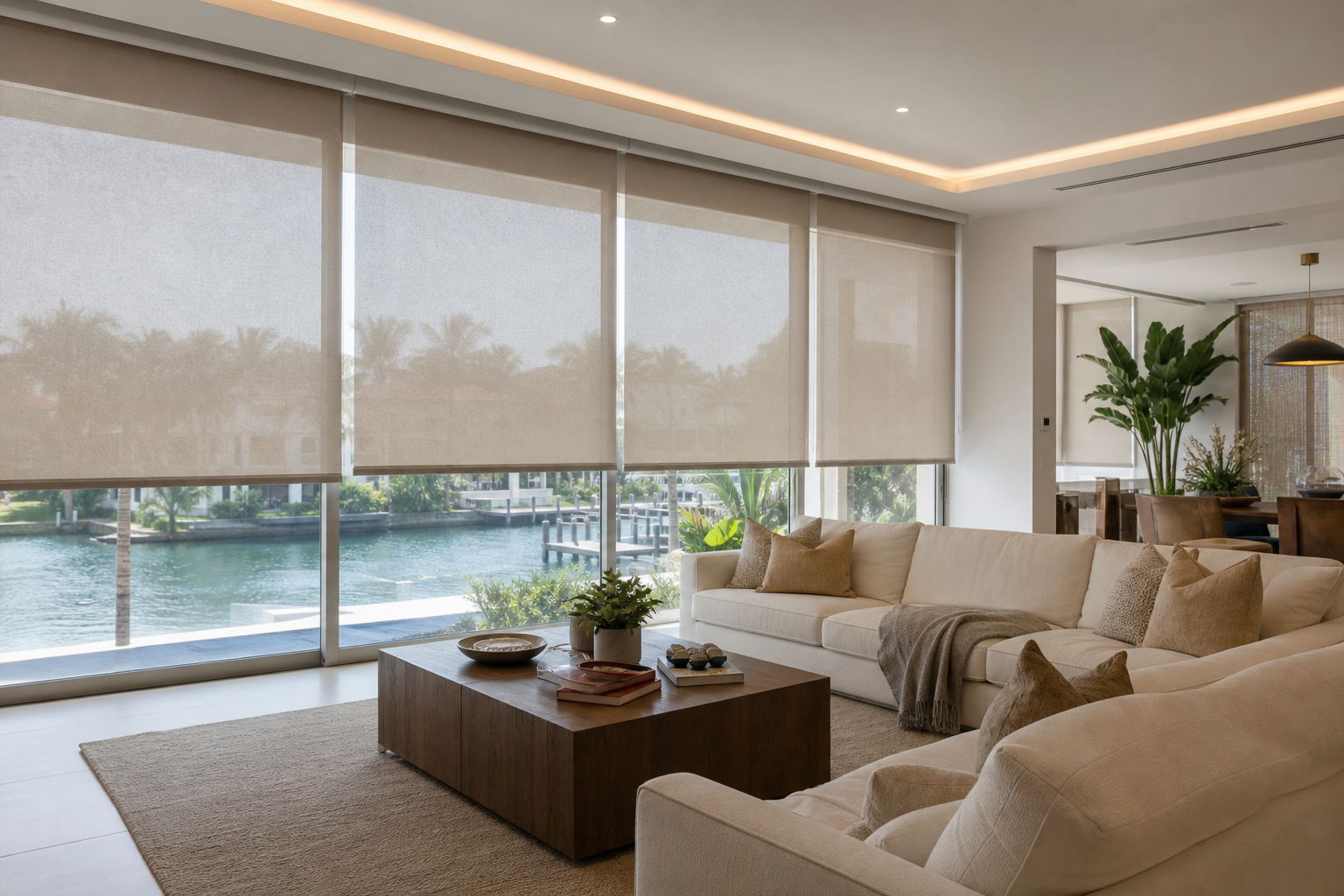
Smart shades can make daily life easier, improve privacy, and give you more control over sunlight throughout your home. But not every motorized shade system offers the same features, and the most useful option depends on your windows, routines, interior design, and smart-home setup.
When comparing products, look beyond the word “smart.” Consider how the shades are controlled, how they receive power, whether they work with your preferred devices, and how well they support the way you use each room. This is especially important in South Florida, where intense sunlight, heat, glare, and privacy concerns can affect comfort throughout the year.
This guide explains the best smart shade features to look for when choosing custom motorized window treatments for a Miami-Dade County home.
What Makes a Shade “Smart”?
A smart shade is a motorized window covering that can be operated electronically and, depending on the system, connected to a control device or smart-home platform. Instead of manually raising or lowering each shade, you may be able to use a remote, wall switch, mobile app, voice command, or automated schedule.
Some systems provide basic motorized operation, while others offer more advanced automation. The right choice depends on whether you want simple convenience for hard-to-reach windows or coordinated control across multiple rooms.
Best Smart Shade Features to Look For
1. Multiple control options
A well-designed smart shade system should give you more than one way to operate your window treatments. Common control methods include:
- Handheld remote controls
- Wall-mounted switches
- Mobile app control
- Voice commands through a compatible smart-home platform
- Automated schedules and scenes
Having several options makes the system more practical for different members of the household. You may prefer a remote for quick adjustments, an app when you are away from home, and voice control when your hands are occupied.
Before choosing a system, confirm which control methods are included and which may require additional equipment. Compatibility can vary between shade motors, hubs, apps, and smart-home platforms.
For more information about voice-operated window treatments, read Smart Motorized Shades With Voice Control: A South Florida Homeowner's Guide.
2. Scheduling and automation
Scheduling is one of the most useful smart shade features for everyday living. It allows shades to open or close at selected times without requiring manual adjustments.
For example, you might schedule bedroom shades to open in the morning, lower living room shades during the brightest part of the afternoon, and close privacy shades in the evening. You can also create different routines for weekdays, weekends, or rooms with different sunlight exposure.
In South Florida, scheduled operation can help you manage glare and direct sunlight during the hottest or brightest parts of the day. It can also make an unoccupied home appear lived in, depending on the system and settings you choose.
Ask whether schedules continue to operate when your phone is not nearby and whether they depend on an internet connection. These details can affect how reliably your automation works.
3. Precise light and privacy control
Smart shades should support the way you want to control light and privacy—not simply move up and down. Depending on the shade style and fabric, you may want to adjust the shade to a precise position rather than fully open or fully closed.
Position control is especially helpful in rooms with large windows, street-facing glass, or strong afternoon sun. You may be able to block direct glare while still allowing some daylight into the room. In bedrooms, media rooms, and home offices, you may prefer a fabric designed for more substantial light reduction.
Motorization is only part of the decision. The shade fabric, openness, opacity, and color also influence how much light enters the room and how much privacy you receive. A professional consultation can help match the fabric to the room’s specific needs.
4. Reliable battery or wired power options
Power is an important consideration before installation. Battery-powered shades can be practical when accessing an electrical outlet is difficult or when you want to minimize visible wiring. Wired systems may be appropriate for new construction, renovations, or installations where a consistent power source is preferred.
The best option depends on window location, shade size, wall access, construction conditions, and how many shades you plan to install. High windows or large groups of shades may also influence the decision because convenient access for maintenance matters.
Ask how the batteries are accessed, how the system indicates low power, and what installation requirements apply to wired motors. To compare the two approaches in more detail, see Battery vs. Wired Motorized Shades: Which Is Right for Your Home?.
5. Smart-home compatibility
If you already use smart-home devices, compatibility should be part of your buying decision. A shade system may work with certain voice assistants, apps, hubs, or home automation platforms, but compatibility should be confirmed before ordering.
Think about how you want your shades to fit into your routines. Do you want one app for the shades, or do you want to include them in broader scenes with lighting and other devices? Do you want individual room control, group control, or both?
Also ask whether the system requires a separate bridge or hub. Understanding the complete setup in advance can help avoid surprises during installation and make daily operation simpler.
6. Group control and room-by-room operation
Group control allows multiple shades to operate together. This can be helpful in open-concept living areas, bedrooms with several windows, or homes with a consistent window design throughout the property.
At the same time, each room may need different settings. A home office may need glare control during working hours, while a living room may benefit from more natural light. Look for a system that allows both grouped operation and individual shade control.
For large homes or rooms with tall windows, professional planning is particularly important. The installer can help determine how the shades should be grouped and how controls should be positioned for convenient use.
7. Quiet, smooth operation
Motorized shades are intended to make window treatments more convenient, so smooth and quiet operation is an important part of the experience. This matters most in bedrooms, nurseries, offices, and media rooms where unnecessary noise can be distracting.
During a consultation, ask to see or hear the motorized system in operation when possible. The shade design, width, fabric, and installation conditions can all affect how the finished product operates.
8. Safety and reduced cord clutter
Cord-free operation can create a cleaner appearance and reduce the need to reach behind furniture or manage hanging cords. It can also be a useful consideration for homes with children or pets.
Ask about the available control methods and how the system is operated if the remote or app is not immediately available. A practical control setup should work for everyone who uses the room.
9. Manual control during everyday situations
Smart features should add convenience without making the shades difficult to use. Consider what happens if the remote is misplaced, a phone battery is low, or your household wants to make a quick adjustment without opening an app.
Depending on the system, manual or local controls may be available. Confirm the operating options before selecting a motor, especially for frequently used rooms.
10. Support for comfort and energy-conscious living
Window treatments cannot eliminate heat gain or replace insulation, but the right shade fabric and operating schedule can help you manage sunlight and indoor comfort. This is relevant in South Florida, where windows may receive strong direct sun for several hours a day.
For example, shades can be scheduled to lower during periods of intense sunlight and open when natural light is more comfortable. Solar shades may help manage glare while maintaining an outdoor view, while blackout shades may be more suitable for sleeping areas or rooms where light control is the priority.
Shade orientation, glass type, room use, and fabric selection all matter. For a closer look at automation and energy-conscious shade planning, read Smart Shades for Energy Efficiency in South Florida Homes.
Smart Shade Features Compared
| Feature | Why it matters | Questions to ask |
|---|---|---|
| Scheduling | Automates daily opening and closing | Can schedules vary by room or day? |
| Voice control | Allows hands-free adjustments | Which platforms and devices are compatible? |
| App control | Provides access from a phone or tablet | Does the system require a hub or internet connection? |
| Battery power | May simplify installation where wiring is difficult | How are batteries accessed and replaced? |
| Wired power | May suit renovations or planned electrical work | What wiring and installation work is required? |
| Group control | Moves several shades together | Can individual shades still be adjusted separately? |
| Position control | Allows more precise light and privacy adjustment | Can shades stop at selected positions? |
How to Choose Smart Shades for Different Rooms
Bedrooms
Bedrooms often benefit from privacy, reduced morning light, and quiet operation. Consider whether you need substantial light reduction, scheduled opening, or independent control for each window.
Living rooms
Living areas may need flexible control throughout the day. A combination of privacy, glare management, and view preservation can be more useful than a shade that is always fully open or closed.
Home offices
Glare on computer screens is a common concern. Consider shade fabrics and schedules that help manage direct sunlight without making the room unnecessarily dark.
High or difficult-to-reach windows
Motorization can be especially practical for windows that are difficult to access manually. Measure carefully and plan the control method before selecting the shade style. Custom measurement is important for achieving proper alignment and consistent operation.
What to Discuss During a Professional Consultation
Before purchasing smart shades, prepare a list of questions about both the product and the installation. A qualified window treatment professional should review:
- Window dimensions and mounting conditions
- Sun exposure and glare in each room
- Privacy requirements
- Shade fabric, color, and opacity
- Battery or wired power options
- Smart-home and voice-control compatibility
- Remote, wall control, app, and scheduling preferences
- How shades should be grouped by room
- Access for future battery service, if applicable
Professional measurement is particularly valuable for large windows, multiple shades installed side by side, unusual window shapes, and high windows. It also helps ensure the selected motor and control system are appropriate for the finished shade design.
Frequently Asked Questions
Are smart shades the same as motorized shades?
Smart shades are motorized shades with additional control or automation capabilities. A motorized shade may operate with a remote or wall switch, while a smart shade may also connect to an app, voice assistant, schedule, or broader home automation system.
Do smart shades need Wi-Fi?
Requirements vary by system. Some features may work through a remote or local control without internet access, while app-based or remote-access functions may require a hub, Wi-Fi, or another connection. Confirm the requirements for the specific system before ordering.
Are battery-powered smart shades a good choice?
Battery-powered shades can be a practical choice when wiring is difficult or when you prefer a simpler installation appearance. Consider the window location, number of shades, accessibility, and how battery maintenance will fit into your routine.
Can smart shades help with privacy in Miami homes?
Yes, smart shades can make it easier to adjust privacy throughout the day, particularly for street-facing windows, condos, and homes with large areas of glass. The fabric and opacity still determine the level of privacy, so product selection is important.
Should every shade in a home use the same schedule?
Not necessarily. Rooms have different sunlight exposure and uses, so separate schedules may be more practical. A flexible system should allow individual shade control as well as grouped operation when desired.
Find the Right Smart Shade System for Your Home
The best smart shade features are the ones that support your daily routines without complicating them. Scheduling, flexible controls, smart-home compatibility, reliable power, precise positioning, and professional installation can all contribute to a better long-term experience.
Floridian Blinds helps South Florida homeowners explore custom motorized shade options based on their windows, design preferences, privacy needs, and light-control goals. Contact us for a free consultation and measurement.