How to Choose Window Treatments Room by Room
Learn how to choose custom window treatments for every room, with practical guidance on privacy, light control, style, comfort, and South Florida sunlight.
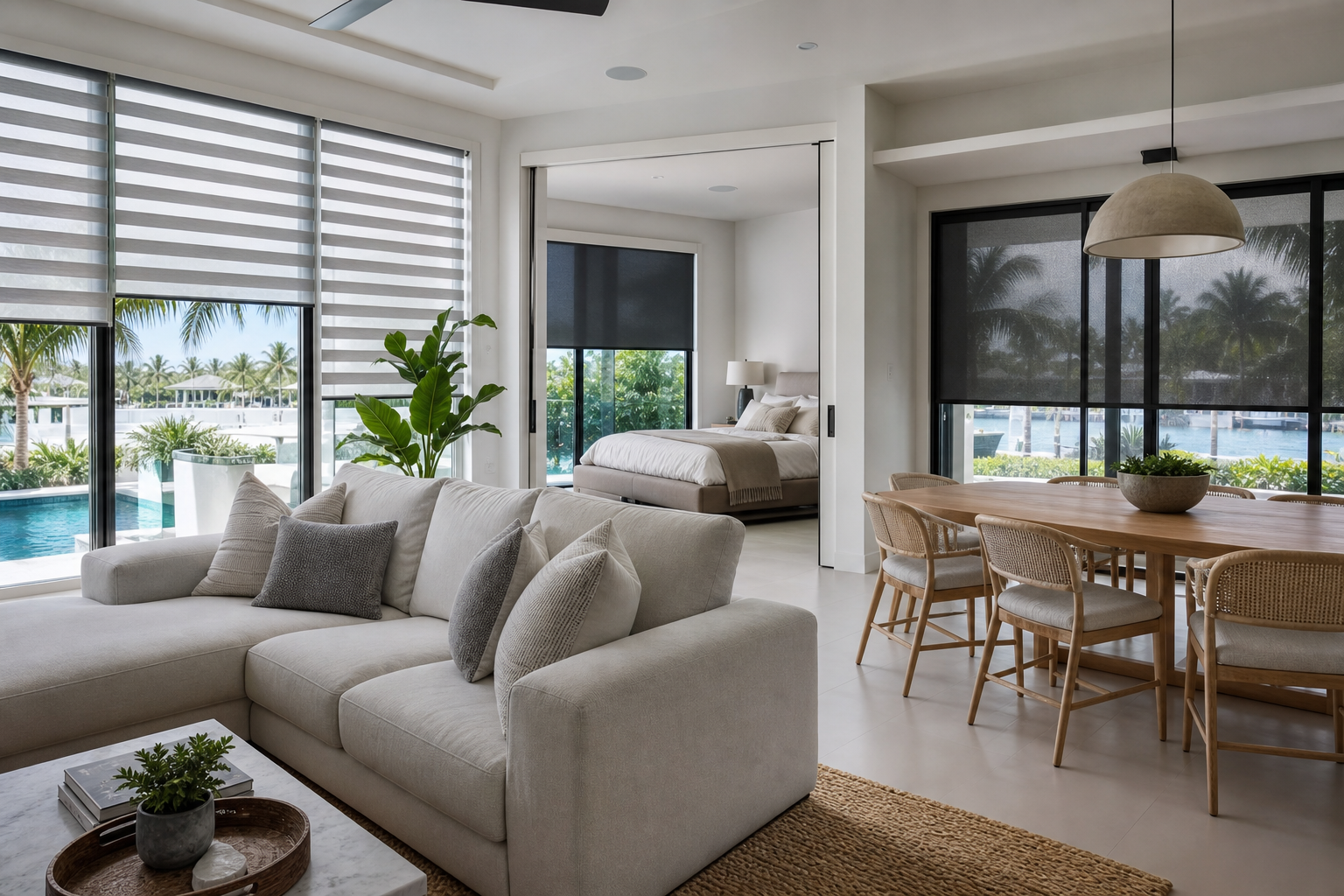
Choosing window treatments for an entire home can feel overwhelming, especially when every room has different needs. A bedroom may need darkness and privacy, while a living room may benefit from filtered sunlight and a clear view. In South Florida, intense sun, heat, humidity, and large windows add another layer to the decision.
The right approach is to choose window treatments room by room rather than selecting the same style for every window. Consider how each space is used, the direction of the windows, the amount of privacy needed, and how much control you want over light and heat. Custom shades can also help create a consistent look throughout the home while allowing each room to perform differently.
This guide explains how to choose window treatments room by room for homes in Miami-Dade County and surrounding South Florida communities.
What to Consider Before Choosing Window Treatments
Before comparing specific shade styles, evaluate each room using the same basic questions:
- How much privacy is needed? Bedrooms and bathrooms generally need more privacy than formal living areas.
- How much natural light should enter? Some rooms benefit from soft daylight, while others need strong light control.
- Does the room get direct sun? Afternoon sunlight can create glare, heat, and fading concerns.
- Is the window difficult to reach? Tall, wide, or elevated windows may be easier to operate with motorization.
- How is the room furnished? Window treatments should complement the room’s colors, textures, and architectural style.
- What level of convenience is important? Motorized shades can make daily adjustments easier, particularly for multiple or hard-to-reach windows.
It is also important to look at the window itself. Large panes, sliding doors, bay windows, and unusually shaped openings may require different solutions than standard windows. Professional measurement helps account for those details before ordering or installing custom treatments.
Living Room: Balance Light, Views, and Design
Living rooms often need a flexible window treatment that manages sunlight without making the space feel dark. In Miami, Coral Gables, Pinecrest, and other areas with bright year-round conditions, window treatments can help reduce glare on televisions and protect furnishings from prolonged direct sunlight.
Recommended options for living rooms
- Solar Shades: A useful choice when preserving an outdoor view is important. They can help soften glare and provide daytime privacy while maintaining a clean, modern appearance.
- Roller Shades: Simple, versatile, and available in a range of fabrics and light-control levels. They work well in contemporary and transitional interiors.
- Zebra Shades: Their alternating bands make it possible to shift between filtered light and greater privacy without raising the shade completely.
- Motorized Shades: Practical for wide windows, tall windows, or rooms with several windows that should be adjusted together.
For a polished look, consider aligning shades across neighboring windows even if the windows receive slightly different amounts of sunlight. If the room connects to a patio or outdoor living area, coordinate the interior shades with exterior screens for a more unified design.
For additional design ideas, see our guide to window treatment trends for modern homes in South Florida.
Bedroom: Prioritize Darkness, Privacy, and Comfort
Bedrooms usually require more light control than shared living spaces. Streetlights, early morning sun, and neighboring homes can all affect comfort and privacy. The best window treatment depends on whether the goal is a darker sleeping environment, soft natural light, or both.
Recommended options for bedrooms
- Blackout Shades: Designed to significantly reduce incoming light when paired with an appropriate installation and window coverage.
- Zebra Shades with a room-darkening fabric: A flexible option for homeowners who want adjustable privacy and light control.
- Roller Shades: Available in light-filtering and darker fabric choices, making them easy to coordinate across bedrooms.
- Motorized Shades: Convenient for setting a consistent opening and closing routine, especially in primary bedrooms with multiple windows.
Pay attention to the sides and top of the window, not just the shade fabric. Light can enter around the edges if the treatment does not provide enough coverage. A professional consultation can help determine whether an inside mount or outside mount is more suitable for the window and desired level of darkness.
Primary Bathroom: Protect Privacy While Letting in Light
Bathrooms need privacy, but completely blocking natural light can make the space feel closed in. Moisture and ventilation should also be considered when selecting materials and operating systems.
Recommended options for bathrooms
- Light-filtering Roller Shades: A clean option for soft daylight and privacy.
- Zebra Shades: Useful when you want to shift between filtered light and increased privacy throughout the day.
- Moisture-conscious selections: Ask about materials and placement that are appropriate for the room’s humidity and ventilation conditions.
For bathroom windows facing a neighbor, walkway, or street, privacy may be needed throughout the day. In those cases, prioritize a fabric and opacity level that limits visibility rather than choosing based only on color or pattern.
Kitchen and Dining Areas: Manage Glare and Everyday Use
Kitchens and dining areas often receive strong daylight and are used frequently throughout the day. Window treatments should be easy to operate, simple to clean, and positioned appropriately around sinks, counters, appliances, and cooking areas.
Recommended options for kitchens and dining rooms
- Roller Shades: Their streamlined profile works well near counters and dining areas.
- Zebra Shades: Offer adjustable light control when the room shifts from bright daytime use to evening dining.
- Solar Shades: Helpful for reducing glare in breakfast areas or dining spaces with strong sun exposure.
Avoid choosing a treatment solely because it looks attractive in a sample. Consider how close it will be to steam, splashes, food preparation, and daily traffic. A custom measurement also helps ensure that the shade clears handles, trim, and nearby fixtures.
Home Office: Reduce Screen Glare and Improve Privacy
A home office needs comfortable light for reading and video calls, but direct sunlight can make computer screens difficult to see. Privacy may also be important if the office faces a street or neighboring property.
Recommended options for home offices
- Solar Shades: A strong option for managing glare while preserving some view through the window.
- Roller Shades: Provide straightforward light control and a professional appearance.
- Motorized Shades: Useful when you need to adjust light during meetings without leaving your desk.
Check the direction of the windows at different times of day before deciding on fabric openness and opacity. A shade that works well in the morning may not provide enough control when the afternoon sun reaches the room.
Homeowners who are comparing custom and ready-made options can learn more in our guide to custom window treatments versus store-bought blinds.
Nursery and Children’s Rooms: Combine Control and Convenience
Children’s rooms often benefit from dependable light control, privacy, and convenient operation. Blackout shades can help create a darker environment for naps or bedtime, while motorization can make adjustments easier without disturbing the room.
When selecting treatments, discuss operating options and placement with your window treatment professional. Keep the design coordinated with the room, but focus first on practical daily use, coverage, and ease of adjustment.
Guest Room: Create Flexible Privacy and Light Control
Guest rooms may be used at different times of day by people with different preferences. A shade that offers more than one light-control position can make the room comfortable for both daytime use and sleeping.
Zebra Shades, dual-purpose Roller Shades, and motorized options can provide flexibility without requiring several separate window treatments. If the guest room is near a neighboring property or street, choose privacy based on both daytime and nighttime conditions.
Sliding Glass Doors and Large Windows
Sliding doors and large windows are common in South Florida homes and often connect interior spaces to patios, balconies, or waterfront views. They require careful attention to clearance, operation, and the amount of glass being covered.
Solar Shades can help manage glare while preserving views, while Roller Shades provide a simple and consistent appearance. Motorization may be especially helpful when the opening is wide or the shade is used frequently. For very tall windows or high ceilings, read our guide to window treatments for high ceilings.
If the opening leads directly to an outdoor living area, consider how interior and exterior treatments will work together. Patio screens and outdoor screens can add shade, privacy, and comfort outside while interior shades manage light indoors.
Choosing Between Light-Filtering, Solar, and Blackout Shades
Understanding light-control terms makes it easier to compare options:
| Shade type | Best suited for | Key consideration |
|---|---|---|
| Light-filtering | Living rooms, dining areas, and bathrooms | Softens daylight while allowing natural brightness into the room. |
| Solar | Sunny living rooms, offices, and large windows | Helps manage glare while maintaining an outward view, depending on the selected fabric. |
| Blackout or room-darkening | Bedrooms, nurseries, and media spaces | Provides stronger light control, with coverage and installation affecting the result. |
Many homes benefit from using more than one category. For example, solar shades may be appropriate in a bright living room, while blackout shades are better suited to bedrooms facing the same direction.
When Is Motorization Worth Considering?
Motorized shades are not limited to luxury homes. They can be useful wherever windows are difficult to reach, numerous, unusually large, or exposed to strong sunlight at predictable times of day.
Homeowners may consider motorization for:
- High or oversized windows
- Multiple windows that should open or close together
- Bedrooms and media rooms requiring regular light control
- Windows that receive intense afternoon sun
- Homes where convenience and a streamlined appearance are priorities
During a consultation, ask how the shades will be operated and whether the controls fit your daily routines. The best setup should be easy to use, not simply technically advanced.
Why Professional Measurement Matters
Window openings are not always perfectly square, and small measurement differences can affect appearance, coverage, and operation. Professional measurement also accounts for trim, handles, door clearance, mounting depth, and the relationship between adjacent windows.
This is especially important for custom window treatments in Miami-Dade County, where homes may include large glass walls, sliding doors, high ceilings, balconies, and indoor-outdoor transitions. A professional installer can recommend the appropriate mounting style and help coordinate treatments throughout the home.
Room-by-Room Window Treatment Checklist
- Identify the room’s primary purpose.
- Note when direct sunlight enters the space.
- Decide how much privacy is needed during the day and at night.
- Choose the desired level of light control.
- Check whether the window is easy to reach and operate.
- Consider nearby furniture, doors, handles, counters, and fixtures.
- Coordinate fabric color and style with the rest of the home.
- Schedule professional measurement before finalizing the order.
Frequently Asked Questions
Should every room have the same type of window treatment?
Not necessarily. Using a consistent color palette or design style can create continuity, while different shade types address the specific needs of each room.
What are the best shades for bright South Florida rooms?
The right choice depends on whether your priority is glare reduction, preserving a view, privacy, or darkness. Solar Shades, Roller Shades, and Zebra Shades are common options for bright living spaces, while Blackout Shades are often preferred for bedrooms.
Are blackout shades completely dark?
Blackout shades can significantly reduce incoming light, but the final result also depends on window coverage, mounting style, fabric, and light entering around the edges.
Are motorized shades useful for ordinary windows?
Yes. Motorization can be convenient for standard windows as well as hard-to-reach or oversized openings. It is particularly useful when several shades should be adjusted together.
How early should window treatments be selected during a renovation?
It is helpful to discuss window treatments before finalizing furniture placement, electrical planning, or trim details. Early planning allows time to consider mounting depth, controls, and the relationship between shades and other finishes.
Choose Window Treatments Room by Room with Floridian Blinds
The right window treatment should reflect how each room is used, how much sunlight it receives, and how your household lives day to day. With custom options, professional measurement, and thoughtful installation, you can create a home that feels more comfortable, private, and visually cohesive.
Floridian Blinds helps homeowners and property professionals throughout Miami-Dade County select custom Zebra Shades, Blackout Shades, Roller Shades, Solar Shades, Motorized Shades, and outdoor solutions. Contact us for a free consultation and measurement.