How Much Do Motorized Shades Cost? A South Florida Homeowner’s Guide
Learn what affects motorized shade costs, including shade size, fabric, controls, installation, wiring, and smart-home integration in South Florida.
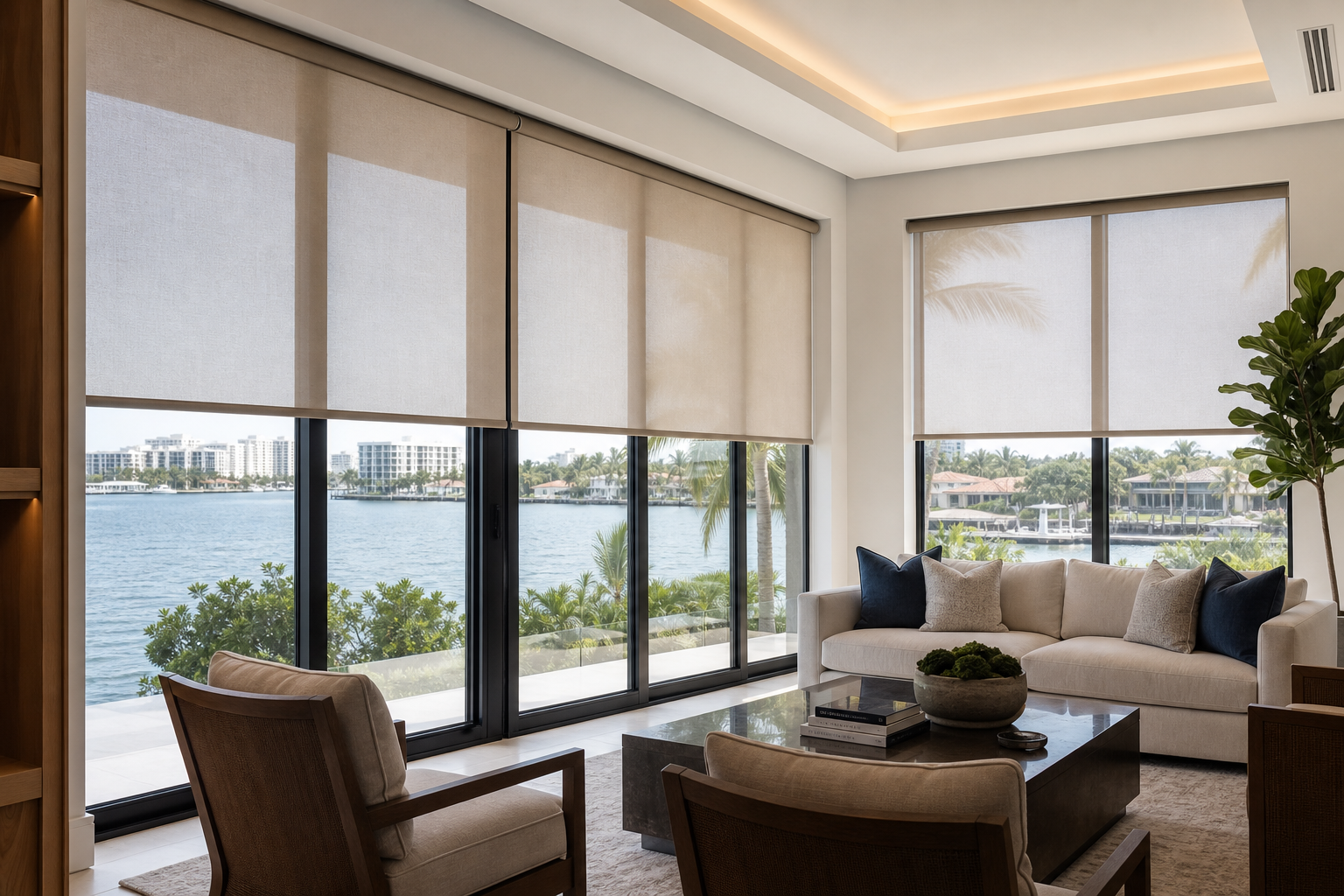
One of the first questions homeowners ask when exploring automated window treatments is: how much do motorized shades cost? The honest answer is that there is no single price for every project. Motorized shade pricing depends on the size and number of windows, the shade style and fabric, the motor and control system, installation requirements, and how much customization your home needs.
For homeowners in Miami-Dade County and throughout South Florida, motorized shades can be a practical solution for large windows, high ceilings, bedrooms, media rooms, and hard-to-reach openings. They can also make it easier to manage intense sunlight, privacy, glare, and indoor comfort throughout the day.
This guide explains the main factors that influence the cost of motorized shades, what a professional estimate should include, and how to compare options without choosing based on price alone.
Why motorized shade prices vary
Motorized shades are custom window treatments rather than one-size-fits-all products. Two homes may have the same number of windows but receive very different estimates because the openings, materials, controls, and installation conditions are different.
A professional quote may account for the following:
- Window dimensions and the total number of shades
- Shade style, fabric, openness, and light-control needs
- Motor type and power source
- Remote controls, wall switches, hubs, or smart-home integration
- Battery installation, wiring, or access to an electrical connection
- Mounting conditions and installation difficulty
- Special requirements for large, tall, or unusually shaped windows
Because these details vary from room to room, a consultation and measurement are important before anyone can provide an accurate project cost.
What is included in the cost of motorized shades?
The shade and fabric
The shade itself is one of the largest parts of the overall cost. Roller shades, solar shades, blackout shades, and other custom styles can each have different pricing depending on the fabric, finish, construction, and size.
Fabric selection also affects how the shade performs. A solar shade may be selected to reduce glare and soften strong sunlight while preserving an outdoor view. A blackout shade may be more appropriate for a bedroom, nursery, or media room where darkness and privacy are priorities. Zebra shades provide adjustable bands of sheer and opaque fabric, allowing homeowners to change the balance between filtered light and privacy.
In South Florida, fabric selection deserves particular attention because windows may receive strong direct sunlight for much of the year. The right material can support a more comfortable interior and help protect furnishings from everyday sun exposure, while still fitting the design of the room.
The motor and power source
Motorized shades require a motor matched to the size, weight, and operating demands of the shade. The power source may be battery-powered or connected to a wired electrical supply, depending on the product and the conditions of the installation.
Battery-powered shades can be useful when homeowners want to avoid opening walls or adding visible wiring. Wired options may be considered during construction, remodeling, or projects where a permanent electrical connection is preferred. The best choice depends on the window location, access, project scope, and homeowner preferences.
When comparing estimates, ask whether the motor and power solution are included or listed separately. It is also helpful to understand how the system is operated and what maintenance the selected power source may require over time.
Controls and smart-home features
Control options can affect the total investment. A basic setup may use a handheld remote, while a larger project may include wall controls, timers, grouped room controls, or integration with an existing smart-home system.
Some homeowners want every shade to operate independently. Others prefer scenes, such as opening living room shades in the morning or closing bedroom shades at night. Automated schedules can be especially convenient for windows that are difficult to reach, including high windows and openings behind furniture.
If smart-home integration is important, discuss compatibility before choosing the shades. The motor, controls, hub, and home automation platform should be evaluated as one system rather than as separate purchases.
Professional measurement and installation
Installation is an important part of the cost because motorized shades must be measured and mounted accurately. The installer may need to account for window depth, trim, nearby walls, ceiling conditions, electrical access, and the clearance required for the shade to operate correctly.
Professional installation also helps ensure that multiple shades align properly and that controls are configured for the way your household uses each room. This matters particularly in homes with large expanses of glass, tall openings, sliding doors, or multiple shades that need to operate together.
How window size and quantity affect motorized shade cost
Large shades generally require more material and may require a motor with greater capacity than a smaller window treatment. Very wide or tall openings may also create additional installation considerations.
The number of shades affects the project total as well. However, treating several windows at once may provide a more cohesive design and allow the control system to be planned across the home. A whole-room or whole-home project can also make it easier to group shades by room, exposure, or daily routine.
During a consultation, consider which windows need automation most. Priorities may include:
- High or difficult-to-reach windows
- Bedrooms that need privacy or light control
- Media rooms where glare is distracting
- Large south- or west-facing windows
- Sliding glass doors and expansive openings
- Rooms where coordinated interior design is important
Some homeowners begin with the most difficult or sun-exposed windows and add additional shades later. Others prefer a coordinated installation throughout the home. Both approaches can make sense depending on the project goals and budget.
For more ideas about treating tall or hard-to-reach windows, see Motorized Shades for High Windows: A South Florida Guide.
Choosing the right motorized shade for each room
Bedrooms and guest rooms
Bedrooms often benefit from blackout fabrics or other options that provide strong light control and privacy. Motorization can make it easy to adjust shades without getting out of bed, and schedules can support a consistent morning and evening routine.
Living rooms and open-plan spaces
Living areas may need a balance between daylight, privacy, and views. Solar shades or light-filtering roller shades can help manage glare while maintaining a clean, modern appearance. For a more flexible look, zebra shades allow the homeowner to adjust the position of sheer and opaque bands.
Media rooms
In a media room, controlling glare and unwanted daylight is often more important than preserving a view. Blackout shades may be considered when the room is designed for movies, gaming, or television viewing.
High windows and large openings
Motorization is particularly useful when manual operation would require a ladder, furniture to be moved, or frequent reaching. Large windows may require careful planning to keep the finished installation visually consistent and easy to operate.
South Florida considerations when budgeting
Window treatments in Miami, Kendall, Doral, Coral Gables, Pinecrest, Miami Beach, and nearby communities often need to address more than appearance. Strong sunlight, heat, humidity, privacy concerns, and indoor-outdoor living all influence the selection process.
For homes with large glass areas, consider how the shade fabric will manage glare and daylight at different times of day. Privacy can also change depending on the direction of the window, neighboring properties, and whether the room faces a street, pool area, or patio.
Motorization may be especially useful in homes with expansive windows or multiple rooms that need coordinated light control. It can also support a cleaner look by reducing the need for cords and making it easier to keep shades positioned consistently.
For outdoor openings, motorized patio screens are a separate type of project from interior motorized shades. They may be used to improve comfort and privacy on covered patios, terraces, and other outdoor living areas. If you are comparing those options, review Motorized Patio Screens for Large Openings: A South Florida Guide.
How to compare motorized shade estimates
The lowest estimate may not represent the same scope of work as another quote. Before comparing totals, confirm that each proposal addresses the same items.
- Verify the number and dimensions of shades. Make sure every window or opening is listed correctly.
- Review the fabric specification. Compare light-filtering, solar, blackout, or layered options based on performance, not just color.
- Ask about the motor and power source. Confirm whether batteries, wiring, chargers, or other necessary components are included.
- Understand the control system. Check whether remotes, wall controls, hubs, programming, and smart-home integration are included.
- Confirm installation details. Ask who will measure, install, program, and test the shades.
- Review the project timeline and service process. Custom window treatments require coordination, so clarify what happens after the order is placed.
A detailed estimate should make it easier to understand what you are purchasing and where differences between proposals come from. If a quote is unusually vague, ask for a clearer breakdown before making a decision.
Are motorized shades worth the investment?
For many homeowners, the value of motorized shades comes from a combination of convenience, control, appearance, and access. Automation can simplify daily adjustments, especially when several shades need to move together or when windows are difficult to reach.
Motorized shades can also support more consistent privacy and light management. In a South Florida home, that may mean closing shades during the brightest part of the day, reducing glare in a home office, or managing visibility from the street in the evening.
The right investment depends on how the shades will be used. A homeowner who only needs occasional adjustment may prefer a simpler manual treatment for some windows. Someone with tall windows, a smart home, or a strong preference for coordinated control may see greater value in automation.
Frequently asked questions
Can I get an exact motorized shade price online?
Usually, an exact price requires measurements and product selections. Window size, fabric, motor type, power source, controls, and installation conditions can all affect the final estimate.
Are battery-powered motorized shades less expensive than wired shades?
Not necessarily. The total cost depends on the shade, motor, installation conditions, and control system. Battery-powered and wired options should be compared based on the needs of the specific window and project.
Do all windows need to use the same shade style?
No. Different rooms may benefit from different fabrics or shade styles. For example, blackout shades may suit bedrooms while solar or light-filtering shades may be more appropriate for living areas. A professional can help coordinate the appearance across the home.
Are motorized shades practical for high windows?
Yes. Automation can be especially helpful for high or hard-to-reach windows because the shades can be adjusted without ladders or repeated manual reaching. The mounting conditions and shade size should be evaluated during measurement.
How long do motorized shade motors last?
Motor lifespan depends on the motor system, frequency of use, installation, and care. For a more detailed overview, read How Long Do Motorized Shade Motors Last?.
Plan your motorized shade project
The most reliable way to understand how much motorized shades cost is to evaluate the actual windows, the desired level of light and privacy control, and the type of automation you want to use. A custom plan can help you avoid paying for features you do not need while making sure important details are not overlooked.
Floridian Blinds helps South Florida homeowners explore custom shades, motorization, fabrics, and installation options for their homes. Contact us for a free consultation and measurement.