How Much Do Patio Screens Cost in Miami? A Key Biscayne Guide
Learn what affects patio screen costs in Miami and Key Biscayne, including size, materials, operation, installation, and South Florida climate considerations.
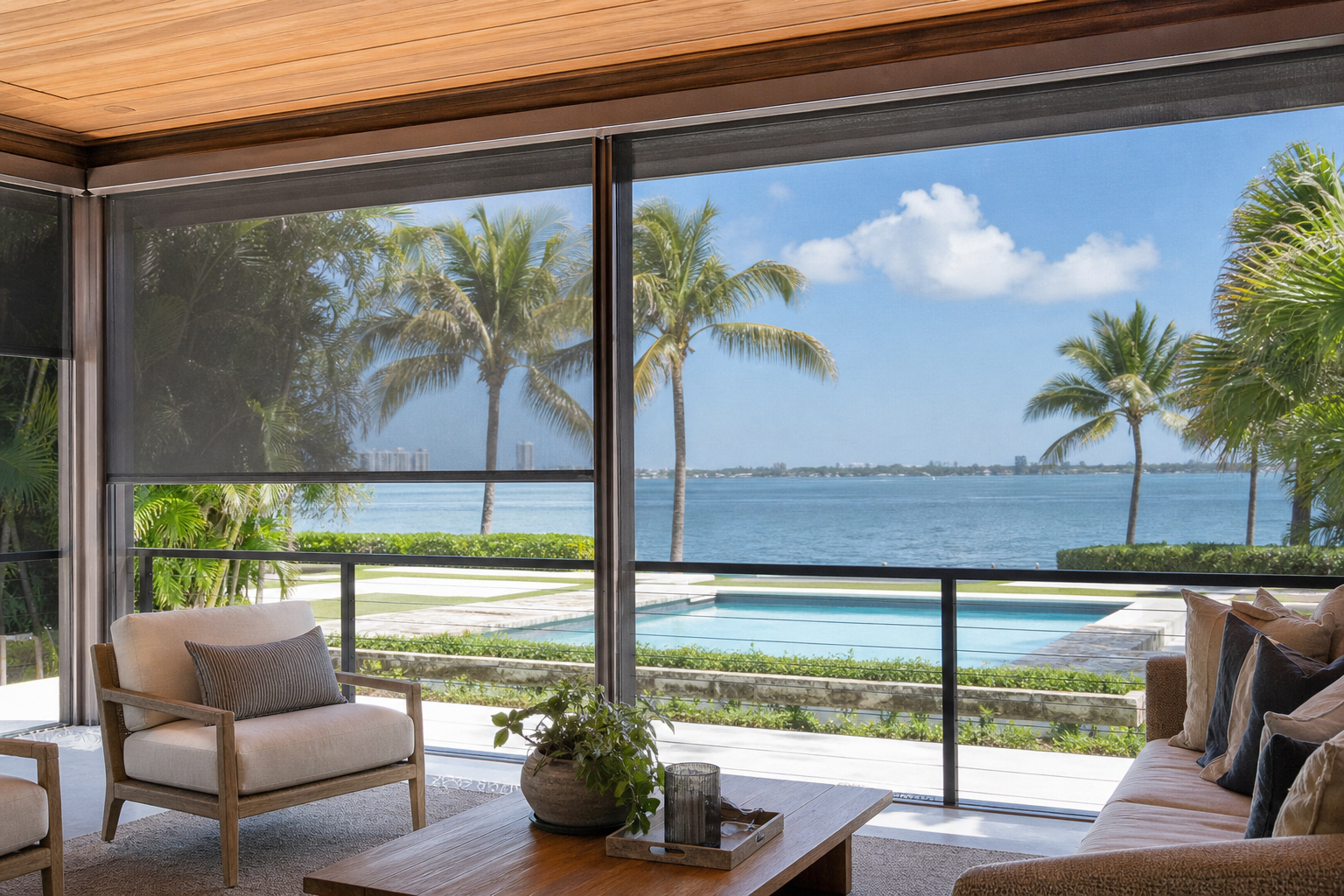
If you are researching how much patio screens cost in Miami, the most accurate answer is that pricing depends on the size of the opening, the screen system, the fabric, the installation requirements, and the level of customization. A small screened area and a large, motorized patio enclosure are very different projects, so a single flat price can be misleading.
That is especially true in Key Biscayne and other South Florida communities, where homeowners often have wide patios, outdoor kitchens, lanais, pool areas, and indoor-outdoor living spaces. Patio screens need to fit the architecture of the home while helping manage sunlight, insects, privacy, and everyday comfort.
This guide explains the main factors behind patio screen costs in Miami-Dade County, what to ask during the consultation process, and how to choose a system that fits your property and lifestyle.
What Is Included in the Cost of Patio Screens?
When comparing estimates, it helps to look beyond the screen material itself. A professional patio screen project may include several components and services:
- Measuring the patio opening or individual openings
- Custom fabrication for the dimensions and layout of the space
- Screen fabric selected for visibility, shade, privacy, or insect control
- Roller tubes, tracks, housing, brackets, or other system components
- Manual or motorized operation
- Mounting into the existing structure
- Professional installation and adjustment
- Coordination with existing lighting, ceiling fans, outdoor kitchens, or other features
Some projects are straightforward, while others require careful planning around columns, beams, multiple openings, or unusual dimensions. A detailed estimate should make clear what is included so you can compare proposals fairly.
Key Factors That Affect Patio Screen Costs in Miami
1. The size and number of openings
Size is one of the most important factors. A single screen covering a standard patio opening generally involves less material and installation time than multiple screens covering a wide lanai or a large outdoor living area.
Large openings may also require additional planning for stability, alignment, and operation. If your Key Biscayne home has broad sliding doors or a covered terrace, the screen design may need to be divided into sections rather than treated as one opening.
2. The type of patio screen system
Patio screens are available in different configurations. Some are designed primarily to reduce insects, while others are intended to manage glare, sunlight, privacy, or heat. The system may be a manually operated shade or a motorized screen that rolls up when the patio is open.
A basic manual system typically has fewer operating components than a motorized system. Motorization can add convenience, particularly for large or hard-to-reach openings, but it also introduces additional components and installation considerations.
3. Screen fabric and openness
The fabric affects the appearance and function of the screen. Depending on the material selected, a screen may prioritize:
- Insect protection
- Sun and glare control
- Outdoor visibility
- Privacy during the day
- A more open or more enclosed feeling
In South Florida, fabric selection deserves special attention because patios may receive intense sunlight for much of the year. A screen that allows more visibility may not provide the same level of light control as a denser fabric. The right choice depends on the patio's orientation, surrounding buildings, landscaping, and how you use the space.
4. Manual versus motorized operation
Manual patio screens can be a practical choice for smaller openings that are easy to reach. Motorized patio screens may be more convenient for wide openings, elevated installations, or homeowners who want to operate several screens together.
Motorization can also support a cleaner, more streamlined appearance because the screen can be controlled without a visible chain or manual adjustment. If you are planning a smart-home setup, ask how the screen can be operated and whether the controls will work with the systems already used in your home. Available integration depends on the specific product and installation plan, so it should be discussed during the consultation.
5. Installation conditions
The existing structure can influence both the installation process and the final cost. Important considerations may include:
- Whether the patio has a suitable beam, header, ceiling, or side surface for mounting
- The condition and material of the mounting surface
- Access to electrical power for motorized screens
- Columns, corners, doors, fans, lights, or outdoor kitchen equipment
- The number of separate screen openings
- Whether the system needs to be recessed or surface-mounted
These details are difficult to evaluate accurately from photographs alone. Professional measurement helps identify installation challenges before the order is placed.
Why Key Biscayne Homes May Need a More Customized Approach
Key Biscayne properties often make extensive use of patios, balconies, covered terraces, and outdoor entertaining areas. Homes may also have large glass doors or openings designed to connect interior rooms with the outdoors.
That creates opportunities for patio screens, but it also means the solution needs to work with the home's architecture. A screen should not interfere with doors, walking paths, lighting, fans, furniture, or views. In coastal areas, homeowners may also want to discuss how the selected materials and components will be maintained in a warm, humid environment with exposure to salt air.
For properties near the water or in other exposed locations, ask the window treatment professional about cleaning, routine care, and the materials recommended for the specific installation. A thoughtful design can help the patio remain comfortable and usable without making the space feel closed off.
What Type of Patio Screen Is Right for Your Space?
For insect control
If your main goal is to enjoy the patio with fewer insects, an insect screen may be the most direct solution. This type of screen can be useful for dining areas, pool decks, and outdoor seating spaces where airflow and visibility are important.
For sunlight and glare control
If the patio becomes uncomfortably bright or warm, consider a solar-style screen fabric designed to filter sunlight. These screens can help reduce glare and create a more comfortable outdoor area while preserving some connection to the view.
For additional information about using shades in covered outdoor areas, see Solar Shades for Patios and Lanais: A South Florida Guide.
For outdoor kitchens and entertaining areas
Outdoor kitchens require careful planning because screens need to work around counters, appliances, lighting, ventilation, and seating. The screen should support the way the space is used without blocking access or creating an awkward operating path.
Our guide to patio screens for outdoor kitchens covers several design considerations for these spaces.
For large or hard-to-reach openings
Motorized screens may be worth considering when the patio has wide openings, high mounting points, or multiple screens that need to be operated regularly. They can make it easier to transition between an open patio and a more protected outdoor room.
How to Compare Patio Screen Estimates
When you receive more than one estimate, avoid comparing only the total number. Review the scope of each proposal and confirm that the systems are being compared on similar terms.
| What to compare | Questions to ask |
|---|---|
| Measurements | Were all openings measured, including height, width, depth, and mounting surfaces? |
| Fabric | What are the priorities: insects, glare reduction, privacy, visibility, or shade? |
| Operation | Is the screen manual or motorized, and how will it be controlled? |
| Installation | Does the estimate include mounting, adjustment, and coordination with existing features? |
| Finish and appearance | How will the frame, housing, and screen coordinate with the patio and home? |
| Maintenance | What routine cleaning and care does the selected system require? |
A lower estimate may reflect a simpler system, fewer openings, different fabric, or a less involved installation. Asking these questions helps you understand what you are actually purchasing.
Ways to Plan a Patio Screen Project Responsibly
- Define the main purpose. Decide whether you need insect control, shade, glare reduction, privacy, or a combination of these goals.
- Identify the openings. Note which doors, windows, patio sides, or lanai sections need coverage.
- Consider daily operation. Think about how often the screens will be opened and closed and whether they are easy to reach.
- Review the patio layout. Account for furniture, grills, outdoor kitchens, fans, lights, and walking paths.
- Schedule professional measurement. Accurate dimensions and an evaluation of the mounting surfaces are essential for a custom fit.
- Ask about care. Understand how to clean the fabric and protect the appearance of the system over time.
Frequently Asked Questions About Patio Screen Costs in Miami
Can I get an exact patio screen price online?
Usually, an exact price requires measurements and a review of the installation conditions. The size, number of openings, fabric, operating method, and mounting requirements can all change the project scope. An in-home consultation is the most reliable way to receive a specific estimate.
Are motorized patio screens worth considering?
Motorized screens may be useful for large, high, or frequently used openings. They can simplify operation and support a more finished look. Whether they are appropriate depends on the size of the patio, access to power, your preferred controls, and how often you plan to use the screens.
Will patio screens block the view?
The amount of visibility depends on the fabric and its openness. Some screen materials are designed to maintain a more open view, while others provide greater shade or privacy. During a consultation, ask to review fabric options in relation to your patio's sunlight and surroundings.
Can patio screens help with Miami sun and heat?
Some screen fabrics are designed to filter sunlight and reduce glare, which can make a covered patio more comfortable. Performance depends on the fabric, orientation, surrounding conditions, and how exposed the area is. Screens should be selected based on the specific goals of the space rather than assuming every fabric performs the same way.
How do I maintain patio screens in a coastal environment?
Follow the care recommendations for the selected fabric and components. Regular, gentle cleaning can help remove dust and outdoor residue. In Key Biscayne and other coastal areas, ask your installer about appropriate maintenance for the material and hardware used in your project.
Get a Custom Patio Screen Consultation in Key Biscayne
The cost of patio screens in Miami depends on the design details of your property, not just the size of the screen. A professional evaluation can help you choose the right fabric, operating method, and configuration for your patio, lanai, outdoor kitchen, or terrace.
Floridian Blinds provides custom window treatment and outdoor screen solutions for homeowners in Key Biscayne, Miami, and surrounding South Florida communities. Contact us for a free consultation and measurement to discuss your space and receive guidance based on its layout, sun exposure, and intended use.