Patio Screens for Covered Terraces: A South Florida Guide
Learn how patio screens for covered terraces improve shade, privacy, comfort, and outdoor living in Miami-Dade homes.
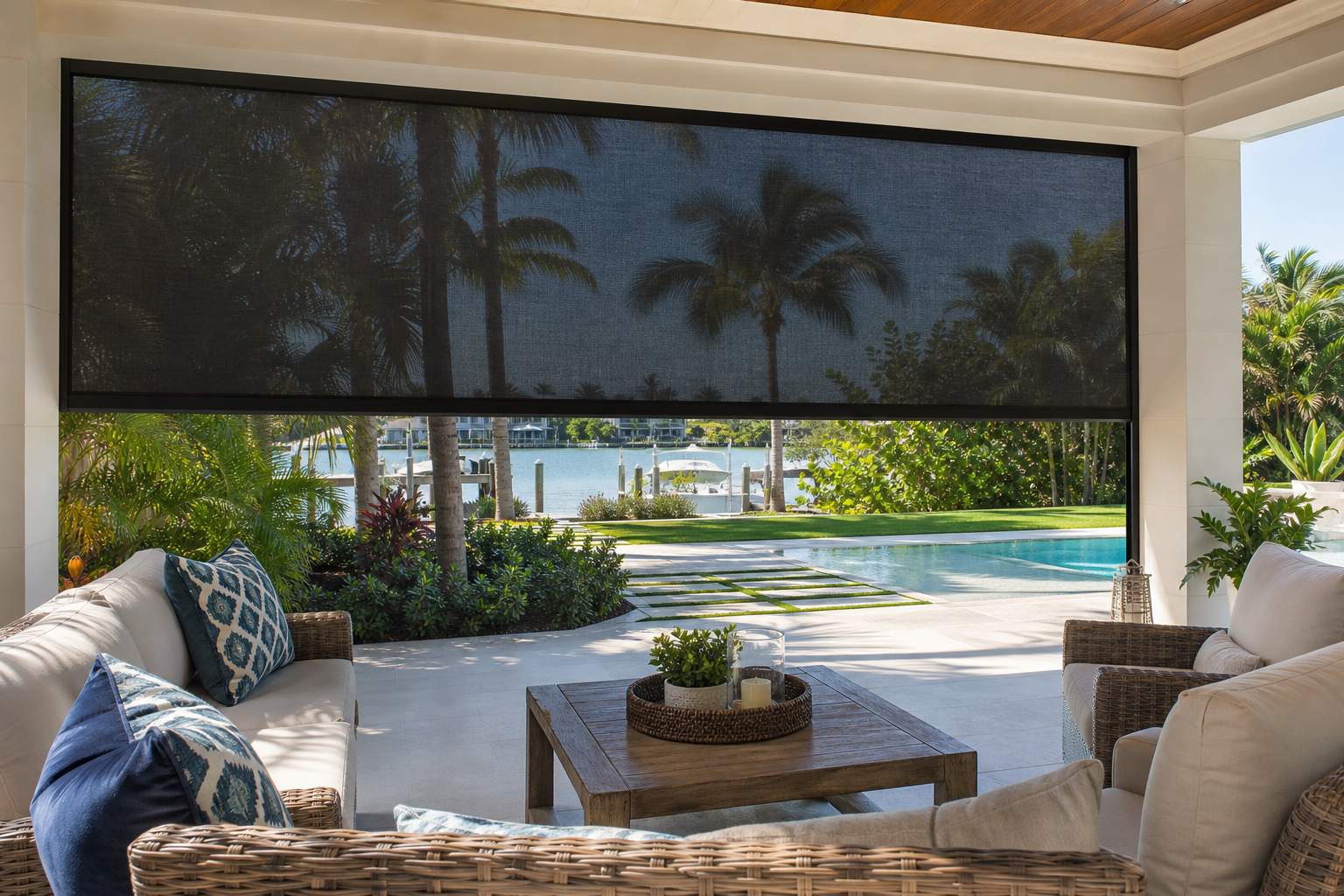
A covered terrace can add valuable living space to a South Florida home, but intense sunlight, humidity, insects, and limited privacy may keep your family from using it as often as you would like. Patio screens for covered terraces can help make the area more comfortable while preserving the open-air feeling that makes outdoor living appealing.
The right screen depends on how your terrace is built, where the sun enters, how much privacy you need, and whether you want a manually operated or motorized solution. This guide explains the main considerations for choosing custom patio screens in Miami, Kendall, Coral Gables, and surrounding Miami-Dade communities.
What Are Patio Screens for Covered Terraces?
Patio screens are shade and screening systems designed for outdoor areas such as covered terraces, patios, lanais, balconies, and outdoor rooms. Depending on the design, a screen may roll down from a housing, extend across an opening, or operate as part of a larger outdoor enclosure.
Unlike a permanent wall, a patio screen can help preserve airflow and visibility. When raised, it leaves the opening substantially more open. When lowered, it can create a more comfortable boundary between the terrace and the surrounding yard or exterior space.
Custom screens are measured for the specific openings of your terrace. This is important because outdoor openings are often wider, taller, or less uniform than standard interior windows. A professional measurement also helps identify mounting surfaces, clearance requirements, control placement, and potential obstructions such as ceiling fans, columns, lights, or beams.
Why Consider Screens for a Covered Terrace in South Florida?
Covered terraces provide some protection from direct weather, but they can still receive strong sunlight and reflected heat. Open-sided outdoor spaces may also be exposed to glare, insects, and views from neighboring properties. Patio screens can address several of these concerns without closing off the space entirely.
Manage sunlight and glare
A screen can reduce the amount of direct sunlight entering a terrace, making the area more comfortable for conversation, dining, or relaxing. It may also help reduce glare on a television or other screen used outdoors.
Screen fabric selection matters. Some fabrics emphasize outward visibility, while others provide more daytime privacy or stronger sun control. Your ideal choice depends on the terrace orientation, the position of nearby windows, and how you use the space throughout the day.
Improve outdoor privacy
A covered terrace may be open to a neighbor’s yard, a sidewalk, a pool area, or a nearby street. Screening can create a greater sense of separation without requiring permanent construction.
Privacy is affected by lighting conditions. During the day, a screen may make it easier to see out than to see in. At night, interior or terrace lighting can change that balance. If evening privacy is a priority, discuss how the screen fabric, lighting, and surrounding sightlines will work together.
Support more comfortable indoor-outdoor living
Many South Florida homeowners want their terrace to function as an extension of the home. Screens can help define the space and make it more useful for meals, entertaining, reading, or relaxing. They can also be coordinated with interior window treatments so the home has a consistent look from inside to outside.
Help limit insects in certain conditions
Screening can create a barrier against flying insects when the opening is fully covered and the system is properly fitted. It is not a substitute for pest control, and performance will depend on the screen design, installation, surrounding conditions, and how the terrace is used.
Patio Screens vs. Solar Shades for a Covered Terrace
Patio screens and outdoor solar shades can overlap in function, but they are not always the same solution. The best choice depends on the primary problem you want to solve.
| Consideration | Patio screens | Outdoor solar shades |
|---|---|---|
| Primary purpose | Define an outdoor opening and help address privacy, sun, and insects | Manage sunlight, glare, and outdoor visibility |
| Privacy | Can provide a stronger sense of enclosure, depending on fabric and lighting | Can provide daytime privacy, depending on openness and conditions |
| Airflow | Generally maintains an outdoor feel when the fabric is breathable | Designed to filter light while preserving some visibility and airflow |
| Best fit | Terraces, patios, lanais, and large outdoor openings | Patios, lanais, windows, and areas where sun control is the main concern |
For a deeper look at outdoor shade planning, see Solar Shades for Patios and Lanais: A South Florida Guide. A consultation can also help determine whether a patio screen, solar shade, or combination of treatments makes sense for your terrace.
How to Choose Patio Screens for Covered Terraces
1. Start with the direction of the sun
Observe when direct sunlight reaches the terrace. A west-facing opening may receive stronger afternoon sun, while an east-facing space may be brightest in the morning. South-facing terraces can experience extended sun exposure depending on the season and surrounding structures.
Note where glare appears, whether the sun reaches seating areas, and which openings are most difficult to use. This information helps guide screen placement and fabric selection.
2. Consider the level of openness you want
Some homeowners want a terrace that feels nearly enclosed for greater privacy and comfort. Others want to reduce glare while maintaining a clear view of the yard or water. Screen openness, color, and weave all influence the balance between visibility, light filtering, and privacy.
Darker screen fabrics may preserve outward views more effectively in some daytime conditions, while lighter colors can create a brighter appearance. The practical result depends on both the fabric and the surrounding light, so it is helpful to review samples in the space whenever possible.
3. Review the terrace structure
Covered terraces can have concrete ceilings, wood framing, aluminum structures, columns, beams, or uneven surfaces. These details affect where the screen can be mounted and how it will operate.
Before selecting a system, consider:
- The width and height of each opening
- Available mounting surfaces
- Columns, railings, doors, and windows
- Ceiling fans, lights, heaters, and other fixtures
- Clearance for the screen housing and bottom rail
- Whether the screen needs to stop at a specific height
Professional measurement is especially valuable for large or multi-sided terraces. A carefully planned installation can provide a cleaner appearance and reduce conflicts with existing features.
4. Choose manual or motorized operation
Manual screens may be suitable for smaller openings that are easy to reach. Motorized screens are often more convenient for wide, tall, or frequently used openings, particularly when the controls can be placed in a practical location.
Motorization can make it easier to adjust several screens, lower them before afternoon sun reaches the terrace, or raise them when you want a completely open view. Depending on the selected system, control options may include a wall control, remote, or smart-home integration. Ask about compatible control options during the design process rather than assuming every system offers the same features.
For related considerations involving large openings, read Motorized Solar Shades for Large Windows: A South Florida Guide.
5. Think about appearance from inside and outside
A terrace screen is visible from the yard and may also be seen through interior windows or sliding doors. Consider the housing color, screen fabric, bottom rail, hardware, and how the system will coordinate with the home’s architecture.
Modern screen systems can support a clean, understated appearance, but the right finish should still be selected with the existing exterior in mind. Neutral tones may blend into the structure, while contrasting finishes can make the screen part of the design.
Important South Florida Considerations
Sun, heat, and UV exposure
South Florida terraces can receive intense sunlight for much of the year. Prolonged exposure can contribute to fading and heat buildup in outdoor furnishings and interior surfaces near large openings. A properly selected screen can help filter sunlight and reduce glare, although it will not eliminate heat or replace other energy-efficiency improvements.
Screen openness is one of the factors to review. Lower openness generally means a tighter weave and more light filtering, while higher openness can preserve more outward visibility. The appropriate choice is not the same for every terrace. Learn more in What Is the Best Solar Shade Openness Factor for Your Home?.
Humidity and maintenance
Outdoor screens are exposed to humidity, dust, pollen, salt air in coastal communities, and occasional rain depending on the terrace design. Ask how the selected fabric and hardware should be cleaned and maintained. In most cases, gentle routine cleaning is preferable to harsh chemicals or abrasive tools that could damage the material.
Weather and seasonal use
A covered terrace is not the same as a fully enclosed room. Screens should be evaluated according to their intended use and the manufacturer’s operating guidance. During severe weather, homeowners should follow the system’s instructions for raising, securing, or otherwise protecting the screen. Patio screens are not a replacement for storm shutters or other hurricane-protection products.
Common Mistakes to Avoid
- Choosing based only on appearance: A fabric that looks attractive may not provide the visibility, privacy, or light control you need.
- Ignoring nighttime privacy: Exterior lighting can change the privacy relationship between inside and outside after dark.
- Skipping professional measurement: Large outdoor openings often have structural details that are easy to overlook.
- Assuming every screen is interchangeable: Systems differ in operation, mounting requirements, controls, and maintenance.
- Overlooking the bottom of the opening: Railings, thresholds, furniture, and uneven flooring can affect how a screen operates.
- Using one solution for every side: A terrace may need different treatments based on sun direction, views, and privacy concerns.
Frequently Asked Questions
Are patio screens suitable for every covered terrace?
Many covered terraces can accommodate a screen, but the best system depends on the opening dimensions, structure, mounting surfaces, and nearby obstructions. A professional site evaluation can identify practical options.
Do patio screens block all sunlight?
No. Screen fabrics filter sunlight rather than necessarily creating complete darkness. The amount of light and glare control depends on the fabric, openness, color, orientation, and how much direct sun reaches the terrace.
Can patio screens provide privacy at night?
They can contribute to privacy, but nighttime results depend on the screen fabric and relative lighting. When the terrace or interior is brighter than the outside, views may become more visible from outdoors.
Should I choose motorized patio screens?
Motorization may be useful for wide or tall openings, hard-to-reach screens, or terraces that are frequently adjusted throughout the day. Manual operation may be adequate for smaller, easily accessible openings.
Can screens help with insects?
They may reduce insect entry when the opening is fully screened and the system is properly fitted. Results depend on the design, installation, surrounding openings, and how the terrace is used.
How do I begin planning patio screens for my terrace?
Start by identifying when the terrace receives direct sun, where you need privacy, and how you want to use the space. Then schedule a professional consultation to review measurements, fabric choices, mounting conditions, and operating options.
Plan a More Comfortable Covered Terrace
Patio screens for covered terraces can help South Florida homeowners make better use of outdoor space while balancing sunlight, privacy, airflow, and design. The most successful solution is one selected for the actual structure and daily use of the terrace—not simply a standard screen chosen from a catalog.
Floridian Blinds can help you compare custom outdoor screening and shade options for your home in Miami-Dade County and nearby South Florida communities. Contact us for a free consultation and measurement.