Window Treatments for Neutral Interiors: A Practical Guide
Learn how to choose window treatments for neutral interiors that add texture, privacy, light control, and comfort without disrupting a calm South Florida design.
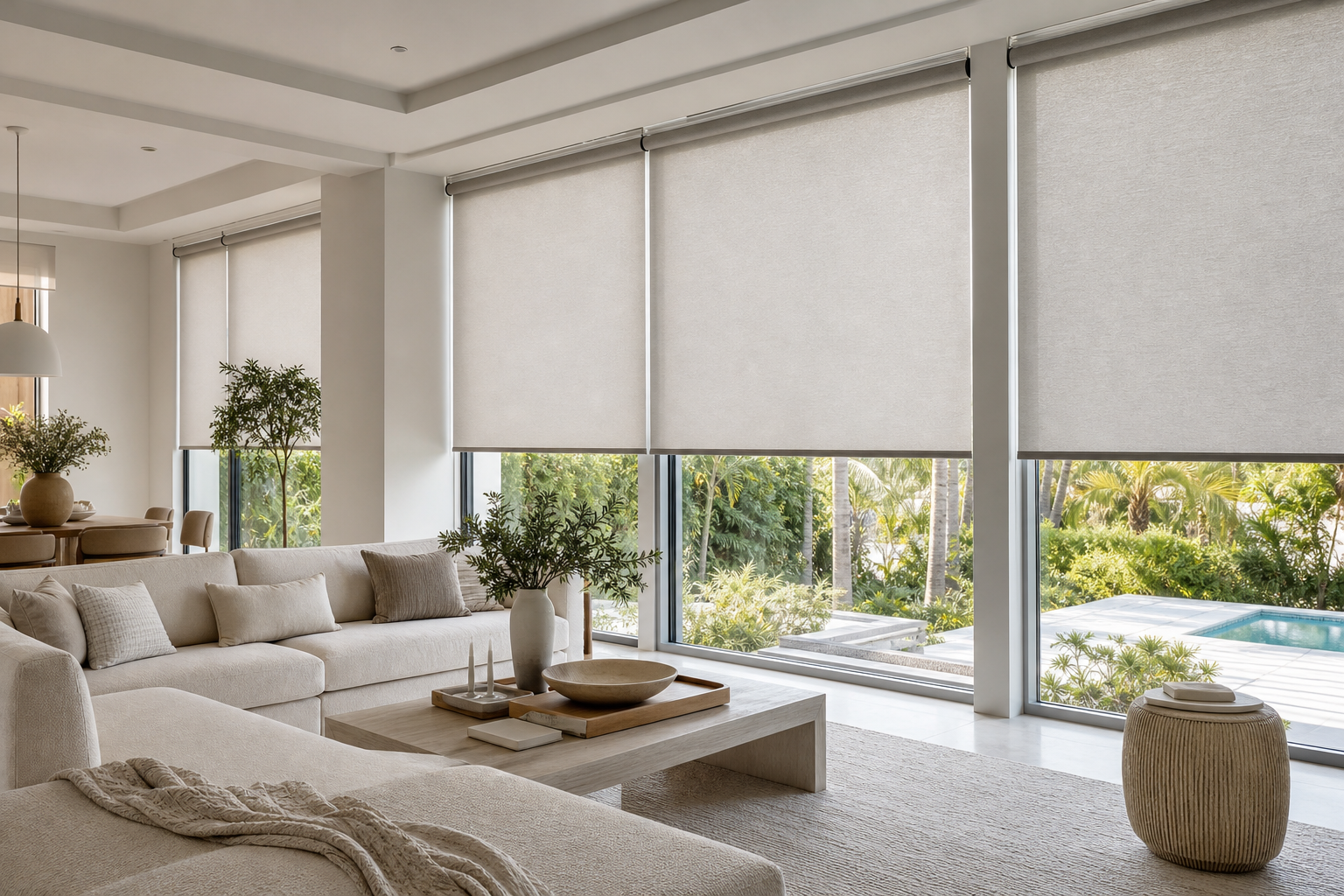
Neutral interiors are popular for a reason: they create a calm, flexible foundation that works with changing décor, natural materials, and the bright indoor-outdoor style common in South Florida homes. But a neutral room can also feel unfinished if the windows are left without the right balance of softness, texture, privacy, and light control.
The best window treatments for neutral interiors do more than match beige, white, gray, or taupe walls. They help define the room while addressing practical concerns such as intense sunlight, glare, heat, UV exposure, and nighttime privacy. Whether you are furnishing a Miami condo, updating a Coral Gables home, or designing a new space in Kendall or Doral, the right treatment should complement the room without competing with it.
Why Window Treatments Matter in a Neutral Room
In a colorful or highly patterned room, window treatments may be used to introduce contrast. In a neutral interior, they often serve a more subtle role. They can add visual depth, frame the windows, soften hard architectural lines, and create a more finished appearance.
Window treatments also influence how a room functions throughout the day. Large windows may bring in beautiful natural light but also create glare on televisions, computer screens, and polished surfaces. Uncovered glass can make it difficult to maintain privacy at night, especially in homes near busy streets, neighboring buildings, or shared outdoor spaces.
For South Florida homeowners, window treatments can also help manage the effect of strong sunlight and heat entering through the glass. The right solution depends on the room’s orientation, window size, desired level of privacy, and how much natural light you want to preserve.
Key Design Principles for Neutral Window Treatments
Choose a shade that is close in tone to the room
A window treatment does not need to be an exact match for the wall color. In many cases, choosing a shade slightly lighter or darker creates more dimension while maintaining a cohesive appearance. Soft whites, warm creams, light grays, sand, taupe, and natural-inspired tones can work well with neutral palettes.
Consider the undertone of the room before selecting a fabric or shade color. Warm beige walls may pair naturally with ivory, oatmeal, or sand tones, while cool gray interiors may work better with soft gray, white, or muted stone. Looking at samples near the actual windows is important because daylight can change how a color appears.
Use texture to keep the room from feeling flat
When a room uses a limited color palette, texture becomes especially important. A woven-looking shade, softly textured fabric, or subtle pattern can add interest without introducing a strong visual contrast.
Texture can also help connect the window treatment to other elements in the room, such as wood furniture, upholstered seating, natural rugs, stone surfaces, or decorative accessories. The goal is not to make the shade the focal point. Instead, it should contribute to the layered, comfortable feeling of the space.
Match the treatment to the architecture
Clean-lined interiors often benefit from streamlined roller shades, solar shades, or modern motorized shades. Rooms with more traditional architectural details may suit softer fabrics or treatments with a warmer visual character.
Window size matters as well. Wide windows and sliding glass doors may require a coordinated solution that provides practical operation and a consistent appearance across the opening. For large doors, review privacy solutions for large sliding doors in South Florida before making a final decision.
Popular Window Treatments for Neutral Interiors
Roller shades for a clean, understated look
Roller shades are a natural fit for modern neutral interiors because of their simple profile. They can be selected in a wide range of colors and opacity levels, making it easier to coordinate the treatment with the walls, flooring, and furniture.
Depending on the material selected, roller shades can provide filtered daylight, increased privacy, or stronger light reduction. They are often a practical option for bedrooms, living rooms, offices, and spaces where a minimal appearance is important.
Solar shades for bright rooms and open views
Solar shades can be helpful in rooms that receive strong direct sunlight or have a view that homeowners want to preserve during the day. Their design can support glare management while maintaining a more open visual connection to the outdoors, depending on the selected material and lighting conditions.
Because visibility and privacy can change after sunset, solar shades should be evaluated for both daytime and nighttime use. In rooms where evening privacy is important, a layered treatment or a different shade style may be more appropriate. Floridian Blinds also explains the relationship between solar shades and nighttime privacy.
Zebra shades for adjustable light control
Zebra shades combine alternating bands that can be adjusted to change the amount of light entering the room. This flexibility makes them appealing for neutral interiors where homeowners want a soft, contemporary appearance without committing to either fully open or fully closed window coverings throughout the day.
They can be considered for living rooms, dining areas, bedrooms, and other spaces where the light changes frequently. A professional consultation can help determine whether the shade’s operation and appearance suit the size and location of your windows.
Blackout shades for bedrooms and media spaces
Neutral bedrooms often benefit from blackout shades when reducing incoming light is a priority. They can also be useful in nurseries, guest rooms, home theaters, and media rooms where light control supports the way the space is used.
Blackout performance depends on more than the shade fabric alone. Light can also enter around the edges of a window treatment, so professional measurement and installation are important when light reduction is a central goal. A blackout shade can still be selected in a soft neutral color, allowing the room to remain calm rather than overly dramatic.
Motorized shades for convenience and clean lines
Motorized shades can be a practical choice for tall windows, hard-to-reach openings, large glass areas, and homes where convenience is a priority. They can also help preserve the clean appearance of a neutral room by reducing the need for visible cords or manual adjustments, depending on the selected product.
Motorization may be especially useful when several windows need to be adjusted together or when homeowners want to manage sunlight at different times of day. For more information about the relationship between automation and home comfort, see this guide to motorized shades and energy use in South Florida.
How to Select the Right Opacity
Color is only one part of choosing window treatments for neutral interiors. Opacity determines how much light enters, how much of the outside view remains visible, and how much privacy the room has during the day.
| Opacity or treatment goal | Where it may work well | What to consider |
|---|---|---|
| Light-filtering | Living rooms, dining areas, and bright common spaces | Allows natural light while reducing some brightness; privacy levels vary. |
| Solar or glare-reducing | Rooms with strong sun, views, televisions, or computer screens | Evaluate both daytime visibility and nighttime privacy. |
| Room-darkening or blackout | Bedrooms, nurseries, media rooms, and guest rooms | Professional measurement can help reduce light around the edges. |
| Layered treatment | Rooms that need flexible light and privacy control | Combines different functions but requires careful coordination of colors and operation. |
In a South Florida home, the best choice may vary from room to room. A living area facing a bright western exposure may need stronger glare control than a shaded bedroom. A bathroom may require privacy as the primary concern, while a home office may need a balance between daylight and screen visibility.
Neutral Window Treatment Ideas by Room
Living rooms
Living rooms often benefit from shades that soften daylight while keeping the room bright. Roller shades, solar shades, and zebra shades can all be considered depending on the desired view, privacy, and level of adjustment. For large windows, keeping treatments consistent across the wall can create a more orderly appearance.
Bedrooms
In bedrooms, privacy and light control usually take priority. Blackout or room-darkening shades in warm white, beige, gray, or another quiet tone can support a restful visual environment. Motorization may be helpful for larger windows or for adjusting shades without walking across the room.
Home offices
A home office needs enough natural light to feel comfortable without creating distracting glare. Solar shades or light-filtering roller shades may be appropriate, but the best option depends on the window’s direction and the location of your desk and screens.
Bathrooms
Bathrooms require careful attention to privacy, moisture, and the size of the window. A neutral shade can blend easily with tile, stone, and painted surfaces while providing the coverage the room requires. Review privacy shades for bathrooms when evaluating options for this space.
Common Mistakes to Avoid
- Choosing color from a small screen image: Digital colors may not accurately reflect how a material looks in your home’s daylight.
- Ignoring the window’s direction: East-, west-, and south-facing windows can create different challenges with glare and heat.
- Using the same opacity everywhere: Different rooms often need different levels of privacy and light control.
- Focusing only on appearance: A shade should also be practical to operate and appropriate for the window size.
- Skipping professional measurement: Incorrect measurements can affect the fit, function, and overall appearance of custom window treatments.
- Forgetting nighttime conditions: A shade that looks ideal during the day may not provide the privacy you expect after dark.
Why Professional Measurement and Installation Matter
Custom window treatments need to work with the specific dimensions and characteristics of each opening. Professional measurement helps account for window width, height, depth, trim, door movement, and nearby furniture. It can also help identify practical concerns before the treatment is ordered.
Installation is equally important. A properly installed shade should operate smoothly, sit correctly within the chosen mounting position, and look consistent with the surrounding room. This is particularly important for large windows, sliding doors, motorized products, and multiple windows that need to align visually.
Frequently Asked Questions
What colors work best for window treatments in neutral rooms?
Soft white, ivory, beige, taupe, light gray, and muted natural tones are common choices. The right color depends on the room’s undertones, flooring, furnishings, and amount of natural light.
Are neutral window treatments boring?
They do not have to be. Texture, subtle pattern, layered opacity, and motorized operation can add interest and functionality while preserving a calm color palette.
Which shades are best for reducing glare?
Solar shades and certain light-filtering roller shades can be considered for rooms with glare. The best selection depends on window direction, the desired outside view, and whether nighttime privacy is also needed.
Can neutral shades provide privacy at night?
Yes, but privacy depends on the shade material, opacity, window location, and interior lighting. Treatments that preserve daytime views may not provide the same privacy after sunset, so both conditions should be discussed during selection.
Should every window in the home have the same treatment?
Not necessarily. Using coordinated colors or materials can create a consistent look, while different opacity levels or shade styles may be more practical for bedrooms, bathrooms, offices, and living areas.
Find the Right Window Treatments for Your Neutral Interior
The right window treatments should support the design of your home while solving real concerns such as glare, privacy, strong sunlight, and daily convenience. For homeowners in Miami-Dade County and surrounding South Florida communities, custom roller shades, solar shades, zebra shades, blackout shades, and motorized options can be tailored to the needs of each room.
Floridian Blinds can help you compare materials, colors, opacity levels, and operating options for your home. Contact us for a free consultation and measurement to begin planning window treatments that fit your space and your lifestyle.