How Much Do Custom Window Treatments Cost in South Florida?
Learn what affects the cost of custom window treatments, including shade type, window size, materials, motorization, installation, and South Florida design needs.
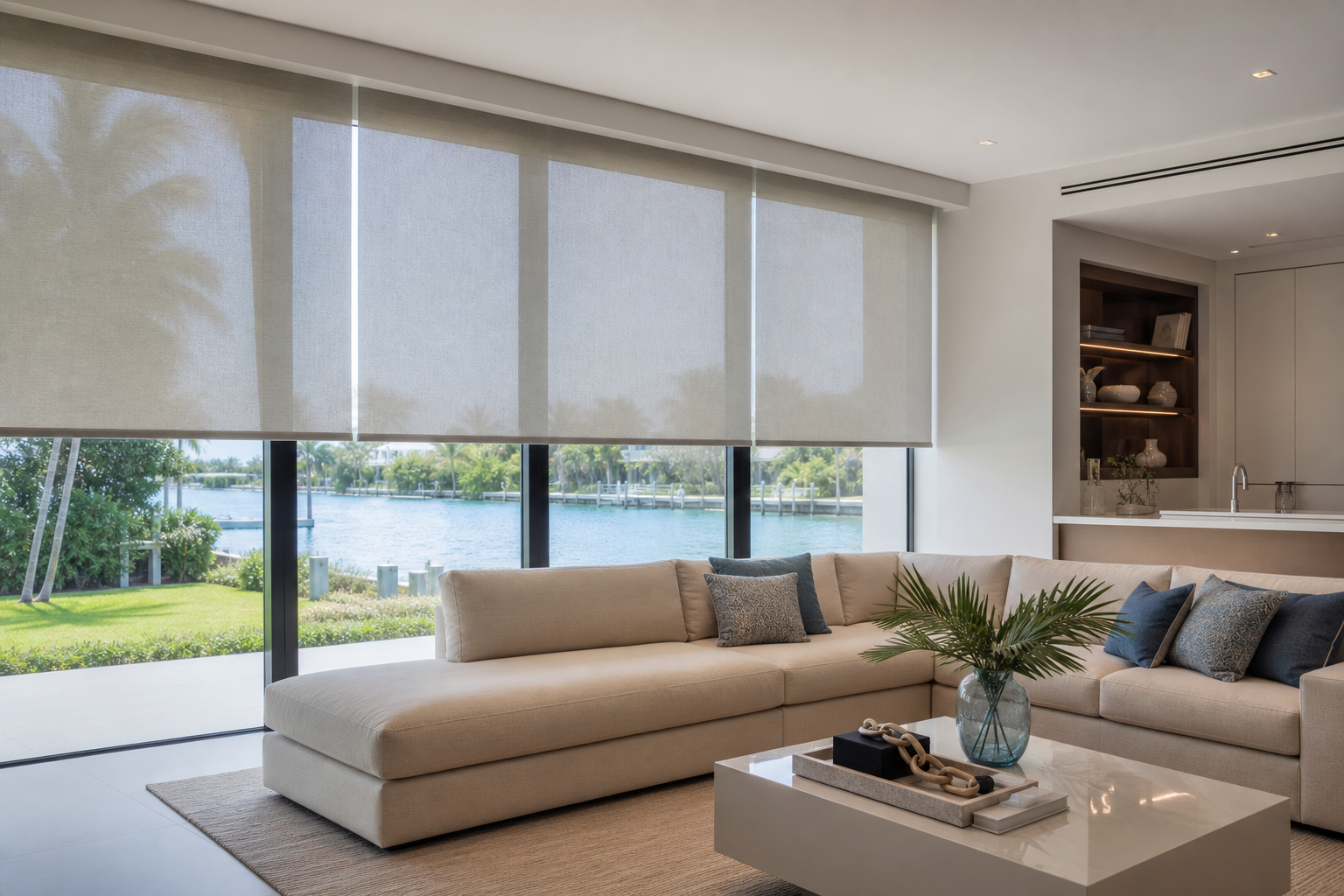
How much do custom window treatments cost? The honest answer depends on several details, including the type of shade or blind, the size and number of windows, fabric and hardware selections, operating features, and the complexity of installation. A custom window treatment is designed for a specific opening rather than produced in a standard size, so the final investment is determined by the needs of your home.
For homeowners in Miami-Dade County and throughout South Florida, window treatments also need to address strong sunlight, heat, UV exposure, privacy, large windows, and indoor-outdoor living. Understanding the factors behind a custom quote can help you compare options more accurately and choose treatments that fit both your space and your priorities.
What affects the cost of custom window treatments?
Custom window treatments are priced based on the complete project rather than one universal price per window. A professional consultation and measurement help identify the right solution for each room and account for details that may not be obvious from a quick visual estimate.
1. The type of window treatment
Different products are designed for different goals, and their materials, mechanisms, and installation requirements can vary. Common options include:
- Roller shades: A clean, streamlined choice available in different levels of light control, privacy, and fabric openness.
- Solar shades: Designed to reduce glare and help manage sunlight while maintaining some visibility through the window, depending on the selected fabric.
- Blackout shades: A practical option for bedrooms, media rooms, nurseries, and other spaces where limiting incoming light and improving privacy are priorities.
- Zebra shades: Alternating bands of solid and transparent fabric allow homeowners to adjust light and privacy with a modern appearance.
- Motorized shades: Motorization adds convenience and can be useful for tall, hard-to-reach, or numerous windows, as well as homes with smart-home preferences.
- Patio and outdoor screens: These treatments are designed for exterior living areas and may help improve comfort, privacy, and usability around patios or covered outdoor spaces.
Because each product solves a different problem, comparing only the initial cost without comparing performance can make it harder to choose well. A solar shade for a bright living room, for example, serves a different purpose than a blackout shade in a bedroom.
2. Window size, quantity, and configuration
Larger windows generally require more material and may need stronger or more specialized hardware. Oversized glass doors, corner windows, arched openings, bay windows, and unusually shaped windows can also affect the design and installation process.
The total number of windows matters as well, but treating an entire home is not always necessary. Some homeowners begin with the rooms that receive the most sun or require the most privacy, then complete additional spaces over time. A consultation can help prioritize the project according to how each room is used.
3. Fabric, color, openness, and material selection
Within each shade category, there may be multiple fabric and material choices. These selections influence appearance, light filtration, privacy, glare control, and how the treatment fits the room's overall design.
South Florida homeowners often need to consider how a fabric will perform in rooms with strong afternoon sun, views of neighboring properties, or large expanses of glass. A more open fabric may preserve a view while filtering glare, while a room that requires greater privacy or darkness may call for a more opaque option.
Color and texture also matter. Neutral shades can create a consistent look throughout a home, while carefully selected colors or textures can add contrast and complement flooring, cabinetry, furniture, and wall finishes.
4. Manual versus motorized operation
Manual shades can be a practical choice for easily accessible windows. Motorized shades may be worth considering when windows are high, wide, difficult to reach, or installed in rooms with many individual openings.
Motorization can also make daily adjustments more convenient. Depending on the system selected, shades may be operated with a remote, wall control, or compatible smart-home setup. The cost of a motorized project depends on the number of shades being automated, the operating components selected, and the installation requirements.
For a home with high ceilings or tall windows, motorization may be more than a convenience. It can provide a simple way to manage sunlight and privacy without relying on ladders or manual access. For more ideas, see this guide to window treatments for high ceilings.
5. Installation and project complexity
Professional installation is an important part of a custom window treatment project. The installer must account for the condition of the mounting surface, the type of window, the available clearance, and the way the treatment should operate.
Installation may be more involved when a project includes tall windows, sliding doors, multiple treatments in one room, unusual angles, limited mounting space, or motorized components. Accurate measurement also helps reduce the risk of treatments that do not fit, operate properly, or align visually across a room.
Typical cost factors at a glance
| Project factor | Why it matters |
|---|---|
| Shade or screen type | Different products have different materials, mechanisms, and performance goals. |
| Window dimensions | Larger or unusually shaped openings may require additional material or specialized hardware. |
| Number of windows | The total scope affects the amount of product, labor, and coordination required. |
| Fabric and material | Choices affect light control, privacy, appearance, glare reduction, and durability considerations. |
| Motorization | Automated operation adds components and may involve additional setup or integration. |
| Installation conditions | Access, mounting surfaces, ceiling height, and window configuration can affect labor and complexity. |
How much should you budget for a custom window treatment project?
It is difficult to provide a responsible universal price for custom window treatments without knowing the project details. Two homes with the same number of windows can have very different requirements if one has standard-size openings and the other has large glass doors, tall ceilings, motorized shades, or specialty configurations.
Instead of focusing only on a per-window number, ask for a written quote that identifies the product type, fabric or material, operating method, measurements, installation, and any additional components. This makes it easier to compare proposals that may appear similar but include different levels of customization or service.
A free consultation and professional measurement can also help you determine whether every window needs the same treatment. In some homes, bedrooms may need blackout shades, living areas may benefit from solar or roller shades, and frequently used patio areas may need outdoor screens. Matching the product to the room can help you use your budget where it matters most.
Custom window treatments versus store-bought options
Store-bought blinds and shades may appeal to homeowners who need a quick, standard-size solution. Custom window treatments are typically considered when fit, appearance, light control, privacy, and long-term usability are more important than choosing a product off the shelf.
- Fit: Custom treatments are measured for the specific window rather than selected from limited standard dimensions.
- Design: Homeowners can coordinate fabrics, colors, textures, and operating styles across different rooms.
- Function: The treatment can be selected based on glare, privacy, room-darkening, view preservation, or access needs.
- Installation: Professional installation helps account for window details and mounting requirements.
- Convenience: Motorization may provide easier operation for tall, wide, or hard-to-reach windows.
That does not mean every window requires the most elaborate option. The right choice depends on the home's layout, the room's purpose, and how the window is used. Read more about the differences in custom window treatments versus store-bought blinds.
South Florida considerations that can influence your selection
Intense sunlight and glare
Bright sunlight is a daily consideration in Miami, Kendall, Doral, Coral Gables, Pinecrest, and nearby communities. The right shade can help manage glare on televisions, computer screens, and reflective surfaces while supporting a more comfortable interior.
Solar shades are often considered for rooms where homeowners want to reduce glare while maintaining an outdoor view. Other rooms may require a more light-blocking treatment. The best selection depends on the direction of the windows, the room's use, and the desired level of privacy.
Heat and UV exposure
Window treatments can be part of a broader approach to managing sunlight and indoor comfort. Fabric openness, color, and coverage all influence how a shade interacts with incoming light. Homeowners should also consider the potential effect of prolonged sun exposure on furnishings, flooring, artwork, and finishes.
For additional guidance, review this South Florida guide to choosing shades for Florida sunlight.
Privacy and indoor-outdoor living
Homes in Miami-Dade County often include large windows, sliding doors, balconies, patios, and connected indoor-outdoor areas. Window treatments can help create privacy from neighboring homes, streets, and nearby buildings without making a room feel closed in.
For patios and covered outdoor areas, outdoor screens may help make the space more comfortable and usable. Their cost and design will depend on the size of the opening, screen configuration, operating method, and installation conditions.
Questions to ask before accepting a quote
- Which product is being recommended for each room, and why?
- What level of privacy, light filtering, or room darkening should I expect?
- Does the quote include professional measurement and installation?
- Are the shades manual or motorized, and what controls are available?
- How will the treatments work with large windows, sliding doors, or high ceilings?
- Can the fabrics and colors be coordinated throughout the home?
These questions shift the conversation from price alone to the value and suitability of the complete installation. A quality consultation should leave you with a clear understanding of what is included and why the recommended treatment fits your home.
Frequently asked questions
Are custom window treatments more expensive than ready-made blinds?
Custom window treatments may require a larger initial investment because they are measured, configured, and installed for the individual project. The comparison should include fit, materials, functionality, design options, and installation rather than product price alone.
Do all of my windows need the same type of shade?
No. Different rooms and window exposures may call for different solutions. A bedroom may benefit from blackout shades, while a living room with a view may be better suited to solar or roller shades.
Is motorization worth considering for standard-height windows?
It depends on your priorities. Motorization can add convenience and may be useful when several shades need to be adjusted together or when you want easier control of sunlight and privacy. It is especially helpful for hard-to-reach windows.
Can custom shades help with bright Florida sunlight?
Yes, the right shade can help manage glare and control incoming light. The result depends on the product, fabric, openness, window orientation, and how much light control you want.
What is included in a professional measurement?
A professional measurement evaluates the width, height, mounting area, clearance, and operating requirements of each opening. It also helps identify conditions that may affect installation or product selection.
Plan your custom window treatment project
The cost of custom window treatments depends on the complete solution: product type, window dimensions, fabric or material, operation, installation, and the needs of each room. In South Florida, sunlight, heat, privacy, and large openings make those decisions especially important.
Floridian Blinds can help you compare options and plan treatments that suit your home's design, comfort, and daily routine. Contact us for a free consultation and measurement.